<!–
title: Jiuhuashan Autumn Pilgrimage for First-Timers 2026
slug: jiuhuashan-autumn-pilgrimage-2026
category: Travel
focus: Jiuhuashan autumn pilgrimage first-timers
meta: Plan a Jiuhuashan autumn pilgrimage for first-timers in 2026: temple etiquette, mountain pacing, Mid-Autumn and Golden Week timing, and practical travel tips.
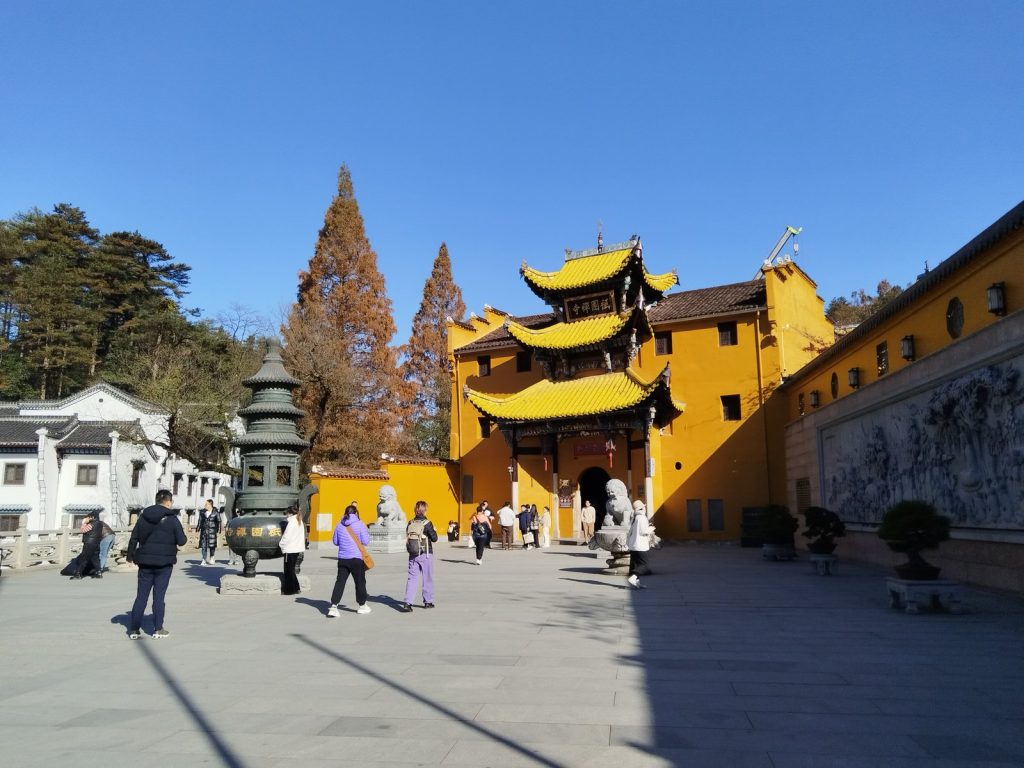
cover_alt: Temple halls and courtyards at Zhiyuan Temple on Jiuhuashan, Anhui
cover_credit: Photo: Xiaoding413 / Wikimedia Commons (CC0)
word_count: 1314
–>
Why visit Jiuhuashan in autumn 2026
Jiuhuashan (九华山) in Anhui is one of China’s four sacred Buddhist mountains, known for temple clusters, hillside paths, and pilgrimage rhythms that feel different from a pure sightseeing peak. For English-speaking travellers and expats, an autumn visit in 2026 often offers cooler walking weather than summer, clearer mornings for temple courtyards, and a calmer pace than Golden Week peaks — if you choose dates carefully.
The 2026 calendar still shapes your journey. Mid-Autumn Festival falls on Friday 25 September 2026 (short holiday roughly 25–27 September). National Day Golden Week runs roughly 1–7 October 2026, with makeup workdays on Sunday 20 September and Saturday 10 October per State Council notice 国办发明电〔2025〕7号. If your trip sits near either holiday, skim Golden Week 2026 vs Mid-Autumn before you lock lodging.
Jiuhuashan densifies when holidays arrive: pilgrims, tour groups, and cable-car queues all rise together. Your best first-timer strategy is respectful pacing — dress and behave for temple spaces, book beds early, and treat the mountain as a two-day walk-and-visit rhythm rather than a single summit race.
Getting there and what to book first
Trains, buses, and mountain transfers
Most visitors reach Jiuhuashan via Anhui hubs such as Chizhou or other regional connections, then continue by bus, taxi, or ride-hail toward scenic entrances and lodging zones. Exact rail and coach options change seasonally, so verify live schedules rather than memorising one blog route. For mainland train booking basics, see how visitors book a mainland train on 12306. Carry your passport for real-name tickets and station security.
Screenshot your hotel’s Chinese name and the gate or shuttle stop you need. Mountain logistics confuse first-timers more than temple maps do. If you prefer ride-hail where available, set up Didi for foreign visitors while you still have stable Wi-Fi. Confirm any hotel pickup in writing.
Lodging and passport check-in
Lodging ranges from simple mountain guesthouses to hotels near temple towns. Decide early whether you want:
- A stay closer to major temple clusters (easy morning visits, more foot traffic)
- A quieter room slightly away from the densest lanes (better sleep, short transfer)
- A base that makes cable-car or shuttle timing easier for your fitness level
Foreign passport holders must complete hotel registration. Bring your passport to the front desk — see China hotel check-in with a foreign passport. Book refundable rates when Mid-Autumn or Golden Week approaches.
Tickets, payments, SIM, and packing
Scenic tickets, cable cars, and shuttle segments change. Buy only through official windows or authorised apps. Do not invent fixed prices from memory — verify on official channels the week you travel. Ask clearly what each ticket covers (entry, transport, specific temples).
Most stalls prefer mobile pay. Set up Alipay and WeChat Pay before you arrive. Keep a little cash as backup. A working China SIM or eSIM helps with maps; see China SIM and eSIM for foreign visitors.
Autumn packing for a sacred mountain means layers, modest clothing for temple halls, grip-friendly shoes, and rain protection. Mornings can feel cool on shaded slopes. More tips: packing list for China autumn.
Temple etiquette for first-time visitors
Respect is the core skill on Jiuhuashan. You do not need to be Buddhist to visit, but you do need to behave as a guest in active religious spaces.
Practical etiquette:
- Dress modestly: cover shoulders and avoid very short shorts in temple halls when possible.
- Speak quietly inside halls; silence phones or use vibrate.
- Do not touch statues, offerings, or ritual objects unless invited.
- Ask before photographing people praying; some halls restrict photography entirely — follow signs and staff.
- Step aside for processions, elderly pilgrims, and monks rather than blocking doorways for photos.
- Keep food and loud music off temple courtyards.
If you are unsure what a ritual means, watch quietly rather than imitating. Curiosity is welcome; performance is not.
A practical two-day pilgrimage pacing plan
Day 1 — Orient, visit one major temple area, rest early
Arrive, check in, and take one coherent temple-and-path block rather than racing every famous hall. Use the afternoon to learn shuttle or cable-car patterns for Day 2. Mid-morning and late-afternoon light are often kinder for courtyard photos than hard noon glare.
Practical Day 1 notes:
- Carry your passport if checkpoints ask for ID.
- Clarify cable-car and shuttle tickets separately from mountain entry.
- Carry water and a light snack; temple-area food quality varies with crowds.
- Rest early — mountain stairs punish late-night arrivals.
Day 2 — Higher paths or a second temple cluster, then descent buffer
Choose one focus: a higher viewpoint temple area, a quieter side cluster, or a slower revisit of halls you liked. Do not treat the mountain as a completion badge. If Mid-Autumn or Golden Week crowds are rising, start at opening time and accept queues.
Build a generous descent and station buffer. For broader holiday planning, see National Day Golden Week 2026 travel plan.
Food, fitness, and health on the mountain
Vegetarian temple-area meals are common in pilgrimage zones, but menus and prices vary — verify locally rather than assuming a fixed set meal. Pace oil and salt if you are sensitive. Carry any personal medication you need; mountain clinics are for emergencies, not routine pharmacy restocks.
Fitness matters more than Instagram. If stairs are hard for you, use authorised cable cars or shuttles where available and skip aggressive hiking goals. Autumn rain makes stone steps slippery — slow down.
Cable cars, stairs, and choosing your effort level honestly
Jiuhuashan combines temple visits with real elevation change. Be honest about knees, lungs, and luggage before you romanticise “walking the whole mountain.” Authorised cable cars and shuttles exist to help pilgrims and visitors move between zones — use them without guilt when they match official routing.
If you prefer stairs, start earlier, carry water, and turn back before exhaustion makes descent unsafe. Autumn mist can hide path edges; follow marked routes even when a shortcut looks tempting. Pair fitness choices with calendar reality: Mid-Autumn and Golden Week queues make every transfer slower, so a modest route finished calmly beats an ambitious route abandoned at a crowded junction.
Timing checklist before Golden Week 2026
Use this short checklist when you finalise dates:
- Prefer midweek autumn days for easier temple courtyard walking.
- Avoid assuming Mid-Autumn (about 25–27 September 2026) is a quiet pilgrimage window — family travel still fills sacred mountains.
- If you must visit during Golden Week (about 1–7 October 2026), book beds early, start at opening time, and accept crowds.
- Confirm transport against makeup workdays (20 September and 10 October 2026) if colleagues’ leave patterns affect your group.
What first-timers often get wrong
First-timers often underestimate walking time between halls that look close on a phone map. They also underestimate how tiring stairs feel after a long train day. Another common mistake is treating every temple as a photo set — that attitude shows, and staff will redirect you.
A better approach: pick two or three halls or paths that matter to you, leave space for quiet sitting, and keep one afternoon unscheduled. Pilgrimage mountains reward presence more than coverage.
Quick FAQ for first-timers
Is one night enough?
One night works for a first taste if transport is tight. Two nights feel better for respectful pacing without rushing stairs.
Do I need fluent Mandarin?
Basic translation apps and Chinese address screenshots cover most hotel and ticket needs. Learn a few polite phrases for temple areas to reduce friction.
Who is this trip best for?
Travellers interested in Buddhist mountain culture, temple architecture, and measured walking. Pure thrill-seekers or nightlife travellers should choose a different destination.
For site questions, contact [email protected]. Lovely China was founded in 2025 to help English speakers navigate practical China travel.