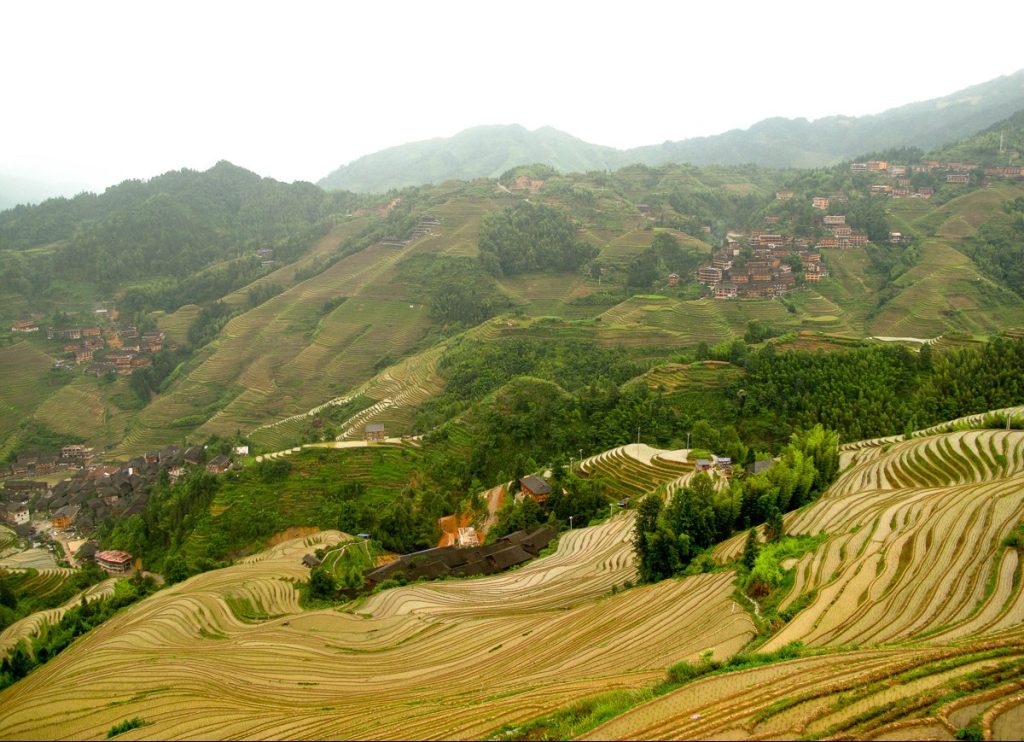
When most travelers picture Guilin’s iconic Longji Rice Terraces (龙脊梯田), they imagine the shimmering mirror-like water of spring or the endless emerald-gold waves of September before the harvest. But as late autumn rolls into November, the mountains undergo a dramatic transformation. The golden grain has been reaped, revealing the raw, sculptural geometry of the ancient earthworks carved into the hillsides of Longsheng County. Visiting the Longji Rice Terraces in late autumn offers a completely different, deeply peaceful travel experience. Without the massive crowds of the peak summer and early autumn harvest seasons, you can wander ancient stone paths in crisp mountain air, watch mist curl around empty terraces at sunrise, and experience ethnic minority village life at a slower, more authentic pace.—## What the Terraces Look Like After HarvestBy late October and November, the autumn harvest is officially complete. The rice stalks have been gathered, leaving behind stepped plateaus of stubble, turned soil, and stubbled water channels reflecting the clear blue autumn sky. While you won’t see the famous golden seas of grain, late autumn lays bare the true architectural marvel of the terraces—often called the “Dragon’s Backbone.” The sweeping contours, intricate curves, and multi-layered ridges stand out with striking clarity against the darkening green of surrounding forests. Photographers often favor this window because the stark, minimalist lines of the post-harvest landscape emphasize the sheer scale and human effort behind the centuries-old engineering.—## Ping’an vs. Jinkeng (Dazhai): Choosing Where to GoThe Longji Scenic Area is vast, encompassing several distinct villages. Choosing where to base yourself depends heavily on your travel style and hiking ambitions: Ping’an Village (平安村): Home to the classic “Seven Stars Accompanying the Moon” viewpoint, Ping’an is the most developed and historically visited part of the scenic area. It features traditional wooden stilt houses, paved stone paths, and plenty of cozy guesthouses. In late autumn, Ping’an is exceptionally quiet, making it ideal for relaxed strolls and easy-to-moderate walks between viewpoints like Nine Dragons and Five Tigers. Jinkeng / Dazhai Village (金坑大寨): Sprawled across a vast, amphitheatrical valley inhabited mainly by the Red Yao ethnic group, Jinkeng is larger, wilder, and more dramatic than Ping’an. It features sweeping ridges, cable car access to the Golden Summit (Tiantang), and extensive hillside trails connecting settlements like Tiantouzhai. If you love hiking and want dramatic, wide-open valley views in the crisp late-autumn air, Jinkeng is the superior choice.—## Hiking the Terraces in Crisp Mountain WeatherLate autumn brings stable, clear weather to northern Guangxi, though temperatures drop sharply once the sun sets. Daytime highs generally hover around 15°C to 20°C (59°F–68°F), perfect for active trekking, while nights can dip near or below 10°C (50°F). The Classic Hike: A popular full-day trek connects Ping’an village to ancient minority hamlets like Zhongolu and onward toward Jinkeng (or vice versa). The route takes you past quiet streams, terraced slopes, and wooden drying racks where villagers preserve winter vegetables. What to Pack: Bring layers, including a fleece or windbreaker for early mornings and evenings. Sturdy hiking boots are essential, as stone steps can be damp from morning dew or autumn frost.—## Seasonal Culture: Red Yao Long Hair and Winter PreparationsBeyond the landscape, late autumn provides a fascinating glimpse into traditional rural preparation. Without the pressing demands of crop maintenance, villagers turn their attention to seasonal survival and cultural preservation. In Jinkeng, women of the Red Yao ethnic group—famous for hair that can grow over two meters long and is traditionally cut only once in a lifetime—frequently gather in communal courtyards to spin cloth, embroider intricate garments, and chat in the afternoon sun.You will also notice wooden balconies hung high with curing meats, chili peppers, and winter squash drying in the crisp autumn sun. Witnessing these authentic rhythms of mountain life offers an immersive cultural experience that is often overshadowed by the rush of tour groups during peak summer months.—## Getting There from Guilin or YangshuoReaching Longji from Guilin or Yangshuo is straightforward, though independent travelers should prepare their digital tools in advance. Most visitors take a high-speed train or long-distance bus to Longsheng County, followed by a local minibus or tourist shuttle directly to the scenic area gates.Navigating transit routes, local bus schedules, and rural pin-drops can be tricky without the right digital setup. Before setting off, make sure your mobile connectivity is sorted by checking out a reliable China SIM and eSIM for Foreign Visitors in 2026. For navigating local mountain roads, pinpointing village trailheads, and finding hidden guesthouses, download and familiarize yourself with How to Use Amap (Gaode Maps) in China as a Foreigner: 2026 English Guide, which offers much better localized detail for rural Guangxi than standard western mapping apps.Furthermore, purchasing park tickets, paying guesthouse bills, and buying snacks along the trail require seamless digital payments. Ensure your digital wallet is linked and funded by reviewing the Alipay and WeChat Pay for Foreign Visitors in China 2026 guide before your trip.—## Guesthouses and Local FoodStaying overnight in Ping’an or Jinkeng’s Tiantouzhai is the highlight of any trip to Longji. Many family-run wooden inns feature rooftop terraces where you can sip hot ginger tea while watching the mountain mist clear. Look for guesthouses with floor heating or electric blankets, as traditional wooden mountain homes can get quite chilly at night in November.When it comes to dining, warming local specialties dominate the menu: Bamboo Rice (竹筒饭): Glutinous rice, pork, and beans stuffed inside fresh green bamboo tubes and roasted over an open fire. Stuffed Oil Tea (油茶): A savory, bitter, and invigorating tea brewed with ginger, garlic, and fried rice puffs, traditionally served by the local Zhuang and Yao people to ward off the mountain chill. Local Free-Range Chicken: Stewed with mushrooms or local herbs harvested straight from the surrounding forests.—## Practical Tips for Your Visit Tickets & Pricing: Avoid outdated blogs quoting arbitrary ticket fees. Always check official park channels, WeChat mini-programs, or your local hotel concierge for up-to-date scenic area admission and cable car pricing before you arrive. Luggage Management: If you are staying in Jinkeng’s higher hamlets like Tiantouzhai, you will likely need to hike up unpaved stone paths with your bags. Pack light, or hire local porters (often organized through your guesthouse) to carry heavy luggage up the mountain trails. Respect Local Culture: The Longji region is home primarily to the Zhuang and Red Yao ethnic minority groups. Always ask permission before photographing villagers in traditional dress, and respect local farming boundaries even after the harvest has ended.—## Frequently Asked Questions (FAQ)### 1. Are the Longji Rice Terraces worth visiting after the harvest?Yes, absolutely. While you won’t see the famous green fields or golden rice waves, late autumn provides unmatched photographic clarity, striking minimalist lines of terraced earth, peaceful trails, and an authentic look at local village life without peak-season crowds.### 2. How cold does it get in Longji during November?Daytime temperatures are pleasant for hiking, usually ranging between 15°C and 20°C (59°F–68°F). However, nighttime temperatures drop rapidly, often dipping near or below 10°C (50°F), so packing warm layers and ensuring your guesthouse has heating is essential.### 3. How many days should I stay in Longji?Most travelers find that 2 days and 1 night is ideal. This allows you to spend one day traveling from Guilin/Yangshuo and exploring one village (like Ping’an), and a second day hiking across to Jinkeng before heading back or moving on to your next destination.
FAQ
Is this guide current for late 2026?
It reflects commonly reported practice as of October 2026. Always re-check official sources before you travel, because rules, ticket platforms and seasons change.
Where can I verify details?
Use the official website, WeChat account or ticket platform named for this topic. For payments and maps, see Lovely China’s practical visitor guides linked above.
What if my situation is unusual?
Ask your hotel, airline, park ticket office or embassy/consulate for case-specific advice rather than relying only on a blog post.