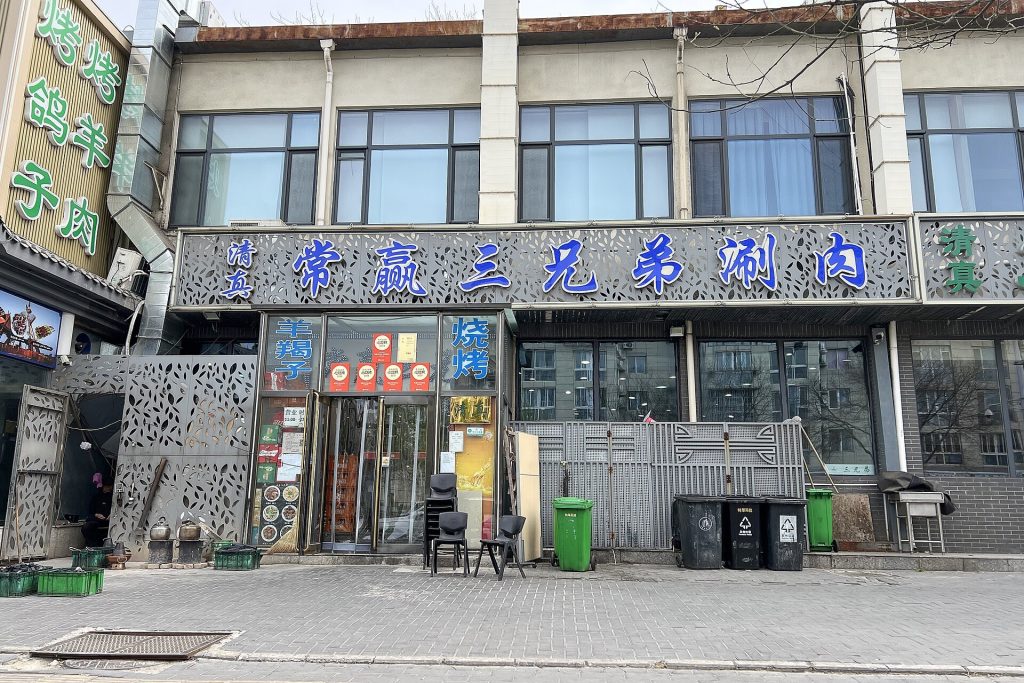
Yang xie zi (羊蝎子) is Beijing lamb-spine hotpot: a shared pot of broth in which a cheap, bony, generously meaty cut of lamb—the spine, with its ridges that remind people of a scorpion’s tail—cooks until the meat loosens and the soup turns rich. It is a winter meal, popular when the capital is cold, and it is not the same dish as shuan yang rou (涮羊肉), the thin-sliced copper-pot mutton hotpot Beijing is also known for. It is also not Sichuan or Chongqing mala hotpot.
This first-timer guide is about what the cut is, how a shared pot is typically ordered, spice and dipping sauces, table manners, and who may want to skip it. It is not a restaurant ranking, a price list, or an origin myth. For copper-pot mutton, use Beijing mutton hotpot first-timers. For a spicy Chengdu-style pot, use Chengdu hotpot first-timers. For a wider winter plan in the capital, see Beijing late December and New Year planner and Beijing first-visit guide.
What you are actually eating
The centre of the table is a pot, often a wide steel or copper vessel, of broth that may start relatively clear and becomes more lamby as the bones cook. The meat is not paper-thin slices. It is chunks of spine, with bone, joint, and meat you work off with chopsticks and, often, your hands once the piece is cool enough. That is the point of the dish, and it is also why it is messy.
Restaurants may offer spice levels, a divided pot, or a house broth that already leans chili, pepper, or herbal. Ask what “mild” means in that room before you say yes to the most dramatic option on the menu. Coriander, scallion, tofu, cabbage, vermicelli, and other sides often go in later, once the bones have given the soup some body. You are not usually flash-boiling a slice for a few seconds the way you do with shuan yang rou; you are simmering a cut that needs time.
A sesame or other dipping sauce may appear, or the house may encourage you to eat the meat with less ceremony, sometimes with a chili relish or garlic. There is no single correct dip. Follow what the table is given, taste, and adjust. If you dislike coriander or a heavy garlic paste, say so when sauces are assembled.
How to order, and how to share
Menus are often organised by weight of spine, plus a soup base, plus vegetables and drinks. If Chinese characters are all you see, point, use a translation photo, or ask for the lamb-spine pot by name: 羊蝎子 (translation apps honest guide). Start with a portion the table can finish rather than a display pile; you can add vegetables later more easily than you can heroically finish a mountain of bones.
This is a shared pot. Do not fish through it as if it were a private bowl. Use serving chopsticks if they are provided, or the clean ends of your own, in the usual way (shared dishes and lazy Susan etiquette, chopsticks etiquette for foreigners). Let bone plates or a discard bowl do their job; a tidy table is part of not making the next diner work around your pile.
Napkins, a damp towel, and possibly plastic gloves appear in some rooms because the last bits of meat near the bone are easier by hand. That is normal, not a failure of etiquette. Finish with the wet towel rather than wiping your hands on a shared tablecloth.
Spice is optional in principle and not always mild in practice. If you do not eat chili, say so clearly when you order, and ask whether the house broth is already spicy. If you do not eat lamb, this is not your dish—there is no useful “make it beef” version that is still yang xie zi. People who dislike bones, gelatinous bits, or eating with their hands may be happier with Beijing mutton hotpot first-timers or another Beijing winter meal.
How it differs from other hotpots
Shuan yang rou is thin mutton, a light broth, a brief dip in the copper pot, and usually a sesame sauce. Yang xie zi is a long simmer and a bony cut. Calling one “Beijing hotpot” as if they were identical is how first-timers order the wrong thing.
Chengdu and Chongqing pots bring a different chili-and-numbing grammar, different cuts, and often a different set of dipping habits (Chengdu hotpot first-timers, Chongqing hotpot for first-timers). You can like all of these. You should not walk into a Beijing lamb-spine house expecting a mala oil bath, or into a Sichuan pot expecting a pile of spine.
Practicalities on a cold night
Late December and the New Year week are natural times to eat this in Beijing. Go when you have time, not when you have a tight show ticket after dinner; the pot is not a five-minute snack. Book or arrive early on weekend and holiday evenings if the room is small, but we will not invent a wait time or a “best” address.
Related Lovely China reading
For payments, start with Alipay and WeChat Pay hub and WeChat Pay vs Alipay for tourists. For trains, keep high-speed rail first-timers guide and 12306 passport signup for foreigners handy. City hubs: Beijing first-visit guide, Shanghai first-visit guide. Connectivity: roaming vs local SIM honest guide, pocket Wi-Fi vs eSIM for China, offline maps for foreigners. Bookmark China travel tools page.
Practical checklist
- Confirm official rules on the relevant government, park, airline, or bank page near your travel week
- Screenshot bookings, tickets, and QR codes while you still have stable Wi-Fi
- Save hotel and attraction names in Chinese characters in your phone notes
- Carry passport, a backup payment method, and a small cash float (why cash is still needed)
- Test one small mobile payment before you rely on wallets at a gate or taxi
- Keep China travel tools page bookmarked for related Lovely China hubs
FAQ
How is yang xie zi different from shuan yang rou?
Shuan yang rou is thin-sliced mutton, quickly dipped in a light copper-pot broth, usually with sesame sauce. Yang xie zi is lamb spine simmered in a shared pot until the meat loosens and the soup turns rich. They are both Beijing winter meals, but they are not the same order.
Is yang xie zi very spicy?
It can be, but spice is not the definition of the dish the way it is in many Sichuan or Chongqing pots. Ask what “mild” means in that restaurant, and say clearly if you do not eat chili. The house broth may already be spicy even if you did not add a chili topping.
I do not eat lamb, or I dislike bones. Should I go?
If you do not eat lamb, skip it; this is not a dish that remains yang xie zi if you “make it beef.” If you dislike bones, gelatinous bits, or eating the last pieces by hand, copper-pot shuan yang rou or another Beijing meal will probably suit you better.
How do we share the pot politely?
Treat it as a shared vessel: use serving chopsticks if they are provided, keep a discard plate for bones, and do not fish through the pot as if it were a private bowl. Some rooms offer gloves or wet towels because meat near the bone is easier by hand; that is normal. Settle the bill with a wallet or card you have already tested.
Notes for late 2026 travellers
Late December 2026 and the New Year week into 2027 bring colder mornings, earlier sunsets, and holiday crowds in many city hubs. Pack real winter layers in the north, and leave extra time on weekends and around 1 January.
This article does not invent ticket prices, opening hours, processing times, consular fees, or official statistics. When a number matters, verify it on the official site, app screen, or ticket board near your travel week.
If an official rule page disagrees with this guide, follow the official page. Lovely China orients English-speaking travellers; we are not an immigration, banking, or medical authority.