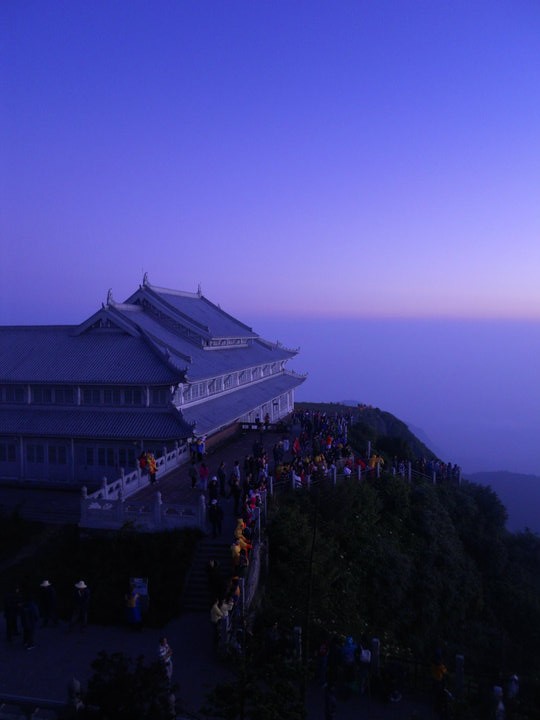
Why Mount Emei before Golden Week 2026
Mount Emei (峨眉山, Emeishan) in Sichuan is a UNESCO-listed Buddhist mountain park: long stone staircases, misty temple courtyards, bold macaques on forested paths, and autumn air that often feels clearer than midsummer humidity. For English-speaking travellers, late September — after the worst heat and before 1–7 October densifies every cable queue — is one of the saner windows to hike without treating the mountain like a theme-park sprint.
Mid-Autumn Festival falls on Friday 25 September 2026 (short holiday roughly 25–27 September). National Day Golden Week runs roughly 1–7 October 2026, with makeup workdays on Sunday 20 September and Saturday 10 October per State Council notice 国办发明电〔2025〕7号.
If you are choosing between headline mountain parks, compare pacing with Huangshan autumn hiking before Golden Week 2026. Emei rewards temple manners, sealed snacks, and honest fitness more than collecting every named peak in one day. It is not a casual city park: weather flips, steps are long, and monkeys treat open plastic bags as invitations. Near holidays, skim China fall 2026 public holidays for foreign staff if you are coordinating leave with travel.
Getting there and where to sleep
Most visitors reach Emeishan city or the Leshan area by high-speed rail, then transfer by bus, shuttle, or taxi toward scenic gates. Exact gate names and shuttle loops change — verify official routes the morning you travel. Screenshot Chinese names and your return meeting point. For holiday trains, see booking China HSR tickets before Golden Week 2026. City legs are easier with Didi for foreign visitors. Carry your passport.
Overnight on the mountain enables dawn walks when weather clears and books out earlier near holidays. Base-town hotels are kinder on sleep and budget for long day trips. Foreign passport registration applies wherever you sleep; follow China hotel check-in with a foreign passport. Prefer refundable rates near Mid-Autumn and Golden Week when policies allow. Do not stack a full Emei day with a full Leshan Giant Buddha day plus nightlife unless you enjoy misery.
Tickets, cables, payments, and packing
Scenic tickets, cables, and shuttles use official windows and authorised platforms. Maintenance closures and weather suspensions change quickly — check official Emeishan channels the morning you go. Do not invent prices from old blogs.
Set up Alipay and WeChat Pay for foreign visitors before you rely on QR codes at gates or snack stalls. Keep a little cash for outliers. A working China SIM or eSIM for foreign visitors keeps maps and group chats reachable when fog shifts plans.
Pack moisture-wicking layers, an insulated mid-layer, a real rain shell, grippy broken-in hiking shoes, water, sealed snacks, blister kit, headlamp for pre-dawn movement, and personal medication. Fashion sneakers on wet stone are a classic regret. For denser holiday travel days, see packing for China Golden Week crowds 2026.
Cable versus stairs: choose before pride argues
Cable cars and buses save knees when queues and weather allow. Stairs build the classic feeling and fatigue mixed groups faster.
- If anyone has knee, heart, balance, or asthma concerns, budget for cable segments and shorter temple loops.
- If you are fit and queues look manageable, a partial stair ascent can be rewarding — agree a turnaround time before pride negotiates.
- One clear ridge section plus one calm courtyard beats a fog checklist of every named viewpoint.
- Do not race children or older relatives into stair sections they cannot reverse safely.
Monkeys, temples, and trail manners
Do not carry food in open plastic bags. Do not tease monkeys for photos. Keep phones on straps. Stay calm if approached and follow staff guidance. Secure daypack zippers.
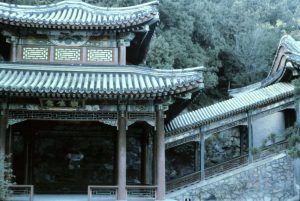
In temples: quieter voices, covered shoulders where requested, no flash toward worshippers, walk with the flow on narrow steps, and stop for photos only where you do not block traffic. Remove hats or sunglasses if a hall requests it — watch what locals do and ask politely when unsure.
A calm mountain day (or overnight)
Morning: start early
Be at gates near opening energy, especially near holidays. Confirm cable status before committing to a long stair that ends at a closed line. Walk at a pace that allows conversation — if you cannot talk, you may be going too fast for a long day.
Midday: eat and watch weather
Mountain food is convenience pricing. Eat enough to stay steady. If clouds seal distant views, enjoy temple woodwork and forest texture nearby instead of forcing grey panoramas.
Afternoon: descend with buffer
Descents take longer than people expect. Wet stone is slick. Meet transfers with buffer. If staying overnight, settle early, dry socks, and prepare layers for dawn wind. If day-tripping, protect the last daylight for final stair sections rather than another optional spur.
Holiday timing and weather honesty
Mid-Autumn weekends and Golden Week days are the hardest for cables, steps, hotels, and shuttle seats. If those are your only dates, book early and accept denser trails. Late September weekdays outside the short holiday are usually kinder. Fog, rain, and sudden temperature drops are real — summit weather is not downtown Emeishan city weather. Clear sunrise moments are bonuses, not contracts.
Common mistakes
- Booking summit rooms only after arriving at the gate on a holiday weekend
- Underestimating step volume and packing city shoes
- Combining Mount Emei, Leshan Giant Buddha, and nightlife in one exhausted calendar day
- Ignoring rain shells because the morning looked clear in town
- Feeding or photographing monkeys with open snack bags
- Turning narrow steps into selfie studios while blocking traffic
- Skipping water because “it is only autumn”
A calm first-timer plan
1. Book transport and lodging with early gate timing and refundable options when possible.
2. Decide cable-assisted versus stair-heavy before you arrive; write the plan down.
3. Pack layers, rain shell, broken-in shoes, and sealed snacks.
4. Start early, eat enough, and turn around before dusk stress.
5. Keep monkey food discipline and temple quiet.
6. Leave buffer for descent, shuttle queues, and the ride back to the station.
If you need a gentler Sichuan nature morning instead, consider the Chengdu Giant Panda Base autumn visit and save Emei for a day when legs and weather both cooperate.
FAQ
Is one day enough? A long day trip can cover key temple and ridge sections with cables; overnight gives dawn options when weather clears.
Is English signage enough? Major routes have bilingual signs; offline maps and Chinese screenshots still help at gates and restaurants.
Can I visit during Golden Week? Yes, with denser crowds — book early, start earlier, and lower viewpoint expectations.
What if it rains all day? Focus on temples and shorter covered sections; do not force slippery stair marathons for social media.
Planning around Mid-Autumn and Golden Week 2026
Holiday timing shapes almost every practical decision for English-speaking travellers and expats this season. Mid-Autumn Festival falls on Friday 25 September 2026 (short holiday roughly 25–27 September). National Day Golden Week runs roughly 1–7 October 2026, with makeup workdays on Sunday 20 September and Saturday 10 October per State Council notice 国办发明电〔2025〕7号. If your only free days sit inside those windows, book transport and lodging earlier than feels comfortable, arrive at gates nearer to opening time, and lower expectations for empty photos. If you can shift to late-September weekdays outside the short Mid-Autumn break, you will usually find thinner queues and kinder pacing.
Use China fall 2026 public holidays for foreign staff when coordinating office leave. For trains, see booking China HSR tickets before Golden Week 2026. Keep Alipay and WeChat Pay for foreign visitors and a China SIM or eSIM for foreign visitors working before you depend on QR tickets or live maps. Ride-hailing tips live in Didi for foreign visitors. Passport hotel registration still applies: China hotel check-in with a foreign passport. Dense-day packing notes: packing for China Golden Week crowds 2026.
Pace, weather, and group honesty
Autumn weather in China is often pleasant and still changeable. Mornings can start cool, afternoons warm, and evenings breezy near water or ridgelines. A light insulated layer plus a compact rain shell solves more problems than a single fashion jacket. Grippy shoes matter on wet stone, polished park paths, and metro stairs after rain. If anyone in your group has knee, heart, balance, or stamina limits, say so before you buy timed tickets for a stair-heavy loop. Splitting briefly with a written reunion time is kinder than forcing everyone into the same hero route.
Eat real meals on a schedule. Snack culture is fun; it is not a substitute for water and protein on a four-hour walk. Take bathroom breaks when lines are short, not when someone is already uncomfortable. Keep valuable items zipped in crowds. Be polite to staff when plans change — maintenance closures and weather suspensions are normal, not personal insults.
After you finish the main visit
Leave buffer for return transit, especially on Mid-Autumn weekends and Golden Week afternoons. Do not stack a second “must-see” marathon the same evening unless energy is genuinely high. A calm dinner and early sleep often protect the next day’s plans better than one more attraction. If you are gift shopping near Mid-Autumn, keep purchases practical and consider buying mooncakes gifts without waste 2026 so you do not haul melting boxes across China. When colleagues invite you to extra dinners or trips you cannot join, decline early and clearly rather than disappearing from the chat.
Write down what worked — gate timing, shoe choice, which loop to skip next time — while the day is fresh. That note helps more than another folder of nearly identical photos. Lovely China’s guides are built for this kind of practical iteration: one clear day plan, honest constraints, and fewer surprises between Mid-Autumn and Golden Week.
Lovely China was founded in 2025 to help English-speaking travellers and expats plan practical China days. For corrections or questions, email [email protected].
Practical extras for mixed groups
If your group mixes strong hikers and cautious walkers, split at the cable station with a written reunion time rather than arguing on the stairs. Give the slower group the scenic-but-shorter temple loop and let the stronger hikers take one optional spur — then meet for the shared descent. Carry a small first-aid kit even if you feel fit; blister care and a spare pair of socks fix more days than bravado. When fog drops, prioritise footing over photography and accept that some famous views will wait for another visit. That mindset is how English-speaking travellers leave Emei happy instead of injured and resentful.