<!–
title: The Hospital Volunteer Who Translated My Blood Test
slug: hospital-volunteer-translated-blood-test
category: Stories
focus: china hospital kindness story
meta: The hospital volunteer who translated my blood test results — fear, paperwork, and a student who made a city hospital feel navigable.
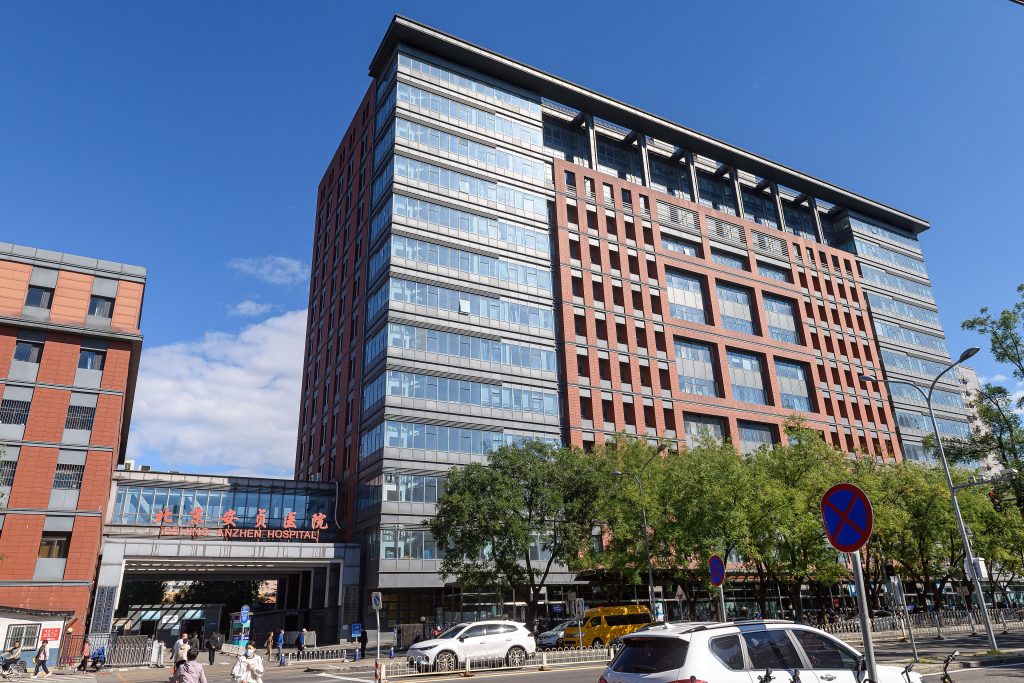
cover_alt: Exterior of Beijing Anzhen Hospital building
cover_credit: Photo: N509FZ / Wikimedia Commons (CC BY-SA 4.0)
word_count: 1398
–>
The printout that looked like a verdict
City hospitals have a special fluorescent honesty. My number eventually glowed. A nurse handed me paperwork and a blood-test summary that might as well have been written in weather code. I smiled the helpless smile of someone who can order food in Mandarin but cannot parse clinical abbreviations under stress.
That is when a volunteer student appeared with a badge and a calm voice — the kind of calm that is trained, not accidental.
Fear shrinks when words grow
She asked which language I preferred. English, I said, ashamed of my limits. She translated line by line without drama: what was normal range, what needed follow-up, what was merely a flag for the doctor to interpret. She did not diagnose. She did not speculate. She converted opacity into sentences I could carry into the consultation room.
My hands stopped performing earthquake.
The kindness infrastructure you do not market
Travel blogs sell skylines. Expats swap restaurant tips. Then one day your body books an appointment and you discover a city’s volunteer desks, bilingual signs that are incomplete, and young people who donate afternoon hours to strangers’ adrenaline. I thanked her too many times. She laughed and said it was practice for her major. Maybe so. It was also grace.
Practical notes for a calmer hospital hour
- Arrive with passport, payment methods, and a charged phone (Alipay/WeChat Pay).
- Screenshot your address and emergency contacts.
- Ask for volunteer/interpreter help early rather than after panic peaks.
- Write questions before the doctor’s door opens.
- Keep expectations modest: kindness is common; instant English fluency everywhere is not.
If your day began as tourism, guides like Chengdu first visit will not cover this wing of life — stories must.
After the consult
The doctor was brisk and decent. The volunteer had already reduced the cognitive load, so I could listen for action items instead of drowning in vocabulary. I walked out past other waiting faces and hoped each one found their own translator of one kind or another — human, app, friend on WeChat video.
Outside, ordinary traffic felt surreal, as it does when your morning included needles. I bought fruit from a stall because fruit felt like a gentle counterspell. The student had already vanished into the next ticket number.
What I remember instead of the lab number
I remember the badge. I remember her pencil underlining a range. I remember that my fear was taken seriously without being amplified. In a large Chinese city hospital, that combination is a form of public service as intimate as any temple incense.
If you ever sit under those lights with a printout that stares back, ask whether a volunteer desk exists. Accept help without apologizing for needing it. And if you are studying languages yourself, consider that fluency can be a flashlight you lend in bright, confusing corridors.
A closing note for fellow travelers
Stories like this one are not blueprints you must copy move for move. They are permission slips: to wake early, to refuse a drink kindly, to follow a smell, to ask for help at a gate, to treat a wrong ticket as a door. China will offer you bigger monuments than any single evening can hold. Keep at least one evening for the human-scale scene — a knock, a queue, a skewer, a translated line on a hospital page.
If you are sequencing festival travel around Mid-Autumn 2026 (25–27 September) and Golden Week (1–7 October), keep the calendar guides handy and leave slack in your plans. Slack is where the soft stories enter. Pack patience, a working payment app, and the humility to be corrected by strangers who mean well. Then write your own version when you get home — not for performance, for memory.
Field notes you can reuse next month
Travel days often fail in the boring places: dead phone batteries, unpaid metro gates, hotel counters that need a passport photo page ready, and holiday calendars that quietly insert makeup workdays. Before you chase the next memorable stranger, spend ten minutes on foundations. Set up Alipay and WeChat Pay for foreign visitors. Skim Golden Week 2026 vs Mid-Autumn so September and October do not blur into one expensive blur. If your route crosses a long national holiday, National Day Golden Week 2026 travel plan helps you expect crowds without resenting them.
Carry a light layer even when noon feels warm; evenings on water, hills, plazas, and overnight buses cool faster than city apps admit. Screenshot Chinese addresses for drivers. Tell one friend where you are going. Eat something small before you join a long queue so hunger does not make you sharp with people who are also tired. None of this is glamorous. All of it protects the soft moments — the grandma’s knock, the plaza gap in the dance circle, the ferry hand that lifts your bag — from being ruined by preventable friction.
When the story ends, write three lines in your phone: where you stood, what you smelled, what you would thank a stranger for. That tiny ritual turns a trip into something you can hand to your future self. Monuments will still be there next year. The exact sentence a retired couple said on a leaf-season bus will not. Keep the sentence.
A closing note for fellow travelers
Stories like this one are not blueprints you must copy move for move. They are permission slips: to wake early, to refuse a drink kindly, to follow a smell, to ask for help at a gate, to treat a wrong ticket as a door. China will offer you bigger monuments than any single evening can hold. Keep at least one evening for the human-scale scene — a knock, a queue, a skewer, a translated line on a hospital page.
If you are sequencing festival travel around Mid-Autumn 2026 (25–27 September) and Golden Week (1–7 October), keep the calendar guides handy and leave slack in your plans. Slack is where the soft stories enter. Pack patience, a working payment app, and the humility to be corrected by strangers who mean well. Then write your own version when you get home — not for performance, for memory.
Field notes you can reuse next month
Travel days often fail in the boring places: dead phone batteries, unpaid metro gates, hotel counters that need a passport photo page ready, and holiday calendars that quietly insert makeup workdays. Before you chase the next memorable stranger, spend ten minutes on foundations. Set up Alipay and WeChat Pay for foreign visitors. Skim Golden Week 2026 vs Mid-Autumn so September and October do not blur into one expensive blur. If your route crosses a long national holiday, National Day Golden Week 2026 travel plan helps you expect crowds without resenting them.
Carry a light layer even when noon feels warm; evenings on water, hills, plazas, and overnight buses cool faster than city apps admit. Screenshot Chinese addresses for drivers. Tell one friend where you are going. Eat something small before you join a long queue so hunger does not make you sharp with people who are also tired. None of this is glamorous. All of it protects the soft moments — the grandma’s knock, the plaza gap in the dance circle, the ferry hand that lifts your bag — from being ruined by preventable friction.
When the story ends, write three lines in your phone: where you stood, what you smelled, what you would thank a stranger for. That tiny ritual turns a trip into something you can hand to your future self. Monuments will still be there next year. The exact sentence a retired couple said on a leaf-season bus will not. Keep the sentence.


