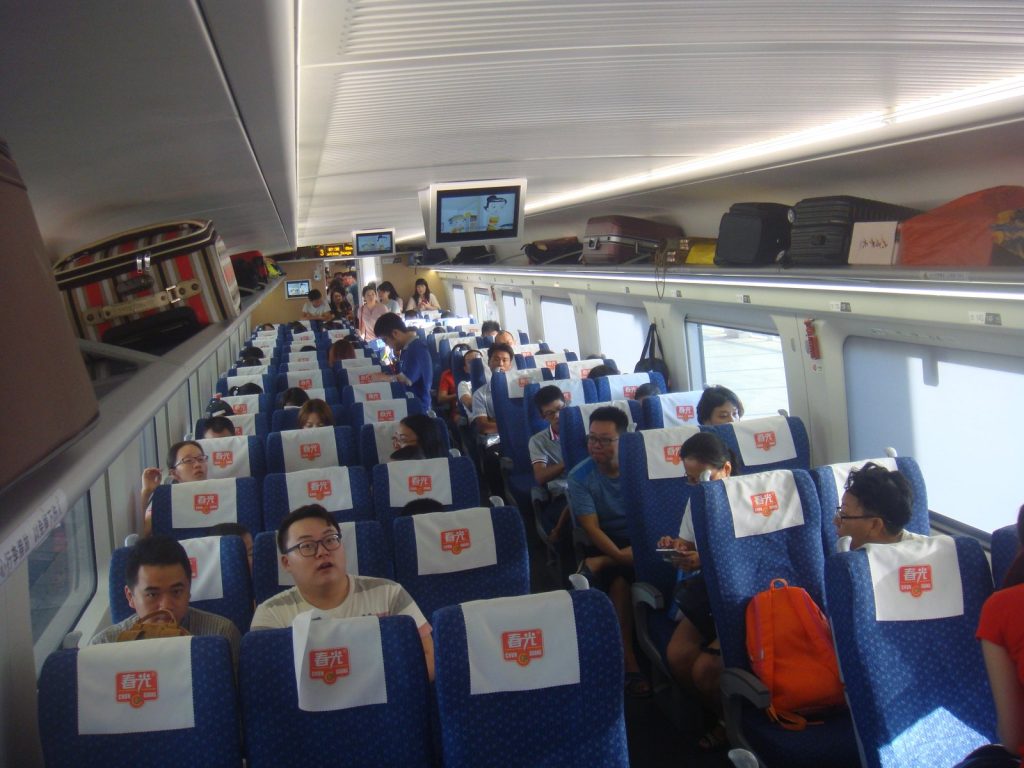
Why the quiet carriage feels different on Chinese HSR
China’s high-speed rail (高铁, gaotie) already feels calmer than many long-distance buses, but some trains set aside quiet carriages (静音车厢) where the expectation is closer to a library than a café. Foreigners who treat every seat like open-plan office space discover that the rules are social first and signage second.
This Culture guide is a practical etiquette walkthrough for English-speaking visitors and expats: what “quiet” usually means, how phone and kid behavior is judged, which food smells travel badly, when attendants step in, and how to plan around the 2026 autumn calendar. Pair it with booking basics in how visitors book a mainland train on 12306, overnight context in soft sleeper first overnight train, and the cautionary tale of a wrong train ticket that found a better city.
Spotting a quiet carriage before you board
Quiet carriages are not on every service. When they exist, you typically see:
- A 静音 or “Quiet” label on the carriage door or LED strip
- Seat-selection screens on 12306 or station kiosks marking quiet cars
- Onboard announcements reminding passengers to keep phones on silent and use headphones
If you booked a standard second-class seat and later notice your car is marked quiet, do not treat that as optional. The ticket did not invent the culture; the carriage did. If you need loud calls for work, choose a different car when seats remain, or move to the vestibule between cars for short conversations.
Before Golden Week rush, check your carriage number twice. Crowded platforms make it easy to board the adjacent car by habit — the same family of mistakes that turns up in wrong-train stories.
Phone volume: the number-one friction point
In a quiet carriage, the unwritten stack of phone rules looks like this:
1. Silent or vibrate — not “low ringtone with a cheerful melody”
2. Headphones for video and games — both ears preferred; one earbud blasting into the aisle still counts as noise
3. Calls as short and soft as possible — better: step to the connection area between carriages
4. Speakerphone is a hard no — even “just two minutes with Mum”
Chinese passengers often message rather than call. If you must take a work call, stand, gather your bag lightly if needed, and walk toward the door. Whispering into a phone while leaning over your neighbor’s tray table is still more disruptive than a two-minute vestibule chat.
Video calls with laptop speakers are the fastest way to collect stares. Use a headset, or wait until you change cars at the next stop if the call is long.
Kids, snacks, and the “happy chaos” line
Families ride quiet carriages too. The etiquette is not “no children”; it is containment.
Helpful patterns parents (and the adults sitting nearby) usually follow:
- Soft toys and tablets with headphones, not cartoon audio filling the row
- Quick redirects when a child starts practicing vocabulary at full volume
- Snacks that do not involve opening six crackling bags in a row during nap hours
- Acceptance that a brief cry happens — and that the recovery should be prompt
If you are the passenger without kids, patience is part of the deal. A single stern lecture from a stranger rarely improves anyone’s day. If noise becomes sustained and the parent seems unaware, a polite word to the attendant is usually cleaner than a public confrontation.
For longer overnight-style trips on conventional sleepers, the social contract is different again — see hard sleeper first-timer guide and soft sleeper conversation until Zhengzhou. Quiet HSR cars sit closer to “shared study hall” than “shared dormitory.”
Food smells that travel farther than you think
Eating is allowed on most Chinese trains, including many quiet cars, but smell is etiquette. Foods that repeatedly annoy nearby seats:
- Strong mala or hotpot takeaway with open lids
- Heavily garlicked or fermented snacks
- Durian in any form (some lines and stations treat it as a hard reject)
- Instant noodles with the lid fully peeled back under someone’s nose
Milder options — bread, fruit without aggressive peel spray, sealed bakery items — usually pass without comment. Wipe the tray table after sticky sauces. Dispose of packaging in the bin areas rather than building a tower under the seat.
If you bought station food in a rush before Mid-Autumn or Golden Week queues, eat the loudest-smelling items before boarding when you can. Your future self in seat 12C will thank you.
Volume from devices that are not phones
Quiet carriage friction is not only phones:
- Laptop keyboard hammering during a late-night coding session
- Mechanical keyboard tourists who treat the tray table like a gaming café
- Bluetooth speakers “just for background music”
- Voice messages played on loudspeaker in WeChat — a classic mistake
WeChat voice notes are convenient; in a quiet car, hold the phone to your ear or use earphones. Playing a string of 30-second voice messages into the aisle is the same category as speakerphone.
When staff intervene — and what they usually say
Attendants (乘务员) walk the aisle with trolleys and safety checks. They intervene when:
- A call stays loud after a glance or soft reminder
- A video is playing without headphones
- An argument escalates
- Luggage blocks the aisle in a way that creates noise and safety issues
Typical intervention is calm and formulaic: a reminder that this is a quiet carriage, a request to use headphones, or a suggestion to take the call between cars. Escalation to moving seats is uncommon but possible on busy holiday services when another seat exists.
Foreign passengers sometimes freeze because they missed the Mandarin. If you see an attendant gesture toward your phone, that is your cue — mute, headphone, or stand up. You do not need a perfect apology speech; adjusting quickly is the apology.
Luggage, reclining, and aisle manners
Quiet is acoustic, but physical etiquette supports it:
- Store large suitcases in the racks or designated areas without dragging wheels over toes repeatedly
- Recline slowly and check the laptop behind you
- Keep aisle conversations brief; the connection area exists for a reason
- Avoid practicing musical instruments, even “quietly,” unless you enjoy becoming a legend for the wrong reasons
During peak weeks — Mid-Autumn Friday 25 September 2026 (roughly 25–27 September), makeup work 20 September, Golden Week 1–7 October, makeup 10 October, per 国办发明电〔2025〕7号 — trains fill earlier. Boarding chaos rises. Quiet-carriage rules do not relax because the platform is loud; if anything, people inside the car want the contrast.
How to choose seats if you care about noise
Practical booking tips:
- Prefer quiet cars when 12306 shows them and your trip is for reading or sleeping
- Window seats reduce aisle traffic noise; aisle seats make vestibule exits easier for calls
- Avoid sitting directly beside the wheelchair / larger-space areas if you want maximum stillness — more movement happens there
- If traveling with a toddler who cannot do headphones yet, a non-quiet car may be kinder to everyone
If you only discover the quiet label after boarding with a loud group call scheduled, message your meeting: “On a quiet HSR car — voice note or text for 40 minutes.” Colleagues in China usually understand train culture better than you fear.
A short script set you can actually use
You do not need perfect Mandarin. Soft tone matters more.
- To attendant: “不好意思,请问可以去车厢连接处打电话吗?” (Excuse me, may I take a call in the connection area?)
- To a neighbor if your child was loud: “不好意思啊。” (Sorry about that.)
- If someone asks you to lower volume: “好的,谢谢提醒。” (Okay, thanks for the reminder.)
A smile plus immediate compliance beats a debate about “but other countries…”
Common foreigner myths
Myth: Quiet carriage means absolute silence like an exam hall.
Reality: Soft conversation happens. Continuous loud media does not.
Myth: Staff will never say anything to a foreigner.
Reality: They will. Uniforms do not skip your row.
Myth: Buying first class automatically solves etiquette.
Reality: Higher class can be quieter, but quiet-carriage rules are carriage-specific. Read the label.
Myth: Holiday trains cancel quiet rules.
Reality: Holiday trains make people more protective of the remaining calm.
Practical takeaway checklist
Before you sit:
1. Confirm carriage number and any 静音 marking
2. Switch phone to silent; pack headphones where you can reach them
3. Plan calls for vestibule breaks
4. Choose low-smell food if eating onboard
5. Brief kids / travel partners on the vibe in one sentence
Quiet carriages are one of the kinder design choices on Chinese HSR: a shared agreement that some journeys can be for rest. Treat that agreement as hospitality you return, not as a restriction you negotiate. Book early for autumn festival weeks, keep the volume down, and you will arrive less frayed than the platform suggested.
Questions about living and traveling in China? Write Lovely China at [email protected]. Lovely China was founded in 2025 to help English-speaking visitors and expats with practical, sourced guides — not theater, and not invented rules.