The night air over West Lake carries the scent of lotus blossoms and wet stone. I am standing on the Broken Bridge just after ten, the white pagoda of Leifeng glowing amber across the water. A couple beside me points upward, tracing a line between two bright stars. “Niulang,” the man says. “Zhinü.” The Milky Way stretches pale above the willow line. Tomorrow is the seventh day of the seventh lunar month. The magpies, so the story goes, have already left their roosts to form a bridge across the sky.
Where the Legend Lives on the Lake
West Lake does not just host the Cowherd and Weaver Girl story; it claims a piece of it. Local tradition places the celestial reunion right here, on the stretch of water between the Broken Bridge and the Su Causeway. The logic is simple to a Hangzhou native: the lake *is* the Heavenly River. Its curve mimics the Milky Way on a star chart. The two small islands, Three Pools Mirroring the Moon and Mid-Lake Pavilion, become the separated lovers. On Qixi night, the reflection of the twin pagodas—Leifeng and Baochu—shimmers in the dark water like the eyes of Niulang and Zhinü finally meeting.
Walking the Qixi Route
If you want to follow the festival as locals do, start at the **Leifeng Pagoda** base around sunset. The climb is steep, but the platform gives you the full bowl of the lake turning gold. From there, walk the Su Causeway north. Vendors set up folding tables along the railing selling **qiao guo**—crisp, twisted pastries fried in peanut oil and dusted with sesame sugar. They are greasy, sweet, and essential. You eat them walking, wiping fingers on a tissue, watching the lanterns flicker on the tour boats below.
Arrive at Leifeng Pagoda by 6:30 PM to beat the tour groups.
Buy a bag of warm qiao guo from the vendor near the third pavilion on Su Causeway.
Cross the Broken Bridge around 8:00 PM when the lights on the opposite shore come on.
Find a gap in the railing at Mid-Lake Pavilion (take the 10-minute ferry from Hubin Park) to see the “Magpie Bridge” reflection—two pagoda lights converging in the water.
Stay past 10:00 PM. The crowds thin, the boat engines cut, and you can actually hear the water slap the pilings.
What Locals Actually Do
Tour groups gather for the laser show at Three Pools. Locals avoid it. A Hangzhou auntie I know brings a folding stool and a thermos of chrysanthemum tea to the **Bai Causeway** instead. She sits facing west, where the sky opens over the hills. Her granddaughter threads a needle under a phone flashlight—an old Qixi test of dexterity. If the thread passes clean through the eye by moonlight, the Weaver Girl blesses your hands for the year. No one I met actually believes the magic, but everyone does it. It is a way to slow down.
Young couples head to **Chenghuang Pavilion** on Wushan Hill. The climb is brutal—hundreds of stone steps—but the terrace looks down on the whole lake basin. You see the magpie-bridge reflection perfectly from up there: two golden lines cutting the black water. Vendors sell **kongming lanterns** near the top. Write a wish, light the fuel cell, hold it until the hot air tugs. Let go. Watch it join a hundred others rising toward Vega and Altair. Fire marshals patrol the railings now; they will confiscate lanterns if the wind picks up. Keep the receipt if you want to argue.
The Temple Most Visitors Miss
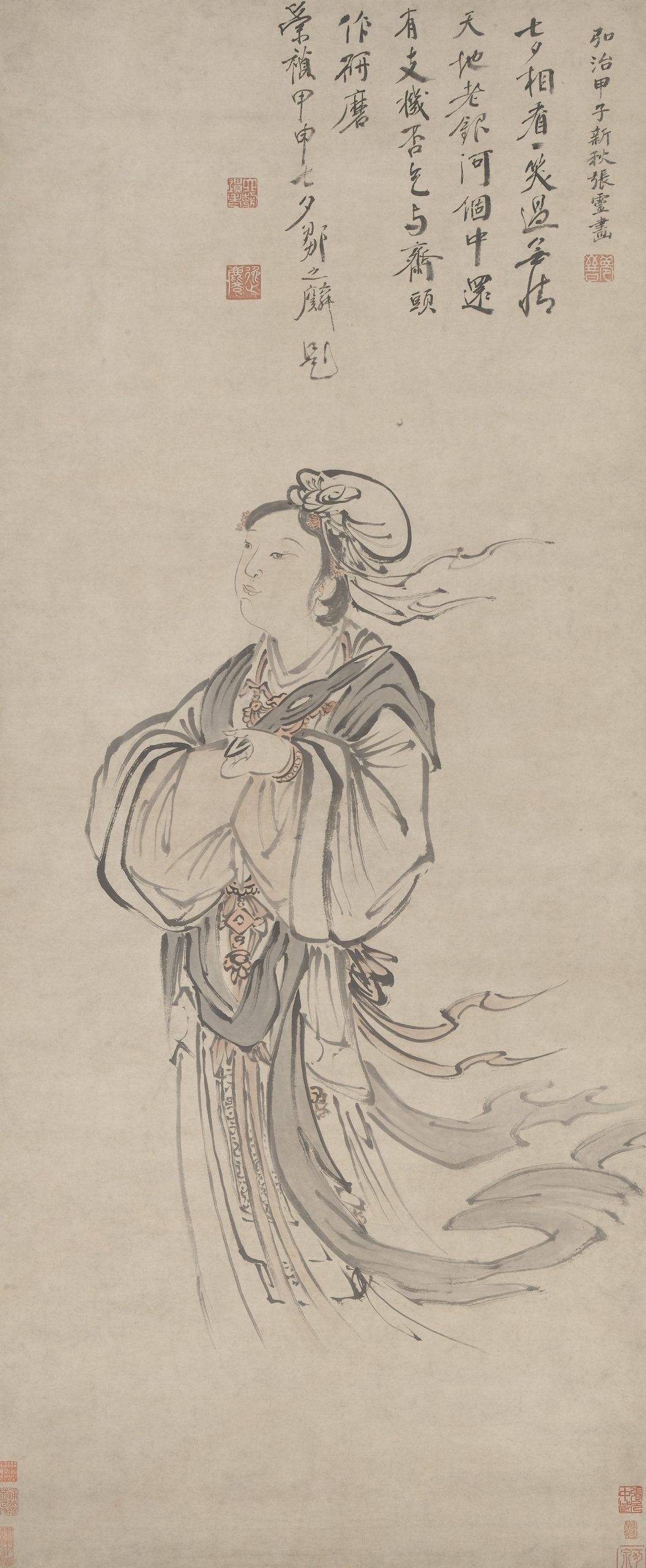
Down a narrow lane behind the **Yue Fei Temple** sits a small shrine dedicated to the Weaver Girl herself. No tour bus stops here. The sign reads *Zhinü Ci* in faded red lacquer. Inside, the statue is modest—wood, painted robes, hands raised as if threading a loom. Women leave spools of red thread, thimbles, and tiny embroidered shoes at her feet. An old woman tends the incense burner. She told me the temple dates to the Southern Song, rebuilt after the Taiping Rebellion burned the original. “The Weaver Girl protects hands,” she said. “Not just embroidery. Surgery. Piano. Coding now, too.” She laughed, tapping her smartphone.
Mistakes That Ruin the Night
Taking a sightseeing boat during the peak hour (7:30–9:00 PM). You will be stuck in a floating traffic jam, diesel fumes masking the lotus scent.
Wearing new leather loafers. The causeways are long, the stone is slick with humidity, and the crowds push you off rhythm.
Expecting a “magpie bridge” prop. There is no physical bridge. The bridge is the reflection, the star line, or the needle thread you just managed to pass.
Buying “Qixi roses” from hawkers on the Broken Bridge. They are flown in from Yunnan, marked up 300%, and wilt before midnight. Bring a single jasmine sprig from the flower market at Wushan Square instead.
Leaving before the last ferry from Mid-Lake Pavilion (usually 10:30 PM). The walk back along the causeway in the dark, with the pagoda lights behind you, is the only part that feels like the story.
A Story That Stays
I stood on the Bai Causeway last year with the auntie and her granddaughter. The girl missed the needle eye three times. “Again,” the auntie said, handing her the thread. “The Weaver Girl has all night.” The lake was ink. The two pagoda reflections trembled on the surface, separate, then merged as a boat passed, then separated again. No lasers. No loudspeakers. Just the sound of a needle pulling through silk, and the weight of a very old hope settling on your shoulders. That is the version of the story West Lake keeps.