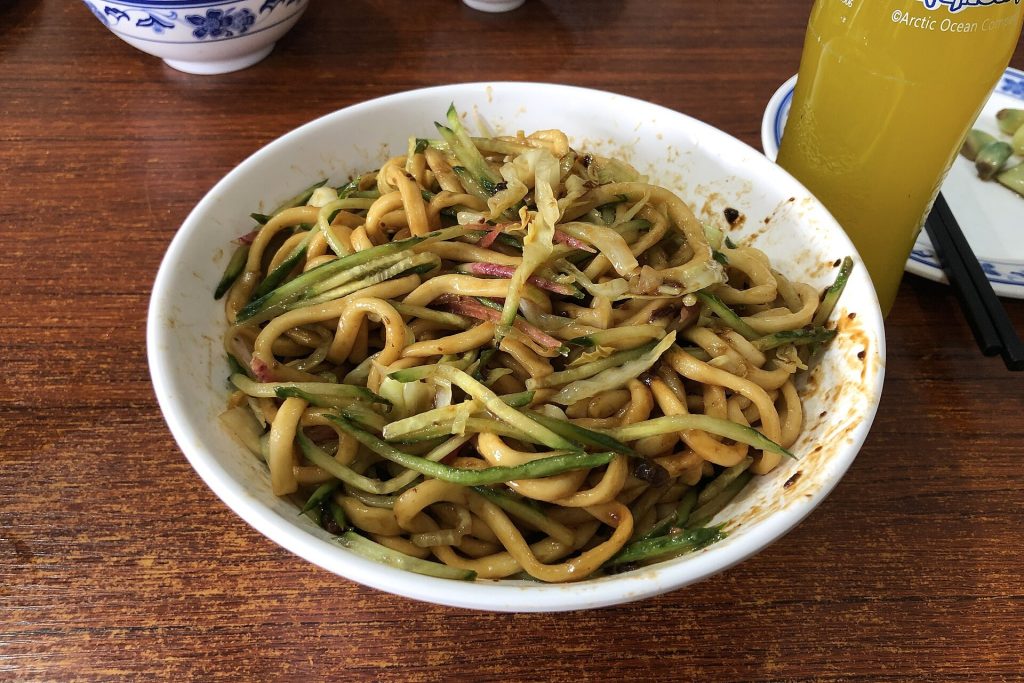
Zhajiangmian—Beijing’s fried sauce noodles—looks simple until the toppings tray arrives. This Lovely China food guide helps first-timers order calmly: sauce richness, vegetable toppings, dry-style mixing, and polite restaurant scripts. No fake prices; verify menu boards in person.
Pair with Peking duck first-timers, Beijing jianbing first-timers, chopsticks etiquette, and Beijing first-visit guide.
What you are ordering
A bowl of noodles topped with savory fermented soybean paste sauce, usually with minced pork, plus fresh vegetable toppings you mix yourself. It is comfort food, not a banquet ceremony (Chinese banquet seating etiquette). Think weeknight classic rather than imperial spectacle.
Dry-style mixing is the point
Staff may present sauce and toppings separately. Mix thoroughly so every strand gets coat—not a dry island at the bottom. If the sauce looks intense, start with part of it, taste, then add more. You are allowed to go slower than locals who mix like pilots.
Toppings tray literacy
Cucumber shreds, radish, bean sprouts, and other fresh bits cut the richness. Add what you recognize; ask before mystery pickles if you have allergies. Vegetarian sauce versions exist in some shops—ask plainly rather than assuming.
How to order without theatre
1. Point at zhajiangmian on the menu or a neighboring bowl.
2. Say if you want less sauce or no raw onion if that matters to you.
3. Confirm noodle portion language if solo—some bowls are generous.
4. Pair with simple sides or a soft drink/tea; you do not need a duck banquet every night (Peking duck first-timers).
5. Pay how the shop prefers—QR or cash (Alipay and WeChat Pay hub, when you still need cash).
Texture and pace
These noodles reward steady eating while hot. Chopstick comfort helps (chopsticks etiquette). If you drop a piece of cucumber, it is not an international incident—napkin, continue.
Where it fits in a Beijing food day
Jianbing for breakfast (Beijing jianbing first-timers), zhajiangmian for a practical lunch, duck for a planned dinner is a classic tourist arc—but any one alone is enough. Hutong shops and casual chains both appear; pick cleanliness and turnover you trust over the loudest English sandwich board.
Common mistakes
Eating toppings and sauce as separate courses without mixing; ordering a second heavy dish immediately after a huge bowl; and filming the entire kitchen without asking.
November note
Warm bowls shine after a windy Jingshan or hutong morning (Beijing November weekend). Carry a tissue pack; sesame-dark sauce loves light jackets.
Angle: order Beijing zhajiangmian as a first-timer—sauce, toppings, mixing—practical, not a recipe essay.
Ground-level reminders for this topic
Stay flexible when a counter, app screen, or staff instruction disagrees with a blog. Lovely China orients travellers; live official pages and bilingual signs win. Keep China travel tools page, essential apps for foreigners, and Alipay and WeChat Pay hub bookmarked so logistics stay boring while you focus on the angle of this guide: ordering classic Beijing zhajiangmian (fried sauce noodles) as a foreigner—sauce levels, toppings, dry vs soup styles, and calm restaurant scripts.
Documents and screenshots worth keeping
Before you lose Wi-Fi, capture passport biodata clarity, booking codes, Chinese addresses, and any payment success screens (hotel Wi-Fi login with passport, offline maps for foreigners). Hotel desks and station staff solve problems faster when you show one clear screen at a time rather than five half-loaded apps (hotel registration for foreigners).
Weather, crowds, and November pacing
November and early December often mean cooler mornings, clearer light, and earlier sunsets across much of eastern and northern China. Weekend leisure crowds thicken at iconic spots—leave buffers, wear layers, and protect phone battery for maps (Amap Baidu English mode, power bank airport security). City hubs like Beijing first-visit guide and Shanghai first-visit guide punish tight back-to-back plans.
Related Lovely China reading
For payments, start with Alipay and WeChat Pay hub and WeChat Pay vs Alipay for tourists. For trains, keep high-speed rail first-timers guide and 12306 passport signup for foreigners handy. City hubs: Beijing first-visit guide, Shanghai first-visit guide. Connectivity: roaming vs local SIM honest guide, pocket Wi-Fi vs eSIM for China, offline maps for foreigners. Bookmark China travel tools page.
Practical checklist
- Confirm official rules on the relevant government, park, airline, or bank page near your travel week
- Screenshot bookings, tickets, and QR codes while you still have stable Wi-Fi
- Save hotel and attraction names in Chinese characters in your phone notes
- Carry passport, a backup payment method, and a small cash float (why cash is still needed)
- Test one small mobile payment before you rely on wallets at a gate or taxi
- Keep the China travel tools page page bookmarked for related Lovely China hubs
FAQ
Do I have to mix the toppings myself?
Usually yes—mix sauce and vegetables through the noodles so every strand gets coated.
Is this the same as Peking duck?
No. Zhajiangmian is a casual noodle classic; duck is a separate planned meal.
What should I screenshot before I lose Wi-Fi?
Restaurant Chinese name, map pin, and any allergen notes you care about.
Notes for late 2026 travellers
November and early December bring cooler mornings, earlier sunsets, and comfortable walking weather across much of eastern and central China. Pack layers and leave extra time on clear weekends at popular sights.
This article does not invent ticket prices, opening hours, processing times, consular fees, or official statistics. When a number matters, verify it on the official site, app screen, or ticket board near your travel week.
If an official rule page disagrees with this guide, follow the official page. Lovely China orients English-speaking travellers; we are not an immigration, banking, or medical authority.