The minibus shuddered around a hairpin bend, and the valley dropped away — turquoise water stacked in terraces, waterfalls fanning over limestone lips, prayer flags snapping above a wooden footbridge. My seatmate, a Chengdu teacher on her third visit, tapped the window. “Wait for the light to hit Five Flower Lake,” she said. “That’s when the bottom turns into a map.” I had flown into Jiuzhai Huanglong Airport at dawn, taken the shuttle to the park gate, and now the bus was climbing the Y‑shaped spine of the reserve. The air smelled of wet pine and cold stone. This was not a postcard. It was a place that demanded legs, lungs, and patience.
When to Go
Autumn arrives early in the Min Shan. By the ninth lunar month the maples and birches flare crimson and gold, and the lakes hold those colors like ink in water. Crowds peak during the Golden Week holiday in early October; if you can shift your dates to late September or the first week of the tenth lunar month, the boardwalks breathe. Winter is quiet — frozen falls, few tourists, and the chance to see the valley under snow — but the shuttle runs on a reduced schedule and some high trails close. Spring brings rhododendron blooms and swelling meltwater, yet the weather flips fast: sun at 9 a.m., hail by noon. Summer is green and wet; landslides occasionally shut the road from Chengdu. For the clearest light on water, aim for the dry weeks after the autumn equinox.
Getting There
Most travelers fly into Jiuzhai Huanglong Airport (JZH), a 40‑minute hop from Chengdu. From the terminal a park‑run shuttle departs every 30 minutes for the main gate; the ride takes 90 minutes along a cliff‑hugging highway. If you prefer ground travel, the expressway from Chengdu now cuts the drive to roughly eight hours — two hours faster than the old mountain road — but rockfalls after heavy rain can add delays. Overnight buses leave Chengdu’s Xinnanmen station around 8 p.m. and arrive at the park entrance near dawn. A few hardy souls still hire a private driver for the scenic loop through Songpan and Huanglong, turning the transfer into a two‑day side trip. Whichever route you choose, buy your park entry ticket online the night before; the QR code saves an hour at the gate.
Navigating the Valleys
The reserve stretches 80 kilometers in a Y shape: Shuzheng Valley to the north, Rize Valley branching southeast, Zechawa Valley stretching southwest. Electric sightseeing buses run the length of each arm, stopping at every major site. A single‑day ticket covers unlimited rides. Strategy matters. Board the first bus at 7 a.m. and ride straight to the end of Rize Valley — Primeval Forest, Swan Lake, Arrow Bamboo Lake — then walk downhill through Panda Lake and Five Flower Lake. The light hits Five Flower best between 10 a.m. and noon. After lunch at the Nuorilang service center, take the bus up Zechawa to Long Lake, then descend past Five‑Color Pool. Finish in Shuzheng Valley where the boardwalks thread between Nuorilang Falls, Shuzheng Lakes, and the Tibetan villages of Heye and Shuzheng. If you have two days, reverse the order on day two and hike the high trail from Zechawa to Rize for views the buses miss.
What to See and Do
- Five Flower Lake (Wuhua Hai) — shallow, crystal water over a submerged forest of ancient trunks; the bottom shifts from jade to amber as the sun moves.
- Nuorilang Waterfall — 320 meters wide, a curtain of white that rainbows in the afternoon; the viewing platform fills fast, so arrive early.
- Long Lake (Chang Hai) — the highest and largest lake, ringed by snow peaks; no outlet, fed only by snowmelt and rain.
- Zechawa Valley high trail — a 6‑kilometer ridge walk with no bus access; bring water, snacks, and a wind layer.
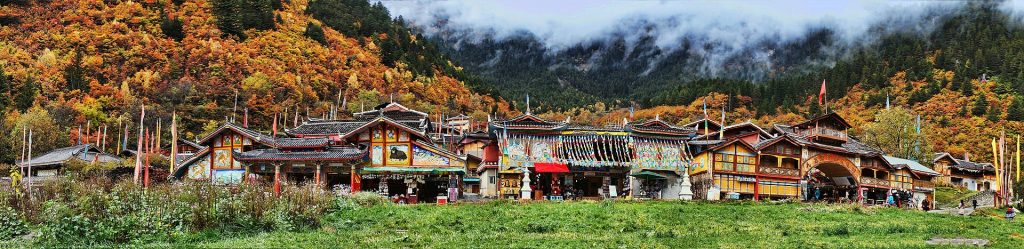
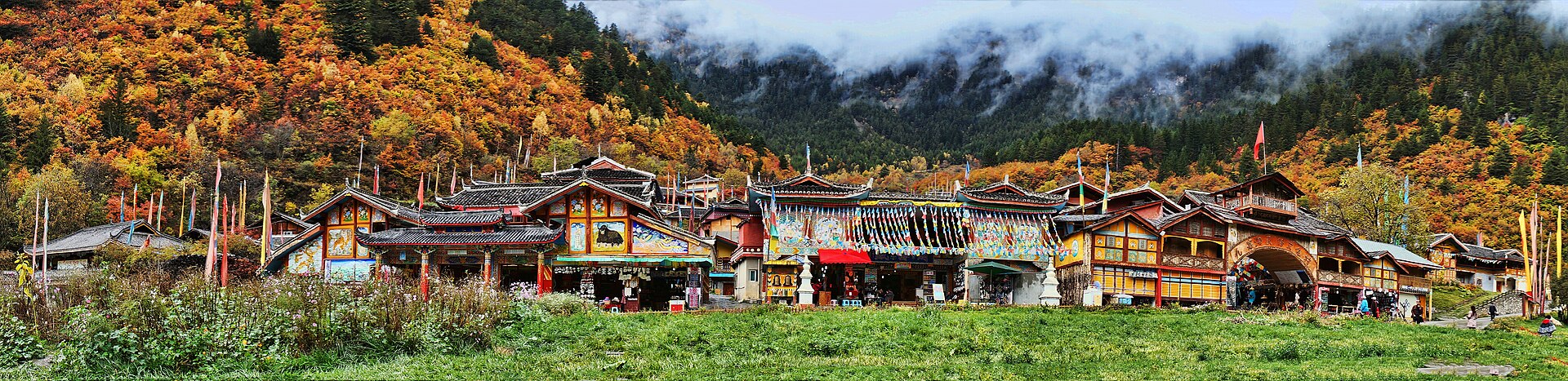
- Tibetan villages — Heye, Shuzheng, and Zechawa villages still house families who herd yak and weave wool; respect privacy, ask before photographing interiors.
- Giant panda habitat signs — you will not see a panda, but interpretive boards along the Rize trail explain the corridor they use.
Eating and Sleeping
Inside the park the Nuorilang cafeteria serves passable Sichuan set meals — rice, stir‑fried greens, spicy tofu — for about 60 yuan. Lines snake at noon; eat at 11 a.m. or pack instant noodles and a thermos. Outside the gate, Pengfeng village has a cluster of Tibetan‑run guesthouses. Rooms are simple: heated kang beds, shared bathrooms, and a communal dining hall where the hostess ladles yak butter tea and hand‑pulled noodles into wooden bowls. A double room with breakfast runs 200‑300 yuan in shoulder season. Book by WeChat or through a Chengdu agent; walk‑ins risk sleeping in the lobby during Golden Week. For more comfort, the Sheraton and InterContinental sit near the airport, 90 minutes from the gate — convenient if you fly in late and want a hot shower before the first bus.
Practical Tips and Common Mistakes
- Altitude — the gate sits at 2,000 meters; Long Lake tops 3,100. Spend a night in Chengdu or Songpan first, hydrate, and move slowly on day one.
- Footwear — boardwalks are slick with mist; trail sections turn muddy after rain. Waterproof hiking shoes beat sneakers.
- Weather gear — a packable down jacket and rain shell live in my daypack year‑round. Temperature can swing 15 degrees between valley floor and ridge.
- Cash and connectivity — mobile signal drops in deep valleys. Carry 500 yuan cash for village snacks, toilet fees, and the occasional horse‑ride offer.
- Ticket trap — the park entry ticket and the sightseeing bus ticket are separate. Buy both online; the bus pass sells out on peak days.
- Trash — no bins on trails. Pack out every wrapper, tissue, and bottle. Rangers fine visibly littering visitors.
- Pacing — trying to hit every lake in one day leaves you exhausted on the bus. Pick two valleys, walk the boardwalks, sit by a shore, and let the water do the work.
On my last afternoon I lingered at Five‑Color Pool, a jewel no larger than a courtyard, its water so clear I could count pebbles ten meters down. An elderly Tibetan woman in a wool apron passed, spinning a prayer wheel, and nodded at my camera. No words needed. The valley does not perform; it simply exists, layered in mineral light and silence. If you walk slowly enough, you start to hear it.