The kitchen smells of hot oil and garlic the moment the first batch hits the pan. A thin crust forms on the bottom while steam curls up the sides, sealing the juices inside. When you lift the lid, the dumplings sit in a golden skirt, each one pleated like a tiny purse. This is the sound of a Sunday afternoon in my apartment — spatula scraping, water sizzling, chopsticks clicking against ceramic plates.
What Arrives on the Table
A proper plate of pot stickers arrives shimmering. The bottoms are burnished bronze, crisp enough to crack under a chopstick tip. The tops stay pale and tender, steamed soft by the trapped moisture. Inside, the filling holds together — juicy, not soggy — with ginger and scallion cutting through the richness. A dipping bowl sits on the side: black vinegar, a splash of soy, chili oil, and a few threads of julienned ginger. You pick one up, dip the crisp side, and bite. The crust shatters, then the steam hits your fingers, then the pork and cabbage rush in, hot and salty and sweet all at once.
How It Should Taste and Look
The wrapper should be thin but resilient, chewy on the steamed side and glass-crisp on the fried side. No raw flour taste. The filling stays distinct — meat separate from vegetable, each piece identifiable. If the juice runs clear when you bite, the meat was cooked through before wrapping. If it floods the plate, the filling was too wet. Color matters: pork turns pale pink, shrimp curls coral, tofu stays ivory. Scallion flecks stay green, not gray. The skirt — that lace of starch and water that forms between dumplings — should be golden, not burned, and lift in one piece when you slide the spatula under.
Home Method: From Filling to Pan
Start with cold filling. Warm filling steams the wrapper before it hits the oil, and you lose the crisp. I mix everything the night before and keep it in a covered bowl in the fridge. The wrappers come out of the freezer an hour ahead — thawed but still cool. Set up a station: a tray dusted with cornstarch, a small bowl of water, a damp towel to cover the finished ones.
- Ground pork — 300 grams, 20 percent fat
- Napa cabbage — 150 grams, finely chopped, salted ten minutes and squeezed dry in a clean towel
- Garlic — three cloves, minced to paste
- Ginger — one thumb, grated
- Scallions — three stalks, white and green parts chopped
- Soy sauce — one tablespoon
- Shaoxing wine — one teaspoon
- Sesame oil — one teaspoon
- White pepper — half teaspoon
- Salt — half teaspoon, or to taste
- One egg, beaten
- Cornstarch — one tablespoon, mixed with one tablespoon water
- Round dumpling wrappers — 40 to 50 pieces
- Neutral oil — for the pan
- Water — 120 milliliters for steaming
- Cornstarch slurry — one teaspoon cornstarch in 120 milliliters water, for the skirt
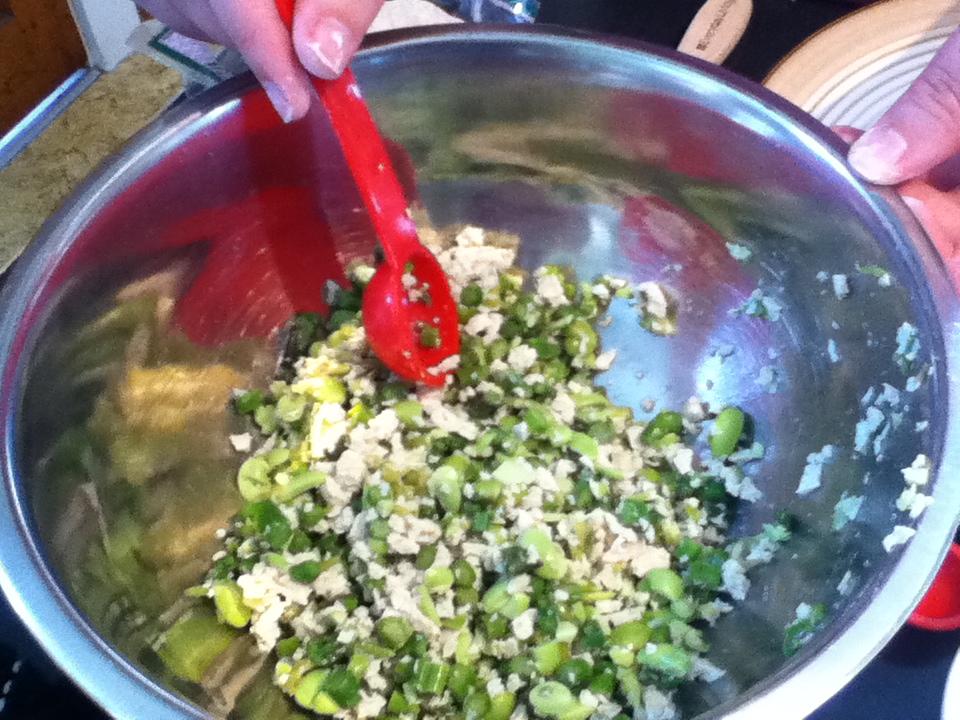
Mix the pork with salt first. Stir in one direction until it turns sticky — two minutes by hand. Add the wine, soy, sesame oil, white pepper, egg, and cornstarch slurry. Stir again until the mixture grabs the bowl. Fold in the cabbage, garlic, ginger, and scallion. Taste a pea-sized bit cooked in the microwave. Adjust salt.
To wrap: hold a wrapper in your non-dominant hand. Place a heaping teaspoon of filling in the center. Dip a fingertip in water and paint half the rim. Fold over, pinch the center shut. Pleat toward the center from the right side, then the left. Press each pleat firmly. Set on the cornstarch tray, pleated side up. Keep covered.
Heat a 28-centimeter nonstick skillet over medium-high. Swirl two tablespoons oil. When it shimmers, place dumplings pleated side up in concentric circles, touching but not crowded. Fry two minutes until the bottoms turn gold. Pour in the plain water, cover immediately, and lower heat to medium. Steam eight minutes. Uncover. The water is gone. Drizzle the cornstarch slurry around the edges. Cook uncovered two more minutes until the skirt sets and releases from the pan. Invert a plate over the skillet. Flip fast. The dumplings land skirt-side up, golden and laced.
Restaurant Ordering: What to Ask For
At a northeastern dumpling house, you order by the liang — fifty grams, roughly ten pieces. Say “shui jiao” if you want them boiled, “guo tie” for pan-fried. Specify the filling: “zhu rou bai cai” for pork and cabbage, “san xian” for the three-delicacy mix of pork, shrimp, and chive. Ask for “cu vinegar” on the side — the aged black kind, not the sharp white. If the server brings chili oil in a spoon, you’re in a good spot. Watch the table next to you. If they’re using scissors to cut the dumplings, the skins are thick. You want the place where they pick them up whole with chopsticks and the wrapper holds.
Lunchtime crowds mean fresh batches. Evening after eight, the wrappers may have sat steaming in a bamboo tray. Go early. Order a side of cold smashed cucumber with garlic — it cuts the oil. And don’t fill up on the first plate. The second batch, made to order while you eat the first, is always better.
Mistakes Beginners Make
Overfilling is the first one. A dumpling that bursts in the pan leaks juice into the oil, and the skirt burns before the inside cooks. One teaspoon. No more. Second: skipping the cabbage squeeze. Wet cabbage turns the filling to soup. Third: wrapping too far ahead. The moisture seeps into the wrapper, and they stick to the tray in a clump. Make, cook, repeat. Fourth: crowding the pan. They need a sliver of space or the steam can’t circulate and the bottoms steam instead of fry. Fifth: lifting the lid during the steam phase. Every peek adds two minutes. Sixth: using boiling water for the steam step. It splatters and cools the pan. Room-temperature water. Seventh: forgetting the cornstarch slurry at the end. Without it, you get loose dumplings, not a skirt. The skirt is half the point.
My first batch stuck to the pan in a single mass. I scraped them out with a spoon, ugly and torn, but the flavor was there. The second batch, I waited for the oil to shimmer. The third, I measured the water. By the time the autumn moon was full, I could flip the pan without looking. Now the neighbors knock when they smell the oil heat up.