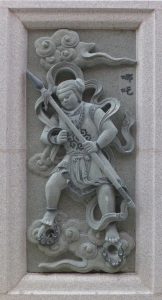
I stood in the back courtyard of a Qingdao temple during the Double Ninth Festival, watching an old man burn paper money beside a statue of a beggar leaning on an iron crutch. Incense curled around the figure’s gourd bottle. A grandmother nearby pressed a peach-shaped bun into her grandson’s hand and whispered the name Li Tieguai. That was the first time the Eight Immortals stopped being names on a souvenir tea towel and started looking like neighbors who might show up at your door.
Who they are and why they matter
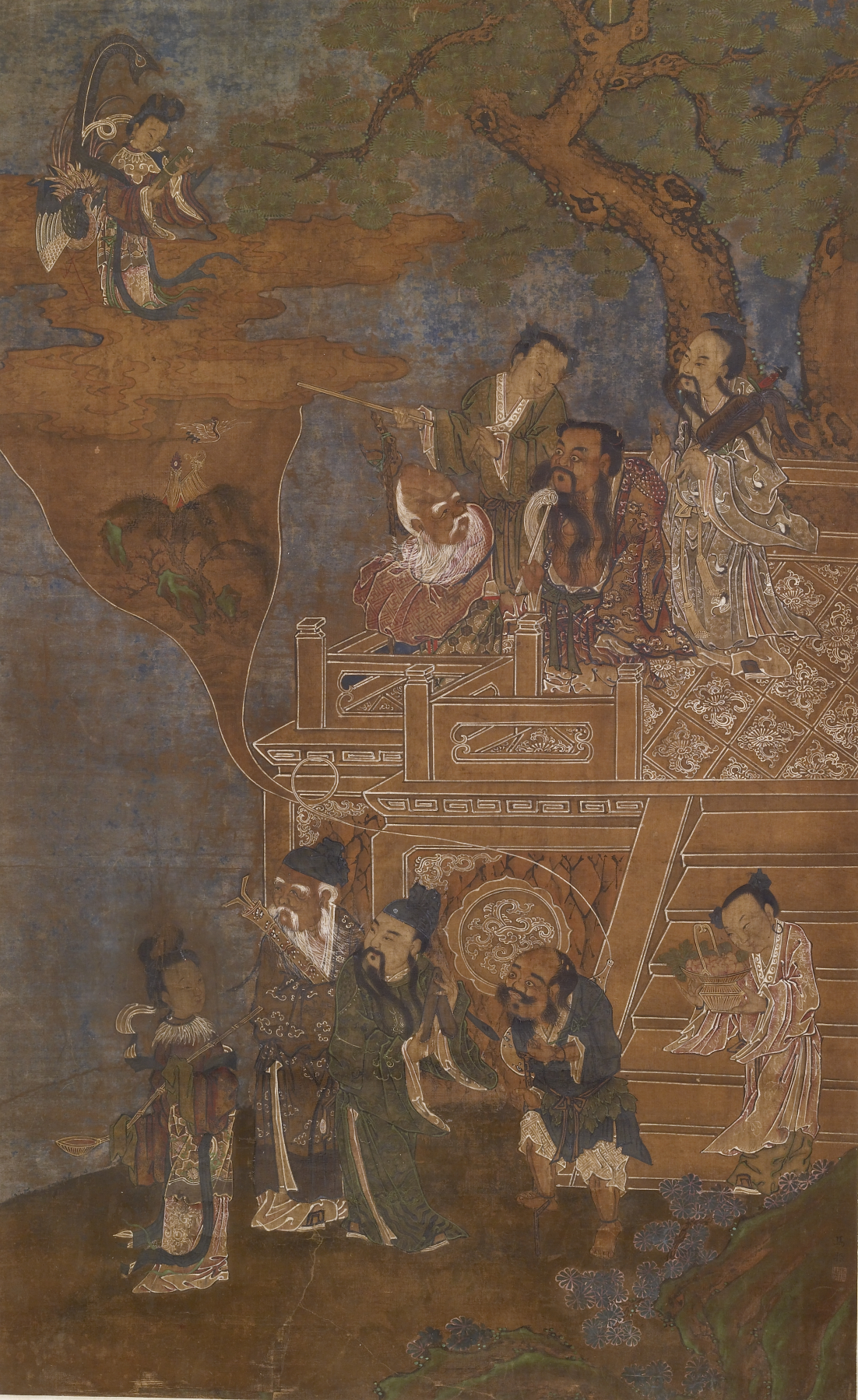
The Eight Immortals are not distant deities seated on clouds. They are former mortals — scholars, drunks, nobles, a flower seller, a crippled beggar — who stumbled into immortality through accident, obsession, or sheer stubbornness. Taoists revere them as xian, beings who refined their qi until the body became light enough to leave the ground. Secular culture treats them as patrons of everyday trades: florists pray to Lan Caihe, musicians keep Han Xiangzi’s flute on the wall, doctors still invoke Li Tieguai’s gourd when a prescription fails. You will see them painted on temple beams, carved into restaurant screens, printed on mahjong tiles, and molded into the dough figurines sold at temple fairs.
Spotting them in the wild
Each immortal carries a signature vessel, the “Covert Eight Immortals,” and learning those objects turns a confusing procession of statues into a readable cast.
Li Tieguai — iron crutch and a gourd bottle that pours medicine for the poor.
Zhongli Quan — a banana-leaf fan that can revive the dead or summon wind.
Zhang Guolao — a paper donkey he folds into his pocket, then unfolds to ride backward.
Lü Dongbin — a double-edged sword slung across his back; he is the scholar-leader who still fails the occasional morality test.
Han Xiangzi — a jade flute that makes flowers bloom in winter.
Cao Guojiu — castanets or a jade tablet, marks of his former court rank.
Lan Caihe — a flower basket, sometimes a hoe, gender fluid across dynasties.
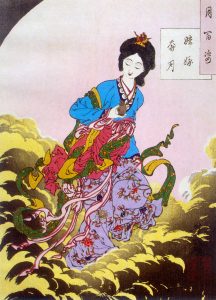
He Xiangu — a lotus blossom or a fenghuang feather, the sole woman in most modern lineups.
Next time you walk through a market in Chengdu or a hallway in a Hakka clan house, count the objects. The old carpenter restoring a shrine in Pingyao once quizzed me: “If the gourd is missing, the beggar is just a beggar.” He was right. The vessel is the shorthand.
Stories people actually tell
Ask a taxi driver in Xi’an about the Eight Immortals and you will hear the Drunken Eight Immortals brawl, not the hagiography. The version that sticks is the one where they get drunk at a celestial banquet, cross the Eastern Sea on their individual vessels — no boat needed — and terrify the Dragon King until he surrenders a palace. That tale shows up in Peking Opera, in Sichuan face-changing sketches, and in the doggerel grandparents chant while bouncing toddlers. Another favorite: Lü Dongbin painting a crane on a tavern wall, the bird flying down to dance for wine money, then returning to the wall when the tab is paid. Locals use that one to warn against skipping a bill.
During the Mid-Autumn season, shadow-puppet troupes in Shaanxi still stage “The Eight Immortals Cross the Sea.” The puppets are flat leather, the dialogue improvised, and the audience shouts corrections if the puppeteer gives Zhang Guolao a horse instead of his donkey. Stay for the second act; the Dragon King’s tantrum is the funniest part.
Temples, mountains, and the right time to visit
The most concentrated Immortal energy sits on Penglai Pavilion in Shandong, where the Bohai Sea meets the Yellow Sea. The pavilion complex claims to be the departure point for the immortals’ voyage to the Isles of the Blessed. Go in the ninth lunar month, when the Double Ninth Festival draws crowds climbing the hill for chrysanthemum wine. The air smells of salt and roasting chestnuts. In the early morning mist you can sometimes see a fata morgana — island shapes floating on the horizon — which locals still call “the immortals’ market.”
Further south, the Eight Immortals Palace in Xi’an sits inside a working Taoist monastery. Monks there will let you photograph the main hall if you bow first and don’t use flash. The best hour is late afternoon, when the sun gilds the roof tiles and the chanting drifts from the back courtyard. Bring a small donation — five or ten yuan in the red box — and you may be offered a cup of bitter tea. Drink it without grimacing; the abbot watches.
If you prefer mountains, head to the Zhongnan range during the third lunar month. Peach blossoms cover the slopes, and hermits in straw raincoats still tend shrines to Han Xiangzi in caves above the tree line. The path is steep, the toilets are squat, and the only snack vendor sells cold noodles in a plastic bag. That is the point.
What newcomers get wrong
First mistake: treating the Eight Immortals as a fixed pantheon like the Greek Olympians. Regional variations swap members. In some Fujian villages, the female immortal is replaced by a local snake goddess; in Chaoshan opera troupes, Lan Caihe is played by a man in falsetto. Second mistake: assuming the “Covert Eight Immortals” are secret magic tools. They are teaching metaphors — the fan for transforming anger into breeze, the sword for cutting delusion. A Taoist priest in Wudang once laughed when I asked where to buy a replica gourd. “The gourd is your own breath,” he said. “Buy a plastic one and you just carry trash.”
Third mistake: posing for selfies with the statues while stepping on the threshold. Thresholds are the mouth of the building; you step over, never on. Fourth: offering meat or alcohol at a strict Quanzhen Taoist altar. Those monks are vegetarian and teetotal. Stick to fruit, flowers, or plain water. Fifth: expecting English signage. Even major sites often label the immortals only in classical Chinese. Carry a pocket guide with the eight characters and their vessels, or better, ask the nearest granny selling incense. She will correct your pronunciation and maybe give you a peanut candy.
Carrying the lesson home
The Eight Immortals endure because they are flawed. Lü Dongbin still gets drunk. Zhang Guolao still rides backward because he forgot which way the donkey faces. He Xiangu still worries about her lotus wilting. They are not perfection; they are persistence. When my flight out of Qingdao was delayed by fog, the woman beside me pulled a tiny pewter gourd from her bag, rubbed it, and said, “Li Tieguai, keep the engine running.” The plane lifted twenty minutes later. I don’t know if the gourd worked, but her calm kept me from pacing the gate. That is the real vessel — calm you can hand to a stranger. If you leave China with only that, the immortals have done their job.