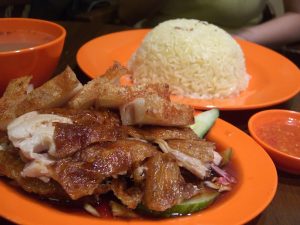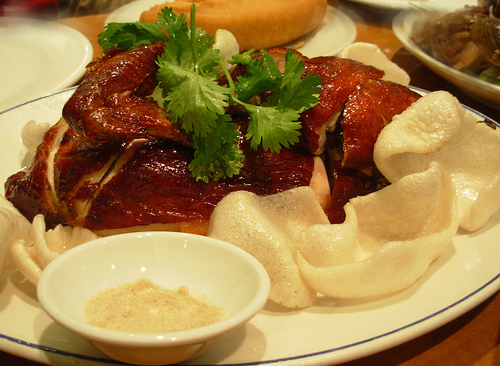
The plate lands with a thunk, steam curling off skin so taut it looks lacquered. A waiter snips through the breast with kitchen shears, the blade making a dry crack that travels across the round table. No sauce pools underneath. Just a mound of pepper salt in a white ramekin, the grains catching the overhead light. This is Cantonese crispy fried chicken — zaa zi gai — served whole, head and feet tucked tidily beneath the wings, waiting for hands to pull it apart.
What Arrives on the Table
A proper bird weighs about one and a half jin — roughly seven hundred grams — small enough that the skin crisps through before the meat dries. The skin is the prize: a golden-brown shell, blistered and glass-thin, shattering into shards the moment chopsticks press down. Underneath, the meat stays pale, juicy, and faintly scented with five-spice and ginger from the poach. No batter, no breading, no heavy oil scent clinging to your fingers. Just clean poultry flavor amplified by salt and pepper.
You’ll also get a side of prawn crackers — raw, translucent discs that puff into airy crisps when dropped into the same hot oil. They arrive in a bamboo bowl, curling like pale commas. Eat them hot; they stale fast. The pepper salt sits beside them, coarse and fragrant, the Sichuan peppercorns leaving a slow, electric tingle on the lips.
How It Should Taste and Look
Skin first: it should sound like breaking dry leaves. The color is deep amber, not burnt orange. No soft spots near the thigh joint. The meat pulls clean from the bone, white with a pink kiss at the joint, never gray. Dip a piece in the pepper salt — just a pinch — and the flavor blooms: saline, floral, faintly numbing, then sweet from the bird’s own fat. The vinegar-sugar glaze brushed on during the final fry adds a whisper of sticky tang, but you barely taste it as sugar; you taste balance.
If the skin bends like leather, the oil wasn’t hot enough. If the meat is stringy, the bird was too big or the poach too long. A good kitchen poaches just until the thigh joint loosens, then shocks the bird in cold air so the skin tightens like a drumhead before the fry.
A Home Method That Works
You don’t need a commercial fryer. A heavy wok, a thermometer, and patience will get you ninety percent there. The process splits across two days, which actually makes it easier for a weeknight cook.
- Pepper salt: Toast one tablespoon coarse salt with three tablespoons Sichuan peppercorns in a dry pan over low heat until fragrant and barely smoking. Cool, then grind fine in a mortar. Stir in one teaspoon MSG (ajinomoto). Store in a jar.
- Poach: Clean a small whole chicken (under 1.5 kg). Remove giblets. In a pot large enough to hold the bird, bring water to a boil with two tablespoons five-spice powder, three smashed ginger slices, and two scallions tied in a knot. Lower the chicken in, breast up. Return to a bare simmer. Cook twenty minutes. Lift out, drain cavity, and set on a rack in the fridge, uncovered, overnight. The cold air dries the skin — this is non-negotiable.
- Glaze: Simmer three tablespoons vinegar (Chinkiang or rice) with a quarter cup sugar until syrupy. Cool.
- Fry: Heat four cups oil in a wok to 190 °C. Brush the chicken with glaze. Lower gently, head first. Fry three minutes, ladling oil over the breast. Lift, rest two minutes. Return to oil for one more minute until the skin sings. Drain on a wire rack, not paper towels.
- Prawn crackers: Drop raw discs into the same oil, a few at a time. They puff in seconds. Scoop immediately.
Carve at the table. Serve with the pepper salt and a simple steamed green — gai lan or choi sum — to cut the richness.
Ordering in a Restaurant
In a Cantonese roast-meat shop (siu mei), you’ll see the birds hanging in the window, skin gleaming under heat lamps. Order “one crispy fried chicken, chopped” (yat go zaa zi gai, faan min). They’ll ask if you want the head and feet — say yes if you know how to eat them; the cheek meat is sweet, the feet collagen-rich. If you’re squeamish, “no head, no feet” (mou tau, mou geok) works fine.
At a banquet, the chicken arrives whole as a centerpiece. The host or eldest person makes the first cut. Wait for that signal. Don’t reach across the lazy Susan. Take a piece of breast, a piece of thigh, a cracker. Dip. Eat. Conversation continues. The bones stay on the plate; they’ll be collected for stock later.
If the menu lists “crispy chicken” but the photo shows battered nuggets, walk away. That’s a different dish — usually Taiwanese popcorn chicken or a Westernized version. True zaa zi gai is always whole, always skin-on, always served with pepper salt on the side.
Mistakes Beginners Make
Buying a supermarket broiler. Those birds carry too much water and fat. The skin never crisps; it steams. Find a “yellow-feather” or “free-range” chicken at a wet market — smaller, firmer, yellower skin.
Skipping the overnight dry. Impatience ruins the crunch. Even four hours in the fridge uncovered beats zero.
Crowding the wok. Oil temperature crashes, skin turns greasy. Fry one bird at a time. Keep a thermometer clipped to the rim.
Drowning the meat in pepper salt. The blend is potent. A pinch per bite. You can always add; you can’t subtract.
Tossing the crackers in the oil after the chicken. Residual chicken fat flavors them, but burnt glaze bits make them bitter. Fry crackers first, or strain the oil between batches.
Eating only the breast. The oyster — that teardrop of meat on the back near the thigh — is the sweetest part. The wing tip, nibbled down to the cartilage, holds concentrated gelatin. The head, cracked open, yields brain the size of a peanut, rich as foie. Respect the bird. Eat it all.