The lanterns along the Shengzhou canal throw yellow circles onto the water. An old woman in a padded jacket adjusts her reading glasses, flips open a libretto, and begins to sing — her voice thin but steady, sliding into a falsetto that sounds like a young scholar pining for a lover across a moonlit garden. No gongs crash, no swords flash. Just the erhu’s sigh and a story carried on a Wu dialect lullaby. This is Yue opera at its roots: intimate, feminine, and stubbornly alive.
From farm lanes to Shanghai stages
The form began around 1906 when tea-pickers in Sheng County started setting local gossip to melody. They called it “small song class” — barefoot performers on makeshift platforms, singing verses lifted from field conversations. By the 1920s, troupes migrated to Shanghai’s foreign concessions, where the soft Wu dialect charmed audiences tired of Peking opera’s martial bombast. Women took over male roles entirely, a practical choice that became artistic signature. The all-female cast turned love tragedies into box-office gold, and by the 1930s Yue opera had its own theaters on Nanjing Road, outperforming both Peking and Shanghai opera in ticket sales.
What makes the sound
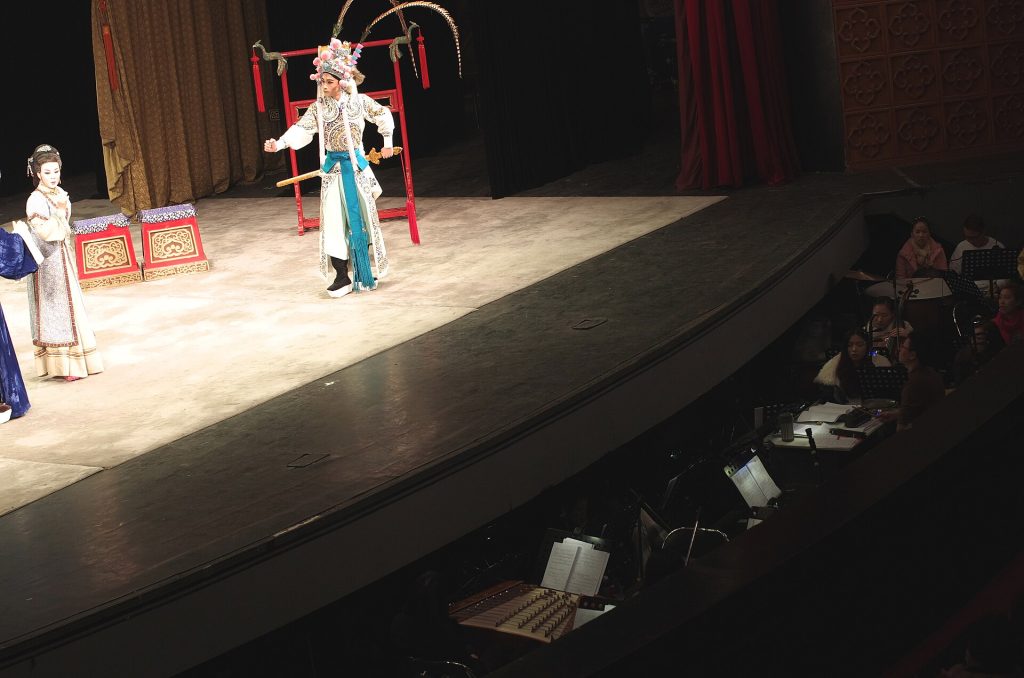
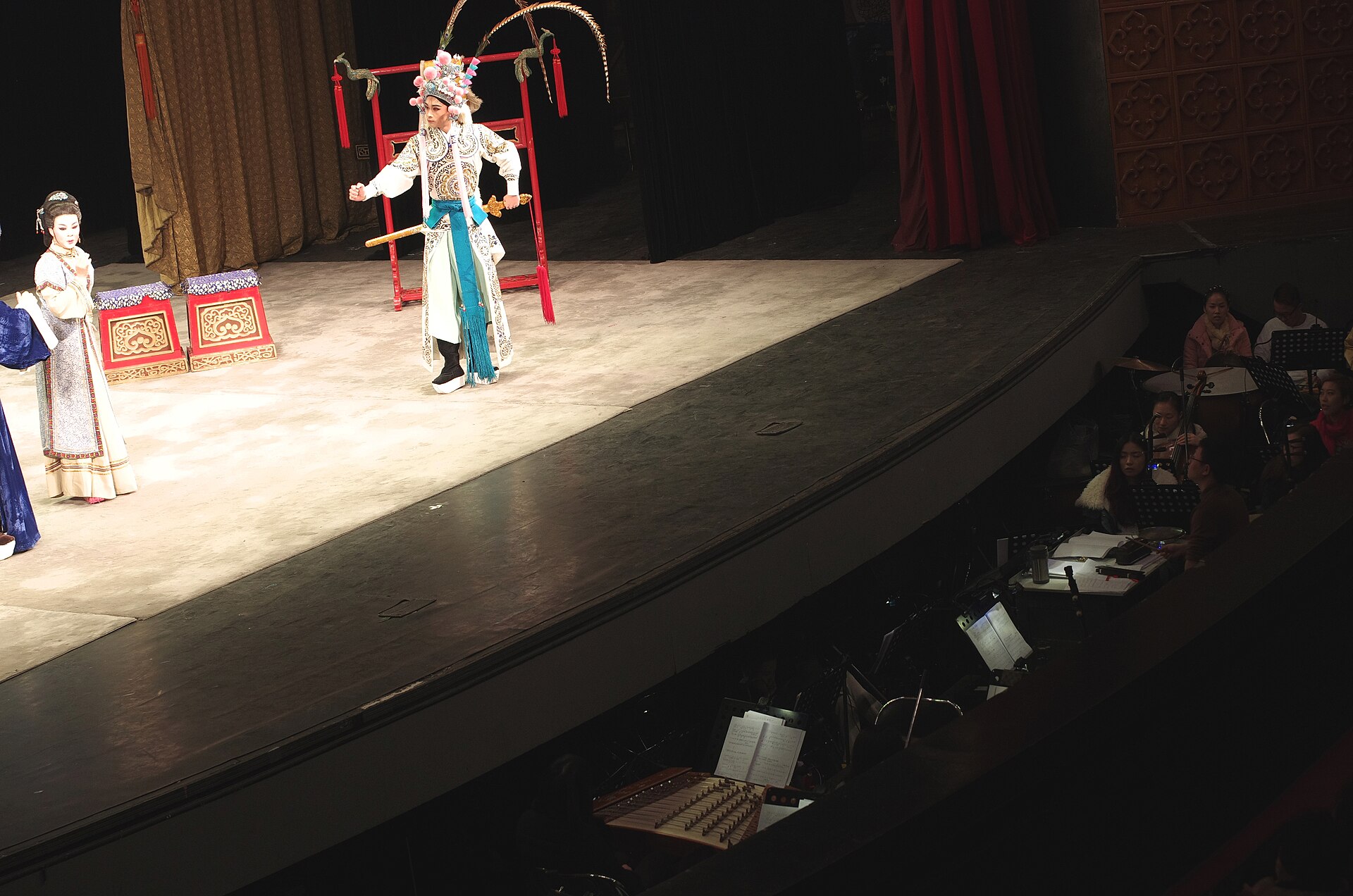
Yue opera sings in Shengzhou Wu — softer than Mandarin, heavier on vowels. The orchestra stays small: erhu leads, pipa plucks, yangqin hammers, flute breathes. No percussion section thunders underneath. Melodies recycle across plays; you recognize the “crying tune” whether the heroine is Liang Shanbo or Wang Baochuan. Costumes borrow from Ming dynasty paintings — water sleeves that ripple like ink, headdresses studded with kingfisher feathers — but the staging stays minimal. A table, two chairs, a painted backdrop. The rest lives in the performer’s wrist flick and eye shift.
Plays you’ll hear again and again
- Butterfly Lovers — Liang Shanbo and Zhu Yingtai die and become butterflies. The “Eighteen Farewells” aria runs twenty minutes; good performers make you forget the length.
- Dream of the Red Chamber — Baoyu and Daiyu’s doomed romance, condensed from Cao Xueqin’s novel. The “Burial of Flowers” scene reduces first-time viewers to tears.
- Jade Hairpin — Scholar Pan Bizheng abandons his wife for an imperial career; she follows him disguised as a nun. The reunion duet balances resentment and tenderness.
- Five Daughters Offering Felicity — Five sisters test their husbands’ loyalty. Comic relief rare in the repertoire, often staged at Lunar New Year.
Where to watch in Zhejiang
Hangzhou Yue Opera Theatre on Fengqi Road runs ticketed productions most weekends. Arrive thirty minutes early; the lobby displays costume sketches and old playbills. Subtitles run in simplified Chinese only — bring a translation app if your reading lags.
Shengzhou Yue Opera Town — the genre’s birthplace, forty minutes by high-speed rail from Hangzhou East. The outdoor stage beside the canal hosts free performances on weekend afternoons during spring and autumn. Local troupes rotate; quality varies but the atmosphere compensates. Elderly spectators bring stools and thermoses, commenting loudly on vocal technique.
Shaoxing Grand Theatre mounts larger productions with visiting stars from Shanghai. Book through the theatre’s WeChat mini-program; paper tickets vanish fast. The building itself — a glass lantern beside the canal — makes the trip worthwhile even before the overture.
Village stages — during the seventh lunar month (ghost festival) and the first lunar month (lantern festival), temporary platforms appear in Shengzhou and Zhuji townships. No tickets, no programs. Follow the erhu sound after dusk. You’ll sit on plastic stools beside grandmothers cracking sunflower seeds, the closest thing to 1906 you’ll find.
What newcomers get wrong
Expecting acrobatics. Yue opera bodies don’t flip; they lean. The drama lives in a fingertip hovering above a teacup, not a sword fight. Expecting Mandarin. The libretto stays in Wu dialect — even Chinese audiences from the north read subtitles. Buying the cheapest seat. The upper balcony swallows vocal nuance; spend the extra fifty yuan for rows five through fifteen. Applauding between arias. The convention holds silence until the final curtain call; premature clapping marks you as a tourist. Filming with flash. Theaters eject for this. The performers’ eyes adjust to stage light; a phone beam blinds mid-aria.
If you stay for the post-show tea at the Shengzhou teahouse beside the canal, the lead actress might join — still in costume, wiping greasepaint from her jawline. She’ll tell you how she learned the “young male” walk by balancing a bowl of water on her head for three winters. That story, more than any program note, explains why this art form survived war, revolution, and television. The bowl is empty now. The walk remains.