The minibus rattles along the mountain road above the Yellow River, dust rising through the open windows. We pass a stone tablet half-swallowed by weeds, its inscription worn smooth by centuries of wind. The driver taps the brakes, points to a cleft in the cliffs where the water churns white, and says something about a man who split the mountain with his bare hands. No museum glass, no audio guide — just the river roaring below and a story that has outlived every dynasty that tried to claim it.
The Legend That Shaped a Landscape
Ask a farmer in Henan or a boatman in Sichuan about Yu the Great, and they will not quote the Shiji. They will point to a gorge, a bend in the river, a pile of rocks their grandfather said Yu stacked with his own shoulders. The core tale is simple: the Yellow River flooded year after year, drowning fields and villages. Yu’s father, Gun, tried to dam it with magic soil and failed. Yu took a different approach — he walked the river’s length, studied its temperament, and dug channels to guide the water to the sea. Thirteen years he labored, the story goes, passing his own home three times without entering. His hands grew calloused, his legs withered from standing in cold currents, but the floods receded.
What makes this stick is not the supernatural feats — though later versions have him transforming into a bear to haul boulders — but the grit. Yu becomes the first ruler who earns his mandate through labor, not birth. Confucius later held him up as the model of a minister who serves the people. When you stand at Yu’s Gate (禹门口) in Shanxi, where the river squeezes through a notch in the Taihang Mountains, the engineering feels plausible. The notch looks chiseled, not blasted. You can imagine a crew of men with bronze tools, generation after generation, widening what nature started.
Where the Story Lives on the Ground
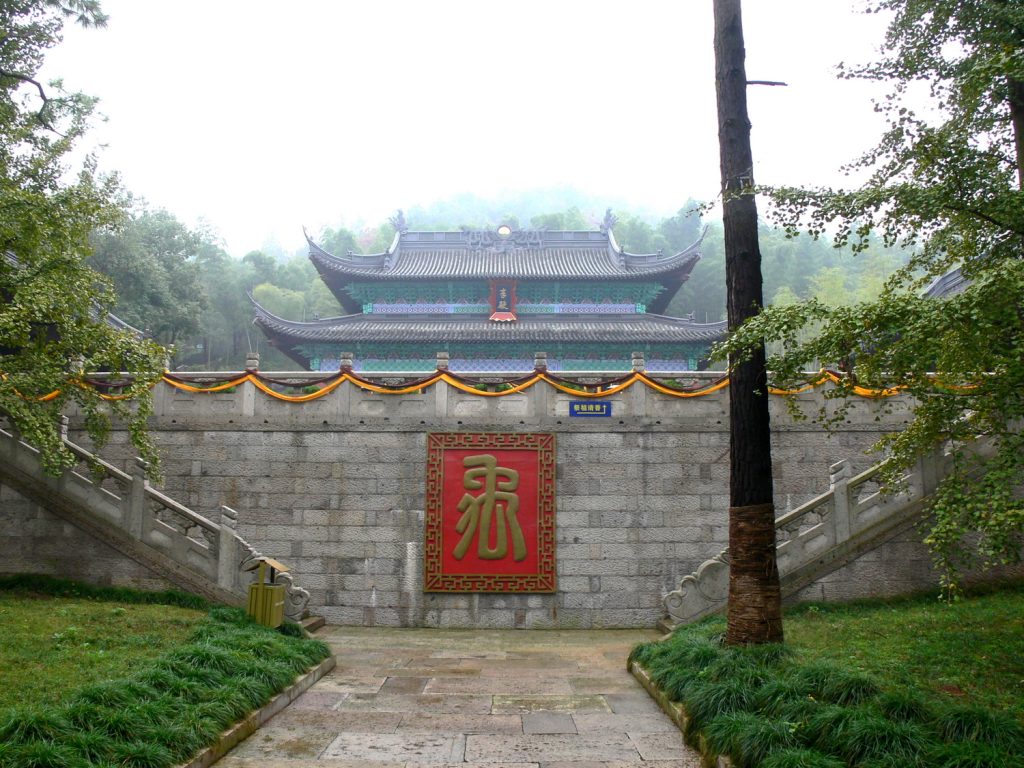
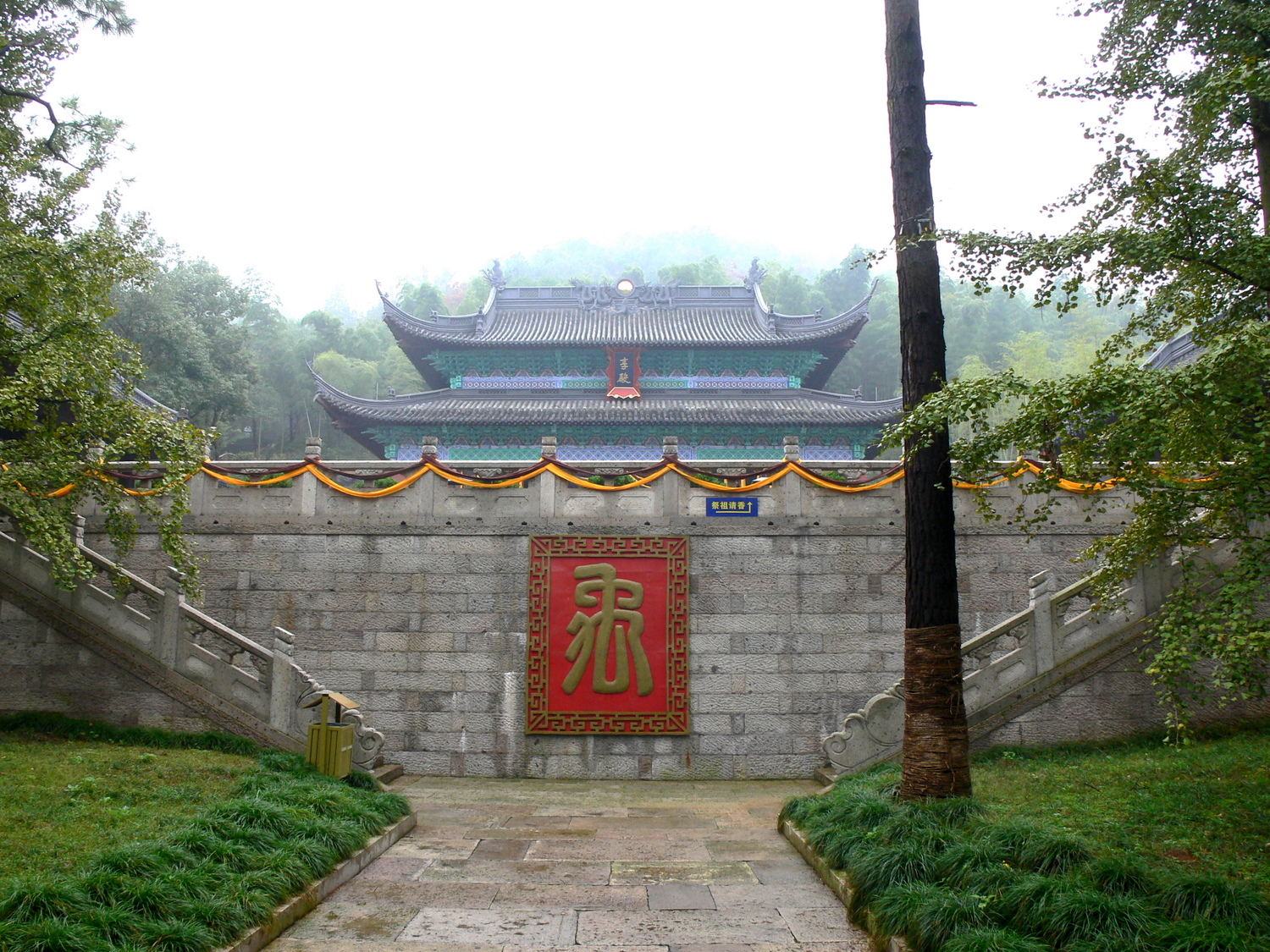
You will not find a single “Yu the Great” tourist circuit. His traces are scattered, often folded into local shrines or river temples. In Shaoxing, Zhejiang, his alleged burial mound sits behind a courtyard of incense-smoked halls. Pilgrims tie red ribbons to the ancient cypress trees, whispering prayers for safe childbirth — Yu’s mother supposedly conceived after swallowing a pearl, and the association with fertility stuck. In Beichuan, Sichuan, a temple rebuilt after the 2008 earthquake houses a statue of Yu with a carpenter’s square, the tool of a planner, not a warrior. Locals bring rice wine and steamed buns on the sixth day of the sixth lunar month, the traditional date of his birthday.
The most visceral site is the Dujiangyan irrigation system near Chengdu. Built around 256 BC by Li Bing, it explicitly follows Yu’s principle: “guide the water, don’t block it.” No dams. A fish-mouth levee splits the Min River; a bottleneck channels floodwater into an outer stream; a spillway releases excess. It still irrigates the Chengdu Plain today. Walk the footbridge during the spring water-release festival, when officials in Han-style robes reenact the ancient measurements, and you see the philosophy in motion — water as a partner, not an enemy.
Reading the Landscape Like a Local
Chinese travelers approach these sites differently than foreign visitors. They do not come for “mythology.” They come to pay respect to an ancestor of governance. You will see officials bowing before Yu’s statue before taking up new posts, engineers touching the stone channels for luck before a project launch. A newcomer who snaps a selfie and moves on misses the transaction happening: incense for continuity, a bow for humility before forces larger than any one reign.
- If you visit a Yu temple, bring three sticks of incense. Light them outside the main hall, bow three times toward the statue, then plant the sticks in the sand burner. Do not blow out the flame — wave your hand.
- At Dujiangyan, arrive before 8 a.m. to avoid tour groups. The Anlan Suspension Bridge sways less when the crowd is thin.
- In Shaoxing, the tomb area closes at 5 p.m., but the outer courtyard stays open. Evening is quieter; you can hear the river below the hill.
- Ask the temple keeper about “Yu’s footprints” — many sites claim a rock bearing his stride. They will show you the one they guard.
What the Texts Don’t Tell You
The Shiji gives Yu a genealogy, a reign length, a capital at Yangcheng. Archaeology gives none of that. No oracle bones mention him. The earliest vessels bearing his name date to the Western Zhou, a thousand years after his supposed life. What you are tracing is not a biography but a cultural spine. Each dynasty rewrote Yu to legitimize itself: the Zhou made him a vassal who earned heaven’s mandate; the Han turned him into a Confucian sage; the Ming rebuilt his temples to assert control over the Yellow River conservancy. The Communist era emphasized his “scientific” flood control, stripping the magic bear but keeping the calloused hands.
This matters when you stand before a stele. The inscription may say “Yu did this,” but the calligraphy is Song, the stone is Qing, the pavilion is 1980s concrete. You are looking at a palimpsest. A local professor once told me, “We don’t worship the man. We worship the idea that a man can measure the earth and win.” That idea is what you touch when you run your fingers over the worn characters.
Mistakes That Mark You as an Outsider
- Treating Yu as a single historical figure. He is a composite — engineer, culture hero, moral exemplar — layered over millennia. Asking “Did he really exist?” shuts down conversation. Ask instead, “How has this place remembered him?”
- Expecting a museum narrative. Most sites are active places of worship or local parks. The explanatory plaques, if they exist, are in Chinese only. Hire a guide who knows the oral versions, not the textbook summary.
- Ignoring the river. You cannot understand Yu from a temple hall. Walk the bank. Watch how the current shifts around a bend. Feel the silt between your toes. The legend was born from mud and current, not marble.
- Visiting only in summer. The spring water-release ceremonies (usually third lunar month) and the autumn sacrifice (ninth lunar month) reveal the living calendar. Winter is quiet, but the frozen river shows the structure of the channels best.
A Story You Can Carry Home
On the minibus ride back, the driver pulls over at a roadside stand selling roasted sweet potatoes. He hands me one, wrapped in newspaper. “Yu ate these,” he says, grinning. “Maybe. His men did.” The potato is hot, sweet, earthy. The Yellow River glints in the late light, constrained for now by levees that trace the lines Yu’s followers dug. The story is not in the tablet, nor the statue, nor even the irrigation works. It is in the fact that a thousand generations have agreed to keep digging, keep guiding, keep passing the home three times without entering. That is the monument. You don’t photograph it. You remember the heat of the potato in your palm.