The taxi slides past a row of Korean barbecue joints on Hongqi Street, their charcoal grills pushing smoke into the dusk. Ahead, the broad boulevard funnels toward a statue of a worker hoisting a gear, and beyond that the silhouette of the old imperial palace rises against a sky bruised purple by cold. It is late autumn, the first hard frost has already glazed the pine needles in Culture Square, and the breath of the driver and me clouds the glass. I came for the auto show, stayed because the city felt like a secret the rest of China forgot to package.
Orientation: The Grid and the Green
Changchun does not sprawl the way Beijing or Chengdu do. The Japanese planners who laid out Hsinking in the 1930s drew wide, straight avenues radiating from circular plazas, and the Soviets who followed widened them further. Today, Renmin Avenue cuts north to south like a ruler line; Hongqi and Jiefang avenues run east to west. Between the arteries, whole neighborhoods of Japanese-era shikumen lane houses survive behind walls of pine and locust. In summer the canopy is thick enough to drop the temperature five degrees; in winter the same trees catch snow like lace. Most landmarks cluster within a thirty-minute taxi ride of People’s Square, so a first-timer can treat the center as a base and fan out by metro Line 1 or the ubiquitous electric scooters.
Getting There and Moving Around
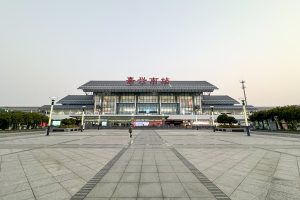
Longjia Airport sits thirty kilometers northeast. The airport express train reaches the main railway station in twenty minutes and costs a fraction of a cab. High-speed rail links Changchun to Harbin in ninety minutes, Shenyang in two hours, and Beijing in six. Inside the city, the metro now has four lines; trains are clean, announcements bilingual, and stations heated in winter. Buses reach the university campuses and the film studio, but routes are numbered only in Chinese—download an offline map or ask a student to write the characters for your destination. Taxis start around ten yuan; ride-hailing apps work, though drivers sometimes cancel short hops during shift change at five in the afternoon. If you rent a shared e-bike, remember the battery drains fast below minus fifteen.
Where to Sleep: Campus Quiet or Neon Convenience
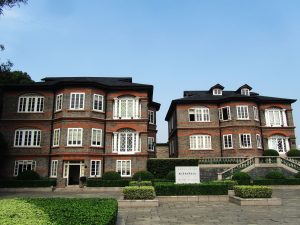
Three zones cover most visitors. Near Renmin Square and the Chongqing Road pedestrian mall, international chains and mid-range Chinese brands sit above department stores and late-night dumpling stalls—convenient, loud, and well-lit for solo walkers. North of the river, around Jilin University’s main campus, boutique hotels occupy renovated Japanese villas; the streets are quieter, bookshops stay open late, and breakfast means steamed buns from a cart rather than a buffet. Finally, the Jingyue development zone, thirty minutes south by metro, holds the film studio, the sculpture park, and newer business hotels; choose it only if your meetings are there, because nightlife is thin. In the depths of winter, confirm the hotel’s heating start date—central heat usually kicks in around the Start of Winter solar term, but smaller guesthouses may rely on space heaters.
Eating: Hearty Northeastern Plates
Dongbei cuisine dominates: heavy on pork, cabbage, potato, and chili oil, light on subtlety. Portions arrive on platters meant for sharing; a single “small” stir-fry can feed two. The classic trilogy—stewed pork with vermicelli, chicken and mushroom stew, and “three fresh vegetables” (potato, eggplant, green pepper)—appears on almost every menu. Korean influence runs deep; cold noodles with icy broth, spicy rice cakes, and grilled beef intestines cluster around the university gates. Russian bakeries on Tongzhi Street still sell dense rye loaves and piroshki stuffed with cabbage or red bean, a reminder of the railway era.
- Staples to order: guobaorou (crispy sweet-sour pork), tieguobaodun (iron-pot stewed fish), suancai dun fen (pickled cabbage with glass noodles), Korean cold noodles, rye piroshki.
- How to eat like a local: order one meat, one vegetable, one soup, and a mound of rice per two people. Use the communal chopsticks provided. Slurp the noodles; silence at the table is considered rude.
- Home-style shortcut: buy vacuum-packed suancai and frozen dumplings at a Carrefour or Walmart, simmer the cabbage with pork belly and vermicelli for twenty minutes, drop in dumplings for the last five.
- Restaurant tactics: point at the picture menu or the table next to you. Ask for “bu yao la” (no chili) if heat is a problem—most kitchens will oblige. Pay at the front counter; tipping is unknown.
- Beginner traps: ordering a “large” portion for one person, skipping the pickled garlic that cuts the grease, assuming “Western food” on a sign means a decent steak—it usually means tomato-sauce spaghetti with ketchup.
Seeing: Puppet Palace, Film City, and Pine Trails
The Museum of the Imperial Palace of Manchukuo occupies the compound where Puyi, the last emperor, lived as a Japanese puppet. Audio guides explain the staged ceremonies and the secret tunnels; allow two hours. Ten kilometers south, Changchun Film Studio—cradle of Chinese cinema—lets visitors walk soundstages where war epics and socialist musicals were shot; a vintage tram shuttles between sets. For a breather, head to Nanhu Park or the South Lake scenic area: a paved loop circles the water, pine scent sharpens the air, and in the twelfth lunar month the lake freezes thick enough for electric bumper cars and ice bicycles. The Jingyue Tan national forest park, farther out, has a ski field and a vasaloppet course; city buses run there on weekends.
Seasonal Rhythm and What to Pack
Winter arrives early and stays late. By the Heavy Snow solar term, daytime highs hover around minus ten; the Spring Festival lanterns stay up until the Lantern Festival in the first lunar month. Layer merino, fleece, and a windproof shell; add a down coat rated to minus thirty if you plan evening walks. Boots need grip—sidewalks turn to polished ice. Summer is short, humid, and surprisingly hot; a T-shirt and light rain jacket suffice from Grain in Ear to Great Heat. Spring and autumn are brief transitions: dust storms can blow in from Mongolia in the third lunar month, while maple leaves flame in the Frost’s Descent period. Check the air-quality index on heavy heating days; an N95 mask in the daypack is cheap insurance.
People, Language, and Small Courtesies
Mandarin here carries a distinct Dongbei lilt—rhotic endings, stretched vowels, and a vocabulary sprinkled with “ga” (very) and “zheng” (really). Few elderly residents speak English, but university students often volunteer to practice. A smile and a halting “ni hao” usually unlock a conversation about where you’re from and whether you can handle the spice. Queue discipline is relaxed at bus stops but strict at metro doors. When someone offers a toast at a banquet, stand, clink lower than the senior person, and sip—refusing outright can cause loss of face. If you’re invited to a home, bring fruit or a box of milk tea powder; shoes come off at the door, and the host will refill your bowl before you finish. The city’s nickname, “Forest City,” is a point of pride—complaining about pine needles on the sidewalk marks you as a tourist who doesn’t get it.
Common Missteps and How to Avoid Them
First-timers often underestimate the cold and overestimate walkability; a ten-minute map distance becomes twenty when you’re dodging ice patches. They skip the morning market on Guilin Road, where steamed corn, roasted sweet potatoes, and fresh tofu cost pocket change and taste better than any hotel breakfast. They assume the “Russian Street” near the railway station is a historic district—it’s mostly a souvenir alley rebuilt in the 2000s. They forget cash; small noodle shops and taxi drivers still prefer notes or Alipay/WeChat QR codes linked to a Chinese bank card. Finally, they leave without riding the tram line 54, the last clattering relic of the Japanese network, rattling past pine groves and apartment blocks like a moving museum. Stay for that ride, and the city stops feeling like a stopover.