The first time I stood close enough to feel the drum in my chest, a Southern Lion snapped its jaws shut six inches from my nose. Red envelope in hand, heart thudding against ribs, I realized no guidebook had prepared me for the weight of that moment — the musk of incense, the sting of firecracker smoke, the sudden silence when the lion freezes mid-leap. That night in a Guangzhou alleyway, I learned the lion dance isn’t something you watch. It’s something you survive.
Two Lions, Two Worlds
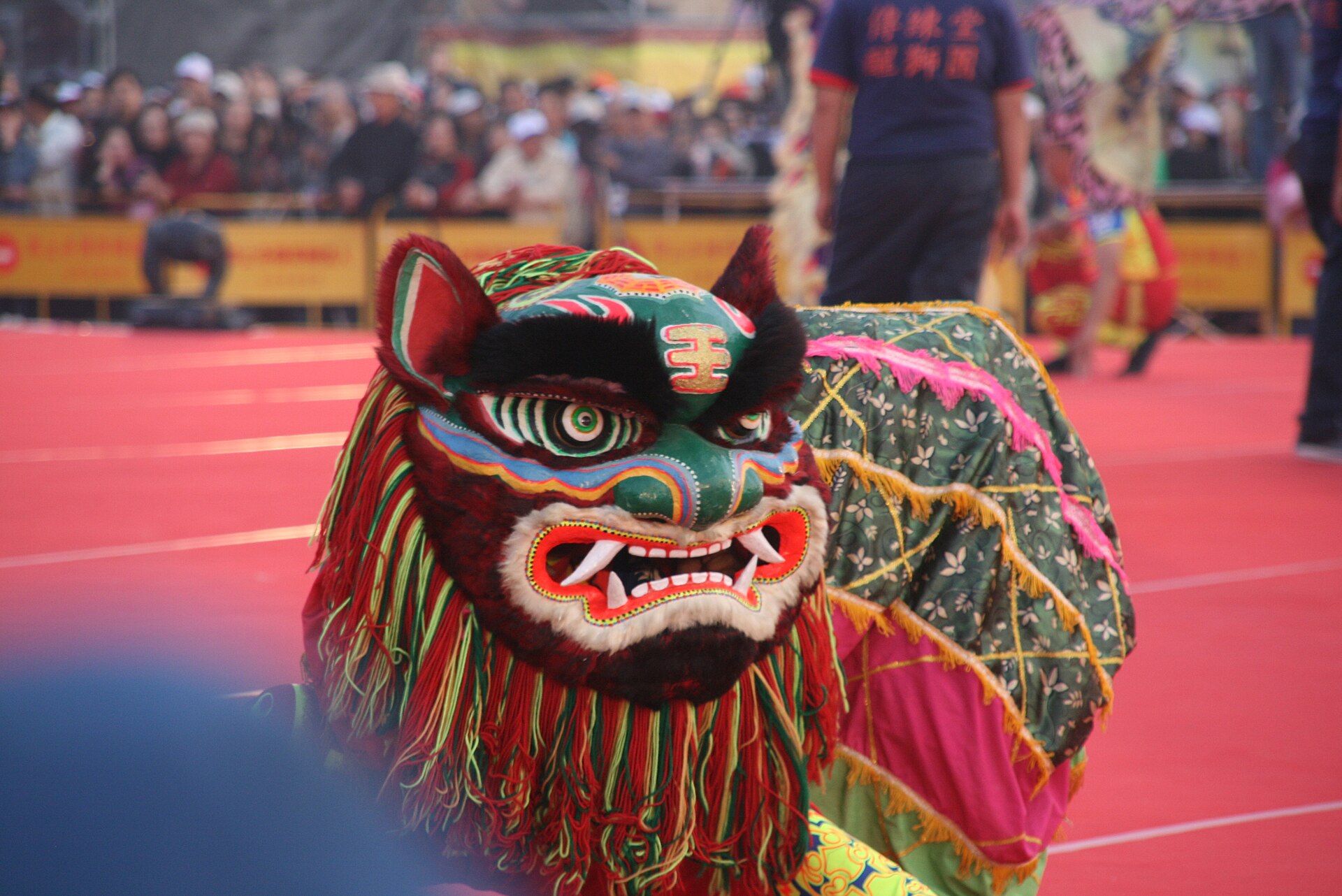
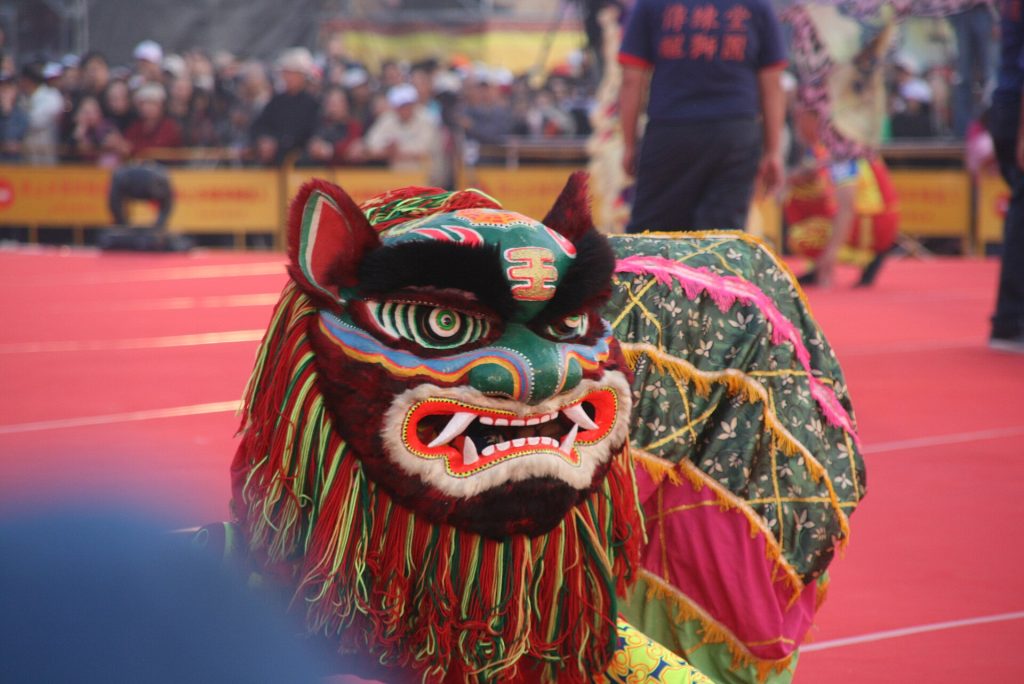
Ask a Beijing native about lion dance and they’ll describe a shaggy golden beast with a high forehead, moving like a playful dog — rolling, scratching, chasing a ball. That’s the Northern Lion, born from imperial court entertainment, all acrobatics and comedy. Travel south to Foshan or Hong Kong and the lion changes completely. The Southern Lion carries a horned forehead, a mirror on its brow to deflect evil, and a mouth that clacks like a trap. Its movements are sharp, martial, rooted in Hung Gar kung fu stances. The drummer doesn’t just keep time; he directs the lion’s mood — sleepy, curious, furious, triumphant.
I’ve seen both styles performed on the same stage during the Spring Festival temple fair at Baiyun Mountain. The Northern Lion drew laughter from toddlers. The Southern Lion drew held breath. Neither is “more authentic.” They’re dialects of the same language.
When the Drums Start
The lunar calendar dictates the season. New Year’s Eve through the fifteenth day — the Lantern Festival — is peak season. But lions also wake for grand openings, weddings, birthdays of deities, and the Mid-Autumn Festival. In Guangdong villages, I’ve watched lions bless fishing boats before the first sortie after the monsoon. In Shanghai, a pair greeted a tech startup’s Series A announcement. The occasion changes. The protocol doesn’t.
New Year visits: Lions tour neighborhoods, stopping at every shop with a red envelope hanging above the door.
Business openings: The lion “plucks the greens” (cai qing) — lettuce hung high with a red envelope inside — spitting the leaves back as blessing.
Weddings: A pair of lions playfully chase each other, symbolizing harmony.
Temple festivals: Lions parade between altars, bowing to deities.
If you’re visiting during the first lunar month, step outside before 10 a.m. That’s when neighborhood troupes make their rounds. Follow the drum. Don’t wait for a schedule.
The Envelope Exchange
Here’s where visitors freeze. The lion approaches. Its mouth opens. You’re supposed to feed it a red envelope (hongbao) — crisp new bills, never coins, amount ending in 8 or 6 for luck. Twenty yuan works. Two hundred works better. The lion takes it, chews dramatically, spits out the envelope (now empty) and bows. That’s the transaction. Blessing delivered. Evil warded.
My first time, I fumbled a crumpled ten-yuan note. The head dancer paused, tilted the lion’s head — a clear “really?” — then accepted it with exaggerated grace. The crowd laughed. I turned red. The drummer accelerated. The lion spun, kicked, and “ate” my envelope with a theatrical gulp. Lesson learned: prepare envelopes beforehand. Crisp bills. Even numbers. Have them ready in your pocket, not buried in a bag.
Use new, unfolded bills — worn notes suggest disrespect.
Avoid amounts with 4 (sounds like death) or odd numbers.
Hand the envelope directly into the lion’s mouth, not to the dancers.
Step back immediately after. The lion needs space for its bow and retreat.
What You’re Actually Watching
Two people inside. The head dancer controls eyelids, ears, mouth, head tilt — all with one hand on a lever inside the mask. The tail dancer crouches, draped in the body fabric, moving in perfect sync. They communicate through pressure signals: a tap on the thigh means “jump,” a squeeze means “shake.” I once watched a rehearsal in a Foshan ancestral hall. No music. Just the thud of feet on concrete, the rasp of breath, the occasional muttered correction in Cantonese. “Lower. Heavier. The lion has weight.”
The drum isn’t background. It’s the lion’s heartbeat. Fast rolls mean excitement. Sharp single beats mark pauses. The gong and cymbals punctuate. A good troupe makes you forget there are humans inside. A great troupe makes you believe the lion chooses its path.
Mistakes That Mark You as a Novice
Standing directly in the lion’s path during cai qing. The lion must approach the greens from a specific angle, execute a prescribed sequence of bows and feints. Blocking that line disrupts the ritual — and the dancers can’t see you well through the mask’s narrow eye slits.
Touching the lion’s head or mirror. The forehead mirror deflects negative energy. Touching it transfers your own qi — and possibly bad luck — onto the creature. Children do this constantly. Parents who know better yank them back.
Filming with flash during the “sleeping lion” opening. The lion begins motionless, eyes closed. The drummer builds tension. A sudden flash breaks the trance. The head dancer loses the internal rhythm. I’ve seen a troupe stop mid-performance, bow to the audience, and leave because one tourist kept flashing.
Expecting English announcements. There won’t be any. The performance speaks through movement. If you need narration, hire a guide. Otherwise, watch the crowd. Local elders nod at specific sequences — a difficult jump, a perfectly timed cymbal crash. Follow their gaze.
Finding the Real Thing
Tourist shows in theme parks serve a purpose — accessibility, air conditioning, subtitles. But the lion dance lives in village squares, factory courtyards, temple forecourts. In the Pearl River Delta, ask for “wong toi” (yellow earth) troupes — community teams, not commercial ones. They practice in ancestral halls on Tuesday evenings. Show up with respect, maybe a pack of cigarettes for the drummer, and you might be invited to watch rehearsal.
In Beijing, seek the “gao qiao” (high stilts) lion teams in Dongcheng’s hutongs during the Lantern Festival. They perform on meter-high stilts. The risk is real. The skill is generational.
Wherever you go, arrive early. Stay late. The best moments happen after the official performance ends — when the dancers remove their heads, wipe sweat, share cigarettes, and the lion becomes fabric again. That’s when you can ask questions. That’s when they might let you try the head. Ten pounds of papier-mâché and bamboo. Heavier than it looks. The neck muscles burn in minutes.
The drum fades. The smoke clears. You walk home with the rhythm still in your fingertips. Next year, you’ll bring better envelopes.