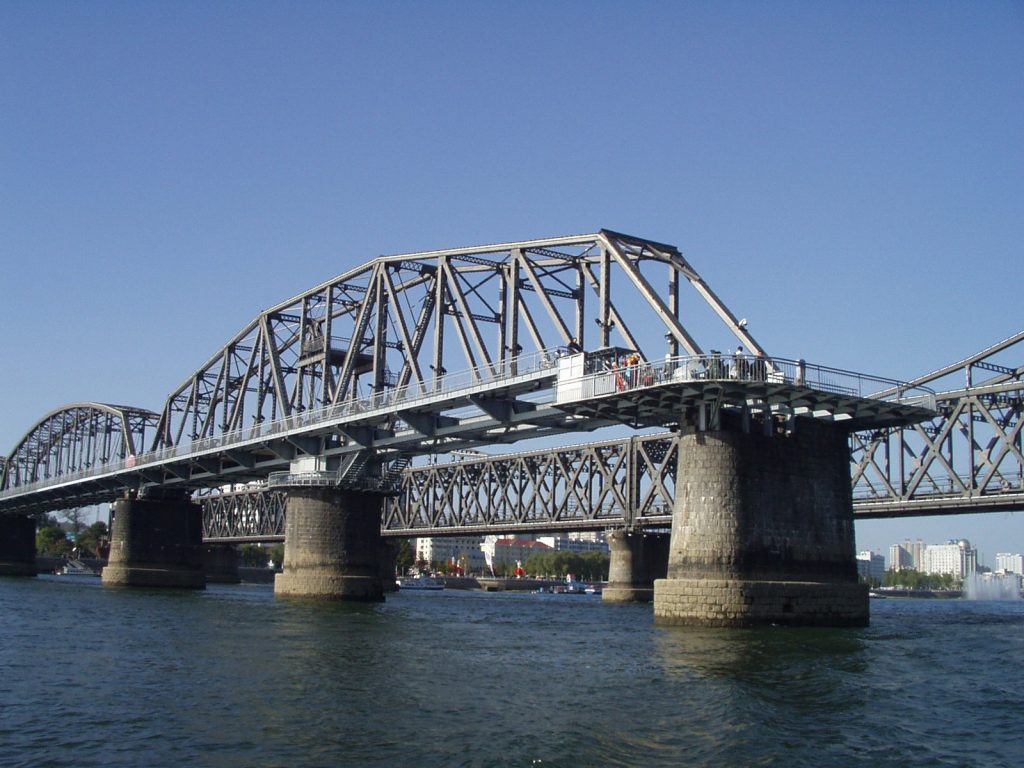
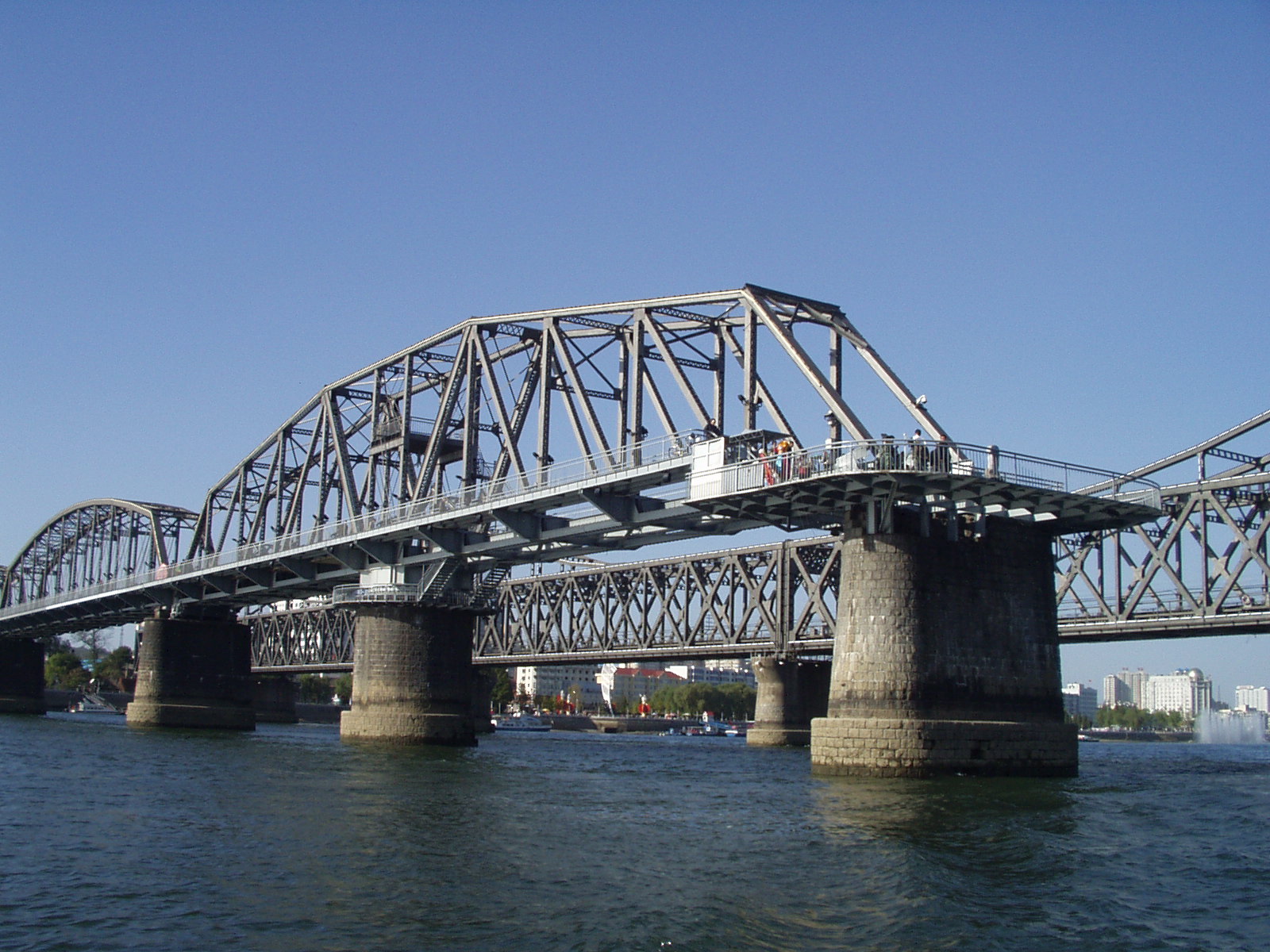
The minibus rattles across the Broken Bridge just as the morning mist lifts off the Yalu. To the right, a rusted span ends abruptly in mid‑river, its girders twisted by bombs that fell when this city was still called Andong. To the left, the Friendship Bridge carries a slow line of blue‑painted trucks toward Sinuiju, their exhaust mixing with the smell of river mud and frying dough sticks from a vendor’s cart. A group of schoolchildren presses against the railing, pointing at the North Korean guard post on the far bank where a soldier in a peaked cap paces back and forth. No one speaks loudly. The border feels both ordinary and charged, like a held breath before a toast.
Getting there and moving around
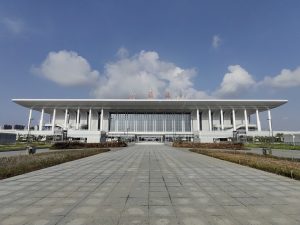
Flights land at Dandong Langtou Airport from Shenyang, Beijing, and Shanghai during the warm season; winter schedules thin out after the first snow. The airport sits twenty minutes by taxi from the riverfront, and drivers know the flat‑rate fare without a meter. High‑speed trains pull into Dandong Station from Shenyang in under two hours, and the station square spills directly onto a grid of city buses. Bus 101 runs the length of the riverside promenade, stopping at the Broken Bridge, the war museum, and the ferry ticket office. Taxis are plentiful, but after dark many drivers refuse the short hop to the border checkpoints — better to book a ride through a local app or ask your guesthouse to call a trusted driver.
Border viewing: bridges, boats, and binoculars
The Broken Bridge (断桥) is the first stop for most visitors. You walk the wooden deck to the severed end, where interpretive panels show black‑and‑white photos of the 1950 air raids. Bring a zoom lens or a pair of binoculars — across the water the North Korean city of Sinuiju unfolds in low‑rise apartment blocks, a statue of a leader on a hill, and a ferris wheel that rarely turns. The Friendship Bridge (中朝友谊桥) stays open to rail and truck traffic; pedestrians cannot cross, but the viewing platform beside the customs plaza lets you watch the choreography of Chinese and North Korean officers exchanging paperwork. For a closer look, buy a ticket for the sightseeing speedboat that departs from the pier below the Broken Bridge. The twenty‑minute ride hugs the Chinese shore, then arcs toward the international demarcation line marked by yellow buoys. The captain cuts the engine at the midpoint; you hear only the river lapping and the distant crackle of a loudspeaker broadcasting a patriotic song from the other side.
Museums and memorials that explain the frontier
The Museum of the War to Resist US Aggression and Aid Korea sits on a hill behind the railway station. Its main hall displays a captured M46 Patton tank, a row of MiG‑15 nose cones, and a diorama of the 1950 crossing where volunteers slipped across the frozen river on foot. English captions are sparse, so rent the audio guide at the desk — it fills in the gaps without rushing you. A smaller, quieter space is the Yalu River Border History Museum near the ferry terminal. Here you’ll find hand‑drawn maps from the Qing dynasty, a collection of vintage passports, and a display of smuggled goods seized over the decades: ginseng roots, cigarette cartons, and once, a live raccoon dog in a burlap sack. Allow an hour for each museum; both close for lunch between noon and one.
Day trips: Hushan Great Wall and the tiger mountain
Twenty kilometers northeast of the city, the Hushan (Tiger Mountain) section of the Great Wall climbs a ridge that ends at the river’s edge. A cable car hauls you to the highest watchtower, where the view stretches across the Yalu into the North Korean countryside — rice paddies, a cluster of blue‑roofed houses, a single dirt road. The wall here is reconstructed stone, steep enough that your calves burn on the descent. Wear shoes with grip; the steps are uneven and slick after rain. At the base, a vendor sells roasted corn brushed with chili butter and small bottles of locally made rice wine. If you have a half day, hire a driver to combine Hushan with the Dalu Island ferry. The island’s tidal flats attract migratory birds in autumn, and the seafood shacks serve steamed clams with garlic and scallions pulled from the water that morning.
Eating where the river meets the table
Dandong’s cuisine leans on the Yalu’s bounty and the Korean influence across the water. A typical dinner starts with a platter of cold‑marinated jellyfish threads, crunchy and sesame‑scented, followed by a bubbling pot of spicy fish stew (辣鱼汤) made with carp, gochujang‑style bean paste, tofu, and wild mountain herbs. Grilled squid brushed with sweet‑soy glaze arrives on a sizzling iron plate, and a bowl of steamed rice soaks up the red broth. For a snack, hunt down the street stall selling “border dumplings” — thin wrappers stuffed with minced pork, kimchi, and glass noodles, pan‑fried until the bottoms lace golden.
- Cold jellyfish: soak dried threads thirty minutes, rinse, toss with vinegar, sesame oil, minced garlic, and julienned cucumber.
- Spicy fish stew: fry ginger and scallion in oil, add bean paste until fragrant, pour in stock, slide in fish chunks and tofu, simmer ten minutes, finish with perilla leaves.
- Border dumplings: mix ground pork, chopped kimchi, soaked glass noodles, soy sauce, and pepper; wrap, pan‑fry, add water, cover until steam evaporates.
Restaurants along the riverside promenade cater to tour groups; the menu photos are helpful but portions shrink during peak season. Walk two blocks inland to the alleys behind the department store — family‑run spots serve the same dishes at half the price and refill the banchan (side dishes) without asking. Order the hawthorn wine, a local specialty, served chilled in small ceramic cups.
Practical pitfalls and local expectations
First‑time visitors often assume they can stroll across the Friendship Bridge or wander the North Korean riverbank — neither is allowed without a pre‑arranged tour group and a Chinese‑issued permit. Photography of military installations, guard posts, or the customs compound is prohibited; signs are posted in Chinese and Korean, but not always in English. Keep your passport in a zippered pocket; plainclothes officers sometimes check IDs on the promenade after sunset. Cash is still king at small stalls and the ferry ticket window; WeChat Pay works in larger shops, but the signal drops near the river’s edge. Finally, respect the quiet at the Broken Bridge memorial. Locals come here to remember relatives who crossed the ice in 1950; loud selfies or climbing on the twisted girders draws sharp glances. A nod, a lowered voice, and a slow pace signal that you understand the weight of the place.