## A Day That Sticks
## What Trips You Up
First, the language wall. Outside the university area and the biggest hotels, English vanishes. Menu photos help, but many hole-in-the-wall places have no menu at all—just a chalkboard in dialect. Learn the characters for mutton (羊肉), noodles (面), and spicy (辣). Second, the coal dust. It settles on windowsills, on your collar, in your nasal passages. A pack of disposable masks and a travel humidifier for the hotel room aren’t paranoia; they’re hygiene. Third, the calendar. The city empties during Spring Festival—shops shutter, buses halt, even the metro runs a holiday skeleton. If you arrive in the first lunar month, confirm every booking twice and stock snacks. Fourth, the “Eagle City” souvenirs. Street vendors sell bronze eagle figurines cast from the same mold since the nineties. They’re fine gifts, but don’t mistake them for antiquities. Real Ying-state bronzes live in the provincial museum in Zhengzhou, not in a plastic bag on a folding table.
## A Day That Sticks
Start before dawn at the Flat Top plateau, sweet potato in hand, watching the plain lighten. Descend to a shift-change noodle stall for a bowl that steams your glasses. Metro to Yexian by mid-morning; walk the wall until your calves complain. Lunch in a courtyard restaurant inside the old city—braised carp from the reservoir, tofu stewed in brown sauce, greens flashed in garlic. Afternoon at the county museum, then a slow coffee in a converted courtyard house where the owner roasts his own beans. Evening train back to the center. Hot pot for dinner: mutton, lotus root, frozen tofu, sesame paste dipping sauce. The broth boils, the table talks, the cranes outside the window keep turning. That’s the rhythm. You don’t tour Pingdingshan; you fall into its shift.
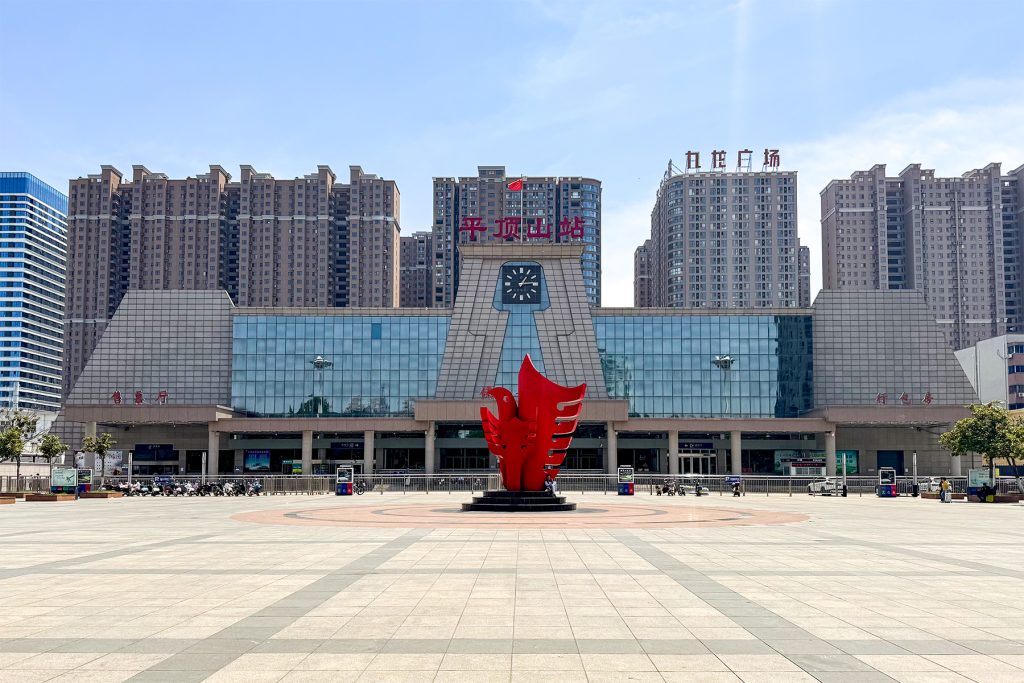
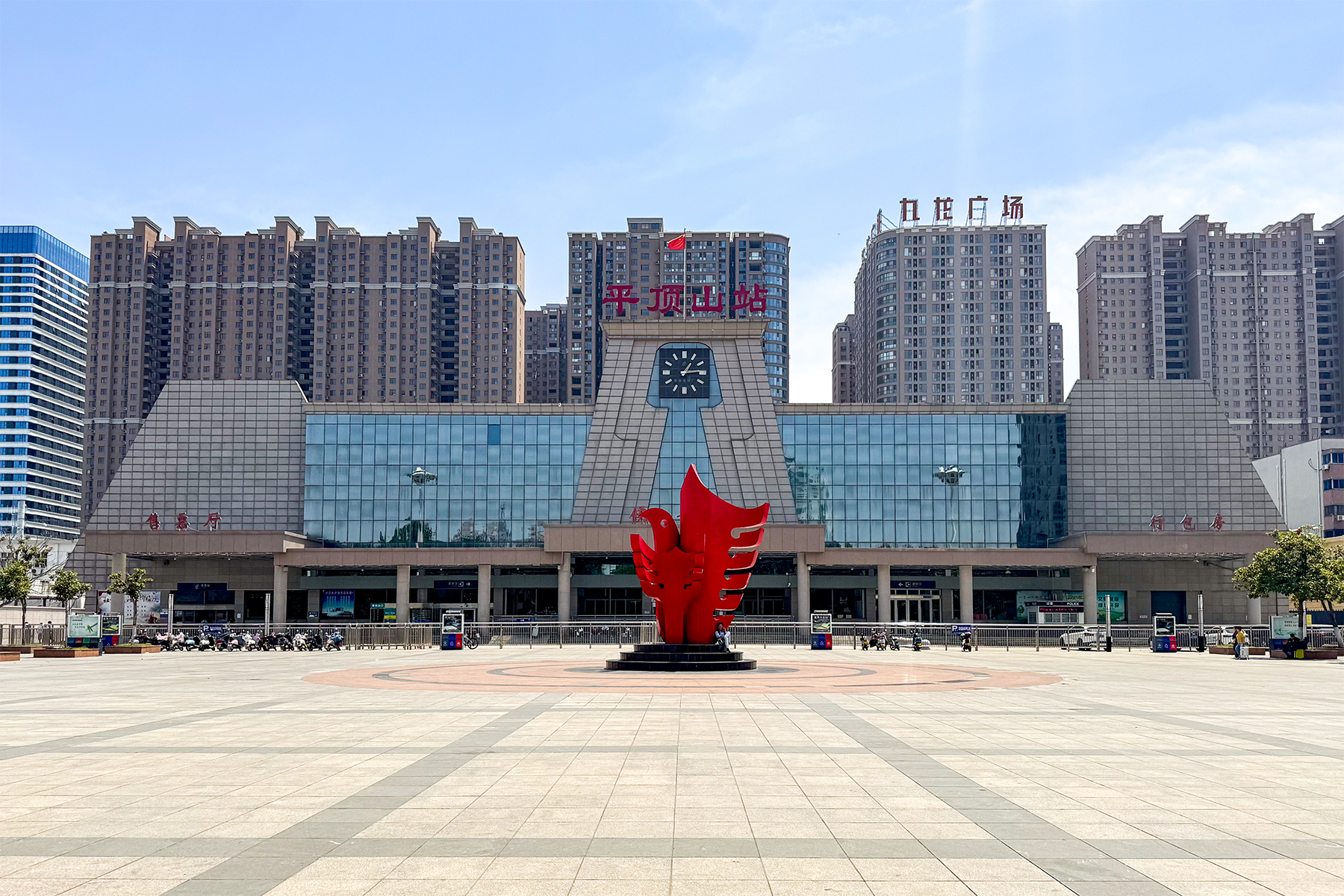
Chain hotels cluster around the high-speed rail station and the municipal government plaza—clean, foreigner-registered, 200 to 400 yuan for a business double. In Yexian, the only foreigner-approved option is a mid-range place near the Drum Tower; book ahead on a Chinese platform and screenshot the confirmation. Homestays in the mountain villages are charming but often lack the registration license; if you stay, carry your passport and a printed address in Chinese for the local police check. Heating is centralized and kicks in mid-November; before that, nights in concrete rooms bite. Ask for extra quilts at check-in.
## What Trips You Up
First, the language wall. Outside the university area and the biggest hotels, English vanishes. Menu photos help, but many hole-in-the-wall places have no menu at all—just a chalkboard in dialect. Learn the characters for mutton (羊肉), noodles (面), and spicy (辣). Second, the coal dust. It settles on windowsills, on your collar, in your nasal passages. A pack of disposable masks and a travel humidifier for the hotel room aren’t paranoia; they’re hygiene. Third, the calendar. The city empties during Spring Festival—shops shutter, buses halt, even the metro runs a holiday skeleton. If you arrive in the first lunar month, confirm every booking twice and stock snacks. Fourth, the “Eagle City” souvenirs. Street vendors sell bronze eagle figurines cast from the same mold since the nineties. They’re fine gifts, but don’t mistake them for antiquities. Real Ying-state bronzes live in the provincial museum in Zhengzhou, not in a plastic bag on a folding table.
## A Day That Sticks
Start before dawn at the Flat Top plateau, sweet potato in hand, watching the plain lighten. Descend to a shift-change noodle stall for a bowl that steams your glasses. Metro to Yexian by mid-morning; walk the wall until your calves complain. Lunch in a courtyard restaurant inside the old city—braised carp from the reservoir, tofu stewed in brown sauce, greens flashed in garlic. Afternoon at the county museum, then a slow coffee in a converted courtyard house where the owner roasts his own beans. Evening train back to the center. Hot pot for dinner: mutton, lotus root, frozen tofu, sesame paste dipping sauce. The broth boils, the table talks, the cranes outside the window keep turning. That’s the rhythm. You don’t tour Pingdingshan; you fall into its shift.
## Sleeping Without Surprises
Chain hotels cluster around the high-speed rail station and the municipal government plaza—clean, foreigner-registered, 200 to 400 yuan for a business double. In Yexian, the only foreigner-approved option is a mid-range place near the Drum Tower; book ahead on a Chinese platform and screenshot the confirmation. Homestays in the mountain villages are charming but often lack the registration license; if you stay, carry your passport and a printed address in Chinese for the local police check. Heating is centralized and kicks in mid-November; before that, nights in concrete rooms bite. Ask for extra quilts at check-in.
## What Trips You Up
First, the language wall. Outside the university area and the biggest hotels, English vanishes. Menu photos help, but many hole-in-the-wall places have no menu at all—just a chalkboard in dialect. Learn the characters for mutton (羊肉), noodles (面), and spicy (辣). Second, the coal dust. It settles on windowsills, on your collar, in your nasal passages. A pack of disposable masks and a travel humidifier for the hotel room aren’t paranoia; they’re hygiene. Third, the calendar. The city empties during Spring Festival—shops shutter, buses halt, even the metro runs a holiday skeleton. If you arrive in the first lunar month, confirm every booking twice and stock snacks. Fourth, the “Eagle City” souvenirs. Street vendors sell bronze eagle figurines cast from the same mold since the nineties. They’re fine gifts, but don’t mistake them for antiquities. Real Ying-state bronzes live in the provincial museum in Zhengzhou, not in a plastic bag on a folding table.
## A Day That Sticks
Start before dawn at the Flat Top plateau, sweet potato in hand, watching the plain lighten. Descend to a shift-change noodle stall for a bowl that steams your glasses. Metro to Yexian by mid-morning; walk the wall until your calves complain. Lunch in a courtyard restaurant inside the old city—braised carp from the reservoir, tofu stewed in brown sauce, greens flashed in garlic. Afternoon at the county museum, then a slow coffee in a converted courtyard house where the owner roasts his own beans. Evening train back to the center. Hot pot for dinner: mutton, lotus root, frozen tofu, sesame paste dipping sauce. The broth boils, the table talks, the cranes outside the window keep turning. That’s the rhythm. You don’t tour Pingdingshan; you fall into its shift.Pepper salt flatbread (jiaoyan shaobing): flaky layered dough, Sichuan pepper salt, baked in a clay urn.
## Sleeping Without Surprises
Chain hotels cluster around the high-speed rail station and the municipal government plaza—clean, foreigner-registered, 200 to 400 yuan for a business double. In Yexian, the only foreigner-approved option is a mid-range place near the Drum Tower; book ahead on a Chinese platform and screenshot the confirmation. Homestays in the mountain villages are charming but often lack the registration license; if you stay, carry your passport and a printed address in Chinese for the local police check. Heating is centralized and kicks in mid-November; before that, nights in concrete rooms bite. Ask for extra quilts at check-in.
## What Trips You Up
First, the language wall. Outside the university area and the biggest hotels, English vanishes. Menu photos help, but many hole-in-the-wall places have no menu at all—just a chalkboard in dialect. Learn the characters for mutton (羊肉), noodles (面), and spicy (辣). Second, the coal dust. It settles on windowsills, on your collar, in your nasal passages. A pack of disposable masks and a travel humidifier for the hotel room aren’t paranoia; they’re hygiene. Third, the calendar. The city empties during Spring Festival—shops shutter, buses halt, even the metro runs a holiday skeleton. If you arrive in the first lunar month, confirm every booking twice and stock snacks. Fourth, the “Eagle City” souvenirs. Street vendors sell bronze eagle figurines cast from the same mold since the nineties. They’re fine gifts, but don’t mistake them for antiquities. Real Ying-state bronzes live in the provincial museum in Zhengzhou, not in a plastic bag on a folding table.
## A Day That Sticks
Start before dawn at the Flat Top plateau, sweet potato in hand, watching the plain lighten. Descend to a shift-change noodle stall for a bowl that steams your glasses. Metro to Yexian by mid-morning; walk the wall until your calves complain. Lunch in a courtyard restaurant inside the old city—braised carp from the reservoir, tofu stewed in brown sauce, greens flashed in garlic. Afternoon at the county museum, then a slow coffee in a converted courtyard house where the owner roasts his own beans. Evening train back to the center. Hot pot for dinner: mutton, lotus root, frozen tofu, sesame paste dipping sauce. The broth boils, the table talks, the cranes outside the window keep turning. That’s the rhythm. You don’t tour Pingdingshan; you fall into its shift.Cold skin noodles (liangpi): wheat starch sheets, cucumber ribbons, bean sprouts, garlic-vinegar sauce, chili oil. Pepper salt flatbread (jiaoyan shaobing): flaky layered dough, Sichuan pepper salt, baked in a clay urn.
## Sleeping Without Surprises
Chain hotels cluster around the high-speed rail station and the municipal government plaza—clean, foreigner-registered, 200 to 400 yuan for a business double. In Yexian, the only foreigner-approved option is a mid-range place near the Drum Tower; book ahead on a Chinese platform and screenshot the confirmation. Homestays in the mountain villages are charming but often lack the registration license; if you stay, carry your passport and a printed address in Chinese for the local police check. Heating is centralized and kicks in mid-November; before that, nights in concrete rooms bite. Ask for extra quilts at check-in.
## What Trips You Up
First, the language wall. Outside the university area and the biggest hotels, English vanishes. Menu photos help, but many hole-in-the-wall places have no menu at all—just a chalkboard in dialect. Learn the characters for mutton (羊肉), noodles (面), and spicy (辣). Second, the coal dust. It settles on windowsills, on your collar, in your nasal passages. A pack of disposable masks and a travel humidifier for the hotel room aren’t paranoia; they’re hygiene. Third, the calendar. The city empties during Spring Festival—shops shutter, buses halt, even the metro runs a holiday skeleton. If you arrive in the first lunar month, confirm every booking twice and stock snacks. Fourth, the “Eagle City” souvenirs. Street vendors sell bronze eagle figurines cast from the same mold since the nineties. They’re fine gifts, but don’t mistake them for antiquities. Real Ying-state bronzes live in the provincial museum in Zhengzhou, not in a plastic bag on a folding table.
## A Day That Sticks
Start before dawn at the Flat Top plateau, sweet potato in hand, watching the plain lighten. Descend to a shift-change noodle stall for a bowl that steams your glasses. Metro to Yexian by mid-morning; walk the wall until your calves complain. Lunch in a courtyard restaurant inside the old city—braised carp from the reservoir, tofu stewed in brown sauce, greens flashed in garlic. Afternoon at the county museum, then a slow coffee in a converted courtyard house where the owner roasts his own beans. Evening train back to the center. Hot pot for dinner: mutton, lotus root, frozen tofu, sesame paste dipping sauce. The broth boils, the table talks, the cranes outside the window keep turning. That’s the rhythm. You don’t tour Pingdingshan; you fall into its shift.Stewed flatbread (huimian): wide noodles, lamb shoulder, tofu skin, daylily, wood ear, thickened broth. Cold skin noodles (liangpi): wheat starch sheets, cucumber ribbons, bean sprouts, garlic-vinegar sauce, chili oil. Pepper salt flatbread (jiaoyan shaobing): flaky layered dough, Sichuan pepper salt, baked in a clay urn.
## Sleeping Without Surprises
Chain hotels cluster around the high-speed rail station and the municipal government plaza—clean, foreigner-registered, 200 to 400 yuan for a business double. In Yexian, the only foreigner-approved option is a mid-range place near the Drum Tower; book ahead on a Chinese platform and screenshot the confirmation. Homestays in the mountain villages are charming but often lack the registration license; if you stay, carry your passport and a printed address in Chinese for the local police check. Heating is centralized and kicks in mid-November; before that, nights in concrete rooms bite. Ask for extra quilts at check-in.
## What Trips You Up
First, the language wall. Outside the university area and the biggest hotels, English vanishes. Menu photos help, but many hole-in-the-wall places have no menu at all—just a chalkboard in dialect. Learn the characters for mutton (羊肉), noodles (面), and spicy (辣). Second, the coal dust. It settles on windowsills, on your collar, in your nasal passages. A pack of disposable masks and a travel humidifier for the hotel room aren’t paranoia; they’re hygiene. Third, the calendar. The city empties during Spring Festival—shops shutter, buses halt, even the metro runs a holiday skeleton. If you arrive in the first lunar month, confirm every booking twice and stock snacks. Fourth, the “Eagle City” souvenirs. Street vendors sell bronze eagle figurines cast from the same mold since the nineties. They’re fine gifts, but don’t mistake them for antiquities. Real Ying-state bronzes live in the provincial museum in Zhengzhou, not in a plastic bag on a folding table.
## A Day That Sticks
Start before dawn at the Flat Top plateau, sweet potato in hand, watching the plain lighten. Descend to a shift-change noodle stall for a bowl that steams your glasses. Metro to Yexian by mid-morning; walk the wall until your calves complain. Lunch in a courtyard restaurant inside the old city—braised carp from the reservoir, tofu stewed in brown sauce, greens flashed in garlic. Afternoon at the county museum, then a slow coffee in a converted courtyard house where the owner roasts his own beans. Evening train back to the center. Hot pot for dinner: mutton, lotus root, frozen tofu, sesame paste dipping sauce. The broth boils, the table talks, the cranes outside the window keep turning. That’s the rhythm. You don’t tour Pingdingshan; you fall into its shift.Mutton soup noodles (yangrou tangmian): clear broth, hand-sliced noodles, paper-thin lamb slices, vermicelli, cilantro, chili oil. Stewed flatbread (huimian): wide noodles, lamb shoulder, tofu skin, daylily, wood ear, thickened broth. Cold skin noodles (liangpi): wheat starch sheets, cucumber ribbons, bean sprouts, garlic-vinegar sauce, chili oil. Pepper salt flatbread (jiaoyan shaobing): flaky layered dough, Sichuan pepper salt, baked in a clay urn.
## Sleeping Without Surprises
Chain hotels cluster around the high-speed rail station and the municipal government plaza—clean, foreigner-registered, 200 to 400 yuan for a business double. In Yexian, the only foreigner-approved option is a mid-range place near the Drum Tower; book ahead on a Chinese platform and screenshot the confirmation. Homestays in the mountain villages are charming but often lack the registration license; if you stay, carry your passport and a printed address in Chinese for the local police check. Heating is centralized and kicks in mid-November; before that, nights in concrete rooms bite. Ask for extra quilts at check-in.
## What Trips You Up
First, the language wall. Outside the university area and the biggest hotels, English vanishes. Menu photos help, but many hole-in-the-wall places have no menu at all—just a chalkboard in dialect. Learn the characters for mutton (羊肉), noodles (面), and spicy (辣). Second, the coal dust. It settles on windowsills, on your collar, in your nasal passages. A pack of disposable masks and a travel humidifier for the hotel room aren’t paranoia; they’re hygiene. Third, the calendar. The city empties during Spring Festival—shops shutter, buses halt, even the metro runs a holiday skeleton. If you arrive in the first lunar month, confirm every booking twice and stock snacks. Fourth, the “Eagle City” souvenirs. Street vendors sell bronze eagle figurines cast from the same mold since the nineties. They’re fine gifts, but don’t mistake them for antiquities. Real Ying-state bronzes live in the provincial museum in Zhengzhou, not in a plastic bag on a folding table.
## A Day That Sticks
Start before dawn at the Flat Top plateau, sweet potato in hand, watching the plain lighten. Descend to a shift-change noodle stall for a bowl that steams your glasses. Metro to Yexian by mid-morning; walk the wall until your calves complain. Lunch in a courtyard restaurant inside the old city—braised carp from the reservoir, tofu stewed in brown sauce, greens flashed in garlic. Afternoon at the county museum, then a slow coffee in a converted courtyard house where the owner roasts his own beans. Evening train back to the center. Hot pot for dinner: mutton, lotus root, frozen tofu, sesame paste dipping sauce. The broth boils, the table talks, the cranes outside the window keep turning. That’s the rhythm. You don’t tour Pingdingshan; you fall into its shift.
## Sleeping Without Surprises
Chain hotels cluster around the high-speed rail station and the municipal government plaza—clean, foreigner-registered, 200 to 400 yuan for a business double. In Yexian, the only foreigner-approved option is a mid-range place near the Drum Tower; book ahead on a Chinese platform and screenshot the confirmation. Homestays in the mountain villages are charming but often lack the registration license; if you stay, carry your passport and a printed address in Chinese for the local police check. Heating is centralized and kicks in mid-November; before that, nights in concrete rooms bite. Ask for extra quilts at check-in.
## What Trips You Up
First, the language wall. Outside the university area and the biggest hotels, English vanishes. Menu photos help, but many hole-in-the-wall places have no menu at all—just a chalkboard in dialect. Learn the characters for mutton (羊肉), noodles (面), and spicy (辣). Second, the coal dust. It settles on windowsills, on your collar, in your nasal passages. A pack of disposable masks and a travel humidifier for the hotel room aren’t paranoia; they’re hygiene. Third, the calendar. The city empties during Spring Festival—shops shutter, buses halt, even the metro runs a holiday skeleton. If you arrive in the first lunar month, confirm every booking twice and stock snacks. Fourth, the “Eagle City” souvenirs. Street vendors sell bronze eagle figurines cast from the same mold since the nineties. They’re fine gifts, but don’t mistake them for antiquities. Real Ying-state bronzes live in the provincial museum in Zhengzhou, not in a plastic bag on a folding table.
## A Day That Sticks
Start before dawn at the Flat Top plateau, sweet potato in hand, watching the plain lighten. Descend to a shift-change noodle stall for a bowl that steams your glasses. Metro to Yexian by mid-morning; walk the wall until your calves complain. Lunch in a courtyard restaurant inside the old city—braised carp from the reservoir, tofu stewed in brown sauce, greens flashed in garlic. Afternoon at the county museum, then a slow coffee in a converted courtyard house where the owner roasts his own beans. Evening train back to the center. Hot pot for dinner: mutton, lotus root, frozen tofu, sesame paste dipping sauce. The broth boils, the table talks, the cranes outside the window keep turning. That’s the rhythm. You don’t tour Pingdingshan; you fall into its shift.
The canteen culture runs deep. Shift changes at six in the morning and six at night flood noodle shops near pitheads. Look for steam rising from a trough of boiling water and a chef flicking dough ribbons into it with a curved knife. The standard bowl: alkaline wheat noodles, mutton broth boiled milky, cilantro, pickled garlic shoots, and a spoon of chili paste that sits like a jewel on the oil slick. Eat fast, stand at the counter, return the bowl to the rinse bin. Breakfast is *huimian*—wide flat noodles stewed with lamb, tofu sheets, and daylily buds. The broth remembers every hand that stirred it.
## Sleeping Without Surprises
Chain hotels cluster around the high-speed rail station and the municipal government plaza—clean, foreigner-registered, 200 to 400 yuan for a business double. In Yexian, the only foreigner-approved option is a mid-range place near the Drum Tower; book ahead on a Chinese platform and screenshot the confirmation. Homestays in the mountain villages are charming but often lack the registration license; if you stay, carry your passport and a printed address in Chinese for the local police check. Heating is centralized and kicks in mid-November; before that, nights in concrete rooms bite. Ask for extra quilts at check-in.
## What Trips You Up
First, the language wall. Outside the university area and the biggest hotels, English vanishes. Menu photos help, but many hole-in-the-wall places have no menu at all—just a chalkboard in dialect. Learn the characters for mutton (羊肉), noodles (面), and spicy (辣). Second, the coal dust. It settles on windowsills, on your collar, in your nasal passages. A pack of disposable masks and a travel humidifier for the hotel room aren’t paranoia; they’re hygiene. Third, the calendar. The city empties during Spring Festival—shops shutter, buses halt, even the metro runs a holiday skeleton. If you arrive in the first lunar month, confirm every booking twice and stock snacks. Fourth, the “Eagle City” souvenirs. Street vendors sell bronze eagle figurines cast from the same mold since the nineties. They’re fine gifts, but don’t mistake them for antiquities. Real Ying-state bronzes live in the provincial museum in Zhengzhou, not in a plastic bag on a folding table.
## A Day That Sticks
Start before dawn at the Flat Top plateau, sweet potato in hand, watching the plain lighten. Descend to a shift-change noodle stall for a bowl that steams your glasses. Metro to Yexian by mid-morning; walk the wall until your calves complain. Lunch in a courtyard restaurant inside the old city—braised carp from the reservoir, tofu stewed in brown sauce, greens flashed in garlic. Afternoon at the county museum, then a slow coffee in a converted courtyard house where the owner roasts his own beans. Evening train back to the center. Hot pot for dinner: mutton, lotus root, frozen tofu, sesame paste dipping sauce. The broth boils, the table talks, the cranes outside the window keep turning. That’s the rhythm. You don’t tour Pingdingshan; you fall into its shift.
## Eating Where the Miners Eat
The canteen culture runs deep. Shift changes at six in the morning and six at night flood noodle shops near pitheads. Look for steam rising from a trough of boiling water and a chef flicking dough ribbons into it with a curved knife. The standard bowl: alkaline wheat noodles, mutton broth boiled milky, cilantro, pickled garlic shoots, and a spoon of chili paste that sits like a jewel on the oil slick. Eat fast, stand at the counter, return the bowl to the rinse bin. Breakfast is *huimian*—wide flat noodles stewed with lamb, tofu sheets, and daylily buds. The broth remembers every hand that stirred it.
## Sleeping Without Surprises
Chain hotels cluster around the high-speed rail station and the municipal government plaza—clean, foreigner-registered, 200 to 400 yuan for a business double. In Yexian, the only foreigner-approved option is a mid-range place near the Drum Tower; book ahead on a Chinese platform and screenshot the confirmation. Homestays in the mountain villages are charming but often lack the registration license; if you stay, carry your passport and a printed address in Chinese for the local police check. Heating is centralized and kicks in mid-November; before that, nights in concrete rooms bite. Ask for extra quilts at check-in.
## What Trips You Up
First, the language wall. Outside the university area and the biggest hotels, English vanishes. Menu photos help, but many hole-in-the-wall places have no menu at all—just a chalkboard in dialect. Learn the characters for mutton (羊肉), noodles (面), and spicy (辣). Second, the coal dust. It settles on windowsills, on your collar, in your nasal passages. A pack of disposable masks and a travel humidifier for the hotel room aren’t paranoia; they’re hygiene. Third, the calendar. The city empties during Spring Festival—shops shutter, buses halt, even the metro runs a holiday skeleton. If you arrive in the first lunar month, confirm every booking twice and stock snacks. Fourth, the “Eagle City” souvenirs. Street vendors sell bronze eagle figurines cast from the same mold since the nineties. They’re fine gifts, but don’t mistake them for antiquities. Real Ying-state bronzes live in the provincial museum in Zhengzhou, not in a plastic bag on a folding table.
## A Day That Sticks
Start before dawn at the Flat Top plateau, sweet potato in hand, watching the plain lighten. Descend to a shift-change noodle stall for a bowl that steams your glasses. Metro to Yexian by mid-morning; walk the wall until your calves complain. Lunch in a courtyard restaurant inside the old city—braised carp from the reservoir, tofu stewed in brown sauce, greens flashed in garlic. Afternoon at the county museum, then a slow coffee in a converted courtyard house where the owner roasts his own beans. Evening train back to the center. Hot pot for dinner: mutton, lotus root, frozen tofu, sesame paste dipping sauce. The broth boils, the table talks, the cranes outside the window keep turning. That’s the rhythm. You don’t tour Pingdingshan; you fall into its shift.
Two metro lines now stitch the main districts. Line 1 runs east-west along the old industrial spine; Line 2 cuts north-south toward the university quarter. Trains are clean, announcements bilingual, and a ride costs two to three yuan. Buses reach the corners the metro misses—especially the older mining towns like Jiaxian and Wugang—but schedules thin out after dark. Taxis cluster at station exits; drivers know every pothole. For the mountain and reservoir trips, hire a car for the day. Negotiate a flat rate before you load luggage; 300 to 400 yuan covers a round trip to Baiguishan with wait time. Ride-hailing apps work, but drivers may cancel if the destination is a scenic area with poor return fares.
## Eating Where the Miners Eat
The canteen culture runs deep. Shift changes at six in the morning and six at night flood noodle shops near pitheads. Look for steam rising from a trough of boiling water and a chef flicking dough ribbons into it with a curved knife. The standard bowl: alkaline wheat noodles, mutton broth boiled milky, cilantro, pickled garlic shoots, and a spoon of chili paste that sits like a jewel on the oil slick. Eat fast, stand at the counter, return the bowl to the rinse bin. Breakfast is *huimian*—wide flat noodles stewed with lamb, tofu sheets, and daylily buds. The broth remembers every hand that stirred it.
## Sleeping Without Surprises
Chain hotels cluster around the high-speed rail station and the municipal government plaza—clean, foreigner-registered, 200 to 400 yuan for a business double. In Yexian, the only foreigner-approved option is a mid-range place near the Drum Tower; book ahead on a Chinese platform and screenshot the confirmation. Homestays in the mountain villages are charming but often lack the registration license; if you stay, carry your passport and a printed address in Chinese for the local police check. Heating is centralized and kicks in mid-November; before that, nights in concrete rooms bite. Ask for extra quilts at check-in.
## What Trips You Up
First, the language wall. Outside the university area and the biggest hotels, English vanishes. Menu photos help, but many hole-in-the-wall places have no menu at all—just a chalkboard in dialect. Learn the characters for mutton (羊肉), noodles (面), and spicy (辣). Second, the coal dust. It settles on windowsills, on your collar, in your nasal passages. A pack of disposable masks and a travel humidifier for the hotel room aren’t paranoia; they’re hygiene. Third, the calendar. The city empties during Spring Festival—shops shutter, buses halt, even the metro runs a holiday skeleton. If you arrive in the first lunar month, confirm every booking twice and stock snacks. Fourth, the “Eagle City” souvenirs. Street vendors sell bronze eagle figurines cast from the same mold since the nineties. They’re fine gifts, but don’t mistake them for antiquities. Real Ying-state bronzes live in the provincial museum in Zhengzhou, not in a plastic bag on a folding table.
## A Day That Sticks
Start before dawn at the Flat Top plateau, sweet potato in hand, watching the plain lighten. Descend to a shift-change noodle stall for a bowl that steams your glasses. Metro to Yexian by mid-morning; walk the wall until your calves complain. Lunch in a courtyard restaurant inside the old city—braised carp from the reservoir, tofu stewed in brown sauce, greens flashed in garlic. Afternoon at the county museum, then a slow coffee in a converted courtyard house where the owner roasts his own beans. Evening train back to the center. Hot pot for dinner: mutton, lotus root, frozen tofu, sesame paste dipping sauce. The broth boils, the table talks, the cranes outside the window keep turning. That’s the rhythm. You don’t tour Pingdingshan; you fall into its shift.
## Moving Through the City
Two metro lines now stitch the main districts. Line 1 runs east-west along the old industrial spine; Line 2 cuts north-south toward the university quarter. Trains are clean, announcements bilingual, and a ride costs two to three yuan. Buses reach the corners the metro misses—especially the older mining towns like Jiaxian and Wugang—but schedules thin out after dark. Taxis cluster at station exits; drivers know every pothole. For the mountain and reservoir trips, hire a car for the day. Negotiate a flat rate before you load luggage; 300 to 400 yuan covers a round trip to Baiguishan with wait time. Ride-hailing apps work, but drivers may cancel if the destination is a scenic area with poor return fares.
## Eating Where the Miners Eat
The canteen culture runs deep. Shift changes at six in the morning and six at night flood noodle shops near pitheads. Look for steam rising from a trough of boiling water and a chef flicking dough ribbons into it with a curved knife. The standard bowl: alkaline wheat noodles, mutton broth boiled milky, cilantro, pickled garlic shoots, and a spoon of chili paste that sits like a jewel on the oil slick. Eat fast, stand at the counter, return the bowl to the rinse bin. Breakfast is *huimian*—wide flat noodles stewed with lamb, tofu sheets, and daylily buds. The broth remembers every hand that stirred it.
## Sleeping Without Surprises
Chain hotels cluster around the high-speed rail station and the municipal government plaza—clean, foreigner-registered, 200 to 400 yuan for a business double. In Yexian, the only foreigner-approved option is a mid-range place near the Drum Tower; book ahead on a Chinese platform and screenshot the confirmation. Homestays in the mountain villages are charming but often lack the registration license; if you stay, carry your passport and a printed address in Chinese for the local police check. Heating is centralized and kicks in mid-November; before that, nights in concrete rooms bite. Ask for extra quilts at check-in.
## What Trips You Up
First, the language wall. Outside the university area and the biggest hotels, English vanishes. Menu photos help, but many hole-in-the-wall places have no menu at all—just a chalkboard in dialect. Learn the characters for mutton (羊肉), noodles (面), and spicy (辣). Second, the coal dust. It settles on windowsills, on your collar, in your nasal passages. A pack of disposable masks and a travel humidifier for the hotel room aren’t paranoia; they’re hygiene. Third, the calendar. The city empties during Spring Festival—shops shutter, buses halt, even the metro runs a holiday skeleton. If you arrive in the first lunar month, confirm every booking twice and stock snacks. Fourth, the “Eagle City” souvenirs. Street vendors sell bronze eagle figurines cast from the same mold since the nineties. They’re fine gifts, but don’t mistake them for antiquities. Real Ying-state bronzes live in the provincial museum in Zhengzhou, not in a plastic bag on a folding table.
## A Day That Sticks
Start before dawn at the Flat Top plateau, sweet potato in hand, watching the plain lighten. Descend to a shift-change noodle stall for a bowl that steams your glasses. Metro to Yexian by mid-morning; walk the wall until your calves complain. Lunch in a courtyard restaurant inside the old city—braised carp from the reservoir, tofu stewed in brown sauce, greens flashed in garlic. Afternoon at the county museum, then a slow coffee in a converted courtyard house where the owner roasts his own beans. Evening train back to the center. Hot pot for dinner: mutton, lotus root, frozen tofu, sesame paste dipping sauce. The broth boils, the table talks, the cranes outside the window keep turning. That’s the rhythm. You don’t tour Pingdingshan; you fall into its shift.
West of the urban zone, Baiguishan Scenic Area cuts into the Funiu foothills. The name means “Hundred Turtle Mountain,” though the rock formations look more like frozen waves. A reservoir fills the valley floor; a plank road clings to the cliff face above it. In the summer rainy season, waterfalls ribbon the rock. In the cold months, the falls turn to ice curtains, and locals hike up with crampons to chip drinking water from the clearest columns. The trailhead has a simple canteen serving hand-pulled noodles in mutton broth—order the *daoxiaomian*, sliced noodles, and ask for extra chili oil. The broth warms fingers numb from the rail.
## Moving Through the City
Two metro lines now stitch the main districts. Line 1 runs east-west along the old industrial spine; Line 2 cuts north-south toward the university quarter. Trains are clean, announcements bilingual, and a ride costs two to three yuan. Buses reach the corners the metro misses—especially the older mining towns like Jiaxian and Wugang—but schedules thin out after dark. Taxis cluster at station exits; drivers know every pothole. For the mountain and reservoir trips, hire a car for the day. Negotiate a flat rate before you load luggage; 300 to 400 yuan covers a round trip to Baiguishan with wait time. Ride-hailing apps work, but drivers may cancel if the destination is a scenic area with poor return fares.
## Eating Where the Miners Eat
The canteen culture runs deep. Shift changes at six in the morning and six at night flood noodle shops near pitheads. Look for steam rising from a trough of boiling water and a chef flicking dough ribbons into it with a curved knife. The standard bowl: alkaline wheat noodles, mutton broth boiled milky, cilantro, pickled garlic shoots, and a spoon of chili paste that sits like a jewel on the oil slick. Eat fast, stand at the counter, return the bowl to the rinse bin. Breakfast is *huimian*—wide flat noodles stewed with lamb, tofu sheets, and daylily buds. The broth remembers every hand that stirred it.
## Sleeping Without Surprises
Chain hotels cluster around the high-speed rail station and the municipal government plaza—clean, foreigner-registered, 200 to 400 yuan for a business double. In Yexian, the only foreigner-approved option is a mid-range place near the Drum Tower; book ahead on a Chinese platform and screenshot the confirmation. Homestays in the mountain villages are charming but often lack the registration license; if you stay, carry your passport and a printed address in Chinese for the local police check. Heating is centralized and kicks in mid-November; before that, nights in concrete rooms bite. Ask for extra quilts at check-in.
## What Trips You Up
First, the language wall. Outside the university area and the biggest hotels, English vanishes. Menu photos help, but many hole-in-the-wall places have no menu at all—just a chalkboard in dialect. Learn the characters for mutton (羊肉), noodles (面), and spicy (辣). Second, the coal dust. It settles on windowsills, on your collar, in your nasal passages. A pack of disposable masks and a travel humidifier for the hotel room aren’t paranoia; they’re hygiene. Third, the calendar. The city empties during Spring Festival—shops shutter, buses halt, even the metro runs a holiday skeleton. If you arrive in the first lunar month, confirm every booking twice and stock snacks. Fourth, the “Eagle City” souvenirs. Street vendors sell bronze eagle figurines cast from the same mold since the nineties. They’re fine gifts, but don’t mistake them for antiquities. Real Ying-state bronzes live in the provincial museum in Zhengzhou, not in a plastic bag on a folding table.
## A Day That Sticks
Start before dawn at the Flat Top plateau, sweet potato in hand, watching the plain lighten. Descend to a shift-change noodle stall for a bowl that steams your glasses. Metro to Yexian by mid-morning; walk the wall until your calves complain. Lunch in a courtyard restaurant inside the old city—braised carp from the reservoir, tofu stewed in brown sauce, greens flashed in garlic. Afternoon at the county museum, then a slow coffee in a converted courtyard house where the owner roasts his own beans. Evening train back to the center. Hot pot for dinner: mutton, lotus root, frozen tofu, sesame paste dipping sauce. The broth boils, the table talks, the cranes outside the window keep turning. That’s the rhythm. You don’t tour Pingdingshan; you fall into its shift.
## Baiguishan: Where the Stone Breathes
West of the urban zone, Baiguishan Scenic Area cuts into the Funiu foothills. The name means “Hundred Turtle Mountain,” though the rock formations look more like frozen waves. A reservoir fills the valley floor; a plank road clings to the cliff face above it. In the summer rainy season, waterfalls ribbon the rock. In the cold months, the falls turn to ice curtains, and locals hike up with crampons to chip drinking water from the clearest columns. The trailhead has a simple canteen serving hand-pulled noodles in mutton broth—order the *daoxiaomian*, sliced noodles, and ask for extra chili oil. The broth warms fingers numb from the rail.
## Moving Through the City
Two metro lines now stitch the main districts. Line 1 runs east-west along the old industrial spine; Line 2 cuts north-south toward the university quarter. Trains are clean, announcements bilingual, and a ride costs two to three yuan. Buses reach the corners the metro misses—especially the older mining towns like Jiaxian and Wugang—but schedules thin out after dark. Taxis cluster at station exits; drivers know every pothole. For the mountain and reservoir trips, hire a car for the day. Negotiate a flat rate before you load luggage; 300 to 400 yuan covers a round trip to Baiguishan with wait time. Ride-hailing apps work, but drivers may cancel if the destination is a scenic area with poor return fares.
## Eating Where the Miners Eat
The canteen culture runs deep. Shift changes at six in the morning and six at night flood noodle shops near pitheads. Look for steam rising from a trough of boiling water and a chef flicking dough ribbons into it with a curved knife. The standard bowl: alkaline wheat noodles, mutton broth boiled milky, cilantro, pickled garlic shoots, and a spoon of chili paste that sits like a jewel on the oil slick. Eat fast, stand at the counter, return the bowl to the rinse bin. Breakfast is *huimian*—wide flat noodles stewed with lamb, tofu sheets, and daylily buds. The broth remembers every hand that stirred it.
## Sleeping Without Surprises
Chain hotels cluster around the high-speed rail station and the municipal government plaza—clean, foreigner-registered, 200 to 400 yuan for a business double. In Yexian, the only foreigner-approved option is a mid-range place near the Drum Tower; book ahead on a Chinese platform and screenshot the confirmation. Homestays in the mountain villages are charming but often lack the registration license; if you stay, carry your passport and a printed address in Chinese for the local police check. Heating is centralized and kicks in mid-November; before that, nights in concrete rooms bite. Ask for extra quilts at check-in.
## What Trips You Up
First, the language wall. Outside the university area and the biggest hotels, English vanishes. Menu photos help, but many hole-in-the-wall places have no menu at all—just a chalkboard in dialect. Learn the characters for mutton (羊肉), noodles (面), and spicy (辣). Second, the coal dust. It settles on windowsills, on your collar, in your nasal passages. A pack of disposable masks and a travel humidifier for the hotel room aren’t paranoia; they’re hygiene. Third, the calendar. The city empties during Spring Festival—shops shutter, buses halt, even the metro runs a holiday skeleton. If you arrive in the first lunar month, confirm every booking twice and stock snacks. Fourth, the “Eagle City” souvenirs. Street vendors sell bronze eagle figurines cast from the same mold since the nineties. They’re fine gifts, but don’t mistake them for antiquities. Real Ying-state bronzes live in the provincial museum in Zhengzhou, not in a plastic bag on a folding table.
## A Day That Sticks
Start before dawn at the Flat Top plateau, sweet potato in hand, watching the plain lighten. Descend to a shift-change noodle stall for a bowl that steams your glasses. Metro to Yexian by mid-morning; walk the wall until your calves complain. Lunch in a courtyard restaurant inside the old city—braised carp from the reservoir, tofu stewed in brown sauce, greens flashed in garlic. Afternoon at the county museum, then a slow coffee in a converted courtyard house where the owner roasts his own beans. Evening train back to the center. Hot pot for dinner: mutton, lotus root, frozen tofu, sesame paste dipping sauce. The broth boils, the table talks, the cranes outside the window keep turning. That’s the rhythm. You don’t tour Pingdingshan; you fall into its shift.
Forty kilometers southeast, Yexian County holds the older pulse. The ancient city wall here isn’t a reconstruction; the rammed-earth core dates to the Ming, the brick facing to the Qing. Walk the full perimeter at dusk—about three kilometers—and you’ll pass gate towers where old men play chess on folding stools, indifferent to tourists. Inside the wall, the county museum sits in a former Confucian temple. The star exhibit is a bronze *ding* vessel from the Spring and Autumn period, its inscription naming the state of Ying. That’s the “Eagle” root: *Ying* sounded like *ying*, eagle, so the chroniclers called it Eagle City. No glass case explains it in English. Photograph the placard and translate later.
## Baiguishan: Where the Stone Breathes
West of the urban zone, Baiguishan Scenic Area cuts into the Funiu foothills. The name means “Hundred Turtle Mountain,” though the rock formations look more like frozen waves. A reservoir fills the valley floor; a plank road clings to the cliff face above it. In the summer rainy season, waterfalls ribbon the rock. In the cold months, the falls turn to ice curtains, and locals hike up with crampons to chip drinking water from the clearest columns. The trailhead has a simple canteen serving hand-pulled noodles in mutton broth—order the *daoxiaomian*, sliced noodles, and ask for extra chili oil. The broth warms fingers numb from the rail.
## Moving Through the City
Two metro lines now stitch the main districts. Line 1 runs east-west along the old industrial spine; Line 2 cuts north-south toward the university quarter. Trains are clean, announcements bilingual, and a ride costs two to three yuan. Buses reach the corners the metro misses—especially the older mining towns like Jiaxian and Wugang—but schedules thin out after dark. Taxis cluster at station exits; drivers know every pothole. For the mountain and reservoir trips, hire a car for the day. Negotiate a flat rate before you load luggage; 300 to 400 yuan covers a round trip to Baiguishan with wait time. Ride-hailing apps work, but drivers may cancel if the destination is a scenic area with poor return fares.
## Eating Where the Miners Eat
The canteen culture runs deep. Shift changes at six in the morning and six at night flood noodle shops near pitheads. Look for steam rising from a trough of boiling water and a chef flicking dough ribbons into it with a curved knife. The standard bowl: alkaline wheat noodles, mutton broth boiled milky, cilantro, pickled garlic shoots, and a spoon of chili paste that sits like a jewel on the oil slick. Eat fast, stand at the counter, return the bowl to the rinse bin. Breakfast is *huimian*—wide flat noodles stewed with lamb, tofu sheets, and daylily buds. The broth remembers every hand that stirred it.
## Sleeping Without Surprises
Chain hotels cluster around the high-speed rail station and the municipal government plaza—clean, foreigner-registered, 200 to 400 yuan for a business double. In Yexian, the only foreigner-approved option is a mid-range place near the Drum Tower; book ahead on a Chinese platform and screenshot the confirmation. Homestays in the mountain villages are charming but often lack the registration license; if you stay, carry your passport and a printed address in Chinese for the local police check. Heating is centralized and kicks in mid-November; before that, nights in concrete rooms bite. Ask for extra quilts at check-in.
## What Trips You Up
First, the language wall. Outside the university area and the biggest hotels, English vanishes. Menu photos help, but many hole-in-the-wall places have no menu at all—just a chalkboard in dialect. Learn the characters for mutton (羊肉), noodles (面), and spicy (辣). Second, the coal dust. It settles on windowsills, on your collar, in your nasal passages. A pack of disposable masks and a travel humidifier for the hotel room aren’t paranoia; they’re hygiene. Third, the calendar. The city empties during Spring Festival—shops shutter, buses halt, even the metro runs a holiday skeleton. If you arrive in the first lunar month, confirm every booking twice and stock snacks. Fourth, the “Eagle City” souvenirs. Street vendors sell bronze eagle figurines cast from the same mold since the nineties. They’re fine gifts, but don’t mistake them for antiquities. Real Ying-state bronzes live in the provincial museum in Zhengzhou, not in a plastic bag on a folding table.
## A Day That Sticks
Start before dawn at the Flat Top plateau, sweet potato in hand, watching the plain lighten. Descend to a shift-change noodle stall for a bowl that steams your glasses. Metro to Yexian by mid-morning; walk the wall until your calves complain. Lunch in a courtyard restaurant inside the old city—braised carp from the reservoir, tofu stewed in brown sauce, greens flashed in garlic. Afternoon at the county museum, then a slow coffee in a converted courtyard house where the owner roasts his own beans. Evening train back to the center. Hot pot for dinner: mutton, lotus root, frozen tofu, sesame paste dipping sauce. The broth boils, the table talks, the cranes outside the window keep turning. That’s the rhythm. You don’t tour Pingdingshan; you fall into its shift.
## Yexian: The County That Remembers
Forty kilometers southeast, Yexian County holds the older pulse. The ancient city wall here isn’t a reconstruction; the rammed-earth core dates to the Ming, the brick facing to the Qing. Walk the full perimeter at dusk—about three kilometers—and you’ll pass gate towers where old men play chess on folding stools, indifferent to tourists. Inside the wall, the county museum sits in a former Confucian temple. The star exhibit is a bronze *ding* vessel from the Spring and Autumn period, its inscription naming the state of Ying. That’s the “Eagle” root: *Ying* sounded like *ying*, eagle, so the chroniclers called it Eagle City. No glass case explains it in English. Photograph the placard and translate later.
## Baiguishan: Where the Stone Breathes
West of the urban zone, Baiguishan Scenic Area cuts into the Funiu foothills. The name means “Hundred Turtle Mountain,” though the rock formations look more like frozen waves. A reservoir fills the valley floor; a plank road clings to the cliff face above it. In the summer rainy season, waterfalls ribbon the rock. In the cold months, the falls turn to ice curtains, and locals hike up with crampons to chip drinking water from the clearest columns. The trailhead has a simple canteen serving hand-pulled noodles in mutton broth—order the *daoxiaomian*, sliced noodles, and ask for extra chili oil. The broth warms fingers numb from the rail.
## Moving Through the City
Two metro lines now stitch the main districts. Line 1 runs east-west along the old industrial spine; Line 2 cuts north-south toward the university quarter. Trains are clean, announcements bilingual, and a ride costs two to three yuan. Buses reach the corners the metro misses—especially the older mining towns like Jiaxian and Wugang—but schedules thin out after dark. Taxis cluster at station exits; drivers know every pothole. For the mountain and reservoir trips, hire a car for the day. Negotiate a flat rate before you load luggage; 300 to 400 yuan covers a round trip to Baiguishan with wait time. Ride-hailing apps work, but drivers may cancel if the destination is a scenic area with poor return fares.
## Eating Where the Miners Eat
The canteen culture runs deep. Shift changes at six in the morning and six at night flood noodle shops near pitheads. Look for steam rising from a trough of boiling water and a chef flicking dough ribbons into it with a curved knife. The standard bowl: alkaline wheat noodles, mutton broth boiled milky, cilantro, pickled garlic shoots, and a spoon of chili paste that sits like a jewel on the oil slick. Eat fast, stand at the counter, return the bowl to the rinse bin. Breakfast is *huimian*—wide flat noodles stewed with lamb, tofu sheets, and daylily buds. The broth remembers every hand that stirred it.
## Sleeping Without Surprises
Chain hotels cluster around the high-speed rail station and the municipal government plaza—clean, foreigner-registered, 200 to 400 yuan for a business double. In Yexian, the only foreigner-approved option is a mid-range place near the Drum Tower; book ahead on a Chinese platform and screenshot the confirmation. Homestays in the mountain villages are charming but often lack the registration license; if you stay, carry your passport and a printed address in Chinese for the local police check. Heating is centralized and kicks in mid-November; before that, nights in concrete rooms bite. Ask for extra quilts at check-in.
## What Trips You Up
First, the language wall. Outside the university area and the biggest hotels, English vanishes. Menu photos help, but many hole-in-the-wall places have no menu at all—just a chalkboard in dialect. Learn the characters for mutton (羊肉), noodles (面), and spicy (辣). Second, the coal dust. It settles on windowsills, on your collar, in your nasal passages. A pack of disposable masks and a travel humidifier for the hotel room aren’t paranoia; they’re hygiene. Third, the calendar. The city empties during Spring Festival—shops shutter, buses halt, even the metro runs a holiday skeleton. If you arrive in the first lunar month, confirm every booking twice and stock snacks. Fourth, the “Eagle City” souvenirs. Street vendors sell bronze eagle figurines cast from the same mold since the nineties. They’re fine gifts, but don’t mistake them for antiquities. Real Ying-state bronzes live in the provincial museum in Zhengzhou, not in a plastic bag on a folding table.
## A Day That Sticks
Start before dawn at the Flat Top plateau, sweet potato in hand, watching the plain lighten. Descend to a shift-change noodle stall for a bowl that steams your glasses. Metro to Yexian by mid-morning; walk the wall until your calves complain. Lunch in a courtyard restaurant inside the old city—braised carp from the reservoir, tofu stewed in brown sauce, greens flashed in garlic. Afternoon at the county museum, then a slow coffee in a converted courtyard house where the owner roasts his own beans. Evening train back to the center. Hot pot for dinner: mutton, lotus root, frozen tofu, sesame paste dipping sauce. The broth boils, the table talks, the cranes outside the window keep turning. That’s the rhythm. You don’t tour Pingdingshan; you fall into its shift.
Pingdingshan—”Flat Top Mountain”—isn’t a single peak but a plateau formation north of the city center. The top really is a table, scraped level by time. A paved road switchbacks up the north face; city buses terminate at the base, and from there it’s a forty-minute climb on stone steps past shrines where miners once left incense for safety. At the summit, the view opens across the whole trapezoid: cooling towers exhaling white plumes, the grid of workers’ housing, the distant smudge of the plain. Go at first light when the air is still. Vendors at the bottom sell roasted sweet potatoes from oil drums—eat one with the skin on while you catch your breath.
## Yexian: The County That Remembers
Forty kilometers southeast, Yexian County holds the older pulse. The ancient city wall here isn’t a reconstruction; the rammed-earth core dates to the Ming, the brick facing to the Qing. Walk the full perimeter at dusk—about three kilometers—and you’ll pass gate towers where old men play chess on folding stools, indifferent to tourists. Inside the wall, the county museum sits in a former Confucian temple. The star exhibit is a bronze *ding* vessel from the Spring and Autumn period, its inscription naming the state of Ying. That’s the “Eagle” root: *Ying* sounded like *ying*, eagle, so the chroniclers called it Eagle City. No glass case explains it in English. Photograph the placard and translate later.
## Baiguishan: Where the Stone Breathes
West of the urban zone, Baiguishan Scenic Area cuts into the Funiu foothills. The name means “Hundred Turtle Mountain,” though the rock formations look more like frozen waves. A reservoir fills the valley floor; a plank road clings to the cliff face above it. In the summer rainy season, waterfalls ribbon the rock. In the cold months, the falls turn to ice curtains, and locals hike up with crampons to chip drinking water from the clearest columns. The trailhead has a simple canteen serving hand-pulled noodles in mutton broth—order the *daoxiaomian*, sliced noodles, and ask for extra chili oil. The broth warms fingers numb from the rail.
## Moving Through the City
Two metro lines now stitch the main districts. Line 1 runs east-west along the old industrial spine; Line 2 cuts north-south toward the university quarter. Trains are clean, announcements bilingual, and a ride costs two to three yuan. Buses reach the corners the metro misses—especially the older mining towns like Jiaxian and Wugang—but schedules thin out after dark. Taxis cluster at station exits; drivers know every pothole. For the mountain and reservoir trips, hire a car for the day. Negotiate a flat rate before you load luggage; 300 to 400 yuan covers a round trip to Baiguishan with wait time. Ride-hailing apps work, but drivers may cancel if the destination is a scenic area with poor return fares.
## Eating Where the Miners Eat
The canteen culture runs deep. Shift changes at six in the morning and six at night flood noodle shops near pitheads. Look for steam rising from a trough of boiling water and a chef flicking dough ribbons into it with a curved knife. The standard bowl: alkaline wheat noodles, mutton broth boiled milky, cilantro, pickled garlic shoots, and a spoon of chili paste that sits like a jewel on the oil slick. Eat fast, stand at the counter, return the bowl to the rinse bin. Breakfast is *huimian*—wide flat noodles stewed with lamb, tofu sheets, and daylily buds. The broth remembers every hand that stirred it.
## Sleeping Without Surprises
Chain hotels cluster around the high-speed rail station and the municipal government plaza—clean, foreigner-registered, 200 to 400 yuan for a business double. In Yexian, the only foreigner-approved option is a mid-range place near the Drum Tower; book ahead on a Chinese platform and screenshot the confirmation. Homestays in the mountain villages are charming but often lack the registration license; if you stay, carry your passport and a printed address in Chinese for the local police check. Heating is centralized and kicks in mid-November; before that, nights in concrete rooms bite. Ask for extra quilts at check-in.
## What Trips You Up
First, the language wall. Outside the university area and the biggest hotels, English vanishes. Menu photos help, but many hole-in-the-wall places have no menu at all—just a chalkboard in dialect. Learn the characters for mutton (羊肉), noodles (面), and spicy (辣). Second, the coal dust. It settles on windowsills, on your collar, in your nasal passages. A pack of disposable masks and a travel humidifier for the hotel room aren’t paranoia; they’re hygiene. Third, the calendar. The city empties during Spring Festival—shops shutter, buses halt, even the metro runs a holiday skeleton. If you arrive in the first lunar month, confirm every booking twice and stock snacks. Fourth, the “Eagle City” souvenirs. Street vendors sell bronze eagle figurines cast from the same mold since the nineties. They’re fine gifts, but don’t mistake them for antiquities. Real Ying-state bronzes live in the provincial museum in Zhengzhou, not in a plastic bag on a folding table.
## A Day That Sticks
Start before dawn at the Flat Top plateau, sweet potato in hand, watching the plain lighten. Descend to a shift-change noodle stall for a bowl that steams your glasses. Metro to Yexian by mid-morning; walk the wall until your calves complain. Lunch in a courtyard restaurant inside the old city—braised carp from the reservoir, tofu stewed in brown sauce, greens flashed in garlic. Afternoon at the county museum, then a slow coffee in a converted courtyard house where the owner roasts his own beans. Evening train back to the center. Hot pot for dinner: mutton, lotus root, frozen tofu, sesame paste dipping sauce. The broth boils, the table talks, the cranes outside the window keep turning. That’s the rhythm. You don’t tour Pingdingshan; you fall into its shift.
## The Mountain That Gave the Name
Pingdingshan—”Flat Top Mountain”—isn’t a single peak but a plateau formation north of the city center. The top really is a table, scraped level by time. A paved road switchbacks up the north face; city buses terminate at the base, and from there it’s a forty-minute climb on stone steps past shrines where miners once left incense for safety. At the summit, the view opens across the whole trapezoid: cooling towers exhaling white plumes, the grid of workers’ housing, the distant smudge of the plain. Go at first light when the air is still. Vendors at the bottom sell roasted sweet potatoes from oil drums—eat one with the skin on while you catch your breath.
## Yexian: The County That Remembers
Forty kilometers southeast, Yexian County holds the older pulse. The ancient city wall here isn’t a reconstruction; the rammed-earth core dates to the Ming, the brick facing to the Qing. Walk the full perimeter at dusk—about three kilometers—and you’ll pass gate towers where old men play chess on folding stools, indifferent to tourists. Inside the wall, the county museum sits in a former Confucian temple. The star exhibit is a bronze *ding* vessel from the Spring and Autumn period, its inscription naming the state of Ying. That’s the “Eagle” root: *Ying* sounded like *ying*, eagle, so the chroniclers called it Eagle City. No glass case explains it in English. Photograph the placard and translate later.
## Baiguishan: Where the Stone Breathes
West of the urban zone, Baiguishan Scenic Area cuts into the Funiu foothills. The name means “Hundred Turtle Mountain,” though the rock formations look more like frozen waves. A reservoir fills the valley floor; a plank road clings to the cliff face above it. In the summer rainy season, waterfalls ribbon the rock. In the cold months, the falls turn to ice curtains, and locals hike up with crampons to chip drinking water from the clearest columns. The trailhead has a simple canteen serving hand-pulled noodles in mutton broth—order the *daoxiaomian*, sliced noodles, and ask for extra chili oil. The broth warms fingers numb from the rail.
## Moving Through the City
Two metro lines now stitch the main districts. Line 1 runs east-west along the old industrial spine; Line 2 cuts north-south toward the university quarter. Trains are clean, announcements bilingual, and a ride costs two to three yuan. Buses reach the corners the metro misses—especially the older mining towns like Jiaxian and Wugang—but schedules thin out after dark. Taxis cluster at station exits; drivers know every pothole. For the mountain and reservoir trips, hire a car for the day. Negotiate a flat rate before you load luggage; 300 to 400 yuan covers a round trip to Baiguishan with wait time. Ride-hailing apps work, but drivers may cancel if the destination is a scenic area with poor return fares.
## Eating Where the Miners Eat
The canteen culture runs deep. Shift changes at six in the morning and six at night flood noodle shops near pitheads. Look for steam rising from a trough of boiling water and a chef flicking dough ribbons into it with a curved knife. The standard bowl: alkaline wheat noodles, mutton broth boiled milky, cilantro, pickled garlic shoots, and a spoon of chili paste that sits like a jewel on the oil slick. Eat fast, stand at the counter, return the bowl to the rinse bin. Breakfast is *huimian*—wide flat noodles stewed with lamb, tofu sheets, and daylily buds. The broth remembers every hand that stirred it.
## Sleeping Without Surprises
Chain hotels cluster around the high-speed rail station and the municipal government plaza—clean, foreigner-registered, 200 to 400 yuan for a business double. In Yexian, the only foreigner-approved option is a mid-range place near the Drum Tower; book ahead on a Chinese platform and screenshot the confirmation. Homestays in the mountain villages are charming but often lack the registration license; if you stay, carry your passport and a printed address in Chinese for the local police check. Heating is centralized and kicks in mid-November; before that, nights in concrete rooms bite. Ask for extra quilts at check-in.
## What Trips You Up
First, the language wall. Outside the university area and the biggest hotels, English vanishes. Menu photos help, but many hole-in-the-wall places have no menu at all—just a chalkboard in dialect. Learn the characters for mutton (羊肉), noodles (面), and spicy (辣). Second, the coal dust. It settles on windowsills, on your collar, in your nasal passages. A pack of disposable masks and a travel humidifier for the hotel room aren’t paranoia; they’re hygiene. Third, the calendar. The city empties during Spring Festival—shops shutter, buses halt, even the metro runs a holiday skeleton. If you arrive in the first lunar month, confirm every booking twice and stock snacks. Fourth, the “Eagle City” souvenirs. Street vendors sell bronze eagle figurines cast from the same mold since the nineties. They’re fine gifts, but don’t mistake them for antiquities. Real Ying-state bronzes live in the provincial museum in Zhengzhou, not in a plastic bag on a folding table.
## A Day That Sticks
Start before dawn at the Flat Top plateau, sweet potato in hand, watching the plain lighten. Descend to a shift-change noodle stall for a bowl that steams your glasses. Metro to Yexian by mid-morning; walk the wall until your calves complain. Lunch in a courtyard restaurant inside the old city—braised carp from the reservoir, tofu stewed in brown sauce, greens flashed in garlic. Afternoon at the county museum, then a slow coffee in a converted courtyard house where the owner roasts his own beans. Evening train back to the center. Hot pot for dinner: mutton, lotus root, frozen tofu, sesame paste dipping sauce. The broth boils, the table talks, the cranes outside the window keep turning. That’s the rhythm. You don’t tour Pingdingshan; you fall into its shift.
The city sits in a trapezoid, tilted west to east. The Funiu Mountains form the high back wall, all limestone ridges and pine forests that catch the first snow. The ground drops in steps—foothills, then rolling hills, then the broad plain where the urban core spreads. That slope dictates everything: where the mines burrow, where the rivers run, and why the wind hits different depending on which district you sleep in. In the depth of winter, the temperature spread between the mountain passes and the plain can hit ten degrees. Pack layers you can shed in a taxi ride.
## The Mountain That Gave the Name
Pingdingshan—”Flat Top Mountain”—isn’t a single peak but a plateau formation north of the city center. The top really is a table, scraped level by time. A paved road switchbacks up the north face; city buses terminate at the base, and from there it’s a forty-minute climb on stone steps past shrines where miners once left incense for safety. At the summit, the view opens across the whole trapezoid: cooling towers exhaling white plumes, the grid of workers’ housing, the distant smudge of the plain. Go at first light when the air is still. Vendors at the bottom sell roasted sweet potatoes from oil drums—eat one with the skin on while you catch your breath.
## Yexian: The County That Remembers
Forty kilometers southeast, Yexian County holds the older pulse. The ancient city wall here isn’t a reconstruction; the rammed-earth core dates to the Ming, the brick facing to the Qing. Walk the full perimeter at dusk—about three kilometers—and you’ll pass gate towers where old men play chess on folding stools, indifferent to tourists. Inside the wall, the county museum sits in a former Confucian temple. The star exhibit is a bronze *ding* vessel from the Spring and Autumn period, its inscription naming the state of Ying. That’s the “Eagle” root: *Ying* sounded like *ying*, eagle, so the chroniclers called it Eagle City. No glass case explains it in English. Photograph the placard and translate later.
## Baiguishan: Where the Stone Breathes
West of the urban zone, Baiguishan Scenic Area cuts into the Funiu foothills. The name means “Hundred Turtle Mountain,” though the rock formations look more like frozen waves. A reservoir fills the valley floor; a plank road clings to the cliff face above it. In the summer rainy season, waterfalls ribbon the rock. In the cold months, the falls turn to ice curtains, and locals hike up with crampons to chip drinking water from the clearest columns. The trailhead has a simple canteen serving hand-pulled noodles in mutton broth—order the *daoxiaomian*, sliced noodles, and ask for extra chili oil. The broth warms fingers numb from the rail.
## Moving Through the City
Two metro lines now stitch the main districts. Line 1 runs east-west along the old industrial spine; Line 2 cuts north-south toward the university quarter. Trains are clean, announcements bilingual, and a ride costs two to three yuan. Buses reach the corners the metro misses—especially the older mining towns like Jiaxian and Wugang—but schedules thin out after dark. Taxis cluster at station exits; drivers know every pothole. For the mountain and reservoir trips, hire a car for the day. Negotiate a flat rate before you load luggage; 300 to 400 yuan covers a round trip to Baiguishan with wait time. Ride-hailing apps work, but drivers may cancel if the destination is a scenic area with poor return fares.
## Eating Where the Miners Eat
The canteen culture runs deep. Shift changes at six in the morning and six at night flood noodle shops near pitheads. Look for steam rising from a trough of boiling water and a chef flicking dough ribbons into it with a curved knife. The standard bowl: alkaline wheat noodles, mutton broth boiled milky, cilantro, pickled garlic shoots, and a spoon of chili paste that sits like a jewel on the oil slick. Eat fast, stand at the counter, return the bowl to the rinse bin. Breakfast is *huimian*—wide flat noodles stewed with lamb, tofu sheets, and daylily buds. The broth remembers every hand that stirred it.
## Sleeping Without Surprises
Chain hotels cluster around the high-speed rail station and the municipal government plaza—clean, foreigner-registered, 200 to 400 yuan for a business double. In Yexian, the only foreigner-approved option is a mid-range place near the Drum Tower; book ahead on a Chinese platform and screenshot the confirmation. Homestays in the mountain villages are charming but often lack the registration license; if you stay, carry your passport and a printed address in Chinese for the local police check. Heating is centralized and kicks in mid-November; before that, nights in concrete rooms bite. Ask for extra quilts at check-in.
## What Trips You Up
First, the language wall. Outside the university area and the biggest hotels, English vanishes. Menu photos help, but many hole-in-the-wall places have no menu at all—just a chalkboard in dialect. Learn the characters for mutton (羊肉), noodles (面), and spicy (辣). Second, the coal dust. It settles on windowsills, on your collar, in your nasal passages. A pack of disposable masks and a travel humidifier for the hotel room aren’t paranoia; they’re hygiene. Third, the calendar. The city empties during Spring Festival—shops shutter, buses halt, even the metro runs a holiday skeleton. If you arrive in the first lunar month, confirm every booking twice and stock snacks. Fourth, the “Eagle City” souvenirs. Street vendors sell bronze eagle figurines cast from the same mold since the nineties. They’re fine gifts, but don’t mistake them for antiquities. Real Ying-state bronzes live in the provincial museum in Zhengzhou, not in a plastic bag on a folding table.
## A Day That Sticks
Start before dawn at the Flat Top plateau, sweet potato in hand, watching the plain lighten. Descend to a shift-change noodle stall for a bowl that steams your glasses. Metro to Yexian by mid-morning; walk the wall until your calves complain. Lunch in a courtyard restaurant inside the old city—braised carp from the reservoir, tofu stewed in brown sauce, greens flashed in garlic. Afternoon at the county museum, then a slow coffee in a converted courtyard house where the owner roasts his own beans. Evening train back to the center. Hot pot for dinner: mutton, lotus root, frozen tofu, sesame paste dipping sauce. The broth boils, the table talks, the cranes outside the window keep turning. That’s the rhythm. You don’t tour Pingdingshan; you fall into its shift.
## Reading the Land Before You Move
The city sits in a trapezoid, tilted west to east. The Funiu Mountains form the high back wall, all limestone ridges and pine forests that catch the first snow. The ground drops in steps—foothills, then rolling hills, then the broad plain where the urban core spreads. That slope dictates everything: where the mines burrow, where the rivers run, and why the wind hits different depending on which district you sleep in. In the depth of winter, the temperature spread between the mountain passes and the plain can hit ten degrees. Pack layers you can shed in a taxi ride.
## The Mountain That Gave the Name
Pingdingshan—”Flat Top Mountain”—isn’t a single peak but a plateau formation north of the city center. The top really is a table, scraped level by time. A paved road switchbacks up the north face; city buses terminate at the base, and from there it’s a forty-minute climb on stone steps past shrines where miners once left incense for safety. At the summit, the view opens across the whole trapezoid: cooling towers exhaling white plumes, the grid of workers’ housing, the distant smudge of the plain. Go at first light when the air is still. Vendors at the bottom sell roasted sweet potatoes from oil drums—eat one with the skin on while you catch your breath.
## Yexian: The County That Remembers
Forty kilometers southeast, Yexian County holds the older pulse. The ancient city wall here isn’t a reconstruction; the rammed-earth core dates to the Ming, the brick facing to the Qing. Walk the full perimeter at dusk—about three kilometers—and you’ll pass gate towers where old men play chess on folding stools, indifferent to tourists. Inside the wall, the county museum sits in a former Confucian temple. The star exhibit is a bronze *ding* vessel from the Spring and Autumn period, its inscription naming the state of Ying. That’s the “Eagle” root: *Ying* sounded like *ying*, eagle, so the chroniclers called it Eagle City. No glass case explains it in English. Photograph the placard and translate later.
## Baiguishan: Where the Stone Breathes
West of the urban zone, Baiguishan Scenic Area cuts into the Funiu foothills. The name means “Hundred Turtle Mountain,” though the rock formations look more like frozen waves. A reservoir fills the valley floor; a plank road clings to the cliff face above it. In the summer rainy season, waterfalls ribbon the rock. In the cold months, the falls turn to ice curtains, and locals hike up with crampons to chip drinking water from the clearest columns. The trailhead has a simple canteen serving hand-pulled noodles in mutton broth—order the *daoxiaomian*, sliced noodles, and ask for extra chili oil. The broth warms fingers numb from the rail.
## Moving Through the City
Two metro lines now stitch the main districts. Line 1 runs east-west along the old industrial spine; Line 2 cuts north-south toward the university quarter. Trains are clean, announcements bilingual, and a ride costs two to three yuan. Buses reach the corners the metro misses—especially the older mining towns like Jiaxian and Wugang—but schedules thin out after dark. Taxis cluster at station exits; drivers know every pothole. For the mountain and reservoir trips, hire a car for the day. Negotiate a flat rate before you load luggage; 300 to 400 yuan covers a round trip to Baiguishan with wait time. Ride-hailing apps work, but drivers may cancel if the destination is a scenic area with poor return fares.
## Eating Where the Miners Eat
The canteen culture runs deep. Shift changes at six in the morning and six at night flood noodle shops near pitheads. Look for steam rising from a trough of boiling water and a chef flicking dough ribbons into it with a curved knife. The standard bowl: alkaline wheat noodles, mutton broth boiled milky, cilantro, pickled garlic shoots, and a spoon of chili paste that sits like a jewel on the oil slick. Eat fast, stand at the counter, return the bowl to the rinse bin. Breakfast is *huimian*—wide flat noodles stewed with lamb, tofu sheets, and daylily buds. The broth remembers every hand that stirred it.
## Sleeping Without Surprises
Chain hotels cluster around the high-speed rail station and the municipal government plaza—clean, foreigner-registered, 200 to 400 yuan for a business double. In Yexian, the only foreigner-approved option is a mid-range place near the Drum Tower; book ahead on a Chinese platform and screenshot the confirmation. Homestays in the mountain villages are charming but often lack the registration license; if you stay, carry your passport and a printed address in Chinese for the local police check. Heating is centralized and kicks in mid-November; before that, nights in concrete rooms bite. Ask for extra quilts at check-in.
## What Trips You Up
First, the language wall. Outside the university area and the biggest hotels, English vanishes. Menu photos help, but many hole-in-the-wall places have no menu at all—just a chalkboard in dialect. Learn the characters for mutton (羊肉), noodles (面), and spicy (辣). Second, the coal dust. It settles on windowsills, on your collar, in your nasal passages. A pack of disposable masks and a travel humidifier for the hotel room aren’t paranoia; they’re hygiene. Third, the calendar. The city empties during Spring Festival—shops shutter, buses halt, even the metro runs a holiday skeleton. If you arrive in the first lunar month, confirm every booking twice and stock snacks. Fourth, the “Eagle City” souvenirs. Street vendors sell bronze eagle figurines cast from the same mold since the nineties. They’re fine gifts, but don’t mistake them for antiquities. Real Ying-state bronzes live in the provincial museum in Zhengzhou, not in a plastic bag on a folding table.
## A Day That Sticks
Start before dawn at the Flat Top plateau, sweet potato in hand, watching the plain lighten. Descend to a shift-change noodle stall for a bowl that steams your glasses. Metro to Yexian by mid-morning; walk the wall until your calves complain. Lunch in a courtyard restaurant inside the old city—braised carp from the reservoir, tofu stewed in brown sauce, greens flashed in garlic. Afternoon at the county museum, then a slow coffee in a converted courtyard house where the owner roasts his own beans. Evening train back to the center. Hot pot for dinner: mutton, lotus root, frozen tofu, sesame paste dipping sauce. The broth boils, the table talks, the cranes outside the window keep turning. That’s the rhythm. You don’t tour Pingdingshan; you fall into its shift.
## Reading the Land Before You Move
The city sits in a trapezoid, tilted west to east. The Funiu Mountains form the high back wall, all limestone ridges and pine forests that catch the first snow. The ground drops in steps—foothills, then rolling hills, then the broad plain where the urban core spreads. That slope dictates everything: where the mines burrow, where the rivers run, and why the wind hits different depending on which district you sleep in. In the depth of winter, the temperature spread between the mountain passes and the plain can hit ten degrees. Pack layers you can shed in a taxi ride.
## The Mountain That Gave the Name
Pingdingshan—”Flat Top Mountain”—isn’t a single peak but a plateau formation north of the city center. The top really is a table, scraped level by time. A paved road switchbacks up the north face; city buses terminate at the base, and from there it’s a forty-minute climb on stone steps past shrines where miners once left incense for safety. At the summit, the view opens across the whole trapezoid: cooling towers exhaling white plumes, the grid of workers’ housing, the distant smudge of the plain. Go at first light when the air is still. Vendors at the bottom sell roasted sweet potatoes from oil drums—eat one with the skin on while you catch your breath.
## Yexian: The County That Remembers
Forty kilometers southeast, Yexian County holds the older pulse. The ancient city wall here isn’t a reconstruction; the rammed-earth core dates to the Ming, the brick facing to the Qing. Walk the full perimeter at dusk—about three kilometers—and you’ll pass gate towers where old men play chess on folding stools, indifferent to tourists. Inside the wall, the county museum sits in a former Confucian temple. The star exhibit is a bronze *ding* vessel from the Spring and Autumn period, its inscription naming the state of Ying. That’s the “Eagle” root: *Ying* sounded like *ying*, eagle, so the chroniclers called it Eagle City. No glass case explains it in English. Photograph the placard and translate later.
## Baiguishan: Where the Stone Breathes
West of the urban zone, Baiguishan Scenic Area cuts into the Funiu foothills. The name means “Hundred Turtle Mountain,” though the rock formations look more like frozen waves. A reservoir fills the valley floor; a plank road clings to the cliff face above it. In the summer rainy season, waterfalls ribbon the rock. In the cold months, the falls turn to ice curtains, and locals hike up with crampons to chip drinking water from the clearest columns. The trailhead has a simple canteen serving hand-pulled noodles in mutton broth—order the *daoxiaomian*, sliced noodles, and ask for extra chili oil. The broth warms fingers numb from the rail.
## Moving Through the City
Two metro lines now stitch the main districts. Line 1 runs east-west along the old industrial spine; Line 2 cuts north-south toward the university quarter. Trains are clean, announcements bilingual, and a ride costs two to three yuan. Buses reach the corners the metro misses—especially the older mining towns like Jiaxian and Wugang—but schedules thin out after dark. Taxis cluster at station exits; drivers know every pothole. For the mountain and reservoir trips, hire a car for the day. Negotiate a flat rate before you load luggage; 300 to 400 yuan covers a round trip to Baiguishan with wait time. Ride-hailing apps work, but drivers may cancel if the destination is a scenic area with poor return fares.
## Eating Where the Miners Eat
The canteen culture runs deep. Shift changes at six in the morning and six at night flood noodle shops near pitheads. Look for steam rising from a trough of boiling water and a chef flicking dough ribbons into it with a curved knife. The standard bowl: alkaline wheat noodles, mutton broth boiled milky, cilantro, pickled garlic shoots, and a spoon of chili paste that sits like a jewel on the oil slick. Eat fast, stand at the counter, return the bowl to the rinse bin. Breakfast is *huimian*—wide flat noodles stewed with lamb, tofu sheets, and daylily buds. The broth remembers every hand that stirred it.
## Sleeping Without Surprises
Chain hotels cluster around the high-speed rail station and the municipal government plaza—clean, foreigner-registered, 200 to 400 yuan for a business double. In Yexian, the only foreigner-approved option is a mid-range place near the Drum Tower; book ahead on a Chinese platform and screenshot the confirmation. Homestays in the mountain villages are charming but often lack the registration license; if you stay, carry your passport and a printed address in Chinese for the local police check. Heating is centralized and kicks in mid-November; before that, nights in concrete rooms bite. Ask for extra quilts at check-in.
## What Trips You Up
First, the language wall. Outside the university area and the biggest hotels, English vanishes. Menu photos help, but many hole-in-the-wall places have no menu at all—just a chalkboard in dialect. Learn the characters for mutton (羊肉), noodles (面), and spicy (辣). Second, the coal dust. It settles on windowsills, on your collar, in your nasal passages. A pack of disposable masks and a travel humidifier for the hotel room aren’t paranoia; they’re hygiene. Third, the calendar. The city empties during Spring Festival—shops shutter, buses halt, even the metro runs a holiday skeleton. If you arrive in the first lunar month, confirm every booking twice and stock snacks. Fourth, the “Eagle City” souvenirs. Street vendors sell bronze eagle figurines cast from the same mold since the nineties. They’re fine gifts, but don’t mistake them for antiquities. Real Ying-state bronzes live in the provincial museum in Zhengzhou, not in a plastic bag on a folding table.
## A Day That Sticks
Start before dawn at the Flat Top plateau, sweet potato in hand, watching the plain lighten. Descend to a shift-change noodle stall for a bowl that steams your glasses. Metro to Yexian by mid-morning; walk the wall until your calves complain. Lunch in a courtyard restaurant inside the old city—braised carp from the reservoir, tofu stewed in brown sauce, greens flashed in garlic. Afternoon at the county museum, then a slow coffee in a converted courtyard house where the owner roasts his own beans. Evening train back to the center. Hot pot for dinner: mutton, lotus root, frozen tofu, sesame paste dipping sauce. The broth boils, the table talks, the cranes outside the window keep turning. That’s the rhythm. You don’t tour Pingdingshan; you fall into its shift.
The train hissed to a halt on Platform 2, and the air that rushed through the doors carried the distinct, dry scent of coal dust mixed with frying chili oil. Outside the station, a forest of cranes stood against a pale winter sky, their steel arms moving over neighborhoods where laundry froze stiff on balconies. This is Pingdingshan in the twelfth lunar month: a city built on black gold, where the mountains to the west wear flat tops like crew cuts and the plains to the east stretch toward the Huang-Huai horizon. You don’t come here for polished tourist loops; you come to see how a city moves when the ground beneath it fuels the lights of the province.
## Reading the Land Before You Move
The city sits in a trapezoid, tilted west to east. The Funiu Mountains form the high back wall, all limestone ridges and pine forests that catch the first snow. The ground drops in steps—foothills, then rolling hills, then the broad plain where the urban core spreads. That slope dictates everything: where the mines burrow, where the rivers run, and why the wind hits different depending on which district you sleep in. In the depth of winter, the temperature spread between the mountain passes and the plain can hit ten degrees. Pack layers you can shed in a taxi ride.
## The Mountain That Gave the Name
Pingdingshan—”Flat Top Mountain”—isn’t a single peak but a plateau formation north of the city center. The top really is a table, scraped level by time. A paved road switchbacks up the north face; city buses terminate at the base, and from there it’s a forty-minute climb on stone steps past shrines where miners once left incense for safety. At the summit, the view opens across the whole trapezoid: cooling towers exhaling white plumes, the grid of workers’ housing, the distant smudge of the plain. Go at first light when the air is still. Vendors at the bottom sell roasted sweet potatoes from oil drums—eat one with the skin on while you catch your breath.
## Yexian: The County That Remembers
Forty kilometers southeast, Yexian County holds the older pulse. The ancient city wall here isn’t a reconstruction; the rammed-earth core dates to the Ming, the brick facing to the Qing. Walk the full perimeter at dusk—about three kilometers—and you’ll pass gate towers where old men play chess on folding stools, indifferent to tourists. Inside the wall, the county museum sits in a former Confucian temple. The star exhibit is a bronze *ding* vessel from the Spring and Autumn period, its inscription naming the state of Ying. That’s the “Eagle” root: *Ying* sounded like *ying*, eagle, so the chroniclers called it Eagle City. No glass case explains it in English. Photograph the placard and translate later.
## Baiguishan: Where the Stone Breathes
West of the urban zone, Baiguishan Scenic Area cuts into the Funiu foothills. The name means “Hundred Turtle Mountain,” though the rock formations look more like frozen waves. A reservoir fills the valley floor; a plank road clings to the cliff face above it. In the summer rainy season, waterfalls ribbon the rock. In the cold months, the falls turn to ice curtains, and locals hike up with crampons to chip drinking water from the clearest columns. The trailhead has a simple canteen serving hand-pulled noodles in mutton broth—order the *daoxiaomian*, sliced noodles, and ask for extra chili oil. The broth warms fingers numb from the rail.
## Moving Through the City
Two metro lines now stitch the main districts. Line 1 runs east-west along the old industrial spine; Line 2 cuts north-south toward the university quarter. Trains are clean, announcements bilingual, and a ride costs two to three yuan. Buses reach the corners the metro misses—especially the older mining towns like Jiaxian and Wugang—but schedules thin out after dark. Taxis cluster at station exits; drivers know every pothole. For the mountain and reservoir trips, hire a car for the day. Negotiate a flat rate before you load luggage; 300 to 400 yuan covers a round trip to Baiguishan with wait time. Ride-hailing apps work, but drivers may cancel if the destination is a scenic area with poor return fares.
## Eating Where the Miners Eat
The canteen culture runs deep. Shift changes at six in the morning and six at night flood noodle shops near pitheads. Look for steam rising from a trough of boiling water and a chef flicking dough ribbons into it with a curved knife. The standard bowl: alkaline wheat noodles, mutton broth boiled milky, cilantro, pickled garlic shoots, and a spoon of chili paste that sits like a jewel on the oil slick. Eat fast, stand at the counter, return the bowl to the rinse bin. Breakfast is *huimian*—wide flat noodles stewed with lamb, tofu sheets, and daylily buds. The broth remembers every hand that stirred it.
## Sleeping Without Surprises
Chain hotels cluster around the high-speed rail station and the municipal government plaza—clean, foreigner-registered, 200 to 400 yuan for a business double. In Yexian, the only foreigner-approved option is a mid-range place near the Drum Tower; book ahead on a Chinese platform and screenshot the confirmation. Homestays in the mountain villages are charming but often lack the registration license; if you stay, carry your passport and a printed address in Chinese for the local police check. Heating is centralized and kicks in mid-November; before that, nights in concrete rooms bite. Ask for extra quilts at check-in.
## What Trips You Up
First, the language wall. Outside the university area and the biggest hotels, English vanishes. Menu photos help, but many hole-in-the-wall places have no menu at all—just a chalkboard in dialect. Learn the characters for mutton (羊肉), noodles (面), and spicy (辣). Second, the coal dust. It settles on windowsills, on your collar, in your nasal passages. A pack of disposable masks and a travel humidifier for the hotel room aren’t paranoia; they’re hygiene. Third, the calendar. The city empties during Spring Festival—shops shutter, buses halt, even the metro runs a holiday skeleton. If you arrive in the first lunar month, confirm every booking twice and stock snacks. Fourth, the “Eagle City” souvenirs. Street vendors sell bronze eagle figurines cast from the same mold since the nineties. They’re fine gifts, but don’t mistake them for antiquities. Real Ying-state bronzes live in the provincial museum in Zhengzhou, not in a plastic bag on a folding table.
## A Day That Sticks
Start before dawn at the Flat Top plateau, sweet potato in hand, watching the plain lighten. Descend to a shift-change noodle stall for a bowl that steams your glasses. Metro to Yexian by mid-morning; walk the wall until your calves complain. Lunch in a courtyard restaurant inside the old city—braised carp from the reservoir, tofu stewed in brown sauce, greens flashed in garlic. Afternoon at the county museum, then a slow coffee in a converted courtyard house where the owner roasts his own beans. Evening train back to the center. Hot pot for dinner: mutton, lotus root, frozen tofu, sesame paste dipping sauce. The broth boils, the table talks, the cranes outside the window keep turning. That’s the rhythm. You don’t tour Pingdingshan; you fall into its shift.