Around New Year, Shanghai windows and breakfast shops fill with nian gao (年糕), a rice cake whose name is a pun on rising year by year. For a first-timer, the confusing part is not the pun. It is that “nian gao” can mean a savoury, chewy stir-fry, a slippery slice in soup, or a sweet steamed cake, depending on the counter you are standing at. This guide is about recognising those styles and ordering without bluffing. It is not a ranked list of restaurants, and it is not a copy of Shanghai stir-fried rice cakes (chao niangao), which is specifically about the everyday stir-fried dish, chao niangao (炒年糕).
If you are in the city for late December or the official New Year holiday, keep Shanghai late December and New Year planner for logistics and come here when you are hungry.
What nian gao actually is
At heart, nian gao is a cake or slice made from glutinous or quietly sticky rice, dense enough to cut, chewy when cooked again, and almost bland until something else — soy sauce, greens, pork, osmanthus, or brown sugar — gives it a personality. The festive association is cultural shorthand, not a rule that you must eat it on 1 January. You will see it earlier in winter and later into the new year.
In Shanghai and the wider Jiangnan region you will commonly meet:
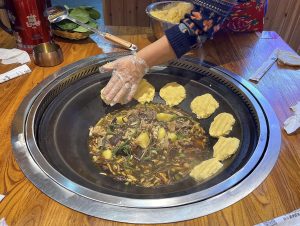
- Savoury stir-fried nian gao, often with shredded greens, pork or sheathed winter vegetables, sometimes a little spicy or sweet-savoury. This is the chao niangao already covered in the sibling article.
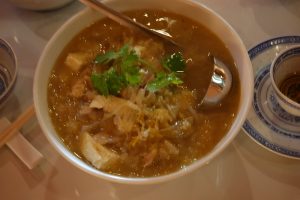
- Slices in soup or a braise, softer, slippery, serving as the starch in a hot bowl on a raw December morning.
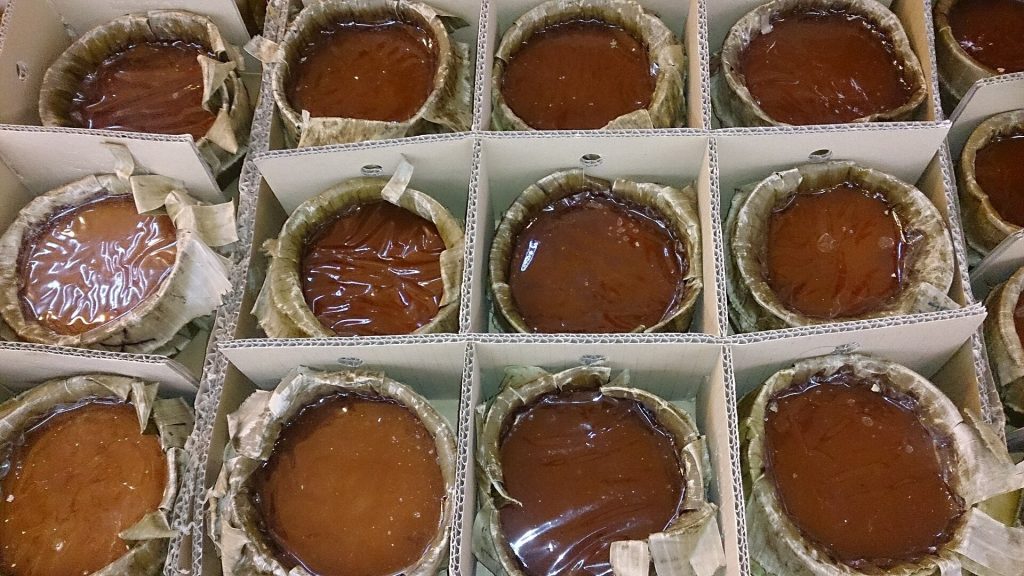
- Sweet styles, steamed or pan-cooked, sometimes with brown sugar, red beans, or osmanthus, closer to a dessert or a gift box than a stir-fry.
Ningbo and other nearby styles appear in Shanghai shops too. If a menu only says 年糕, ask whether it is savoury or sweet, fried or in soup. A staff member can usually point.
How to order as a first-timer
You do not need a perfect accent. You need a decision.
1. Decide sweet or savoury before you reach the front of a busy breakfast line.
2. If you want the familiar Shanghai savoury plate, you can say 炒年糕, or point at a neighbour’s glistening white slices in a wok-dark sauce. Then go back to Shanghai stir-fried rice cakes (chao niangao) for texture and topping details.
3. If you want something festive and sweet, look at the pastry or cake counter, or ask for the sweet nian gao — 甜年糕 — and confirm ingredients if you have a bean or nut allergy.
4. Start with one portion. Glutinous rice sits heavily if you also ordered dumplings, noodles, and a fried bread.
Prices belong on the board in front of you, not in this article. Shop quality varies. A busy breakfast counter with a well-seasoned wok is a safer first experiment than a sealed gift box eaten cold on a hotel bed, though the gift box has its own seasonal charm.
Texture, taste, and small surprises
Cooked savoury slices should be flexible and chewy, not raw-hard or melted into paste. If they taste only of oil, the wok was tired. If they taste mainly of cabbage and soy, you are in the everyday Shanghai lane, and that is a good lane.
Sweet nian gao can be dense. Cut small pieces. Some versions are sticky enough to be a chopsticks test; others slice cleanly like a pound cake. Neither is “more authentic” in a way a visitor needs to police.
If you do not eat pork, ask. Many savoury versions include it. Vegetarian or seafood variants exist in some shops and do not exist in others. We will not invent a city-wide rule.
When and where this food appears
You will notice nian gao more as winter deepens and as New Year displays go up in bakeries. Hotel breakfasts may offer a polite sweet slice. Neighbourhood shops around markets are often more interesting. Night stalls may sell only the stir-fry. None of this requires a reservation or a “hidden courtyard.”
Late December weather is raw; a hot savoury plate or a soup with rice-cake slices makes more sense than a picnic. If you are moving between the Bund and a west-side neighbourhood, treat nian gao as a sit-down bowl, not as walking food, unless the shop clearly sells a dry sweet piece for the road.
A calm first tasting plan
Eat chao niangao once, so you know the savoury city staple. On another morning, try a sweet piece with tea. That is enough to understand the word 年糕 without turning the trip into a rice-cake project. If you love it, you will find it again. If the chew is not for you, Shanghai will forgive you and offer soup dumplings tomorrow — Shanghai xiaolongbao first-timers waits without judgement.
Nian gao is festive without being formal. Order plainly, chew slowly, and let the pun remain a pun rather than a homework assignment.
Related Lovely China reading
For payments, start with Alipay and WeChat Pay hub and WeChat Pay vs Alipay for tourists. For trains, keep high-speed rail first-timers guide and 12306 passport signup for foreigners handy. City hubs: Beijing first-visit guide, Shanghai first-visit guide. Connectivity: roaming vs local SIM honest guide, pocket Wi-Fi vs eSIM for China, offline maps for foreigners. Bookmark China travel tools page.
Practical checklist
- Confirm official rules on the relevant government, park, airline, or bank page near your travel week
- Screenshot bookings, tickets, and QR codes while you still have stable Wi-Fi
- Save hotel and attraction names in Chinese characters in your phone notes
- Carry passport, a backup payment method, and a small cash float (why cash is still needed)
- Test one small mobile payment before you rely on wallets at a gate or taxi
- Keep the China travel tools page bookmarked for related Lovely China hubs
FAQ
Is this the same as stir-fried chao niangao?
Chao niangao is one common Shanghai way to eat rice cake, and we already have a first-timer guide for that stir-fry. This article also covers sweet and festive New Year styles so you can recognise both.
Is nian gao always sweet?
No. In Shanghai you will see savoury stir-fried or soup versions and sweeter steamed or brown-sugar styles. Ask which one you are ordering if the menu only says 年糕.
Does the name have a festive meaning?
Nian gao is often associated with the new year because it sounds like a wish to rise year by year. That is cultural context, not a rule that you must eat it on a particular day.
Can you recommend the best shop?
No. We do not publish fake rankings or prices. Look for a busy breakfast or noodle shop, or a bakery counter, and read the menu in front of you.
Notes for late 2026 travellers
Late December 2026 and the New Year week into 2027 bring colder mornings, earlier sunsets, and holiday crowds in many city hubs. Pack real winter layers in the north, and leave extra time on weekends and around 1 January.
This article does not invent ticket prices, opening hours, processing times, consular fees, or official statistics. When a number matters, verify it on the official site, app screen, or ticket board near your travel week.
If an official rule page disagrees with this guide, follow the official page. Lovely China orients English-speaking travellers; we are not an immigration, banking, or medical authority.