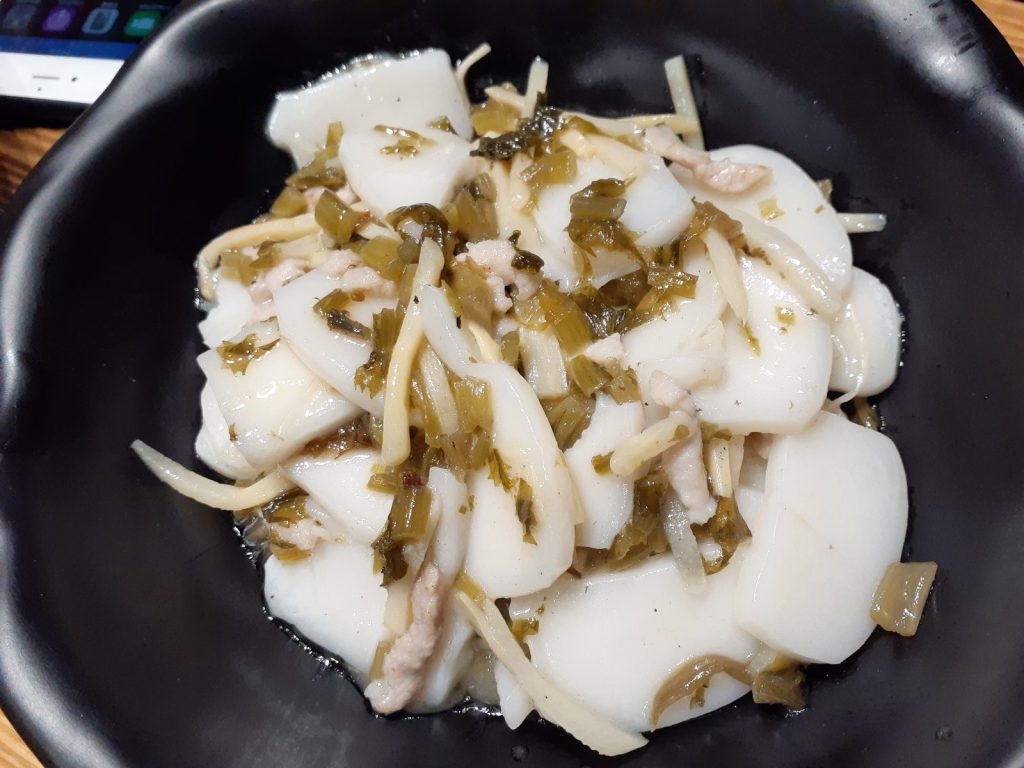
Shanghai stir-fried rice cakes (上海炒年糕, Shànghǎi chǎo niángāo) are one of the city’s most comforting everyday dishes: chewy white ovals of rice cake tossed in a wok with shredded pork, greens and a light soy seasoning. You will find them in noodle shops, Shanghainese family restaurants and home kitchens, and they make an easy, filling lunch for first-timers who want something local that is not soup dumplings. This guide explains what the rice cakes are, the classic versions to order, the autumn crab variation, and what to check if you avoid pork, shellfish or gluten.
What “niangao” means here
Niángāo (年糕) literally means “year cake”, and the name puns on 年高, “higher every year”, which is why rice cakes are a Lunar New Year food across China. But the niangao in Shanghai’s stir-fries is not the sweet, sticky, brown New Year cake you may know from Cantonese or Hong Kong bakeries. It is a savoury, plain white rice cake sold in long flat bars or pre-sliced ovals.
Most of the rice cakes used in Shanghai are Ningbo-style rice cakes (宁波年糕). They are made mainly from japonica (non-glutinous) rice: the rice is soaked, wet-milled, pressed, steamed and pounded into a dense dough, then shaped into bars. Zhejiang’s intangible heritage records describe the water-milled rice cakes of Cicheng, a historic town in Ningbo, as especially fine and smooth. Because the rice is not glutinous, the cakes are chewy and springy rather than gluey, and they hold their shape in a hot wok.
Why a Ningbo cake is a Shanghai classic
Ningbo people were one of the largest migrant groups in Shanghai from the late 19th and early 20th centuries, and they brought their rice cakes with them. A Shanghai newspaper retrospective republished by The Paper argues that Ningbo rice cakes became so embedded that they turned into a Shanghai tradition. Today Shanghai homes cook them almost any way: stir-fried, in soup, with pork chops, with crab.
Classic versions to order
Menus vary, but these are the names you are most likely to see:
- 荠菜肉丝炒年糕 (jìcài ròusī chǎo niángāo) — rice cakes with shepherd’s purse and shredded pork. Shepherd’s purse is a wild green with a fresh, grassy flavour; it is a favourite in Ningbo-style restaurants and many Shanghai shops.
- 黄芽菜肉丝炒年糕 (huángyácài ròusī) — with napa cabbage and pork, often with mushrooms and bamboo shoots. The cabbage softens into a light, slightly thickened sauce; Shanghai families think of it as a homey classic.
- 雪菜肉丝炒年糕 (xuěcài ròusī) — with preserved potherb mustard greens and pork: salty, savoury and very rice-friendly. This is the style in our cover photo.
- 蟹炒年糕 / 毛蟹年糕 (xiè chǎo niángāo / máoxiè niángāo) — rice cakes cooked with crab, an autumn favourite (see below).
- 排骨年糕 (páigǔ niángāo) — fried pork chop served with rice cakes in a sweet-savoury sauce. Strictly a separate dish, it has been a Shanghai snack since the 1930s; Chinese references name Xiandelai (鲜得来) as one of the shops that made it famous.
- 汤年糕 — rice cakes in soup, for when you want a lighter bowl.
If the menu just says 炒年糕, ask what goes in it: 里面有什么?
The autumn angle: crab and rice cakes
October and November are crab season in Shanghai. Alongside the prized hairy crabs eaten steamed, many home cooks and restaurants make crab with rice cakes — crab pieces stir-fried or braised with sliced rice cakes so the cakes soak up the sauce. Small crabs are often used for this dish, which makes it a more relaxed way to taste the season than a full crab banquet. Read our guides to Shanghai crab season 2026 and what to eat in Shanghai’s hairy crab season for the bigger picture. Seasonal crab dishes are priced by market rate; ask before ordering.
Today, Monday 5 October 2026, is day five of Golden Week (roughly 1–7 October; makeup workday Saturday 10 October). Popular Shanghai restaurants are crowded this week; a plate of rice cakes at a neighbourhood noodle shop is a quick, queue-light alternative.
How to order
Stir-fried rice cakes usually come as a single plate for one person, or as a shared dish at a family-style meal.
Useful phrases:
- 炒年糕 — stir-fried rice cakes
- 荠菜肉丝 / 黄芽菜肉丝 / 雪菜肉丝 — shepherd’s purse & pork / napa cabbage & pork / preserved greens & pork
- 不要肉 / 素的 — no meat / vegetarian version
- 少油 / 少盐 — less oil / less salt
- 有没有放猪油? — Is there lard in it?
- 一份 — one portion
- 打包 — takeaway
Pay with Alipay or WeChat Pay. Many noodle shops in Shanghai let you order by scanning a QR code at the table.
What it tastes like
The rice cakes are the main event: chewy, springy and mild, with a slightly crisp edge where they touch the wok. The seasoning is usually light soy, a little sugar (Shanghai cooking tends to be gently sweet), and the savoury depth of pork and greens. It is not spicy unless you add chili sauce. A good plate is glossy but not greasy, and the cakes are separate, not stuck in a lump.
Eat with chopsticks; the cakes are slippery at first, so pinch firmly or use a spoon. Pair with a light soup or a few Shanghai pan-fried buns (shengjianbao) for a full Shanghai lunch, or try scallion oil noodles as the next everyday classic.
Cooking it at home
Supermarkets and wet markets sell packaged Ningbo rice cakes (宁波年糕), either as bars or pre-sliced. Recipes vary, but a basic method is:
1. Slice bars thinly; soak or rinse slices so they do not stick.
2. Stir-fry shredded pork until it changes colour; add your greens.
3. Add the rice cakes with a splash of water or stock and a little soy sauce.
4. Toss until the cakes are soft and chewy all the way through, then season to taste.
Do not swap in Korean cylinder rice cakes (tteok) and expect the same result — they work, but the texture and thickness are different.
Etiquette notes
- At a shared table, take a modest portion with serving chopsticks if provided.
- Rice cakes are filling; order one shared plate for two or three people at a multi-dish meal.
- On Lunar New Year, rice cakes carry the “higher every year” wish, so they make a cheerful dish to serve or bring to a family meal.
- Leaving a few pieces is fine; pushing the whole plate away untouched can seem rude if your host ordered it for you.
Dietary notes
- Pork: most classic versions include shredded pork, and kitchens may cook with lard. Ask 不要肉 and 有没有放猪油? — vegetarian versions with greens and mushrooms are often possible on request.
- Gluten: the rice cakes themselves are rice-based, but soy sauce contains wheat. Coeliacs should be careful.
- Shellfish: crab rice cakes contain crustaceans; avoid if allergic, and note shared woks.
- Sugar: Shanghai seasoning often includes a little sugar.
- Halal: standard Shanghainese restaurants are not halal; see our halal food guide.
- Texture: chewy rice cakes need careful chewing for small children and older people.
Common first-timer mistakes
- Expecting the sweet, sticky New Year niangao
- Confusing it with spicy Korean tteokbokki
- Ordering crab rice cakes without checking the market price
- Letting leftovers go cold — rice cakes harden quickly; reheat in a pan
- Assuming a greens-only plate is vegetarian without asking about lard or stock
FAQs
What is chao niangao in English? Stir-fried rice cakes — chewy slices of rice cake stir-fried with meat and vegetables.
Are Shanghai rice cakes glutinous? The Ningbo-style rice cakes used in Shanghai are made mainly from japonica (non-glutinous) rice, which makes them chewy rather than sticky.
Is it spicy? No. Shanghai-style rice cakes are savoury and mildly sweet; chili is optional.
Is it vegetarian? Usually not as served, but many shops can make a version without meat. Ask about lard.
When is crab rice cake season? Autumn, especially October and November.
Is it the same as Korean tteokbokki? No. Both use rice cakes, but tteokbokki is a spicy Korean dish with cylinder-shaped cakes.
Before you go
Save 炒年糕 and your preferred version on your phone, ask about pork and lard if needed, and try the crab version while the season lasts. A plate of Shanghai stir-fried rice cakes is a humble, delicious window into how Ningbo and Shanghai food grew up together. Planning your trip? Start with our Shanghai first visit guide.
Lovely China was founded in 2025 to publish practical English guides for travellers and expats in China. Questions or a broken link? Email [email protected].
Cover photo: Zihfaboecfoak / Wikimedia Commons (CC BY-SA 4.0).