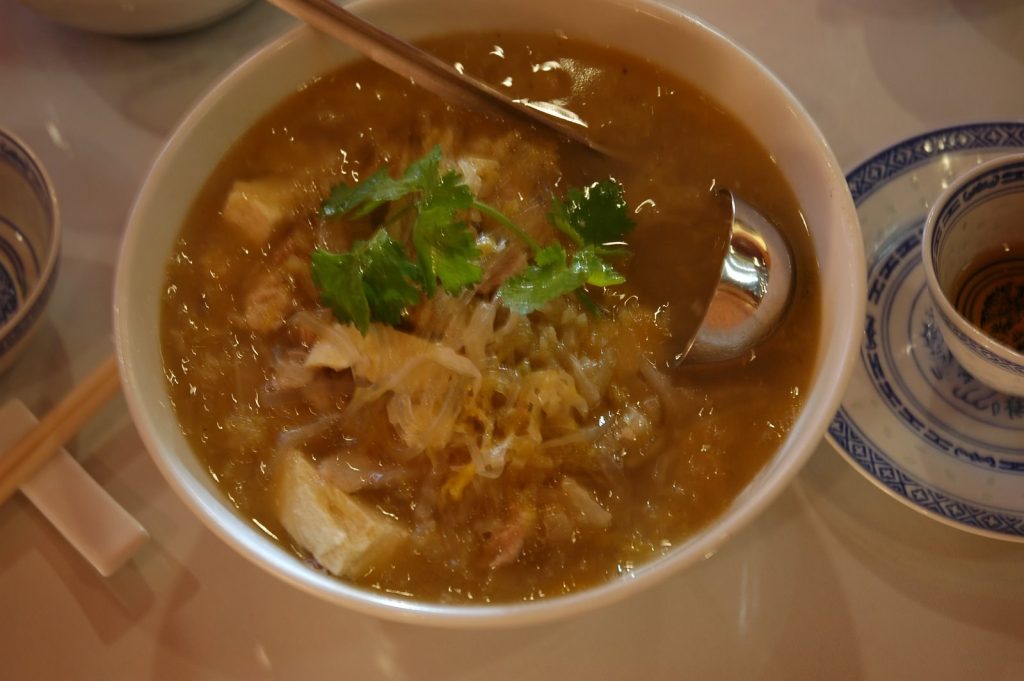
酸菜白肉 (suan cai bai rou) is a Northeast comfort dish of sour pickled Chinese cabbage cooked with pork, often pork belly, until the leaves go silky and the meat turns tender and rich. In late autumn and through a late-December stay in the north, it appears in Dongbei restaurants, in some family-style rooms, and on cold-night tables far from Harbin. It is not Sichuan chilli theatre, and it is not the same pot as 猪肉炖粉条 (Dongbei pork stewed with vermicelli), a sibling we have already written for first-timers.
If you have already tried Dongbei pork stewed with vermicelli (猪肉炖粉条), treat this as a sibling, not a sequel with noodles: the sour pickle is the point, and the pork is there to flavour the broth and to eat with rice.
What arrives at the table
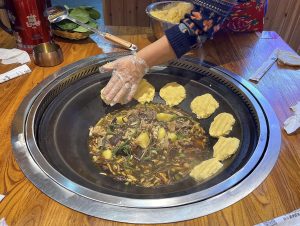
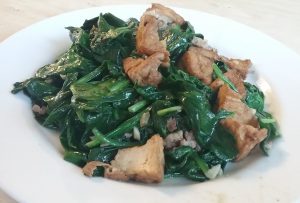
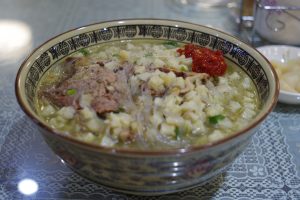
You will usually see a deep bowl or a metal or clay pot: pale, sour cabbage in a milky or light broth, with slices of pork that still have a layer of fat. Houses vary. Some keep it almost austere—pickle, pork, maybe a little chilli or garlic. Others add potato, vermicelli, blood sausage, or a heavier chilli kick. Ask, or look at the next table, before you assume it is mild.
The taste you should expect is sour and savoury first, rich from the pork, and only sometimes spicy. If you want it less oily, you can lift cabbage and leaner slices and leave some fat in the pot, just as you would with a hearty stew. If you want more heat, ask whether they can add chilli; do not invent a standard spice scale. how to order from a Chinese menu helps if the menu is only in Chinese: look for 酸菜白肉, and show the characters if you need to.
It is a shared dish. Eat it with rice, not as a lonely soup. A table may also order a lighter vegetable, a cold starter, or dumplings. shared dishes and lazy Susan etiquette covers the communal manners; Beijing mutton hotpot first-timers is a different northern meat-and-broth ritual and should not be confused with this pickle pot.
How to order without folklore
- Say 酸菜白肉, or point to the characters
- Ask whether it is a pot for two or a small plate if you are dining alone; portions can be generous
- Mention if you cannot eat pork, because this is a pork dish; a “vegetable suan cai” is a different request and may not exist in every room
- If you avoid very fatty cuts, you can ask for more lean meat, but the classic plate is proud of its fat
- In a Dongbei restaurant in Beijing, Shanghai, or a northeastern city, this is an ordinary order, not a performance
We will not invent prices. Pay as the house asks, usually by QR, and keep a cash backup as always.
What it is not
It is not 杀猪菜 in every restaurant, though some houses serve a wider butcher’s-feast spread that includes suan cai. It is not Korean-style kimchi stew, even if both are sour cabbage dishes; the pickle, cut, and pork treatment are Chinese Northeast. It is not a street snack you eat while walking. Sit down, share, and slow down.
Dietary notes are simple and should stay honest: this is pork, often fatty pork, with pickled cabbage that may be made with salt and a little chilli. If you need a vegetarian table, vegetarian or vegan in Chinese restaurants is the wider dining article; this particular dish will not be the centre of that meal.
When it fits a trip
A late-December evening in Beijing after a windy palace day, a first night in Shenyang or Harbin, or a Dongbei restaurant in another hub, are all natural times. If you are in Harbin, pair the meal with the city plan in Harbin late December first-visit planner, not with a second heavy stew on the same plate. If you already had 猪肉炖粉条 at lunch, choose something lighter at night.
Recheck nothing official here except your own appetite. Lovely China describes the table; we do not certify a recipe.
Ground-level reminders for this topic
Stay flexible when a counter, app screen, or staff instruction disagrees with a blog. Lovely China orients travellers; live official pages and bilingual signs win. Keep China travel tools page, essential apps for foreigners, and Alipay and WeChat Pay hub bookmarked so logistics stay boring while you focus on the angle of this guide: what first-timers should expect from Northeast Chinese suan cai bai rou (酸菜白肉): the sour pickled-cabbage and pork pot, how it is usually served, and how to order it in late-autumn and winter meals.
Related Lovely China reading
For payments, start with Alipay and WeChat Pay hub and WeChat Pay vs Alipay for tourists. For trains, keep high-speed rail first-timers guide and 12306 passport signup for foreigners handy. City hubs: Beijing first-visit guide, Shanghai first-visit guide. Connectivity: roaming vs local SIM honest guide, pocket Wi-Fi vs eSIM for China, offline maps for foreigners. Bookmark China travel tools page.
Practical checklist
- Confirm official rules on the relevant government, park, airline, or bank page near your travel week
- Screenshot bookings, tickets, and QR codes while you still have stable Wi-Fi
- Save hotel and attraction names in Chinese characters in your phone notes
- Carry passport, a backup payment method, and a small cash float (why cash is still needed)
- Test one small mobile payment before you rely on wallets at a gate or taxi
- Keep the China travel tools page page bookmarked for related Lovely China hubs
FAQ
Is 酸菜白肉 the same as 猪肉炖粉条?
No. Both are Northeast comfort dishes, but suan cai bai rou is sour pickled cabbage with pork. Pork stewed with vermicelli is a different pot, already covered in its own first-timer guide.
Is it very spicy?
Not automatically. The usual impression is sour and rich. Some houses add chilli; ask if you need it mild or hotter, and do not expect a standard number on a spice scale.
Can it be made vegetarian?
This is a pork dish. Ask the restaurant if they offer a vegetable suan cai, but do not assume it. Use our vegetarian dining guide when the whole table needs a meat-free meal.
Notes for late 2026 travellers
Late December 2026 and the New Year week into 2027 bring colder mornings, earlier sunsets, and holiday crowds in many city hubs. Pack real winter layers in the north, and leave extra time on weekends and around 1 January.
This article does not invent ticket prices, opening hours, processing times, consular fees, or official statistics. When a number matters, verify it on the official site, app screen, or ticket board near your travel week.
If an official rule page disagrees with this guide, follow the official page. Lovely China orients English-speaking travellers; we are not an immigration, banking, or medical authority.