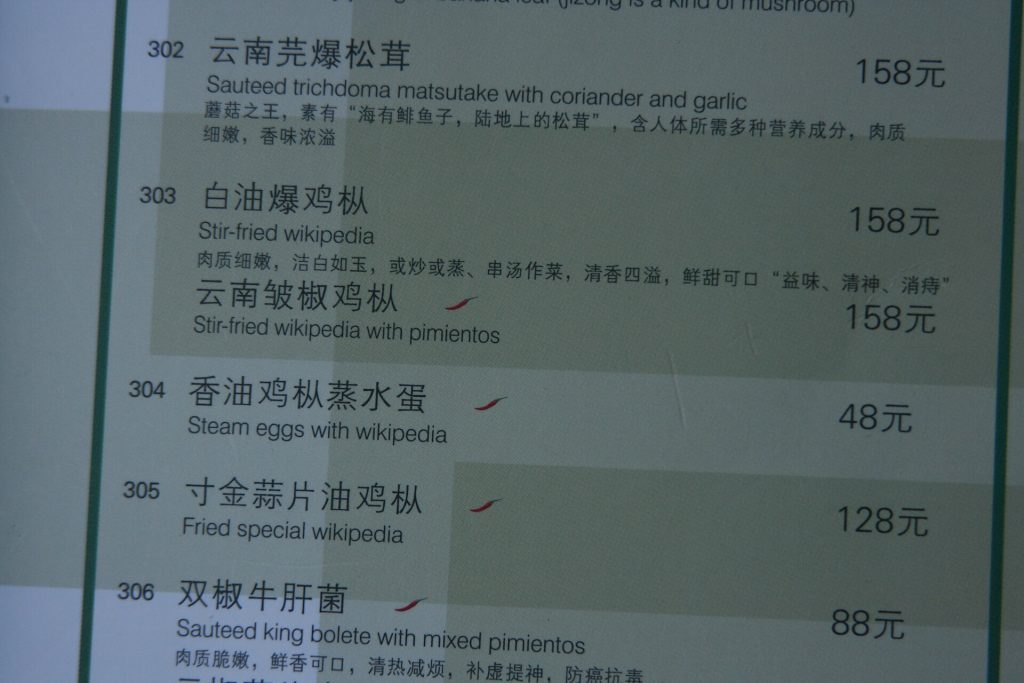
You do not need fluent Chinese to eat well in a Chinese restaurant. You do need a method, because many places will not produce a full English menu, and a camera translation can misread a special as confidently as it reads a staple. This is a practical ordering guide: picture menus, pointing, useful phrases, allergy notes, set meals, and how you usually pay. It is not a list of famous dishes, and it does not claim that every dining room is ready for tourists.
Offline translation packs belong in translation app offline packs; camera-translation habits are in camera and offline translation apps. Payment choice is WeChat Pay vs Alipay for tourists. If you are in a busy lunch line, queue etiquette for foreigners is the courtesy piece.
Start with what the room already offers
Look around before you invent a plan. Many everyday restaurants put photographs on the wall, in a paper menu, or on a laminated folded card. Some have a plastic display case of model dishes. Some write a short list of 特色 (house specials) on a board. These are your friends. Point to a picture and catch the server’s eye. A nod, a number of plates, and a confirmation look go a long way.
If there is a set meal, lunch combo, or 套餐, it is often the path of least confusion: one price-like line (which we will not invent), a staple, a dish or two, and maybe soup or a drink. Point at the set, or say you would like that one, rather than building a custom banquet from characters you cannot parse.
Do not assume an English menu exists in the back. Asking once, politely, is fine. Asking repeatedly, or photographing every page over a neighbour’s shoulder, is not. If the only menu is Chinese and has no photos, the camera and a short conversation are next.
Camera translation, and its honest limits
A camera or overlay translation can turn a wall of characters into something you can act on, especially if you already downloaded an offline pack (translation app offline packs, camera and offline translation apps). It can also invent a dish, miss a negation, or turn a cut of meat into a vegetable. Use it to shortlist, then confirm with the server.
Hold the phone steady, translate the line, and point at the original characters as you speak. If a word looks like a famous dish you know, good. If a translation sounds poetic and unlikely, ask. The goal is a shared finger on the same line, not a perfect literary rendering.
Lighting, fancy calligraphy, and glossy menu paper all confuse cameras. So does a crowded table. Step aside rather than blocking a narrow aisle.
Useful confirmations, including heat and allergies
A few spoken or written checks prevent most unhappy surprises:
- 不太辣 — not too spicy, if you want the heat turned down
- 过敏 — allergy, followed by the thing you cannot eat, ideally written
- 这个 — this one, while pointing
- 不要 — I don’t want… (useful if a default topping is a problem)
We do not present these as official or unique spellings; they are ordinary words staff hear often. Pronunciation will be imperfect. Written characters on a note, plus a pointing finger, usually travel better than a memorised sentence you whisper into the menu.
If you have a serious allergy, a short card in Chinese listing the allergen, and the fact that it is an allergy, is worth more than a phrasebook flourish. Show it early, not after the first bite. Translation apps still miss “stock,” “lard,” or a dried shrimp garnish; if the risk is medical, choose simpler dishes or a restaurant used to special requests, and still confirm.
Vegetarian and vegan limits are a sibling topic of their own, not a subsection we will expand here.
How you order, and how you pay
In small restaurants you may order at the counter, then sit, or sit and have a server come to you. Watch the next table for ten seconds. In busier canteens you take a ticket, a number, or a tray. Do not start a long translation session at the front of a lunch rush; step aside, decide, then order (queue etiquette for foreigners).
Quantities: one dish per person as a starting point is often too little if you are sharing, and too much if everyone ordered a large meat plate plus rice. If you are two people, two or three dishes plus staple is a common shape. You can add later more easily than you can explain a cancellation.
Payment may happen at the table by scanning a code, or at a cashier on the way out. Follow the house. Alipay and WeChat Pay are common; cards and cash are not guaranteed at every small shop (WeChat Pay vs Alipay for tourists, when you still need cash). If a QR code sits on the table, that is often how the bill is meant to be settled.
A calm order is: see what the room makes easy, confirm heat and allergies, point at the line you mean, and pay the way the house already pays. Recheck any written allergy note before you reuse it on a later trip, and treat the camera as a helper, not as a fluent dining companion.
Related Lovely China reading
For payments, start with Alipay and WeChat Pay hub and WeChat Pay vs Alipay for tourists. For trains, keep high-speed rail first-timers guide and 12306 passport signup for foreigners handy. City hubs: Beijing first-visit guide, Shanghai first-visit guide. Connectivity: roaming vs local SIM honest guide, pocket Wi-Fi vs eSIM for China, offline maps for foreigners. Bookmark China travel tools page.
Practical checklist
- Confirm official rules on the relevant government, park, airline, or bank page near your travel week
- Screenshot bookings, tickets, and QR codes while you still have stable Wi-Fi
- Save hotel and attraction names in Chinese characters in your phone notes
- Carry passport, a backup payment method, and a small cash float (why cash is still needed)
- Test one small mobile payment before you rely on wallets at a gate or taxi
- Keep the China travel tools page page bookmarked for related Lovely China hubs
FAQ
Will every restaurant have an English menu?
No. Many everyday places use photo menus, wall pictures, or Chinese-only lists. Point, use a camera translation as a shortlist, and confirm the line with the server.
How should I flag an allergy?
Show a short written note in Chinese early, not after the first bite. Useful words include 过敏 and, for heat, 不太辣. Camera translations can miss stock or garnishes, so confirm when the risk is medical.
Do I pay at the table or the counter?
Follow the house. Some rooms scan a code at the table; some take payment at a cashier on the way out. Watch the next table for ten seconds before you invent a process.
Notes for late 2026 travellers
November and early December bring cooler mornings, earlier sunsets, and comfortable walking weather across much of eastern and central China. Pack layers and leave extra time on clear weekends at popular sights.
This article does not invent ticket prices, opening hours, processing times, consular fees, or official statistics. When a number matters, verify it on the official site, app screen, or ticket board near your travel week.
If an official rule page disagrees with this guide, follow the official page. Lovely China orients English-speaking travellers; we are not an immigration, banking, or medical authority.