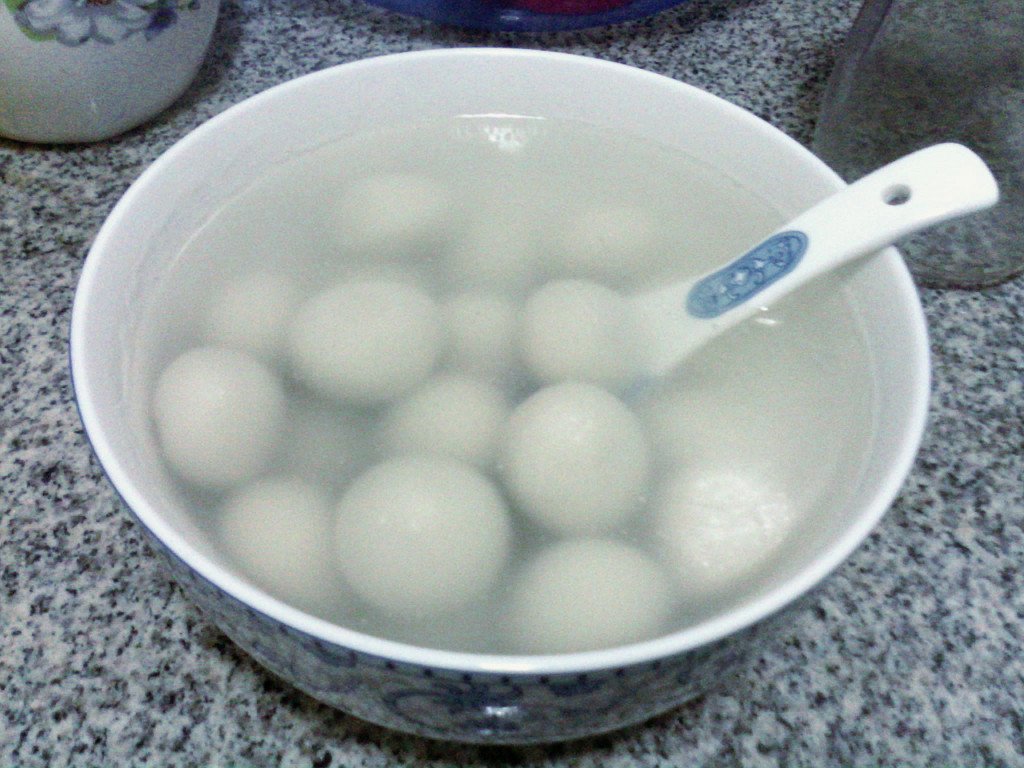
Ningbo tangyuan (宁波汤圆, also called 宁波汤团 tāngtuán locally) are the most famous version of China’s sweet glutinous rice balls: smooth white skins around a molten filling of black sesame, sugar and pork lard, served in hot, lightly sweet water, often with a spoonful of sweet osmanthus. They are a Lunar New Year breakfast in Ningbo, a year-round dessert in shops, and one of the best-known frozen foods in Chinese supermarkets. This guide explains what makes the Ningbo style special, where to try them, how to eat them without burning your mouth, and what to know if you avoid pork.
What makes Ningbo tangyuan different
Tangyuan are eaten all over China, with sweet and savoury versions from Sichuan to Fujian. Ningbo’s reputation rests on two things:
The wet-milled skin
Traditional Ningbo tangyuan use shuǐmó fěn (水磨粉), water-milled glutinous rice flour. A 2024 Ningbo Evening News piece describes the old home process: glutinous rice soaked for more than ten hours, ground with water on a stone mill, and the slurry hung in a cloth bag to drip dry. The result is a very fine dough. Chinese references describe the finished skin as white and glossy, soft and sticky but not gluey — nuò ér bù nián (糯而不粘).
The black sesame and lard filling
The classic filling, known in Ningbo as hēi yáng shā (黑洋沙) or sesame-lard filling, is toasted black sesame ground to a powder, mixed by hand with pork leaf lard and fine white sugar. When cooked, the lard melts and the filling turns into a hot, glossy black liquid that flows out at the first bite — the moment every Ningbo tangyuan fan waits for. This style became so influential that Shanghai shops widely adopted the Ningbo method too.
The Ningbo tangtuan-making technique (宁波汤团制作技艺) is on Zhejiang’s provincial intangible cultural heritage list, and the Ningbo Evening News reports that Kongyagou is the designated bearer of that tradition. The same paper notes that tangyuan in Ningbo are traced back to the Song–Yuan period, when a poem about “floating round dumplings” (浮圆子) gave the earliest written mention.
A famous name: Kongyagou
The best-known Ningbo tangyuan brand is 缸鸭狗 (Gāng Yā Gǒu, often written Kongyagou or Gangyagou). According to the company’s official site, it was founded in 1926 by Ningbo native Jiang Dingfa. Its odd name — literally “jar, duck, dog” — comes from a dialect pun on his childhood nickname, Jiang A-gou, and its old shop sign showed exactly that: a jar, a duck and a dog. The business began as a sweet-food stall outside Ningbo’s old City God Temple, and the Ningbo Evening News recalls an old local rhyme about craving Kongyagou’s lard tangyuan so much that you would pawn your coat to pay. Today it is a China Time-Honored Brand (中华老字号).
The brand has restaurants in Ningbo and also sells frozen tangyuan. Branches, hours and menus change; check a map or delivery app before you go. The official menu also lists other fillings such as osmanthus and durian, and a 素 (vegetarian-labelled) black sesame option.
Where to eat Ningbo tangyuan
- Ningbo’s old town: dessert and snack shops around Tianyi Square and the Chenghuang Temple area serve bowls all day. Pair a bowl with a Ningbo autumn weekend trip from Shanghai or a visit to Tianyige Library.
- Shanghai: Ningbo-style tangyuan are a Shanghai staple, a legacy of the many Ningbo migrants who shaped the city. Chinese references note that a Ningbo tangyuan shop at Shanghai’s City God Temple has long been well known — handy if you are visiting Yu Garden this autumn.
- Jiangnan dessert shops and Shanghainese restaurants across China often list 宁波汤圆 on the dessert menu.
- Supermarket freezers: frozen packs labelled 宁波汤圆 or 黑芝麻汤圆 are sold nationwide and are easy to cook in a hotel kettle-room or apartment.
Useful phrases:
- 宁波汤圆 / 宁波汤团 — Ningbo tangyuan
- 黑芝麻馅 — black sesame filling
- 猪油 — lard
- 有没有不放猪油的? — Do you have any without lard?
- 加桂花 — with osmanthus
- 一碗 / 几个一碗? — one bowl / how many per bowl?
- 打包 / 冻的 — takeaway / frozen
Prices depend on the shop and portion; check the menu.
How to eat tangyuan (and not burn yourself)
The filling is far hotter than the skin feels. Treat the first one with respect:
1. Lift a tangyuan onto your spoon with a little soup.
2. Let it cool for a moment.
3. Take a small bite from the side, not the whole ball.
4. Let the sesame filling run onto the spoon, then eat the rest.
Drink some of the sweet soup between bites. Most bowls hold several tangyuan; you do not have to finish them all.
Safety note: glutinous rice is very sticky. Chinese doctors and health media regularly warn about choking on tangyuan around festivals, particularly for young children and older people. Cut tangyuan into smaller pieces for kids, eat slowly, and do not talk or laugh with a mouthful.
What it tastes like
Expect a silky, stretchy skin with almost no flavour of its own, followed by a rich, nutty, toasted-sesame filling that is sweet and buttery-smooth from the lard. The soup is lightly sweet and, with osmanthus, faintly floral. It is comforting and filling — a bowl can easily replace breakfast. If you liked osmanthus desserts beyond mooncakes, osmanthus-topped tangyuan are an easy next step.
When locals eat tangyuan
- Lunar New Year’s morning: in Ningbo, eating tangyuan together on the first morning of the new year is a family custom; the round shape stands for togetherness (团圆).
- Lantern Festival: the 15th day of the first lunar month is the national tangyuan/yuanxiao day; see our Lantern Festival guide.
- Winter Solstice (冬至): many Jiangnan families eat tangyuan in late December.
- Any cool day: shops sell them year-round, and autumn is a natural time to start.
Today, Monday 5 October 2026, is day five of Golden Week (roughly 1–7 October; makeup workday Saturday 10 October). Ningbo’s old-town snack streets are busy during the holiday; go mid-afternoon or try a neighbourhood dessert shop if queues are long.
Cooking frozen Ningbo tangyuan at home
1. Bring a pot of water to a full boil.
2. Add the frozen tangyuan straight from the freezer — do not thaw.
3. Stir gently so they do not stick to the bottom.
4. When the water returns to the boil, add a splash of cold water; repeat once or twice. The Ningbo Evening News article describes this same old home technique.
5. They are ready when all the balls float and the skins look slightly translucent.
6. Serve in some of the cooking water with sugar and sweet osmanthus, or with fermented rice wine (酒酿).
Dietary notes
- Pork lard: the traditional filling contains lard (猪油). Not suitable for vegetarians, vegans, or anyone avoiding pork unless the label or shop confirms no lard. Ask 有没有不放猪油的?; some frozen brands make lard-free versions, so read ingredients.
- Halal: classic Ningbo tangyuan are not halal. Look for halal-certified brands; see our halal food guide.
- Sesame: a major allergen — the whole point of the filling.
- Gluten: glutinous rice is gluten-free despite the name, but frozen products may include other ingredients; read labels.
- Sugar: filling and soup are both sweet.
- Peanuts and nuts: some shops sell peanut or mixed-nut fillings; ask if allergic.
Common first-timer mistakes
- Biting a whole tangyuan straight from the pot and scalding your mouth
- Assuming black sesame filling is vegetarian
- Thawing frozen tangyuan, which makes them split
- Giving whole tangyuan to toddlers
- Confusing tangyuan (wrapped by hand) with northern yuanxiao (rolled in dry flour) — related but different
FAQs
What is the difference between tangyuan and tangtuan? Same food. Ningbo and other Wu-dialect areas often say 汤团 (tāngtuán).
Is Ningbo tangyuan vegetarian? Traditionally no, because the filling uses pork lard. Ask or check the label.
Are tangyuan only eaten at festivals? No. Shops sell them all year, though they are most popular in cold months and at New Year and the Lantern Festival.
Where can I buy them outside Ningbo? Shanghai and Jiangnan dessert shops, Shanghainese restaurants, and supermarket freezers across China.
How many should I eat? Start with a small bowl. They are dense and filling.
Before you go
Remember 宁波汤圆 and 黑芝麻, ask about lard if it matters, bite carefully, and add osmanthus if offered. A steaming bowl of Ningbo tangyuan on a cool autumn day is one of the simplest pleasures of eastern China.
Lovely China was founded in 2025 to publish practical English guides for travellers and expats in China. Questions or a broken link? Email [email protected].
Cover photo: Huihermit / Wikimedia Commons (CC0).