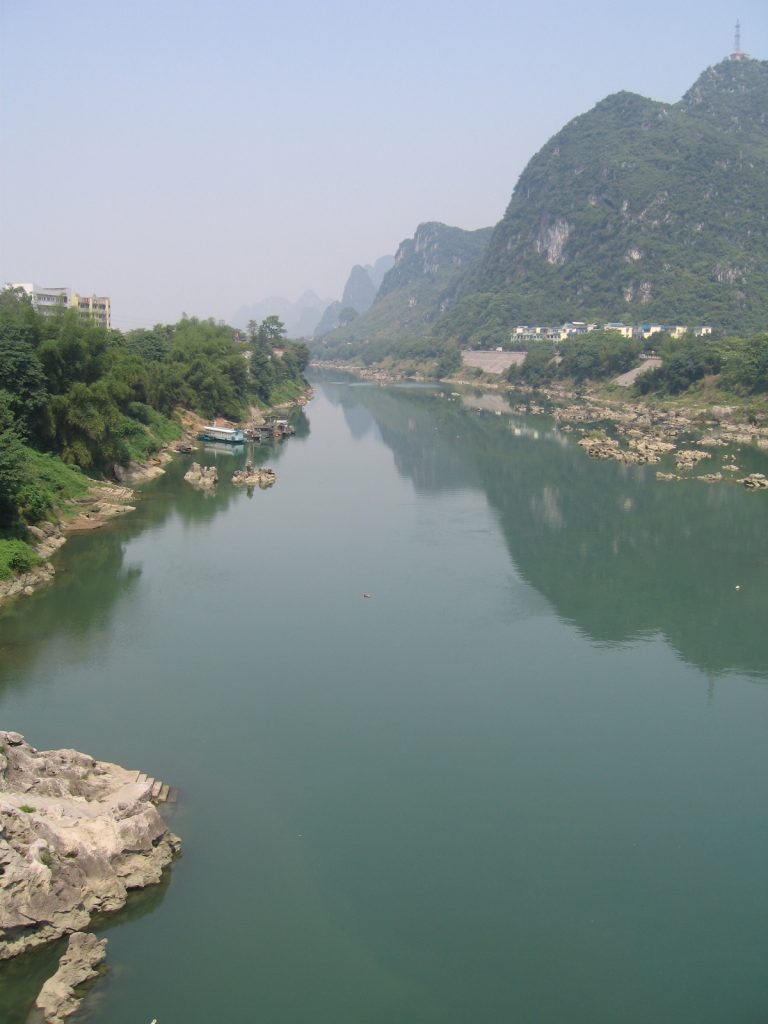
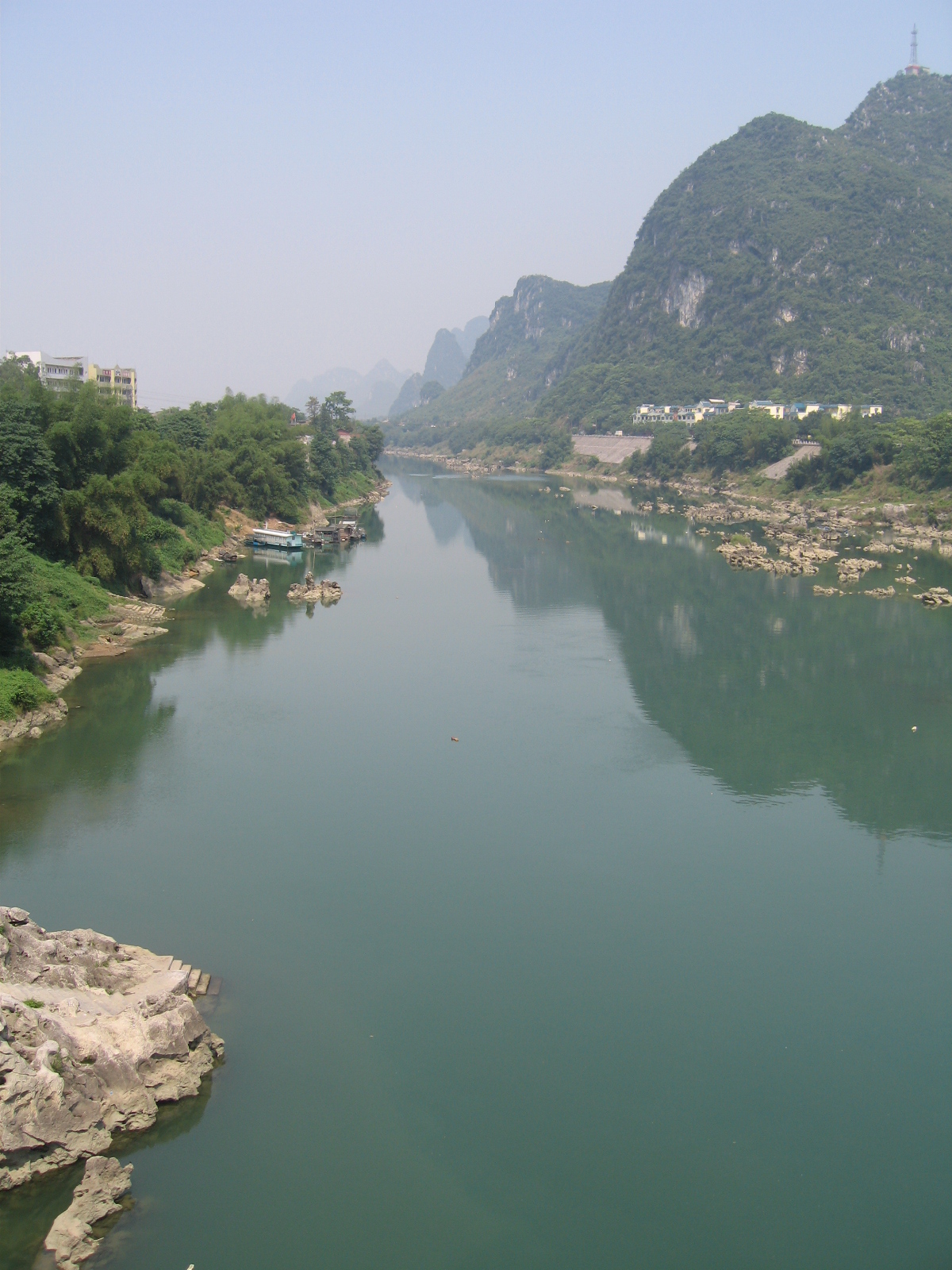
The minibus from Guilin drops you at a crossroads where the karst peaks close in like a fist around the Hongshui River. No tourist kiosk, no English signage, just a row of three-wheeled taxis idling under banyan trees and the smell of rice noodles steaming from a stainless pot. You are in Yizhou, a working river town in northwestern Guangxi where the limestone scenery rivals Yangshuo but the foreign faces are few enough that shopkeepers still stare.
Getting There Without a Tour Bus
Trains now stop at Yizhou Station on the Guiyang–Nanning high-speed line, cutting the ride from Guilin to just over an hour. If you prefer wheels, the long-distance bus station on Jiefang Road runs coaches to Guilin (four hours), Nanning (six), Guangzhou (twelve), and Guiyang (eight). Buses leave when full, so arrive early in the morning if you want a seat by the window. Tickets are bought at the counter with cash or a quick WeChat scan; no advance booking needed outside of the Spring Festival rush.
Moving Around the Valley Floor
The city stretches along a narrow plain between the river and the cliffs. Metered taxis start around eight yuan and cover most trips across town. For short hops, flag down a green three-wheeler — sanlunche — and agree on a price before you climb in; three to five yuan usually covers a neighborhood ride. Drivers know every alley, but few speak English. Have your destination written in Chinese or dropped as a pin on your phone map. Shared electric scooters cluster near the station and the main shopping street; scan the QR code, helmet optional but smart.
When the Sky Turns into a Battlefield
The single best week to be here falls on the lunar new year, usually the second new moon after winter solstice. Families spill onto the riverside promenade after the reunion dinner, and the fireworks start before midnight. By one in the morning the air is thick with sulfur and red paper confetti, the noise a rolling thunder that bounces off the karst walls. Hotels fill fast — book a room at least two weeks ahead if you plan to stay. If you arrive without a reservation, walk the backstreets near the old bus depot; family guesthouses sometimes keep a spare bed for walk-ins.
Karst Without the Crowds
The limestone towers here rise straight from rice paddies and fish ponds, not from a manicured park. Rent a bicycle from the shop beside the north bridge (twenty yuan a day, deposit held via phone) and follow the concrete dike road west toward Longtou Village. The path threads between peaks that locals call Sleeping Dragon and Phoenix Crown. No ticket booth, no guardrails — just farmers waving from water buffalo trails. Pack water, a hat, and a flashlight for the unlit caves that puncture the cliffs. In late spring the rapeseed flowers turn the valleys gold; in autumn the rice turns amber and the air smells of drying chili.