The minibus rattles to a halt beside a cracked stone archway, and the conductor shouts something that sounds like “Shenhou!” through the open door. Steam rises from a vendor’s copper pot of mutton broth across the lane, mixing with the scent of wet clay and woodsmoke. An old woman in a blue padded jacket waves a bamboo fan over a tray of cooling porcelain bowls, their glazes catching the weak winter sun. This is Yuzhou — no tourist shuttle, no ticket gate, just a working town where the kilns have never really gone cold.
Getting Oriented in the Central Plains
Yuzhou sits in central Henan, about two hours by slow train from Zhengzhou. The city spreads along the Ying River, flat and dusty in winter, green and heavy with corn in summer. Most visitors come for Shenhou Ancient Town, twelve kilometers northeast of the city center, but the administrative area also takes in Lotus Mountain to the south and a scattering of Xia dynasty sites along the river terraces. Buses marked “Shenhou” leave from the square behind Yuzhou Railway Station every twenty minutes. The ride costs pocket change and drops you at the town’s south entrance, where the main street begins its climb toward the old kiln sites.
Shenhou Ancient Town: Walking the Kiln Road
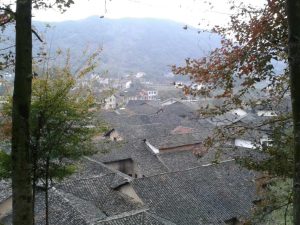
The main street runs north-south, paved with uneven flagstones worn smooth by centuries of cart wheels and bare feet. Ming and Qing dynasty shopfronts lean into each other, their wooden lattices darkened by time. Every few meters, a courtyard gate opens onto a workshop where someone is still throwing, trimming, or glazing Jun ware. The glaze recipes — copper red, sky blue, moon white — are family secrets passed down through generations. You can watch a master pull a vase from the wheel in ninety seconds, then walk three doors down and see his cousin loading a wood-fired kiln the size of a shipping container.
- Jun Porcelain Museum: Housed in a restored Qing guild hall. Three floors of shards and masterpieces, with English labels on the major pieces. Allow ninety minutes.
- Ancient Kiln Site: Excavated mound behind the museum showing cross-sections of Song through Qing firing chambers. Glass walkway lets you peer into ash layers.
- Street-level workshops: Look for the red paper lanterns. Most welcome visitors who ask before photographing. Some offer half-hour throwing sessions for fifty to eighty yuan.
- Tea houses in converted courtyards: Order a pot of Xinyang maojian and sit on heated brick beds (kang) while the owner explains glaze chemistry.
Weekends bring tour groups from Zhengzhou by mid-morning. Come on a weekday if you want the street to yourself. The town effectively shuts down after dark — last bus back to Yuzhou city leaves around six thirty.
Lotus Mountain: Taoist Temples and Forest Trails
Twenty kilometers south of the city, Lotus Mountain rises like a green fist from the plain. The main peak holds a Taoist complex dating to the Tang, rebuilt after a fire in the early Republic. Stone steps climb through cypress stands to the Jade Emperor Hall, where incense coils hang thick enough to obscure the roof beams. Pilgrims tie red ribbons to the ancient ginkgo beside the courtyard — some as thick as a wrist, layered over decades.
The Forest Botanical Garden occupies the lower slopes. Gravel paths wind past labeled specimens: dove tree, Chinese yew, dawn redwood. In the fourth lunar month, the mountain’s namesake lotus ponds bloom below the temple walls. A cable car runs from the parking lot to the mid-mountain pavilion, but the walk up takes forty minutes and lets you hear the wind in the pines without engine noise.
Xia Dynasty Roots: The Capital That Wasn’t
Yuzhou claims the Xia capital at Wangchenggang, a rammed-earth platform twenty minutes west by taxi. Archaeologists uncovered palace foundations, bronze workshops, and a moat system here in the 1970s. The site museum displays pottery tripods, jade axes, and a reconstructed section of city wall. Information panels are mostly Chinese; hire the retired teacher who waits at the gate — he’ll walk you through the stratigraphy in broken English and gestures, pointing out where the flood layer marks the Great Yu’s legendary waterworks.
Don’t expect a grand ruin. The platform is a grassy mound grazed by sheep, the moat a dry ditch full of reeds. What you get is scale: the sense of a polity that could move this much earth four thousand years ago.
Eating in Yuzhou: Mutton, Beef, and Kiln-Fired Noodles
Yuanhu mutton soup defines the local palate. The broth starts before dawn: whole sheep bones, ginger, peppercorn, and a handful of dried jujubes simmered until the liquid turns white and viscous. Bowls arrive with a side plate of cilantro, chili oil, and fermented bean curd. You tear pieces of unleavened flatbread into the soup, let them soften, then drink the lot. Best eaten at the alley stall behind the city’s main mosque, where the broth has been replenished daily for thirty years.
Fanpo whole beef banquet is a production. A single cow yields twenty-some dishes: cold-sliced shank with garlic, braised tendon until it quivers, stir-fried tripe with pickled chili, bone marrow scooped hot from the femur. Restaurants in Fanpo township, forty minutes north, serve it family-style on lazy Susans. Order the “small table” for four people — still more meat than you can finish.
- Yuanhu mutton soup: Sheep bones, ginger, Sichuan peppercorn, dried jujubes, salt. Simmer six hours. Serve with torn flatbread, cilantro, chili oil, fermented bean curd.
- Jun kiln roasted chicken: Whole chicken stuffed with scallion, ginger, star anise. Wrapped in lotus leaf, then clay. Buried in warm kiln ash for two hours. Crack the shell at the table.
- Hand-pulled noodles in beef broth: High-gluten flour, alkaline water, pulled to order. Broth from beef bones, white radish, coriander root. Topped with braised beef slices and chili oil.
Practical Rhythms and Common Missteps
Spring and autumn are the sweet spots — the fourth and ninth lunar months especially. Summer heat traps you in the kiln workshops; winter wind cuts across the plain and makes the mountain steps treacherous. Cash is still king in Shenhou workshops and rural restaurants. WeChat Pay works in the city hotels and museum ticket offices, but carry small bills for the mutton soup lady.
Newcomers often try to “do” Yuzhou in a day trip from Zhengzhou. You’ll spend four hours on the road and two rushing through Shenhou. Stay overnight in a courtyard guesthouse in the ancient town — rooms run one to two hundred yuan, heated by the same kang beds the owners sleep on. Wake before the tour buses, walk the empty street while the kilns exhale overnight smoke, and you’ll understand why the potters never left.
Another mistake: buying the first “antique” Jun piece a street vendor shows you. Authentic Song shards are study pieces, not souvenirs. If you want a real bowl, commission one from a workshop master. He’ll write your name on the base in cobalt, fire it in the next batch, and you can collect it on your return trip — or have it mailed. The wait is part of the object.