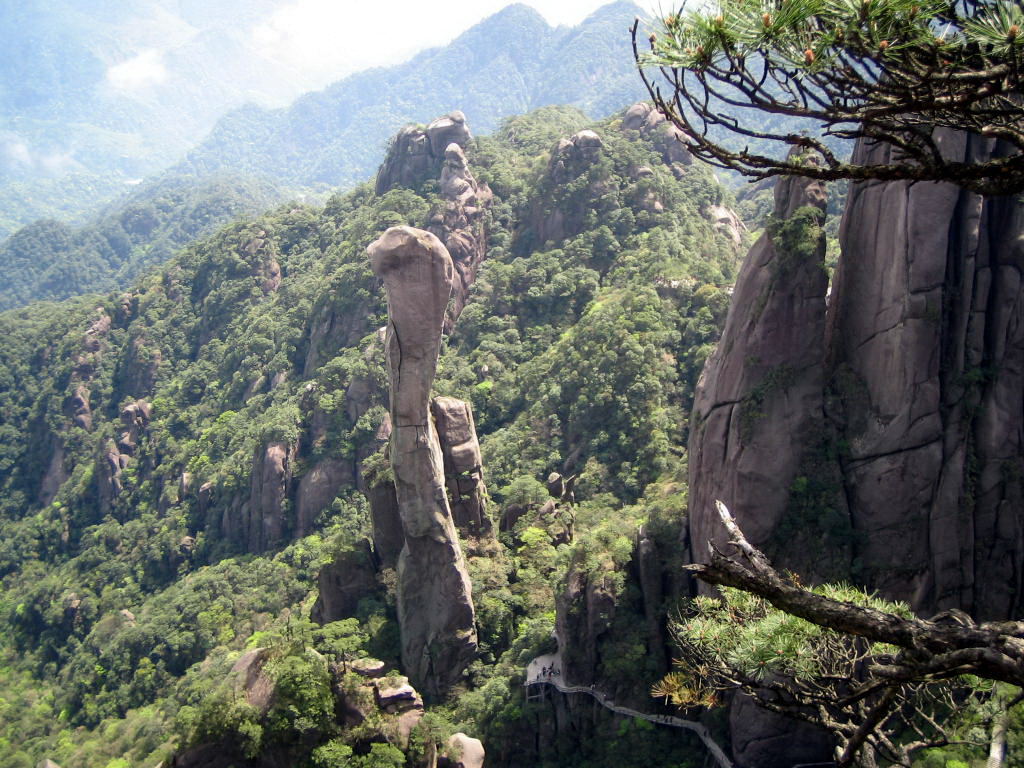
The mist clung to the guardrail of the east cable car as we rose above the tree line, the grey trunks of ancient pines vanishing into white. Below, a sheer granite face dropped away, streaked with rust and lichen. When the gondola shuddered to a halt at the upper station, the air turned cold and smelled of wet stone and pine resin. A ranger in a fluorescent vest waved us toward the concrete path that clung to the cliff edge like a grey ribbon. That first step onto the West Coast trail—clouds boiling in the valley, a twisted pine root serving as a handrail—sets the tone for every hour that follows.
Getting There and First Logistics
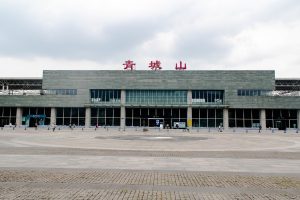
Most travelers arrive via Shangrao high-speed rail station, about an hour’s drive from the park gates. From the station forecourt, licensed minibuses and shared taxis wait for a full load before departing; the ride costs roughly the price of a bowl of beef noodles and takes seventy minutes on the mountain switchbacks. If you drive yourself, the G60 Expressway exit for Sanqingshan is clearly marked, but the final ten kilometers climb steeply through villages where chickens dart across the asphalt. Parking at the main Jinsha entrance fills by mid-morning on holiday weekends, so aim to pass the toll booth before 8:00 a.m. Ticket booths sell a combined entry-and-shuttle pass; keep the paper stub—you’ll need it to re-enter the shuttle loop if you descend for lunch.
Choosing a Cable Car: East vs. West
Two ropeways serve the summit plateau. The east line (Yujing) runs from the Jinsha gate to the highest peak area; the west line (Waishuangxi) departs from a quieter valley entrance nearer Shangrao city. The east car is larger, newer, and queues snake back to the parking lot by 9:00 a.m. in peak season. The west car is older, slower, and often half-empty, but its upper station drops you closer to the start of the West Coast loop—the most dramatic cliff walk. If you have a single day, ride the east car up, hike the West Coast trail toward the west station, and download the west car to exit. That one-way flow avoids backtracking and saves three hours of retracing steps.
Core Hiking Loops: What the Legs Actually Do
The summit plateau is a network of broad concrete boardwalks bolted into granite, linked by stone staircases that climb through rock tunnels and over saddle ridges. Three loops dominate the map.
West Coast Trail (Xihai Great Canyon) – 4.5 km of exposed clifftop walking. The path narrows to a single plank in spots, with vertical drops hidden by fog. Allow three hours one-way at a photo pace. Highlights: the “Goddess Peak” silhouette, the “Python Emerging from the Mountain” rock spine, and several pavilions where you can sit inside the cloud bank.
South Ridge Loop (Nanqingyuan) – 3 km of gentler ups and downs through rhododendron tunnels. In late spring the blossoms turn the trail magenta. This loop connects the east cable car station to the Jade Capital peak (Yujing Feng) summit push—a steep 400-meter stair climb that adds forty minutes round-trip.
East Valley Descent (Dongxi) – A steep, shaded staircase dropping 600 vertical meters to the east cable car lower station. Knees take a beating; allow ninety minutes down. Most hikers only use this as an emergency exit or a second-day variation.
Signage is bilingual (Chinese/English) at every junction. Distance markers count down in hundreds of meters. Toilets exist at each cable car station and at the midpoint pavilion on the West Coast trail; nowhere else.
Seasonal Rhythm and Weather Reality
Spring (third to fifth lunar months) brings rhododendron bloom and the highest chance of “sea of clouds” mornings—cool, damp, and spectacular. Summer (sixth to eighth lunar months) is the wet season; afternoon thunderstorms close the cable cars without warning, and leeches appear on the lower forest trails. Autumn (ninth to eleventh lunar months) offers crisp, dry air and the best visibility for photography; crowds peak during the National Day golden week. Winter (twelfth lunar month to second lunar month) sees ice on the boardwalks and occasional cable car suspension for high wind; the upside is solitude and frozen waterfalls on the cliff faces.
Check the park’s WeChat mini-program the night before for real-time cable car status. If the red “stop” icon shows for both lines, the summit is closed—have a backup plan in Shangrao’s old town or the nearby Wuyuan rapeseed fields.
Overnight Strategy: Hut, Tent, or Town
A single night on the mountain transforms the experience. The park operates a basic dormitory-style hotel near the east upper station—bunk beds, shared showers, no heating. Book through the official mini-program two weeks ahead; walk-ins are turned away after 4:00 p.m. For lighter sleepers, a private hotel in the Jinsha valley (ten minutes by shuttle) offers hot water and dinner, but you’ll miss the pre-dawn light on the West Coast trail. Camping is prohibited on the summit plateau; rangers patrol the boardwalks at dusk.
If you stay up top, wake at 5:00 a.m., grab a thermos of instant coffee from the hotel kettle, and walk twenty minutes to the “Sunrise Pavilion” on the West Coast loop. The sun lifts the cloud sea in layers—first the valleys, then the peaks, finally the pine crowns. By 7:00 a.m. the day-trippers arrive and the silence breaks.
Food, Water, and Pack Weight
Summit concessions sell instant noodles, sausages on sticks, bottled water, and chocolate bars at triple valley prices. A 500 ml bottle costs ¥8–10. Carry two liters from the base if hiking the full West Coast loop; there are no refill points. Snacks: salted peanuts, dried mango, a few pieces of compressed biscuit. Lunch eaten on a cliffside bench with a view of the “Three Pure Ones” peaks beats any restaurant meal.
Daypack: 20 L, rain cover attached.
Footwear: broken-in trail runners or light hikers; the concrete is slick when wet.
Layers: merino base, fleece mid, hardshell outer—temperature swings 15 °C between valley and summit.
Extras: headlamp (for pre-dawn start), trekking poles (save knees on descents), zip-lock bag for phone (mist soaks pockets).
Common Missteps and How to Avoid Them
Buying a round-trip cable car ticket for the same line. You’ll waste hours returning to the start. Buy single rides up east, down west (or vice versa).
Starting the West Coast trail after 10:00 a.m. Clouds often thicken to zero visibility by noon; the rock formations disappear.
Wearing city sneakers. The boardwalk gaps and wet granite eat soft soles; ankles roll on the stone stairs.
Ignoring the shuttle loop. The internal bus connects the two cable car lower stations and the main gate. Missing the last bus (usually 5:30 p.m.) means a ¥150 taxi or a long walk in the dark.
Expecting 4G on the trails. Signal drops inside the canyon. Download offline maps and the park’s audio guide before you board the first gondola.
Cultural Context: Taoist Roots Underfoot
Sanqingshan has been a Taoist cultivation ground since the Eastern Jin dynasty. The three summits—Yujing, Yuxu, Yuhua—represent the Three Pure Ones, the highest deities in the Taoist pantheon. Pilgrims once climbed the “Heavenly Ladder,” a near-vertical stair carved into a fissure, on knees. Today the concrete boardwalk follows a similar line. Small shrines tuck into rock alcoves: a statue of Laozi, an incense burner blackened by centuries of ash. Visitors bow, light three sticks, and place them in the sand. No photography inside the shrines. If you see a red ribbon tied to a pine branch, it marks a vow—do not cut or remove it.
The park’s museum near the east lower station displays bronze ritual vessels, cloud-seal script rubbings, and a scale model of the former temple complex destroyed in the 19th century. Allow thirty minutes if the cable car queue stalls.
Two-Day Itinerary That Breathes
Day 1: Enter Jinsha gate by 7:30 a.m. East cable car up. Hike South Ridge to Yujing summit (highest point). Descend via South Ridge to West Coast trail midpoint. Walk West Coast toward west station. West cable car down. Shuttle to valley hotel. Dinner: local river fish with pickled chili.
Day 2: 5:00 a.m. wake. Walk to Sunrise Pavilion. Return for breakfast. East cable car up (or hike up East Valley if knees allow). Complete any missed sections—Goddess Peak close-up, Python Rock side trail. East cable car down by 11:00 a.m. Shuttle to Shangrao station for afternoon train.
The mountain rewards patience. Clouds hide the pillars for hours, then tear open for five minutes of light that makes the granite glow like bone. Stay long enough for that moment.