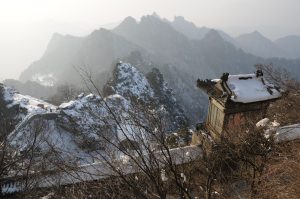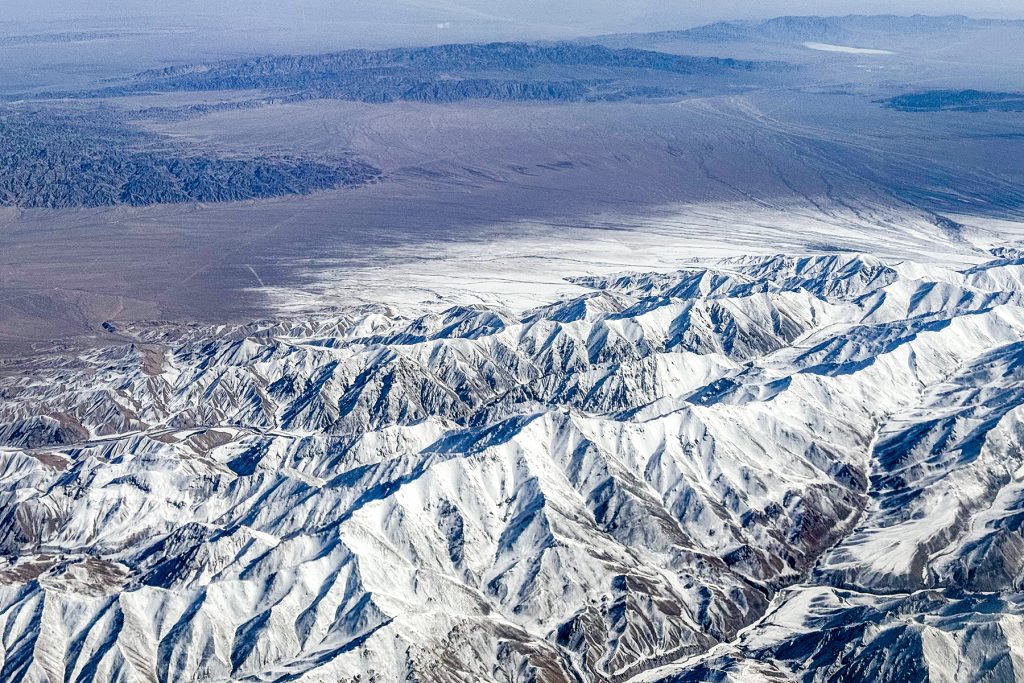
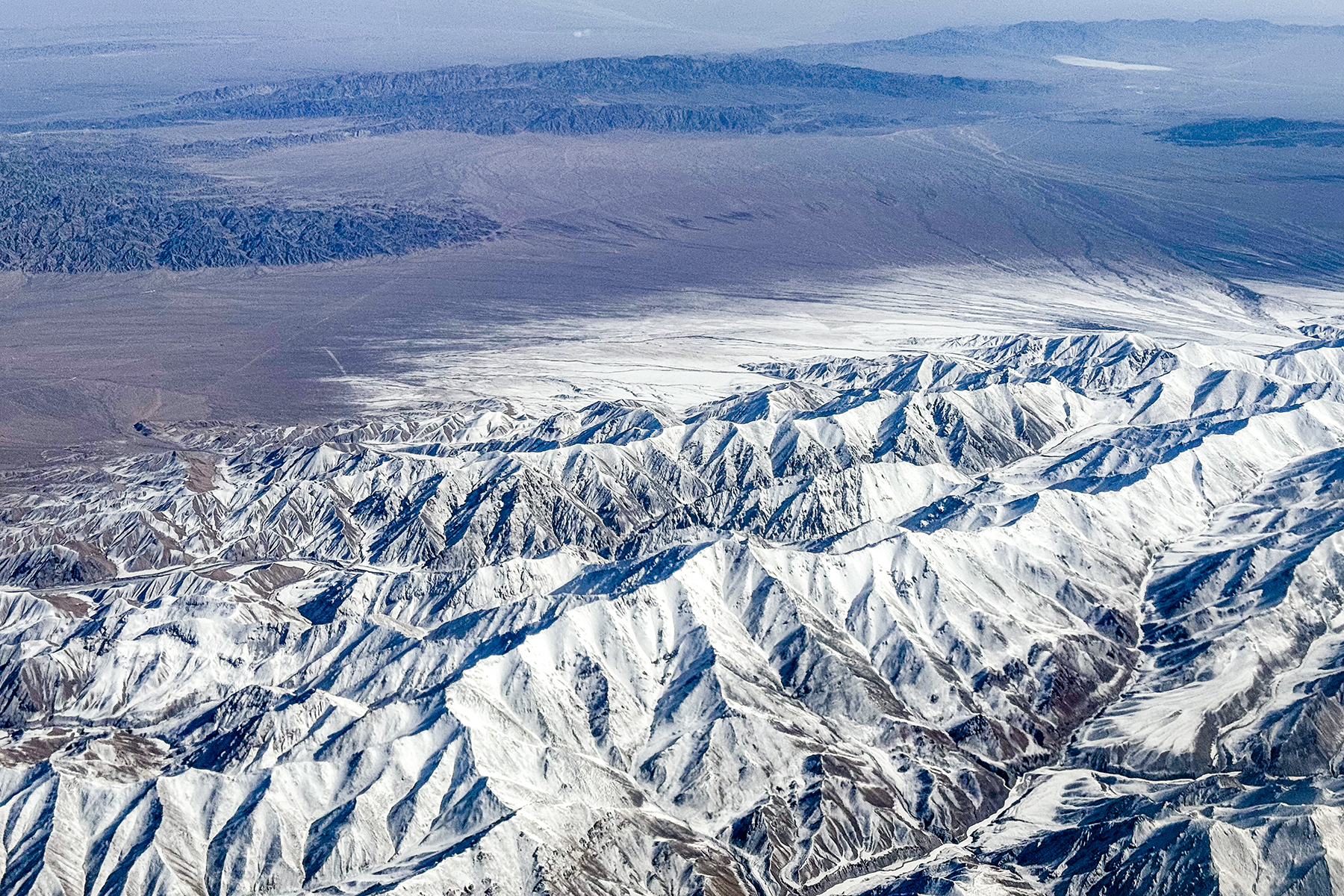
The minibus rattles north from Dunhuang, the Gobi gravel giving way to rolling steppe that stretches toward a wall of white peaks. At the county seat, a cluster of low-rise buildings sits under a sky so wide it feels deliberate. Prayer flags snap from a hilltop cairn, and the air carries the scent of sagebrush and woodsmoke. This is Subei, where the Mongol herders still move their flocks between summer and winter pastures, and the glaciers of the Qilian range feed rivers that never reach the sea.
Getting There
No train reaches the county yet, though rails have been creeping westward from the Hexi Corridor for years. Most travelers arrive by road. The daily minibuses from Dunhuang leave the long-distance station around 08:30 and again in early afternoon; the ride takes roughly three hours and costs about twenty yuan. Shared taxis wait near the same lot — four passengers, forty yuan each, faster but bumpier. If you are coming from Jiuquan or Guazhou, county buses run on a loose morning schedule; ask at the ticket window the night before because departure times shift with the season. Drivers heading south toward Golmud sometimes offer a seat for a negotiated fare, but the road climbs above 3,500 meters and winter snow can close the pass without warning.
Where to Sleep
The county town has a handful of simple hotels near the bus station — clean rooms, hot water most of the day, and a front desk that can call a local driver for you. For a night on the steppe, several Mongol families run yurt camps a short drive north toward the glacier access road. They provide thick felt quilts, a charcoal stove, and breakfast of milk tea and fried dough. Book through your hotel or a Dunhuang agency; the families rarely list online. Bring a headlamp — generator power cuts at ten — and expect the toilet to be a sheltered pit behind the camp.
Tuoming Mengke Glacier
The glacier tongue spills down a broad valley at the end of a rough dirt track that climbs from the county seat. A four-wheel-drive vehicle is essential; the last twenty kilometers washboard badly after summer rains. From the parking area, a marked trail follows the lateral moraine for about two kilometers to a viewpoint where blue ice fractures into seracs. The walk takes an hour each way at this altitude — move slowly, drink water, and watch for sudden cloud banks that drop visibility to a few meters. In late summer, meltwater runs milky with rock flour; in autumn the ice surface hardens and crampons become useful. No facilities exist at the trailhead, so pack snacks, a wind layer, and a bag for your trash.
Steppe Riding and Herder Visits
Horse treks can be arranged through the yurt camps or the county tourism office. A half-day ride follows the seasonal migration route across grassland dotted with marmot burrows and the occasional herd of kiang, the Tibetan wild ass. Your guide will likely be a young herder who speaks Mandarin with a strong accent and knows every water source. He will tie a spare lead rope to his saddle — if your horse spooks, he can catch it without dismounting. Lunch is often a thermos of salty milk tea and boiled mutton shared on a felt blanket. Accept the bowl with both hands; refuse only if you truly cannot eat, and even then, touch the rim to your lips as a gesture of respect.
Town Market and Temple
The county market wakes early, around the time the first milk trucks rumble past. Stalls sell yak jerky, dried apricots, blocks of hard cheese that squeak between the teeth, and bundles of dried currants. Women in embroidered vests bargain over bolts of floral fabric while men test the weight of saddles. At the edge of the square stands a modest Gelug monastery — whitewashed walls, a single prayer wheel, and a courtyard where elderly monks turn rosaries. Visitors may enter the main hall if they remove hats and walk clockwise. Photography inside is discouraged; outside, ask before pointing a lens at a monk’s face.
Practical Details
- Altitude: the town sits above 2,000 meters; the glacier trailhead exceeds 3,500. Spend a night in Dunhuang or Jiayuguan first if you are prone to altitude sickness.
- Cash: small shops and yurt camps do not take cards. Carry enough yuan for three days — there is one ATM at the county bank, but it often runs dry on market days.
- Permits: foreign passport holders need no special permit for the county or the glacier, but the border zone toward Aksai and Xinjiang is restricted. Stay on marked roads and do not hike toward the provincial boundary without a local guide.
- Season: late June through early October offers the most reliable weather. July brings wildflowers and mosquitoes; September turns the grass gold and the nights cold enough for frost.
- Language: Mandarin works everywhere. A few Mongolian greetings — “Sain baina uu” for hello, “Bayarlalaa” for thank you — earn smiles and sometimes an extra piece of cheese.
When the minibus turns south again, the glacier fades into a white smudge against the blue. The steppe rolls on, empty except for a lone horseman driving sheep toward a distant fold. You carry the taste of salty tea and the memory of wind off ice — enough reason to plan the return before the first snow closes the pass.