The minibus shudders as it rounds the ninety-ninth hairpin, the tires kissing the white line above a drop that makes my stomach float. Through the windshield, the limestone arch of Tianmen Cave gapes like a jaw unhinged, framed by a sky the color of bruised plums. I grip the seatback in front of me, remembering the first time I took this road — white knuckles, held breath — and how the driver just laughed, tapped his horn at a tour bus, and kept climbing. That sound, a short polite toot, is the only warning you get before the mountain swallows you whole.
Choosing Your Line and Buying the Ticket
The ticket hall sits at the foot of the mountain, a glass box humming with tour groups and the occasional solo traveler clutching a phone translator. You don’t hike up from here unless you have days to spare and knees made of steel. Everyone takes the cable car — the longest single-span passenger gondola on the planet — or the bus, or a combination of both. The ticket window sells three routes, labeled A, B, and C, though the board only explains them in Chinese.
Line A puts you on the big gondola first. You float up twenty-eight minutes over orange groves, tile roofs, and the brown ribbon of the Li River, stepping out at the summit station near the cliff walkways. From there you chase the views, ride the short express lift to the cave stairway, then descend by bus down the ninety-nine bends. Line B flips the script: bus up, cable car down. I prefer B in the morning. The bus ride wakes you up with vertigo before your legs get tired, and the gondola descent at golden hour turns the karst peaks into silhouettes against a molten sky. Line C appears when the main gondola goes down for maintenance or when holiday crowds crush the system; it swaps the long ride for the shorter express lift both ways, eating up less time but stealing the best aerial perspective.
- Arrive before 7:30 a.m. in peak season (summer holidays, Golden Week) or the queue snakes past the parking lot.
- Bring your passport; the ticket machine scans the photo page and prints a QR code wristband you cannot lose.
- Ask for “A Line” or “B Line” by holding up one finger or two — the staff understand the gesture faster than the words.
- Skip the insurance upsell; the wristband already covers the cable car liability.
The Ninety-Nine Bends and the Bus Drivers
If you choose the bus leg, you hand your fate to a driver named Lao Zhang or Lao Li, men who have steered these switchbacks since the road opened. They do not slow for the view. They honk once at every blind corner, a rhythm that becomes the mountain’s heartbeat. The road clings to the cliff face, guardrail bolted into rock that weeps water in spring. On a clear day you see the cable car cables slicing the valley at a forty-five-degree angle, gondolas swinging like charms on a bracelet. In fog, you see nothing but the taillights of the bus ahead and the white stripe on your side of the asphalt.
Sit on the right side going up for the sheer drop; sit on the left coming down for the cave approach. Hold your phone with both hands if you film — the vibration shakes footage into abstraction. I once watched a tourist drop an iPhone through the cracked window trying to catch the cave mouth; the driver didn’t flinch, just shifted gear and kept climbing. Motion sickness tablets live in my daypack now, taken twenty minutes before the station.
Walking the Cliff Paths and the Glass Skywalk
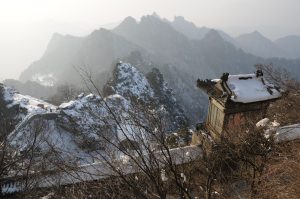
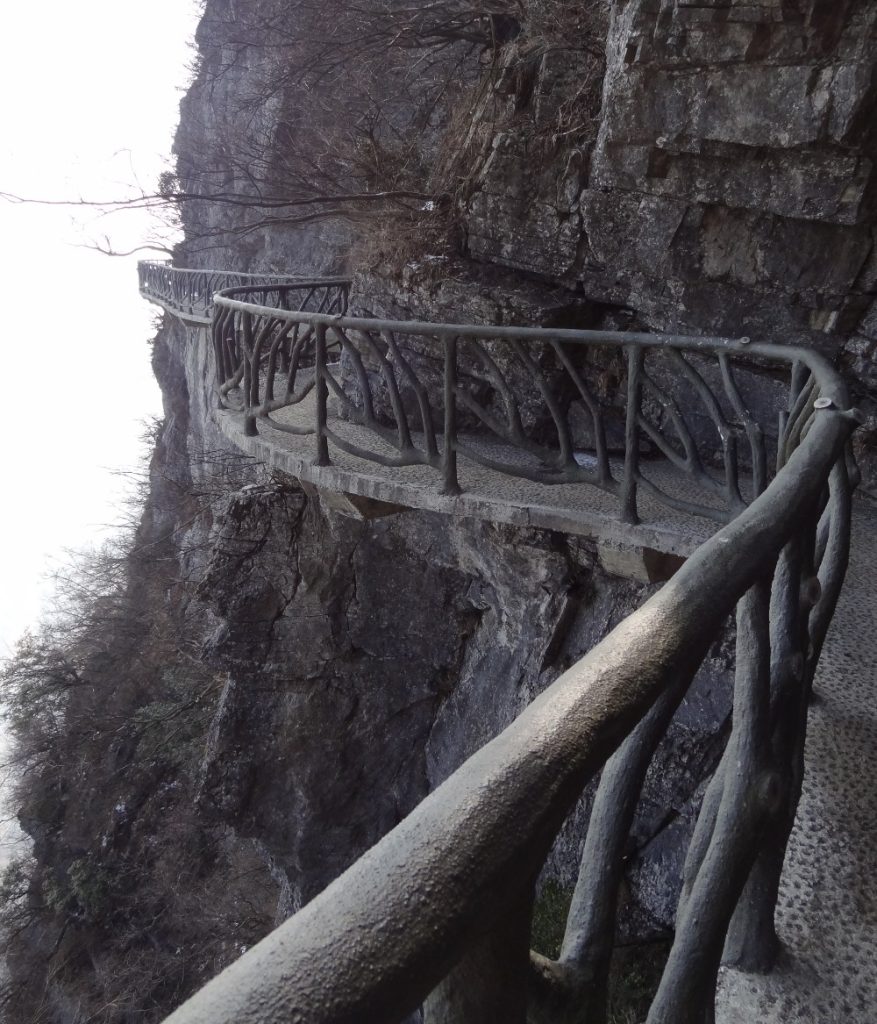
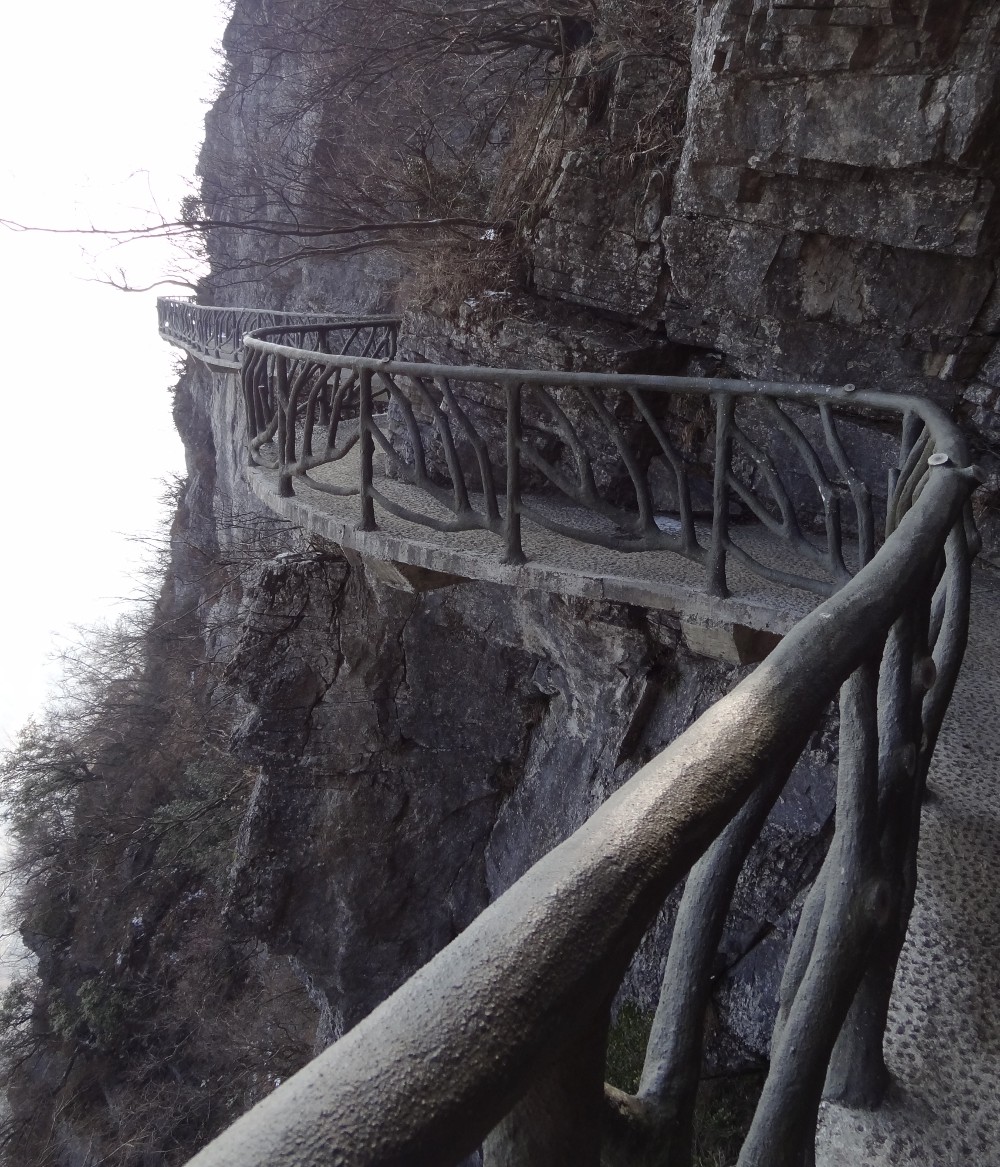
The summit plateau spreads into a network of wooden boardwalks bolted into the vertical face. You wear blue cloth shoe covers over your sneakers — mandatory, sold at the entrance for a few yuan — to protect the paint and your grip. The path splits: west line toward the Buddha Temple and the glass skywalk, east line toward the cliff-hanging temple and the cave stairway. Signage uses arrows and pictograms; English is sporadic but the flow of bodies makes the route obvious.
The glass skywalk is a sixty-meter ribbon of transparent panels bolted over a seven-hundred-meter void. The first step onto it triggers a primal freeze. Your brain screams “hole” while your eyes confirm solid glass. Locals stride across in leather loafers, grandmothers pausing to take selfies with peace signs. I shuffle, heels glued to the frame, until the vertigo settles into a hum. The panels are triple-laminated, rated for thousands of kilograms, but the scratches from millions of shoe covers catch the light, reminding you how many feet have trembled here.
- Wear socks without holes; the shoe covers are thin and the glass is cold even in summer.
- Leave selfie sticks in your bag — they scratch the panels and the staff will confiscate them.
- If the wind hits force six, the skywalk closes; have the east line as your backup loop.
Climbing the Heaven Gate Stairway
Nine hundred ninety-nine steps descend from the cliff path to Tianmen Cave. The number is deliberate — nine is the emperor’s digit, repeated thrice for eternity. Each riser is shallow, the tread deep, but the altitude steals breath. I count in sets of fifty, pausing at the landings where vendors sell water in plastic pouches you bite open. The air smells of damp limestone and incense from the small shrine tucked into a grotto halfway down.
At the bottom, the arch frames the valley like a deliberate composition. Tour groups cluster for the mandatory photo: arms raised, fingers forming a heart, the cave mouth glowing behind them. The stone floor is polished smooth by centuries of pilgrims’ knees. I press my palm against the cool rock where the cave roof collapsed in the third century, imagining the thunder that shook the mountain when the sky finally broke through. The climb back up is harder than the descent; quads burn, lungs rasp. The express cable car at the base saves the return — if you bought the right line.
Food, Rest, and the Descent
The summit complex has a cafeteria serving rice bowls with pickled mustard greens, chili oil, and shredded pork — simple, hot, and priced for captives. A vendor near the temple grills corn on the cob brushed with soy sauce and cumin; the kernels pop sweet and smoky against charred husks. Bring a thermos of tea if you prefer quiet; the dining hall echoes with tour guides’ megaphones.
Toilets are squat-style, mostly clean, stocked with toilet paper only at the main stations. Carry tissue and hand sanitizer. Benches line the cliff paths every few hundred meters; use them. The altitude (fifteen hundred meters at the top) turns a mild headache into a throb if you rush.
When the gondola carries you down at dusk, the city lights of Zhangjiajie flicker on, a grid of amber and blue spreading toward the river. The cable car sways once over the last ridge, and the mountain releases you. My legs remember the nine hundred ninety-nine steps for days afterward — a good ache, the kind that proves you were there.