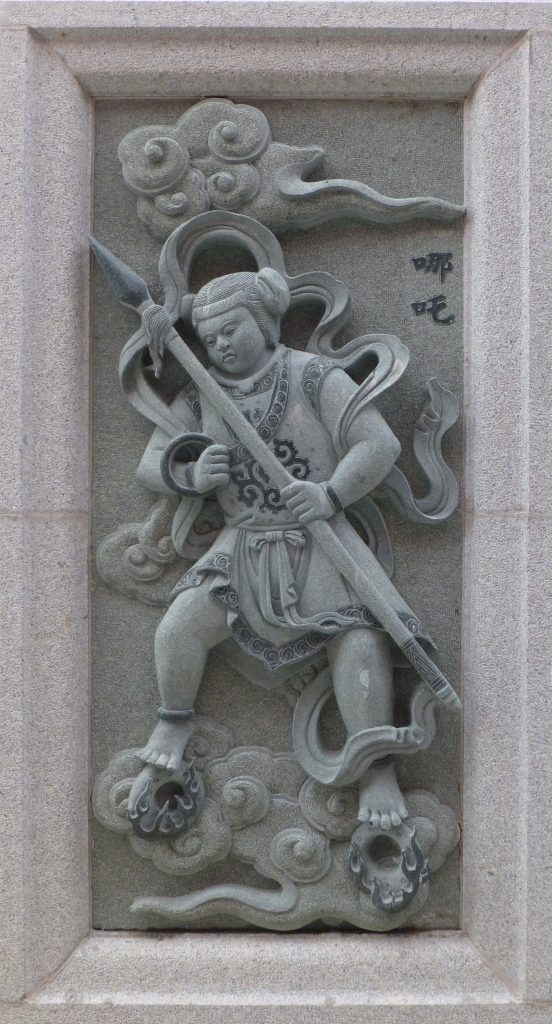
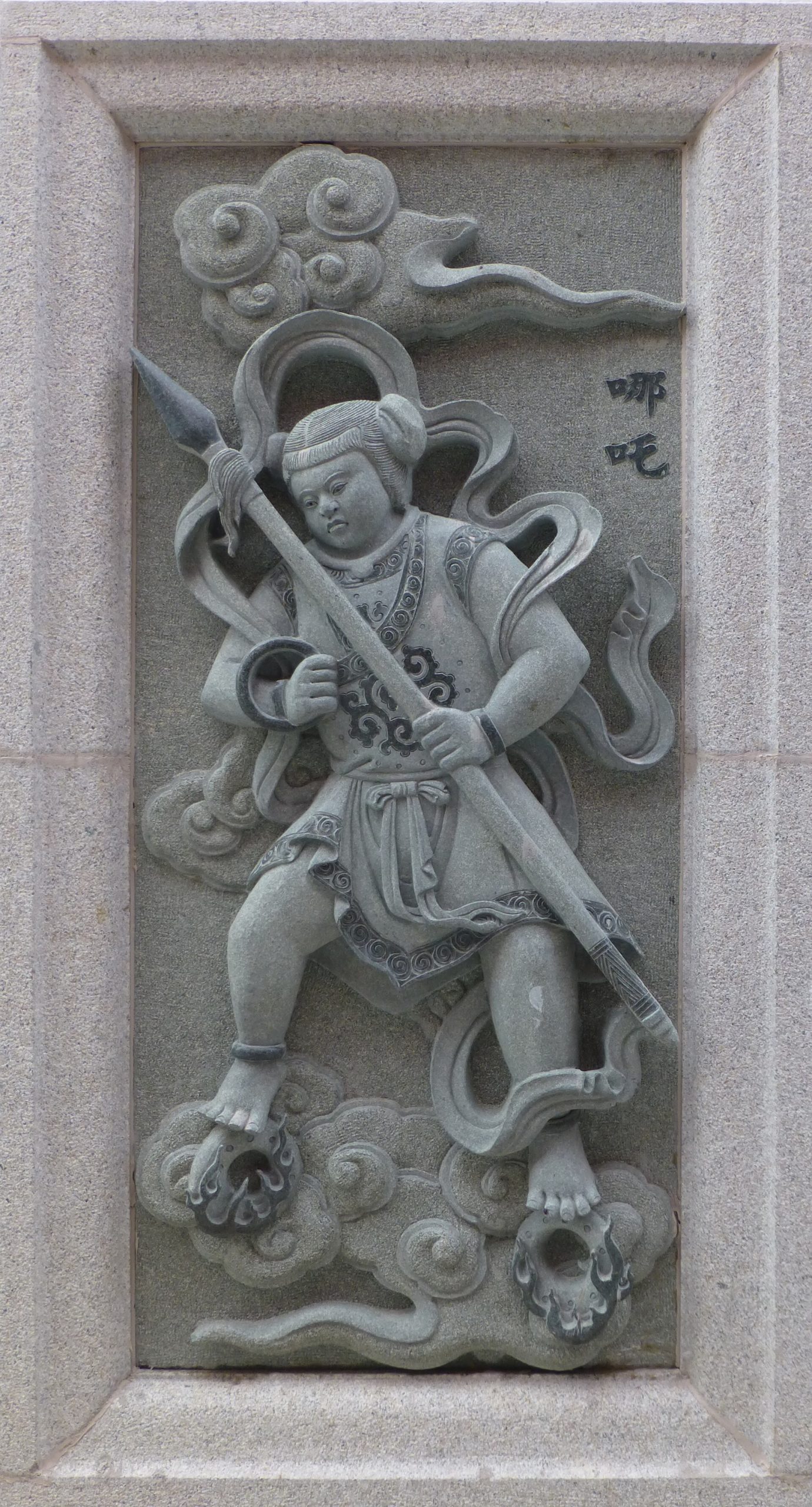
The minivan rattles over the cattle guard at the edge of Chentang Pass just as the morning mist lifts off the river. Ahead, the stone archway bears the three characters 唐朝古镇 in faded red paint, and a vendor is already unfolding a tarp of plastic windmills beside a statue of a boy on fire wheels. I have come because the cartoon posters in Chengdu metro stations made the legend look like a superhero origin story, but the old men playing xiangqi under the banyan tree treat it like family history.
The Pass Itself
Chentang Pass sits where the Sichuan basin folds into the foothills of the Longmen Mountains. The “pass” is really a narrow gorge where the Fu River squeezes between limestone cliffs, and the ancient post road clings to the rock face like a swallowed thread. Most of the original Tang dynasty fortifications are gone, rebuilt in the Qing and again after the 2008 earthquake, but the layout remains: a single street of gray-tile shops, a drum tower at the north end, and a shrine to Li Jing tucked behind a screen wall at the south.
Start at the drum tower before the tour buses arrive. Climb the steep wooden stairs — each tread worn thin by centuries of sandals — and you can see the whole gorge laid out below: the river flashing green, the terraced fields stepping up the slopes, the incense smoke curling from the shrine courtyard. A caretaker will unlock the tower door if you ask politely and buy a stick of incense from the box at the bottom. Inside, the drum skin is patched with hide glue, and the mallet handles are smoothed to a shine. Strike it once, low and slow. The sound rolls down the gorge and bounces off the cliffs, the same signal that once told merchants the gates were open.
The Nezha Shrine Complex
Walk back down the street, past the noodle shop where the owner hand-pulls biangbiang strands thick as belts, and turn left through a moon gate into the shrine compound. The main hall faces east, standard for a martial deity. Inside, the statue stands three meters tall: a boy with three heads and six arms, each hand gripping a different weapon — fire-tipped spear, wind-fire wheels, golden brick, red silk sash, demon-slaying sword, and a lotus blossom. The faces are calm, not fierce, eyes half-closed as if listening to a distant argument.
Locals approach differently than tourists. They bring three sticks of sandalwood, bow three times at the threshold, then place one stick in the bronze burner at the center, one at the feet of Li Jing’s smaller statue in the side hall, and one at the lotus pond in the rear courtyard. The pond is the real destination. Legend says Nezha sliced his own flesh and returned it to his mother, his bones to his father, then was rebuilt from lotus roots by his master Taiyi Zhenren. The water here stays clear year-round, fed by a spring that never freezes. In the third lunar month, when the lotus shoots break the surface, elderly women wade in barefoot to harvest the tender tips for the temple kitchen.
Walking the Legend: Seven Stations
The story unfolds along a marked path that loops behind the shrine and climbs the west cliff. Seven stone markers correspond to episodes from the Fengshen Yanyi. You can do the loop in ninety minutes if you hurry, but the point is to pause at each one.
- Station One — The Meat Ball: A boulder split down the middle, the halves gaping like a mouth. Touch the cool inner surface and imagine the sword strike that freed a walking, talking seven-year-old instead of an infant.
- Station Two — The Bath in the Nine-Dragon River: A cascade pooling in a stone basin. In summer, local children still swim here, daring each other to stand under the main fall. The water numbs your calves in seconds.
- Station Three — The Dragon King’s Palace: A cave mouth screened by ferns. Inside, a stalactite formation resembles a seated figure — the Dragon King Ao Guang, supposedly petrified when Nezha tore his tendons out. Bring a headlamp; the electric lights failed years ago.
- Station Four — The Suicide at Chentang Pass: The cliff edge where Nezha carved his flesh from his bones. A railing now prevents reenactments, but the view straight down to the river makes the desperation palpable.
- Station Five — The Lotus Rebirth: The spring-fed pond behind the main hall, seen from above. Lotus leaves the size of dinner plates cover the surface by the sixth lunar month.
- Station Six — The Fire Wheels: A flat rock where two circular grooves are worn into the stone. Folklore says Nezha tested his wind-fire wheels here, spinning them until the rock smoked. Rub your palm in the grooves; they are warm even in winter.
- Station Seven — The Pagoda: A seven-story brick tower on the ridge, rebuilt in the Ming. Climb the internal ladder to the top floor. The key hangs on a nail in the caretaker’s shed — ask for “the tower key” and he will hand it over without a word.
Festival Time: The Third Month Temple Fair
If your visit falls in the third lunar month — usually the season of peach blossoms and sudden rain — the pass transforms. The temple fair lasts nine days, centered on the ninth day, Nezha’s traditional birthday. The single street becomes a corridor of smoke and noise: sugar painters blowing molten maltose into dragons, shadow puppet troupes setting up behind white screens, vendors grilling lamb skewers over charcoal dusted with cumin and chili powder.
The procession starts at the drum tower at noon. A palanquin carries a smaller, portable Nezha statue — gold-lacquered, glass eyes catching the sun — borne by eight men in blue cotton jackets. Behind them march the spirit mediums: men and women in red sashes, faces painted with black-and-white geometric patterns, shaking copper bells and chanting in a dialect that predates Mandarin. They enter trance states halfway up the cliff path, and the crowd parts instinctively. Do not step into the cleared space. Do not photograph the mediums’ faces up close. A local woman once grabbed my wrist and pulled me back when I raised my phone, hissing, “They are not performers. They are working.”
Food during the fair is distinct from the everyday menu. Look for the steamed buns stuffed with lotus root paste and brown sugar — the paste cooked down for six hours until it turns the color of old amber. Eat them hot, tearing the fluffy white skin to let the steam escape. Another specialty: cold jelly made from mung bean starch, cut into cubes and drowned in a sauce of black vinegar, garlic, chili oil, and crushed peanuts. The vendor will hand you a wooden skewer, not chopsticks. Eat standing at the counter; the bowl goes back into a basin of river water for the next customer.
What Newcomers Get Wrong
First, they treat the site as a theme park. I watched a family pose their toddler on the lotus pond’s stone railing for a photo, the child’s shoes muddying the carved lotus petals. The caretaker appeared silently, handed them a towel, and pointed to the sign: “Enter with reverence.” The family left in a huff. The shrine is an active place of worship. If you would not wear shorts and shout in a cathedral, do not do it here.
Second, they skip Li Jing. The father’s hall is smaller, quieter, and often empty. But the legend hinges on his rage and his grief. His statue holds a pagoda — the weapon that later earned him the title “Pagoda-wielding Heavenly King” — and his eyes are painted wide open, staring at the door. Leave a stick of incense for him. The old men playing xiangqi will nod if they see you do it.
Third, they assume the story ends at the pass. It doesn’t. The real Chentang Pass in the novel is a military fortress; this village is a memorial built centuries later. The actual strategic pass lies thirty kilometers north, a ruin of tamped earth walls and a collapsed gatehouse, unmarked and unvisited. A taxi driver will take you there for a negotiated fare, but bring water and a hat. No vendors, no toilets, no cell signal. Just wind in the grass and the outline of foundations in the soil. That is where Li Jing really stood, watching the horizon for the Shang army. The boy on fire wheels is the story we tell ourselves; the father scanning the ridge is the history we live.
Practical Notes
- Getting there: Buses from Chengdu’s Xinnanmen Station to Wenchuan County stop at the Chentang Pass turnoff. From the turnoff, a local minibus runs every forty minutes. Total travel time: three to four hours depending on landslides.
- Staying overnight: Two family guesthouses operate in the village — clean rooms, shared bathrooms, home-cooked meals. Book through the WeChat contact posted on the shrine bulletin board. No online listings.
- Footwear: The cliff path is polished limestone. Wet or dry, it is treacherous. Wear hiking shoes with grip. The caretaker sells rubber-soled cloth shoes at the drum tower if you arrive in sandals.
- Cash: No card readers anywhere. Bring small denominations for incense, donations, snacks, and the tower key deposit.
- Language: The local dialect is a variant of Sichuanese. Mandarin works, but learning “thank you” (duōxiè) and “excuse me” (bù hǎoyìsi) in the local pronunciation earns patience.
I left Chentang Pass on a minibus packed with sacks of dried chili and a cage of clucking chickens. The driver honked at every blind curve. From the window, the shrine’s golden roof caught the late sun, then disappeared behind a fold of mountain. The legend stays in the gorge. You only borrow it for an afternoon.