Arriving in Guangzhou during the late autumn and winter months is arguably the best time to visit—the city’s notorious humidity finally breaks by late October, leaving perfect weather for exploring the bustling streets of southern China’s commercial powerhouse.
However, your first hurdle will be navigating Guangzhou Baiyun International Airport (CAN). As one of the busiest and largest aviation hubs in the world—and a massive beneficiary of China’s expanded 144-hour visa-free transit policy in 2026—the scale of Baiyun can be intimidating.
Whether you’re landing at Terminal 1 or the newer, sprawling Terminal 2, getting into the city center (typically Tianhe, Yuexiu, or Haizhu districts) is incredibly straightforward once you understand the transport network, modern digital payment methods, and late-night travel realities.
Here is your comprehensive, updated guide to getting from Baiyun Airport to downtown Guangzhou in 2026.
Navigating Terminal 1 vs. Terminal 2: What You Need to Know
Before figuring out how to leave, it helps to know where you are starting. Baiyun Airport operates two massive, separate terminals.
Terminal 1 (T1): The older of the two, T1 underwent significant renovations over the last few years. It primarily handles domestic flights and select international carriers. It is laid out in a distinct “U” shape with concourses A and B.
Terminal 2 (T2): Opened specifically to be the hub for China Southern Airlines and its international partners, T2 is a masterclass in modern airport architecture. It is massive, highly automated, and where the vast majority of international visitors using the 144-hour transit visa will arrive.
Connecting the Terminals:
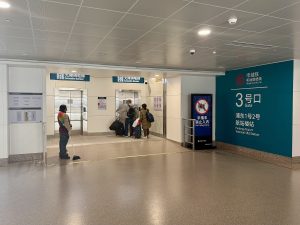
If you ever need to transit between the two (for instance, to meet a travel companion or catch a connecting domestic flight), do not attempt to walk. The airport provides a free, 24-hour Metro connection between the two terminals. Simply go to the Metro station in either terminal, look for the “Free Terminal Transfer” green channel, and hop on the train for the three-minute ride.
The Guangzhou Metro (Line 3): Fast, Cheap, and Reliable
For most travelers arriving during the day or early evening, the Guangzhou Metro is the absolute best option. It completely bypasses the city’s notorious rush-hour traffic and connects directly to the heart of downtown.
The Route: You will take Line 3 (specifically the Northern Extension). This line acts as the main artery connecting the airport to major hubs like East Railway Station, Tiyu Xilu (in Tianhe District), and Zhujiang New Town.
Stations at the Airport:
Terminal 1 is served by Airport South (机场南) station.
Terminal 2 is served by Airport North (机场北) station, which is the start of the line, guaranteeing you a seat if you board here.
Operating Hours: Roughly 06:00 to 23:30.
Travel Time: About 45–55 minutes to Tiyu Xilu.
Cost: ¥7 to ¥9 depending on your exact stop.
Luggage and Rush Hour Warnings
A vital piece of practical advice: Line 3 is the busiest metro line in Guangzhou. If you are arriving between 5:00 PM and 7:00 PM on a weekday and have massive suitcases, taking the metro can be a grueling, highly compressed experience. If you are traveling heavy during peak hours, strongly consider an Airport Express bus or taxi instead.
How Foreigners Can Pay for the Metro in 2026
Guangzhou has heavily optimized its metro for digital payments; paper tickets are rapidly becoming relics. The easiest way to ride is by using the “Guangzhou Metro” (广州地铁) mini-program within WeChat or Alipay to generate a digital transit QR code, which you simply scan at the turnstile.
To do this seamlessly, you’ll need your digital wallets set up in advance. Check our guide on Alipay and WeChat Pay for Foreigners in China 2026: Setup, Limits, and Workarounds to ensure your international credit card is linked properly before you board your flight.
If you haven’t set up digital payments, you can still buy physical plastic tokens at the automated ticket machines using cash (small bills are best, as machines may reject worn ¥100 notes) or occasionally via foreign credit card at the manned service counters (though success rates with foreign physical cards vary).
Taxis and Ride-Hailing (DiDi)
If you have heavy luggage, are traveling in a group of two or more, or your hotel isn’t within walking distance of a metro station, a taxi or DiDi (China’s equivalent to Uber) is incredibly convenient.
Official Taxis
Follow the prominent bilingual English/Chinese signs to the official taxi ranks outside both T1 and T2. Do not accept rides from touts who approach you inside the arrivals hall offering a “cheap ride”—these are unlicensed drivers who will inevitably overcharge you.
Cost: Around ¥120–¥160 to the city center (Tianhe/Zhujiang New Town), which includes the highway toll.
Time: 40 to 60 minutes, depending heavily on traffic.
Payment: All drivers accept WeChat and Alipay. While technically required by law to accept cash, drivers rarely carry physical change in 2026. Having exact fare is highly recommended if you aren’t paying digitally.
DiDi (Ride-Hailing)
Using the DiDi mini-program inside Alipay or WeChat (which is fully available in English) allows you to book a ride without any language barrier. You can type in your hotel’s English name, and the app will match it with the Chinese address.
Built-in Translation: If the driver texts you to confirm your location, the DiDi app automatically translates your English messages to Chinese, and their Chinese to English.
Pickup Zones: Both terminals have dedicated, numbered parking zones specifically for ride-hailing cars. The app will direct you to the specific floor and spot (e.g., “T2 P8 Parking Lot, Zone A”) to meet your driver. Pay close attention to these instructions, as private cars are not allowed in the official taxi lanes.
Requirement: You need immediate internet access to use DiDi upon arrival. Read about getting connected right away in our guide to China eSIM and Local SIM for Foreigners 2026: Airport, Apps, and Coverage.
Airport Express Buses
Guangzhou operates a vast fleet of comfortable, air-conditioned Airport Express bus lines that connect Baiyun to major hotels and transport hubs across the entire city. This is an excellent middle-ground option: it guarantees a comfortable seat, handles oversized luggage easily in the undercarriage storage, and is significantly cheaper than a taxi.
Popular Lines:
Line 1 goes to Guangzhou Railway Station (Aviation Ticket Office), an excellent choice for those staying in Yuexiu District.
Line 2A goes directly to the Garden Hotel and Crowne Plaza, a popular route for business travelers.
Line 6 goes to Tianhe District (CITIC Plaza area).
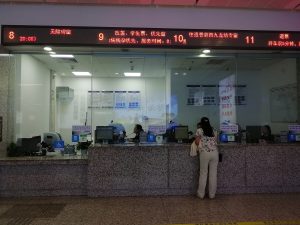
Tickets: Tickets must be purchased at the counters located inside the terminal right near the bus bays. Important: As a foreigner, you are required to present your physical passport to purchase a bus ticket.
Cost: ¥20–¥30 per person.
Operating Hours: Most routes run from around 07:00 until 22:30 or 23:00.
Late-Night Arrivals (After 11:30 PM)
If your flight is delayed or you are landing on a red-eye, your options change. The Metro officially stops running around 11:30 PM, and the regular Airport Express daytime lines shut down shortly after.
If you arrive past midnight, do not panic. The airport does not sleep, and your primary options are very reliable:
Late-Night Airport Express Bus: There is usually a late-night route that shadows the Line 1 route into the city center (terminating near the Guangzhou Railway Station), operating until the last flight of the night arrives.
Taxi/DiDi: This is the most reliable late-night method. Note that a government-mandated night surcharge applies to taxis after 11:00 PM, pushing the fare slightly higher (expect to pay between ¥150–¥180). The silver lining? Traffic at 1:00 AM is almost nonexistent, meaning you’ll breeze down the highway and be at your downtown hotel in under 40 minutes.
Safety Note: Late-night travel in Guangzhou is exceptionally safe. Official taxis are strictly monitored via GPS and interior cameras, and DiDi has robust safety features built-in.
Frequently Asked Questions (FAQ)
Is there free Wi-Fi at Baiyun Airport?
Yes. The airport offers free Wi-Fi, but there’s a catch: to log in, you usually need to receive a text message verification code. While the system allows you to select international country codes, delivery of the SMS to foreign numbers can be spotty. Alternatively, you can scan your passport at automated Wi-Fi kiosks scattered around the terminal to get an access code.
Do taxi and DiDi drivers speak English?
Generally, no. A few may know basic phrases, but you should not rely on verbal communication. Always have your hotel name and address written in Chinese characters (a screenshot from your booking app works perfectly) to show the taxi driver, or use the DiDi app to handle the navigation digitally.
How long does immigration take at Guangzhou Airport?
In 2026, standard immigration for foreigners typically takes between 30 to 60 minutes. However, if you are applying for the 144-hour transit visa on arrival, expect to add an extra 45 to 90 minutes to your wait time, as the paperwork queue for this specific desk can get long during peak arrival banks.
Can I use foreign credit cards to pay for my transport?
Directly? Rarely. You cannot tap a Visa or Mastercard on the Metro turnstile or in a taxi. You must link your international credit card to Alipay or WeChat Pay beforehand. Once linked, you can use those apps to pay for the Metro, DiDi, or the Airport Express bus.
Where to Go Next?
Once you’ve dropped your bags and made it to your hotel, the real adventure begins. If this is your initial trip to the southern capital, organizing your itinerary around the city’s vast historical sites, wholesale markets, and incredible culinary landscape can be daunting. Start by mapping out your days with our Guangzhou First Visit Guide 2026.
If you are using Guangzhou merely as a transit hub to explore the rest of the country, China’s spectacular high-speed rail network is your best friend. The city’s massive South Railway Station connects you to Shenzhen, Hong Kong, Guilin, and beyond. Learn how to navigate the station and secure your seats with our step-by-step tutorial on how to Book China High-Speed Rail on 12306 as a Foreigner (2026 Hub).
Related Lovely China guides
- China 144-Hour Visa-Free Transit: Who Qualifies and How to Use It
- How to Use Amap (Gaode Maps) in China as a Foreigner: 2026 English Guide
- Packing List for China Autumn Travel October November 2026
FAQ
Is this guide current for late 2026?
It reflects commonly reported practice as of October 2026. Always re-check official sources before you travel, because rules, ticket platforms and seasons change.
Where can I verify details?
Use the official website, WeChat account or ticket platform named for this topic. For payments and maps, see Lovely China’s practical visitor guides linked above.
What if my situation is unusual?
Ask your hotel, airline, park ticket office or embassy/consulate for case-specific advice rather than relying only on a blog post.