<!–
title: Camping on a Shandong Beach After the Tour Buses Left
slug: camping-shandong-beach-after-tour-buses
category: Stories
focus: shandong beach camping story
meta: Camping on a Shandong beach after the tour buses left — October wind, squid grills, and the quiet that arrives when day-trippers go home.
cover_alt: Qingdao Silver Beach shoreline and sea under open sky
cover_credit: Photo: Ginbayashi / Wikimedia Commons (CC BY-SA 4.0)
word_count: 1432
–>
After the buses reverse away from the sea
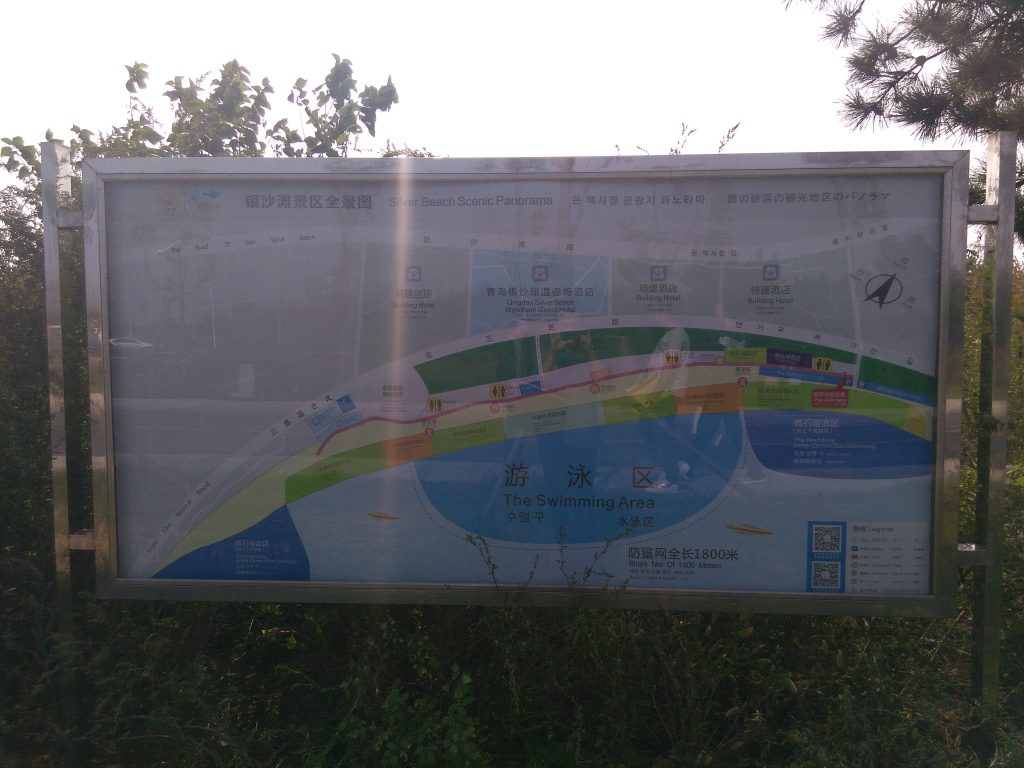
Shandong’s beach towns know how to host a daytime crowd: parking choreography, seafood menus, selfie sticks aimed at horizon clichés. I waited for the opposite hour — when tour buses exhaled their last passengers and left the shoreline to wind, gulls, and people who had nowhere better to be. October air had an edge. My tent stakes argued with sand. Somewhere behind the dunes, a squid grill kept a stubborn orange heart.
For a more conventional seaside plan, Qingdao autumn before Golden Week is the practical sibling. This is the overnight chapter after the schedule boards go blank.
Setting camp without turning it into a survival show
I am not a hardcore mountaineer. I am a person with a borrowed tent and a respect for tide lines. Locals had pointed me toward a stretch where overnighting was tolerated if you stayed tidy and quiet. I kept the site minimal: tent, layer, water, trash bag as moral backbone. Phone battery was a planning tool, not an entertainment sink — and yes, city habits die hard; I still thought about power banks like a talisman.
The grill that became a lighthouse
As darkness settled, the squid vendor’s light became the social sun. A few campers drifted near with beer and cold hands. Conversation stayed in the shallow end: where are you from, is the wind worse than last week, did you try the clam soup inland. Someone offered a skewer. I offered tangerine segments. We practiced the international law of beach nights: share heat, do not overtalk.
Waves wrote long sentences. A dog inspected everyone and approved the treaty.
Quiet is not emptiness
Daytime beaches perform. Night beaches listen. You hear rope lines tick against poles. You hear a couple arguing softly and then laughing, which is the preferred arc. You hear your own thoughts without metro announcements editing them. Golden Week (1–7 October 2026) can keep some coasts busy late; arriving after the holiday peak, or on a shoulder night, changes the acoustic. Calendar sense: Golden Week travel plan.
Morning evidence
Dawn returned the ordinary world: joggers, a radio, vendors resetting trays. My tent looked smaller in daylight, like a secret that had lost its cover story. I packed every scrap. The vendor nodded as if scoring my cleanup. That nod meant more than any travel app review.
What the night fixed in me
City months can make you confuse stimulation with joy. A Shandong beach after the buses leave teaches a cheaper joy: wind, salt, one good skewer, strangers who do not need your LinkedIn. I rode inland later with sand in my shoes and a calmer inbox in my head.
If you try your own after-hours shore, check local rules, weather, and your exit transport. Keep fires where they belong. Let the grill be enough nightlife. And when the last bus pulls away, do not rush to fill the silence — it is the amenity you came for.
A closing note for fellow travelers
Stories like this one are not blueprints you must copy move for move. They are permission slips: to wake early, to refuse a drink kindly, to follow a smell, to ask for help at a gate, to treat a wrong ticket as a door. China will offer you bigger monuments than any single evening can hold. Keep at least one evening for the human-scale scene — a knock, a queue, a skewer, a translated line on a hospital page.
If you are sequencing festival travel around Mid-Autumn 2026 (25–27 September) and Golden Week (1–7 October), keep the calendar guides handy and leave slack in your plans. Slack is where the soft stories enter. Pack patience, a working payment app, and the humility to be corrected by strangers who mean well. Then write your own version when you get home — not for performance, for memory.
Field notes you can reuse next month
Travel days often fail in the boring places: dead phone batteries, unpaid metro gates, hotel counters that need a passport photo page ready, and holiday calendars that quietly insert makeup workdays. Before you chase the next memorable stranger, spend ten minutes on foundations. Set up Alipay and WeChat Pay for foreign visitors. Skim Golden Week 2026 vs Mid-Autumn so September and October do not blur into one expensive blur. If your route crosses a long national holiday, National Day Golden Week 2026 travel plan helps you expect crowds without resenting them.
Carry a light layer even when noon feels warm; evenings on water, hills, plazas, and overnight buses cool faster than city apps admit. Screenshot Chinese addresses for drivers. Tell one friend where you are going. Eat something small before you join a long queue so hunger does not make you sharp with people who are also tired. None of this is glamorous. All of it protects the soft moments — the grandma’s knock, the plaza gap in the dance circle, the ferry hand that lifts your bag — from being ruined by preventable friction.
When the story ends, write three lines in your phone: where you stood, what you smelled, what you would thank a stranger for. That tiny ritual turns a trip into something you can hand to your future self. Monuments will still be there next year. The exact sentence a retired couple said on a leaf-season bus will not. Keep the sentence.
A closing note for fellow travelers
Stories like this one are not blueprints you must copy move for move. They are permission slips: to wake early, to refuse a drink kindly, to follow a smell, to ask for help at a gate, to treat a wrong ticket as a door. China will offer you bigger monuments than any single evening can hold. Keep at least one evening for the human-scale scene — a knock, a queue, a skewer, a translated line on a hospital page.
If you are sequencing festival travel around Mid-Autumn 2026 (25–27 September) and Golden Week (1–7 October), keep the calendar guides handy and leave slack in your plans. Slack is where the soft stories enter. Pack patience, a working payment app, and the humility to be corrected by strangers who mean well. Then write your own version when you get home — not for performance, for memory.
Field notes you can reuse next month
Travel days often fail in the boring places: dead phone batteries, unpaid metro gates, hotel counters that need a passport photo page ready, and holiday calendars that quietly insert makeup workdays. Before you chase the next memorable stranger, spend ten minutes on foundations. Set up Alipay and WeChat Pay for foreign visitors. Skim Golden Week 2026 vs Mid-Autumn so September and October do not blur into one expensive blur. If your route crosses a long national holiday, National Day Golden Week 2026 travel plan helps you expect crowds without resenting them.
Carry a light layer even when noon feels warm; evenings on water, hills, plazas, and overnight buses cool faster than city apps admit. Screenshot Chinese addresses for drivers. Tell one friend where you are going. Eat something small before you join a long queue so hunger does not make you sharp with people who are also tired. None of this is glamorous. All of it protects the soft moments — the grandma’s knock, the plaza gap in the dance circle, the ferry hand that lifts your bag — from being ruined by preventable friction.
When the story ends, write three lines in your phone: where you stood, what you smelled, what you would thank a stranger for. That tiny ritual turns a trip into something you can hand to your future self. Monuments will still be there next year. The exact sentence a retired couple said on a leaf-season bus will not. Keep the sentence.


