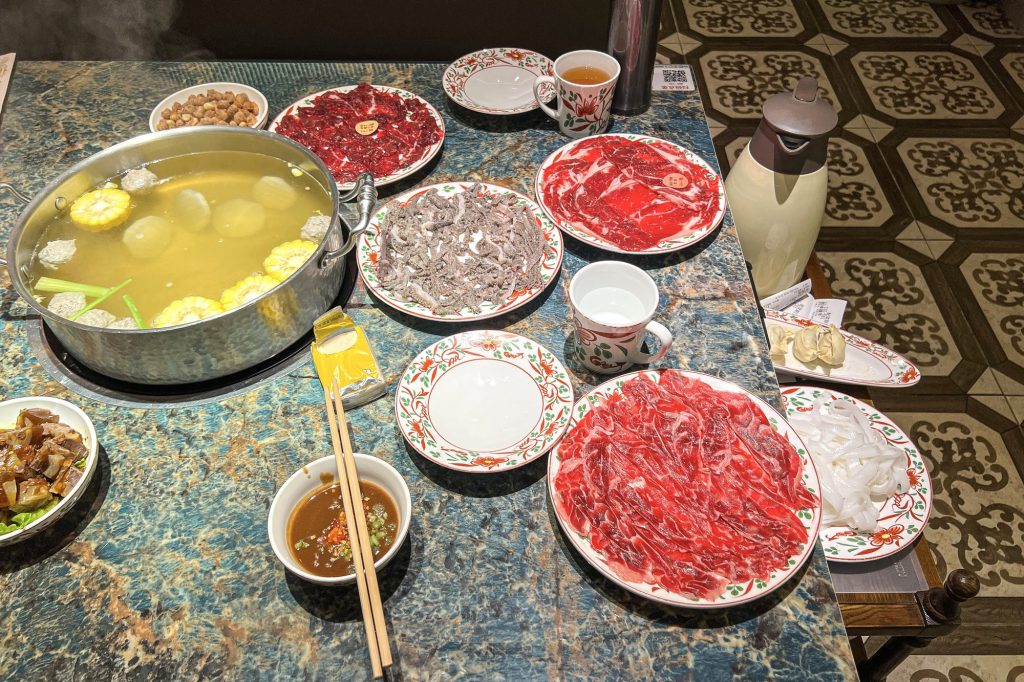
What Chaozhou beef hotpot actually is
Chaozhou beef hotpot—often labeled 潮汕牛肉火锅 (Cháoshàn niúròu huǒguō) or Chaozhou / Teochew beef hotpot—is a clear-broth, beef-focused hotpot style from the Chaoshan region of Guangdong. Instead of a heavy mala chili broth, you get a light beefy soup and a parade of freshly sliced beef cuts that cook in seconds. The skill is timing: too long in the pot and tender cuts toughen.
English menus may say “Chaoshan beef hotpot,” “Chaozhou beef pot,” or “beef shabu-style hotpot.” Look for 潮汕 or 潮州 plus 牛肉火锅.
This guide is for English-speaking travelers and expats who know Sichuan hotpot and need a different mental model: clearer broth, fussier beef timing, and sauce plates that matter.
How it differs from Sichuan hotpot
Sichuan and Chongqing hotpot often lead with chili oil and numbness. Chaozhou beef hotpot leads with beef quality and speed. You still share a boiling pot, but the flavor philosophy is lighter. If you want broth-base literacy across styles, read hot pot broth bases explained, then treat Chaozhou beef as the clear, beef-centric branch.
Shared-chopsticks hygiene still applies—see Chinese hotpot etiquette and shared chopsticks.
The cut board: what you are ordering
Restaurants present trays or a menu of cuts. Names vary; textures matter more than memorizing every label on day one. You will commonly see:
- Tender quick-cook slices (the reason many people came)
- Slightly firmer cuts that tolerate a few more seconds
- Beef balls, tendon, or tripe for textural contrast
- Vegetables, tofu, and noodles to round out the meal
Ask staff which cuts are 最嫩 (most tender) and which need longer. Pointing at the display case is completely normal—and smarter than guessing English translations.
Order a mix: two or three beef cuts plus vegetables. All-beef with no carbs leaves some diners hungry and others overwhelmed.
Timing: the whole game
For tender slices:
1. Wait for a true boil.
2. Swish the beef a few seconds until color changes.
3. Remove promptly to your sauce dish.
4. Eat; then repeat.
Leaving delicate beef in the pot “to be safe” is how you make expensive chewing gum. Firm cuts and meatballs can handle longer. Watch what neighboring tables do if you feel unsure—Chaoshan beef houses are great classrooms.
Sauces and seasonings
Sauce plates often include shacha (沙茶) sauce, soy, garlic, chili, cilantro, and sesame oil combinations. Many diners start with a shacha-forward dip and adjust. You do not need to mix a chemistry experiment on the first visit—begin simple, then tweak.
If cilantro is in the default garnish, say 不要香菜. Chili is optional in a way Sichuan pots rarely allow; the broth stays clear even if your personal dish is spicy.
A calm first-timer ordering script
1. Seat a Chaoshan / Chaozhou beef hotpot restaurant; confirm it is clear-broth beef style.
2. Order a pot for the table size (staff often guide broth volume).
3. Pick 2–4 beef cuts with staff advice on tenderness.
4. Add vegetables, beef balls, and a starch (noodles or rice) .
5. Mix a simple dipping sauce; keep chili optional.
6. Cook beef in small batches—never dump the whole tray at once.
7. Pay by app—Alipay / WeChat Pay.
Pocket lines:
- 这些哪个最嫩? — “Which of these is the most tender?”
- 不要香菜 — “No cilantro.”
- 清汤 — “Clear broth” (if choices appear).
What to pair and how to pace
Vegetables clean the palate between beef rounds. Noodles or rice at the end use the enriched broth. Some tables drink the broth as soup late in the meal—only do this if it still tastes clean to you.
Pacing tips:
- Cook what you can eat in the next minute.
- Keep raw and cooked tools separate when the restaurant provides them.
- Do not overfill the pot; boiling temperature drops and timing fails.
QR ordering is common in cities—QR menu tips. Photos of cuts help when translations are thin—photo translation apps.
Regional and restaurant notes
Chaoshan / Chaozhou / Shantou region: Home turf—expect serious cut variety and locals who care about seconds.
Guangdong elsewhere and major Chinese cities: Widely available; quality tracks the restaurant’s beef supply more than the neon sign.
Compared with malatang or buffet hotpot: This is usually à la carte cuts, not a self-serve spice free-for-all. Price perception follows beef grade—order thoughtfully rather than by random tapping.
Etiquette essentials
- Use serving chopsticks for raw-to-pot when provided.
- Do not return bitten beef to the communal pot.
- Bones or gristle go on waste plates.
- No tipping—tipping guide.
- It is fine to ask staff to demo one cut’s cook time.
Common first-timer mistakes
- Treating it like Sichuan hotpot and dumping chili oil into the clear broth without asking the table.
- Overcooking tender beef “to be safe.”
- Ordering only exotic cuts and skipping a known tender slice for calibration.
- Filling the pot with vegetables until beef cannot boil properly.
- Arriving without a payment app in a shop that prefers scans.
Diet and caution notes
This cuisine is beef-forward. If you avoid beef, choose another hotpot style. Allergies to dipping-sauce ingredients (peanut, sesame, shellfish powders in rare blends) deserve a question before mixing. Pregnant diners and anyone with medical diet limits should follow their own guidance on hotpot meats and broths; this article is practical travel help, not medical advice.
Broth etiquette and “can we spice the pot?”
Some groups want chili in the communal broth. In a Chaozhou beef house, ask the whole table before altering a clear pot. Many diners prefer to keep broth clean and put heat only in personal dipping dishes. That compromise keeps tender beef flavors readable. If everyone wants a spicy pot, say so early so staff can advise—some restaurants offer optional spicy sides rather than ruining a beef-focused broth.
Skimming foam is normal. Staff may adjust the burner; diners should not invent fire hazards with the stove controls if service is handling heat.
Ordering smart on a budget mindset
Beef cut menus can tempt over-ordering. A practical approach:
- Start with two trusted tender cuts and one interesting texture cut.
- Add vegetables and balls.
- Reorder the favorite cut once you taste it.
This beats a crowded table of half-eaten trays. Servers in good beef houses expect reorders; it is part of the format.
First visit vs becoming a regular
Your first visit is about timing and sauce. Your second visit is about preferring one cut over another. By the third, you may have a usual sauce mix and a favorite seat near the kitchen’s slicing rhythm. Chaoshan beef hotpot rewards repetition more than most tourist meals because the learning curve is tactile.
Travelers who only know Sichuan hotpot sometimes call clear-broth beef “bland.” That usually means they overcooked the beef or skipped sauce. Fix technique before judging the cuisine.
Group roles that make dinner smoother
Assign someone to manage the boil (not overcrowding), someone to watch raw trays (food safety order), and someone to reorder. It sounds formal; it actually prevents five chopsticks from debating while beef turns grey. Solo diners can still enjoy smaller setups—ask which cuts suit one person and whether a small pot is available.
After the meal
You will likely smell lightly of broth. That is normal. Schedule a walk, not a tight theater seat, if you are sensitive. Leftover broth rarely travels well; leftover cooked beef is better eaten than forced into a takeaway adventure unless you have immediate refrigeration.
If this hotpot style wins you over, keep a shortlist of Chaoshan restaurants in your city and rotate cuts seasonally. For chili nights, return to Sichuan; for beef clarity nights, return here. China’s hotpot map is large enough for both—and for the etiquette habits in our shared chopsticks guide to transfer cleanly between them.
Bottom line
Order Chaozhou beef hotpot for clear broth and fast beef, not for mala drama. Let staff steer you to tender cuts, cook in small waves, and keep your dipping sauce simple on the first visit. Once you feel the timing click—slice in, color change, slice out—you will understand why Chaoshan diners treat seconds as a craft. It is one of China’s most rewarding hotpot styles for travelers who want beef clarity instead of chili fog.