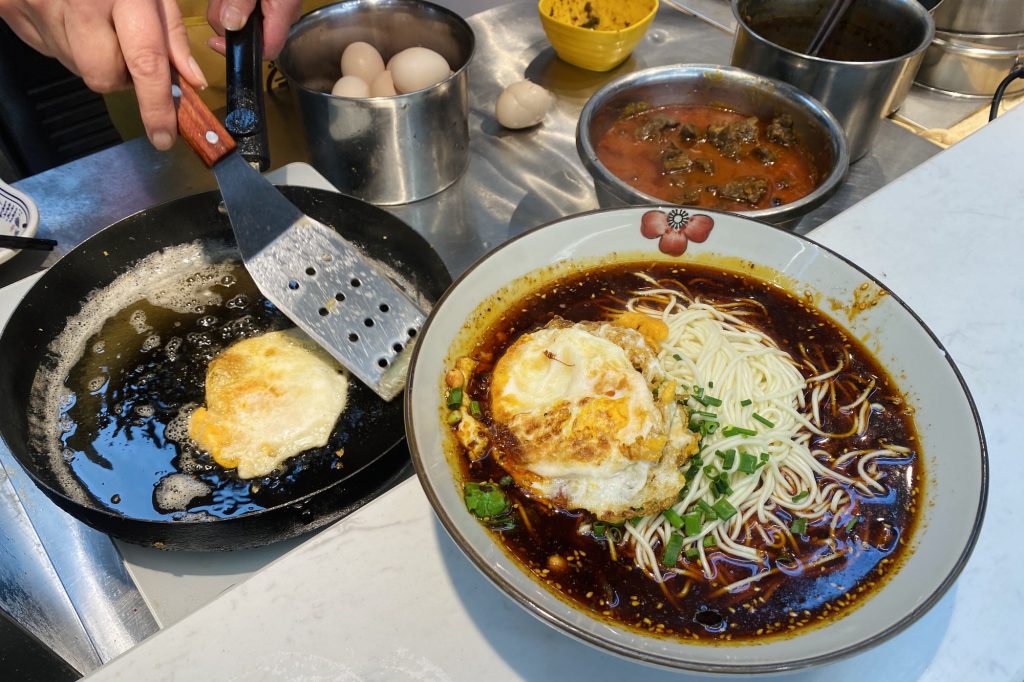
What Chongqing xiaomian is
Chongqing xiaomian (重庆小面) is a wheat-noodle bowl built around chilli, Sichuan pepper fragrance, aromatic oils, and savoury toppings. It is everyday food more than banquet theatre: fast, fragrant, and adjustable — if you ask. For English-speaking travellers, it is one of the clearest introductions to Chongqing heat without committing to a full hotpot session on day one.
Xiaomian is not the same as Wuhan hot dry noodles, Lanzhou beef noodles, or Guilin rice noodles. It is also not automatic mouth-numbing disaster if you request less spice — but default local heat can surprise visitors.
Late September 2026 sits near Mid-Autumn (25 September) and before Golden Week (1–7 October). Noodle shops stay busy on holiday travel days; go earlier for calmer seats.
How it should taste
A good bowl smells of chilli oil, sesame or aromatic pastes depending on the shop, scallion or garlic notes, and the specific topping you chose (minced meat, peas, egg, offal varieties, and more). Noodles should have chew. Broth or sauce coating varies by style — some bowls are drier-sauced, some soupier. Numbing (麻) and heat (辣) are related but not identical; you can ask to reduce either when staff can adjust.
If the bowl is only greasy heat with no aroma, or noodles are mush, try another shop tomorrow rather than deciding you “hate Chongqing food.”
Where to eat it
Look for busy specialist xiaomian shops with quick turnover — freshness matters. Hotel restaurants may offer milder tourist versions; street-adjacent specialists teach the real rhythm. In other cities, Chongqing-style shops exist with variable authenticity. Ask for 小面 and clarify toppings.
Pair noodle breakfasts with lighter lunches. If you are also exploring Sichuan cold dishes another day, see Sichuan koushui ji for first-timers for a different chilli-forward classic.
How to order heat you can enjoy
Useful phrases
- 重庆小面 (Chongqing xiaomian)
- 微辣 (wei la) — mild heat
- 少辣 / 不要辣 (shao la / buyao la) — less spice / no chilli (shops vary in how “zero” they can go)
- 少麻 (shao ma) — less numbing pepper
- 加蛋 (jia dan) — add egg, when available
Point to toppings on the wall menu. Start milder than your pride suggests; you can add chilli oil later more easily than you can undo a default bowl.
Toppings and extras
Minced pork, beans or peas, egg, and various prepared meats appear often. Offal toppings are normal locally — skip them if you prefer. Ask what today’s popular topping is, then choose within your comfort.
What to drink and what to eat beside it
Unsweetened soy milk, tea, or simple broth drinks appear in many shops. Sugary sodas with heavy spice are a personal choice; many locals still drink them. You rarely need three side dishes — xiaomian is already a meal. If sharing, order one milder bowl and one standard bowl rather than forcing everyone to the same heat.
Payments and practicalities
Set up Alipay and WeChat Pay. Keep small cash for older stalls. Peak breakfast and lunch hours move fast — know your order before you hit the counter. A working China SIM or eSIM helps when translation apps need data.
Common first-timer mistakes
- Saying “I like spicy” and receiving local-default fire
- Mixing xiaomian with hotpot the same lunch hour
- Wearing white shirts on a chilli-oil day
- Stirring endlessly for photos while noodles soften
- Assuming every chilli noodle in China is Chongqing xiaomian
Allergies and diet notes
Wheat noodles are the base. Soy, sesame, and peanut appear in some sauces and toppings. Chilli oil and peppercorns are central. Vegetarian bowls may exist but are not guaranteed everywhere — ask. This is not medical advice; communicate allergies clearly.
A calm first-timer plan
1. Choose a busy xiaomian specialist at off-peak if possible.
2. Order 微辣 or less heat than your ego wants; add egg if you like.
3. Stir, taste, then adjust with table chilli if available.
4. Drink something simple; skip extra heavy sides.
5. Walk afterward; plan milder food for the next meal.
Xiaomian vs other famous noodles
Compared with Sichuan dan dan noodles, xiaomian is a broader everyday Chongqing category with many topping paths. Compared with Liuzhou luosifen, it is wheat-based and a different aroma world. Space famous noodle bowls across days so you can taste differences.
Holiday travel days
On Mid-Autumn and Golden Week travel days, station-adjacent xiaomian shops jam. Eat before you are desperate, or walk one block farther from the densest exit cluster. If you have a long HSR ride after, milder heat is kinder in a quiet carriage — see China HSR quiet carriage etiquette.
Bottom line
Chongqing xiaomian is fragrant chilli-oil noodles with chew and toppings — best when you order heat deliberately, eat at a busy specialist, and keep the rest of the day lighter. Start milder than pride suggests; Chongqing will still be there for round two.
Reading the wall menu without panic
Xiaomian shops often use Chinese boards with topping prices. Photos help. Translation apps help. Pointing helps most. If the queue is fast, decide topping and heat before you reach the cashier. Hesitation is how you get default spicy. If you freeze, say 微辣小面加蛋 and refine next time.
Spice recovery without drama
If the bowl is hotter than expected, add noodles or egg if the shop allows, eat more carb, and slow down. Do not chug ice-cold dairy myths as a universal fix — use what you tolerate. Skip rubbing your eyes after chilli oil fingers. Pack tissues. Plan a mild dinner. Tomorrow’s breakfast can be congee or non-chilli noodles.
Breakfast culture and office mornings
Xiaomian is a morning staple for many workers. Expats on office schedules can use it as a fast breakfast if heat is controlled. On makeup workdays such as Sunday 20 September 2026 for some nationwide calendars, station and office-adjacent shops stay busy — leave earlier. See China makeup workday Sep 20 for foreign staff if your team is still decoding the calendar.
Regional variants and chain shops
Chains outside Chongqing can be decent introductions with milder defaults. Local independent shops vary more. Neither is “fake” by default — judge aroma, noodle chew, and whether staff understand mild requests. If a shop refuses any heat adjustment, choose another; many are flexible within reason.
Heat ladder for return visits
First bowl: mild. Second visit: standard local mild-plus. Third visit: try a signature topping at normal heat if you enjoyed the aroma. This ladder prevents one traumatic lunch from closing the door on Chongqing food. Keep notes on which shop understood 微辣 — good shops deserve repeat business.
Office lunch vs travel lunch
As an expat office lunch, xiaomian is fast if the shop is near your building. As a travel lunch before a museum afternoon, milder heat preserves attention span. As a farewell-to-Chongqing meal, you can push heat if your stomach agrees. Match the bowl to the next three hours of your day, not to social media toughness.
What “small” means in xiaomian
“Xiao” does not always mean a tiny portion. It signals a style category more than a diet bowl. Still, you can ask for less noodles if offered. If you are sharing, two toppings in two bowls beats one mountain bowl fought over with chopsticks wars.