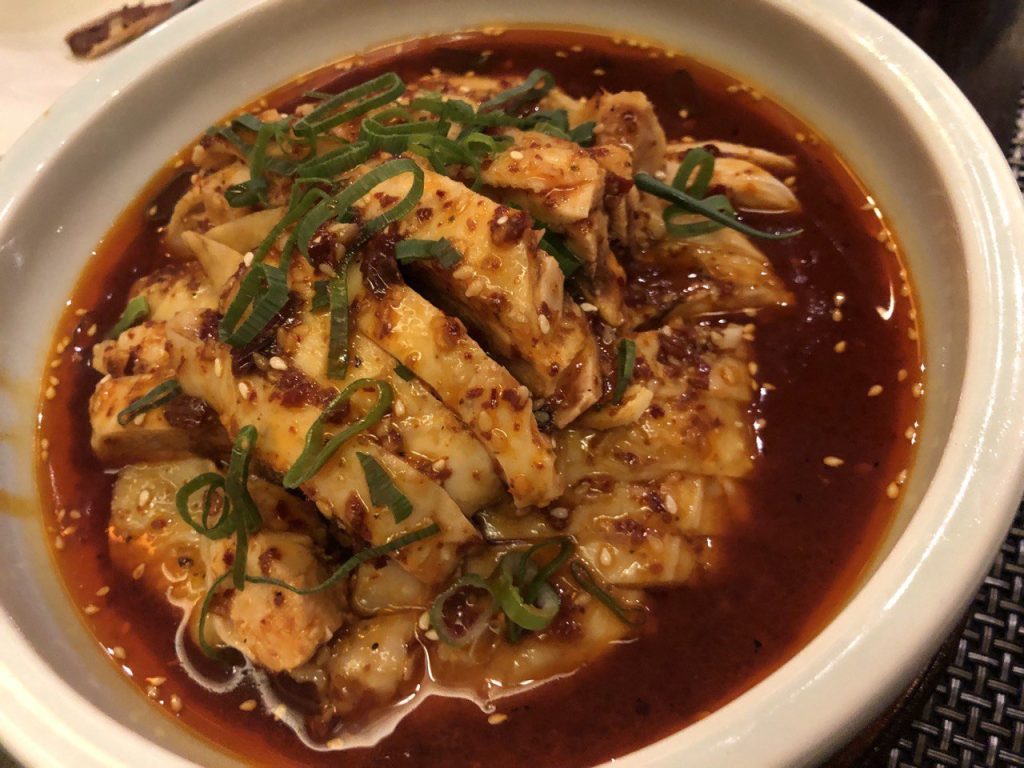
What koushui ji is
Koushui ji (口水鸡), often translated “mouthwatering chicken” or “saliva chicken,” is a Sichuan cold dish: poached or steamed chicken cut and dressed with fragrant chilli oil, Sichuan pepper, soy, vinegar, garlic, and sesame notes. It should make you salivate — hence the name — not numb you into silence on the first bite if you order thoughtfully.
It is related in spirit to other cold dressed chickens (and sometimes confused with bang bang chicken), but the chilli-oil fragrance and mala balance are the Sichuan signature you are chasing. First-timers should treat it as a shared starter, not a solo protein mountain.
If you already tried bang bang chicken, koushui ji will feel like a cousin with a bolder red-oil personality.
How to order
Show 口水鸡. Ask for mild or less spicy (少辣 / 微辣 / 油在外面) if you want chilli oil on the side when the restaurant allows. Clarify bone-in versus boneless if you care — styles vary. Order rice and a vegetable stir-fry alongside; chilli oil chicken alone is intense.
In Chengdu, Chongqing, and Sichuan restaurants nationwide, cold dishes arrive early. Do not fill up before hot dishes land. Around Mid-Autumn office meals and Golden Week family dinners, koushui ji appears on shared tables — pace yourself.
Set up Alipay and WeChat Pay. Tipping is not expected.
Taste and texture
Chicken should be moist, not dry cotton. Sauce should smell of chilli oil and aromatics, with Sichuan pepper tingle (ma) in balance with heat (la). Sesame paste appears in some house styles. If the dish is only raw heat without fragrance, the oil was lazy — try another restaurant.
Eat with rice. The goal is synergy, not finishing the chilli oil like a soup.
Etiquette
Use serving chopsticks for shared plates when provided. See shared-plate instincts in Chinese hotpot etiquette and shared chopsticks. Photo quickly; cold dishes wait better than hot pot, but courtesy still matters.
Common mistakes
- Ordering extra spicy as a dare before rice arrives
- Confusing it with fried chicken
- Eating the whole platter before other dishes
- Ignoring sesame/peanut allergies in the sauce
- Assuming every red-oil chicken is identical across provinces
Allergies and diet
Chicken is the protein. Sauces often include soy, sesame, chilli oil, and sometimes peanuts. Wheat via soy. Not vegetarian. If you avoid Sichuan pepper’s tingle, ask whether mild versions reduce it — results vary.
A calm first-timer plan
1. Order koushui ji as a shared starter with rice.
2. Request mild chilli if unsure.
3. Taste sauce on a small piece; adjust with rice.
4. Leave room for a hot vegetable and main.
5. Drink tea; avoid stacking three more mala cold dishes immediately.
Chengdu lunch logic in late September
Autumn in Sichuan still supports outdoor tea houses and spicy lunches. If you are travelling before Golden Week, book popular restaurants or arrive early. Koushui ji works at lunch because it does not require a full hotpot commitment. Pair with a gentle soup if your group includes spice beginners.
For travellers coming from milder Shanghai food days, warn your mouth: chilli oil here is the point. Mild asks are normal — locals request them too.
How restaurants vary
Some versions are heavy on sesame paste; some are sharper vinegar-forward; some float in a pool of red oil. None of these is automatically “fake.” Ask for the house style. Hotel restaurants may tame spice for tourists — sometimes welcome, sometimes dull. Specialist Sichuan kitchens usually offer a more aromatic oil.
Leftovers
Cold chicken in chilli oil can refrigerate and reappear at lunch next day if handled hygienically. In hotels without fridges, do not gamble. When in doubt, order less.
Bottom line
Koushui ji is fragrant chilli-oil dressed chicken — Sichuan’s appetite-whetting cold starter. Order it shared, keep spice adjustable, eat with rice, and leave room for the rest of the meal. Master this and other red-oil cold dishes become less intimidating.
Naming confusion travellers hit
Menus may say mouthwatering chicken, saliva chicken, steamed chicken with chilli sauce, or simply koushui ji. Photo menus help. If you see bang bang chicken (棒棒鸡) nearby, know they can both appear at the same meal — order one first-timer cold chicken, not three.
Drinking with mala cold dishes
Tea is ideal. Beer is common. Baijiu escalates dinners quickly — decline politely if you need a clear head for afternoon trains. Hydrate; chilli oil thirst is real.
Cold dish culture in Sichuan meals
Sichuan tables often open with a spread of cold dishes: chicken, wood ear, beef slices, tofu. Koushui ji is a star among them. Ordering two cold chickens plus three other red-oil starters is how foreigners accidentally fill up before mapo tofu arrives. Pick one cold chicken highlight, one vegetable cold dish, then hot mains.
Servers may recommend house signatures. Accept one recommendation if it sounds clear; decline a pile politely by saying you will add more later (先这些,不够再加).
Bone-in joy and chopstick skills
Bone-in pieces taste great and slow you down — good. If your chopstick skills are new, boneless is less stressful. Nobody minds you using a spoon for sauce-heavy bits. Wipe fingers; chilli oil stains napkins and shirts.
Spice ladders across a week in Chengdu
Day one: mild koushui ji. Day two: mapo or twice-cooked pork at medium. Day three: hotpot if you still want it. Jumping straight to extra-spicy everything produces a miserable travel day and unfair dish judgments. Late September weather can still be warm; spicy food plus humidity demands tea and rest.
Restaurant vs home versions
Home cooks and small shops may produce extraordinary koushui ji without English menus. Point at another table’s dish if needed. Delivery apps show photos — useful for expats with Meituan vs Eleme already set up — but first taste is better in a dining room where you can adjust spice with staff help.
When colleagues order for you
If Chinese colleagues order a full cold-dish spread including koushui ji, thank them, take small portions first, and use rice. You can admire the red oil without finishing every drop. Leaving a little sauce is okay; wasting a mountain of chicken is less ideal — serve yourself modestly at first.
Sesame, peanuts, and sauce thickness
Some kitchens lean into sesame paste for a thicker dressing; others keep a lighter red-oil pour. If you have sesame allergies, ask before ordering — 有没有芝麻. Peanut fragments appear in some house sauces. True allergies deserve caution in busy shared kitchens where utensils touch multiple cold dishes.
Sauce thickness changes how you eat: thick dressings cling to chicken; thin oils pool and need rice. Neither is wrong. Ask for sauce on the side only if the restaurant can accommodate — not every cold dish is built that way.
What to order next on the same table
After koushui ji, good companions include dry-fried green beans, a clear soup, and a mild stir-fried green vegetable. Another heavy red-oil cold dish is optional, not mandatory. If hotpot is the main event later that night, keep lunch’s koushui ji smaller.
Bottom line reminder
Fragrance first, heat second, rice always. That is the koushui ji first-timer contract.