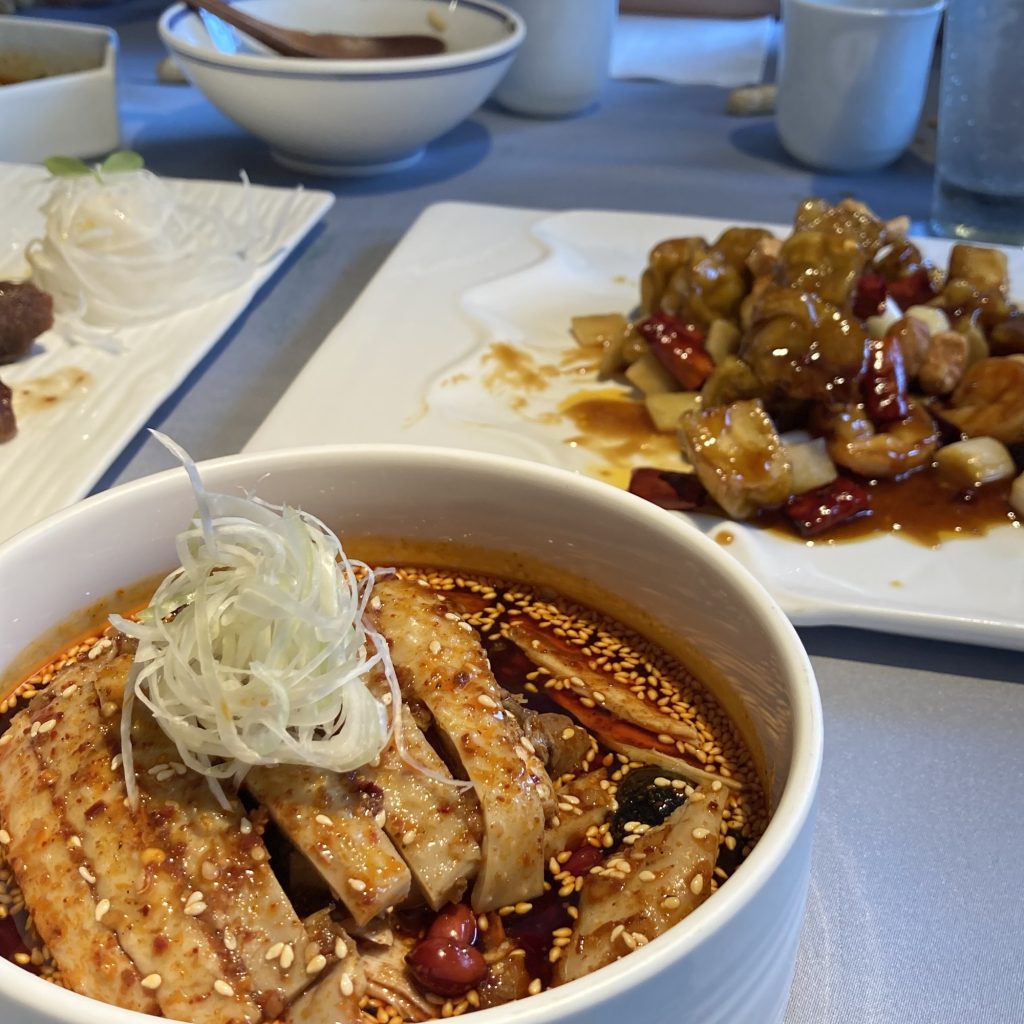
What bangbang ji actually is
Bangbang ji (棒棒鸡), often translated bang bang chicken, is a Sichuan cold chicken dish: tender chicken pulled or sliced, dressed with a savory, nutty, chili-forward sauce. The classic story of the name points to cooks tenderizing or portioning chicken with a stick (bang), though modern kitchens may skip the theatrics and still serve the same flavor idea.
On the table it usually arrives as an appetizer or cold dish: pale chicken under a glossy red-brown sauce with sesame paste or sesame oil notes, chili oil, soy, vinegar, garlic, and sometimes Sichuan pepper. Cucumber shreds or scallion may appear underneath or on top. It is refreshing before heavier hot dishes—and still spicy enough to wake you up.
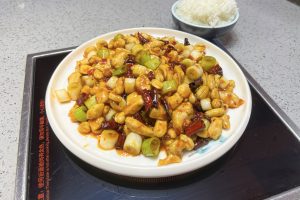
This guide covers how to order it, how spicy it runs, how it differs from related cold chicken dishes, and how to fit it into a Sichuan meal without confusing it with hot stir-fries like Kung Pao chicken / gongbao jiding or mapo tofu as the hot contrast.
Cold dish, not leftover chicken
Bangbang ji is intentionally served cool or room temperature. That is correct, not a sign it sat out carelessly. In Chinese meal structure, cold dishes start the table while hot woks finish. If you only eat piping-hot food, this may surprise you—give it one fair tasting with rice or as a opener.
Busy reputable restaurants prepare cold chicken to order from chilled cooked birds or portions kept under proper cold holding. Choose crowded places with high turnover, especially in summer heat. General street-food caution still applies; see street food safety for your first month for broader habits.
Sauce: sesame, chili, and savor
Expect a sauce that is:
- Nutty from sesame paste or sesame oil
- Savory from soy
- Bright from vinegar
- Warming from chili oil
- Aromatic from garlic and sometimes Sichuan pepper
Sweetness is usually light compared with sticky Western “bang bang” reinterpretations. If your only prior reference is a creamy Western salad dressing labeled bang bang, reset expectations toward chili-sesame cold chicken.
Sesame allergy: ask before ordering. 我对芝麻过敏 (wǒ duì zhīma guòmǐn).
Bangbang ji vs kou shui ji vs other cold chicken
Menus can blur cold chicken names:
- 棒棒鸡 (bangbang ji): shredded/sliced chicken with bangbang-style spicy sesame sauce; name and presentation vary by shop.
- 口水鸡 (kou shui ji / “mouth-watering chicken”): another famous Sichuan cold chicken with chili oil sauce; often bone-in pieces or chopped sections, very saucy.
- 凉拌鸡: generic “cold-mixed chicken,” house-dependent.
If the photo shows chili oil pooling over chicken with peanuts or sesame, you are in the right family. When unsure, point at the picture and say 这个鸡肉凉菜 (zhège jīròu liángcài — “this cold chicken dish”).
How spicy is it?
Cold does not mean mild. Chili oil can be assertive. Customize when staff ask, or add a note:
- 微辣 — mild
- 酱少一点 — less sauce
- 辣椒油少一点 — less chili oil
- 不要花椒 — no Sichuan pepper
You can also ask for sauce on the side in some casual restaurants (酱料分开), though not every kitchen will oblige.
Ordering script
1. Find 棒棒鸡 on the cold dishes section (凉菜).
2. Order one plate to share as a starter for two to four people.
3. Set spice preference early.
4. Follow with a hot main and vegetables so the meal has temperature contrast.
Phrases:
- 来一份棒棒鸡,微辣 — “One bang bang chicken, mild.”
- 这是凉菜,对吗? — “This is a cold dish, right?” (if you want confirmation).
Use QR menus with photo translation when needed: QR menus for foreigners. Keep visitor payment apps ready: Alipay and WeChat Pay 2026 guide.
How to eat it
Toss gently so sauce coats the chicken if the kitchen did not already mix it thoroughly. Lift chicken with chopsticks; use a spoon for extra sauce over rice. Cucumber underlayers are there to cool and crunch—eat them.
Bone-in versions need slower eating. Boneless shreds are first-timer friendly. Either can be excellent.
Where you will see it
- Sichuan restaurants’ cold-dish list
- Some Chengdu snack shops and set-meal starters
- Banquet openers in southwest China
- Occasional chains with standardized portions
It is less common as a mall “main with rice” than as part of a multi-dish table. Order it with friends, not as your only food unless the portion is clearly large.
Pairing ideas
Start with bangbang ji, then add a hot stir-fry and greens. If you want noodle heat later, dan dan noodles make a focused second act. Save full hotpot for a night when cold dishes are only the opening chapter.
Texture: poached tenderness
The chicken should be moist, not stringy-dry. Overcooked cold chicken tastes dusty even under great sauce. Undercooked chicken is unsafe—stick to busy restaurants. Ideal bangbang ji chicken pulls into soft shreds that still feel juicy when coated.
Some shops slice rather than shred. Slices can look neater for photos; shreds catch sauce better. Both are legitimate.
Sauce-to-meat ratio
Too little sauce and the dish tastes like plain cold chicken with a red drizzle. Too much sauce and you are eating chili oil soup with chicken garnish. A good plate coats thoroughly without drowning. If sauce pools heavily, spoon strategically onto each bite instead of flooding your rice bowl on the first pour.
Make it a starter, not a mystery main
Foreign visitors sometimes order only cold dishes and wonder why they are still hungry. Bangbang ji shines as the opening act. Follow with a hot vegetable and a main protein or tofu dish. That rhythm matches how Sichuan tables actually move.
If you are solo, one bangbang ji plus rice plus a hot veg can still work when portions are generous—eyeball the plate size before you stop ordering.
Travel days and picnic boxes
Cold chicken can travel in a sealed takeaway box for a short park picnic the same day. Keep it cool, eat within a sensible window, and skip if the box sat warm in a backpack for hours. Mid-Autumn park evenings are lovely; food safety still wins. Festival timing in 2026 clusters around late September and early October—plan fridge access if you are packing leftovers.
Related flavors to try later
After bangbang ji, explore kou shui ji at another meal to compare sauce styles. Then add a hot classic so your mental map of Sichuan includes both cold openers and wok mains. That variety is the point of a multi-day Chengdu or Chongqing eat-through.
Holiday note
Around Mid-Autumn (25 September 2026, roughly 25–27 September) and Golden Week (1–7 October, makeup workdays 20 September and 10 October, 国办发明电〔2025〕7号), group dinners increase. Cold dishes like bangbang ji are easy to add to a shared table without waiting for a second wok slot—handy when kitchens are slammed.
Common mistakes
- Sending it back because it is not hot.
- Ordering only this and leaving hungry.
- Assuming it is mild because it is an “appetizer.”
- Confusing it with fried chicken or Kung Pao.
- Ignoring sesame/peanut-related allergens in the sauce.
Bottom line
Order 棒棒鸡 as a cold starter, ask for 微辣 if needed, mix sauce through the chicken, and follow with a hot dish. Bang bang chicken is Sichuan’s spicy welcome handshake: cool temperature, warm chili, sesame depth, and a fast way to start a memorable table.