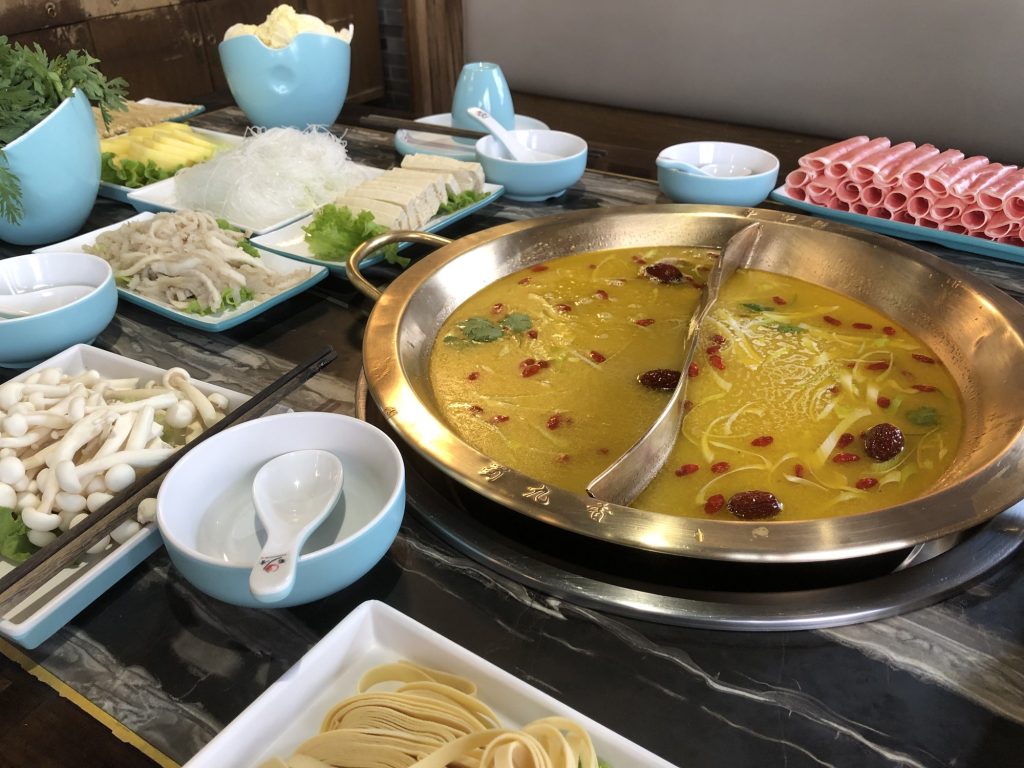
What Sichuan hotpot is (and is not)
Sichuan hotpot (四川火锅, sìchuān huǒguō) is a shared meal built around a bubbling broth pot in the center of the table. You cook raw ingredients in the pot, then dip them in a personal sauce bowl. The headline flavor is má là (麻辣): numbing from Sichuan peppercorn plus chili heat. That combination is famous for a reason—but a first meal does not have to be a dare.
You will meet hotpot across China, not only in Chengdu and Chongqing. Mall chains, neighborhood shops, and regional branches all run similar rituals with local twists. Chongqing styles often lean fiercer and oilier; Chengdu tables frequently offer milder options and clearer “tourist-friendly” scripts. Chains outside Sichuan may dial heat down by default or push a split pot hard. Treat every city as a slight dialect of the same meal.
This guide is for English travelers and expats who want a calm first session: how to choose broth, build a dipping sauce, cook in a sensible order, ask for less heat without embarrassment, and leave with a full stomach instead of a ruined evening.
Why hotpot works for first-timers
Hotpot is social, paced, and flexible. You control how much you cook, how spicy each bite is (via dipping sauce and which side of a split pot you use), and how long you stay. If you already like fondue, Korean BBQ, or shabu-shabu, the learning curve is mostly vocabulary and table choreography—not courage.
It also scales. Two people can share a small pot; six people can fill a big round table. Vegetarian guests can stick to tofu, mushrooms, greens, and noodles while others cook meat. If spice anxiety is high, a yuanyang (鸳鸯) split pot—mild on one side, spicy on the other—is the standard safety net.
For a Chengdu-side spice companion dish on another day, see our mapo tofu first-timers guide. For a lighter Sichuan noodle lunch between heavier dinners, dan dan noodles are a useful contrast.
Broth choices without drama
Yuanyang (split pot)
Ask for 鸳鸯锅 (yuānyāng guō). One side is usually clear or tomato/mushroom mild; the other is red chili-oil broth. This is the default recommendation for almost every first visit. You can taste spicy ingredients without committing the whole meal.
Mild / clear / tomato / mushroom
If even the “mild” side of a chain’s split pot looks aggressive, ask for a fully mild pot: 清汤锅 (qīngtāng guō), 番茄锅 (fānqié—tomato), or mushroom broth if listed. Staff understand “first time” gestures. Say 我不太能吃辣 (wǒ bú tài néng chī là — I can’t handle much spice).
Full spicy (later)
Save a full red pot for a second or third visit, once you know your own limit. “Spicy” on a Sichuan menu is not the same as “spicy” on a Western chain menu. There is no need to prove anything on night one.
Heat guidance without fake numbers: think in steps—no chili, light chili oil sheen, steady burn, and “I need more rice and less talking.” Start at light. Numbing (má) feels tingly and floral before it feels hot; chili (là) is the burn. They stack. If your lips buzz and your forehead sweats after two bites, pause, drink something non-alcoholic and cool, and switch to the mild side.
Dipping sauce: your personal control panel
Most Sichuan hotpot places have a sauce bar (自助调料). Build a small bowl; you can remix later.
A calm first-timer base:
1. Sesame oil (香油) or sesame paste (芝麻酱) — cools and coats.
2. Garlic (蒜) — almost everyone adds some.
3. Scallion / cilantro if you like them (香菜 = cilantro; say 不要香菜 if not).
4. A little soy sauce or fermented sauce if offered.
5. Optional: vinegar for brightness; a tiny bit of chili only if the mild broth already feels too soft.
Avoid dumping every spicy condiment into the bowl on pass one. Your dipping sauce is where you fine-tune heat bite by bite. If the table has egg in the sauce culture (common in some shops), ask staff what is customary rather than inventing a chemistry experiment.
What to order on the first table
Aim for a mix of quick-cook and longer-cook items, plus something starchy.
Good first proteins
- Thin-sliced beef or lamb (cooks in seconds)
- Meatballs or fish balls (forgiving timing)
- Shrimp or squid if you eat seafood
- Tripe and offal are classic—but optional; try one skewer later if curious
Tofu and eggs
- Soft tofu, fried tofu, tofu skin
- Quail eggs or egg dumplings if listed
Vegetables and mushrooms
- Leafy greens, potato slices, lotus root, wood ear, enoki, oyster mushroom
- Potato and lotus need a bit more time; greens wilt fast
Carbs
- Instant-style noodles, sweet potato noodles, or rice to finish
- Many tables end by cooking noodles in the seasoned broth
If the menu is only Chinese photos, point. For sit-down QR ordering culture more broadly, see Chinese restaurant QR menus for foreigners. Keep Alipay / WeChat Pay ready before you sit; many hotpot shops are phone-pay first.
Cook order that keeps texture
1. Start broth fully boiling—do not cook in a lukewarm pot.
2. Drop longer-cook items first (root vegetables, dense balls).
3. Add thin meats in small batches; pull when color changes.
4. Cook leafy greens last so they stay bright.
5. Noodles near the end, when the broth has picked up flavor.
Use the slotted spoons and strainers provided. Do not “wash” raw meat in the communal pot with chopsticks you just licked—use serving tools, then your own chopsticks for eating. This is basic hygiene, not fussiness.
If something disappears into the spicy side and you cannot find it, ask staff or move on. Digging endlessly with chopsticks is how broth ends up on sleeves.
Table etiquette that locals notice
- Wait for boiling before major cooking.
- Do not dunk personal chopsticks deep into the pot if a communal utensil is available.
- Share plates in the middle; do not hoard the only plate of beef.
- Pace alcohol if you drink; spice plus beer can sneak up on you.
- Tell staff early about allergies: peanut, shellfish, cilantro, pork.
Hotpot is loud and long by design. Two hours is normal. If you have a soft sleeper or early train the next morning, set a mental end time before you order the third round of lamb.
A calm ordering script
1. Seats and pot: 鸳鸯锅,微辣 (yuānyāng guō, wēi là — split pot, mild spice) or 清汤 if you want fully mild.
2. Confirm headcount so staff bring enough sauce bowls and utensils.
3. Order 8–12 items for two people to start; you can add more. Over-ordering raw plates that sit warm is wasteful and sad.
4. Sauce bar → return → start cooking.
5. Add dishes in waves, not one giant pile.
If English menus exist, still learn 不辣 / 微辣 / 中辣 / 特辣 (none / mild / medium / extra). Pointing at those four words solves most negotiations.
Regional notes across China
In Chengdu, expect many first-timer scripts and split pots. In Chongqing, assume more chili-forward broths and ask clearly for mild. In Beijing, Shanghai, Shenzhen, national chains often standardize spice labels—trust the label less than your tongue; start mild anyway. Airport and station hotpot outlets can be convenient but rushed; neighborhood shops usually feel better for a first lesson.
Pairing tip: if you are building a wider Sichuan food week, leave mapo tofu and dan dan for lunches, and keep hotpot as the long evening ritual.
Payment, leftovers, and going home
Pay at the cashier or via table QR when finished—customs vary. Ask whether unused sealed sides can be packed; cooked leftovers in spicy oil travel poorly and smell up hotel rooms. Drink water, eat rice, and give your stomach an hour before late-night dessert hunts.
If lips burn: dairy is not always available; plain rice, mild broth noodles, and time help more than heroic chili challenges. Skip rubbing eyes after handling chili oil.
First-timer checklist
- Split pot or fully mild broth
- Sesame-oil-forward dipping sauce
- Thin meats + tofu + mushrooms + greens + one noodle finish
- Spice words: 不辣 / 微辣
- Allergy phrases ready
- Phone payment set up
- Loose plan for 90–120 minutes
Sichuan hotpot rewards curiosity paced with humility. Order the split pot, cook in small batches, and let the second visit be where you chase more heat—if you still want it.