Chengdu hotpot is a social sport disguised as dinner. First-time foreigners who treat it like a solo steak order miss the point—and sometimes order a broth that outruns their spice tolerance. This guide covers order flow, dipping sauces, cook times, and table manners without medical claims or invented menu prices.
City logistics: Chengdu first-visit guide. Bill splitting: see this batch’s group dining pay guide. Wallets: Alipay and WeChat Pay hub.
How the meal is structured
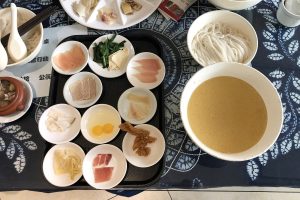
You choose a broth (or a split yin-yang pot), build a dipping sauce, order plates of raw ingredients, then cook at the table. Dishes arrive in waves. The lazy Susan turns; chopsticks and strainers move constantly. Pace yourself—the pot keeps bubbling after you are full.
Broth spice levels without bravado
Staff often ask how spicy you want it. “Mild” for locals can still be bold for newcomers. A split pot (one spicy side, one clear or tomato-mild side) is the friendliest first move. You can always dip a chili oil spoon later; you cannot un-spice a roaring red broth.
If you have known chili sensitivity, say so early and prefer the clear side. This is preference, not a diagnosis.
Dipping sauces
A common Chengdu-style base is sesame oil with garlic, scallion, salt, and optional fermented bean or chili crisp. Watch neighbours, then copy lightly. Sauces are personal—there is no single correct bowl. Keep raw and cooked tools mentally separate when the table is crowded.
What to cook and for how long
Thinly sliced meats cook in seconds—pull them when colour changes. Leafy greens wilt fast. Densely packed meatballs and root vegetables need longer; follow staff cues or ask. Do not leave a forgotten skewer dissolving into the broth forever. Seafood timing varies by cut; when unsure, ask rather than guessing.
Communal etiquette
- Use serving chopsticks or the communal end when provided
- Do not spear everything like a weapon if locals are lifting gently
- Avoid stirring like a washing machine—share space in the pot
- Let hosts order signature plates if you are invited
For formal seating anxiety, skim Chinese banquet seating etiquette; hotpot houses are usually more relaxed than banquet halls.
Mild options and sides
Ask for non-spicy broth, plain noodles, rice, or cooling side dishes if available. Soft drinks and local beers appear often; hydrate. If smoke and chili air bother your eyes, request a seat with better ventilation when the room allows.
Paying
One person usually scans at the end—see the group dining article in this batch. Test wallets before you are chili-flushed and impatient (Alipay setup for foreigners, WeChat Pay foreign card guide, why cash is still needed).
November note
Spicy broth and cool evenings pair well; carry a tissue pack and a light layer for the walk home when pores are open.
Related Lovely China reading
For payments and wallets, start with Alipay and WeChat Pay hub and WeChat Pay vs Alipay for tourists. For trains and long-distance moves, keep high-speed rail first-timers guide and 12306 passport signup for foreigners handy. For city orientation, the Beijing first-visit guide, Shanghai first-visit guide, and Chengdu first-visit guide hubs remain useful even when your trip centres on another province. Connectivity backups live in roaming vs local SIM honest guide, SIM vs eSIM carriers compare, pocket Wi-Fi vs eSIM for China, and offline maps for foreigners. Bookmark China travel tools page so you can jump between logistics topics without searching from scratch on hotel Wi-Fi at midnight.
Practical checklist
- Confirm official rules on the relevant government, park, airline, or bank page near your travel week
- Screenshot bookings, tickets, and QR codes while you still have stable Wi-Fi
- Save hotel and attraction names in Chinese characters in your phone notes
- Carry passport, a backup payment method, and a small cash float (why cash is still needed)
- Test one small mobile payment before you rely on wallets at a gate or taxi
- Build time buffers for security lines, November weather, and bilingual navigation
- Prefer refundable holds until visas, trains, or park tickets are confirmed
- Keep the China travel tools page page bookmarked for related Lovely China hubs
How to verify information without panicking
English travel blogs lag policy changes. When something critical is at stake—entry permission, ticket validity, or whether a card works—use primary sources: embassy or VAC pages, National Immigration Administration notices, official park reservation platforms, airline apps, and the screens inside Chinese super-apps. Lovely China articles such as Alipay and WeChat Pay hub, high-speed rail first-timers guide, and essential apps for foreigners help you orient, but they are not substitutes for the live rule in front of you.
If two sources conflict, choose the stricter one until you can ask a human at the counter. That habit prevents most arguments that begin with “I read online that…” at gates.
FAQ
Must I order the spiciest broth to be authentic?
No. Split pots and mild sides are normal for mixed groups.
Is there a correct dipping sauce recipe?
No single recipe—start simple and adjust.
Can I ask for a fork?
Yes if you need one; many diners still use chopsticks for the social rhythm.
How do groups usually pay?
One QR payer, then private settlement—see the group dining pay guide.
Notes for late 2026 travellers
Late October and November bring cooler mornings, earlier sunsets, and comfortable train weather across much of eastern and central China. Pack layers, keep phone batteries warm outdoors, and leave extra time whenever a clear weekend coincides with popular sightseeing.
This article does not invent ticket prices, opening hours, processing times, consular fees, or official statistics. When a number matters, verify it on the official site, consulate page, app screen, or ticket board near your travel week.
Write key Chinese addresses into your phone notes before you leave Wi-Fi. Screenshot tickets and booking codes. Carry a small cash float even if you prefer wallets—see why cash is still needed. Reconfirm last-mile transport the evening before early starts.
If an official rule page disagrees with this guide, follow the official page. Lovely China orients English-speaking travellers; we are not an immigration, banking, or medical authority. Keep the China travel tools page bookmarked for other logistics hubs.
Traveller mindset
Move slowly through paperwork moments. A calm queue is cheaper than a missed train or a refused visa file. When language fails, show passport pages, booking screens, and maps with Chinese labels. Hotel front desks and station information booths are used to helping foreigners through routine steps.
Keep expectations honest: China is highly digital, but edge cases remain. Your job is not to memorise every exception—it is to carry backups (second card, cash, offline maps, written addresses) so one failure does not end the day. For everyday apps, start with essential apps for foreigners.