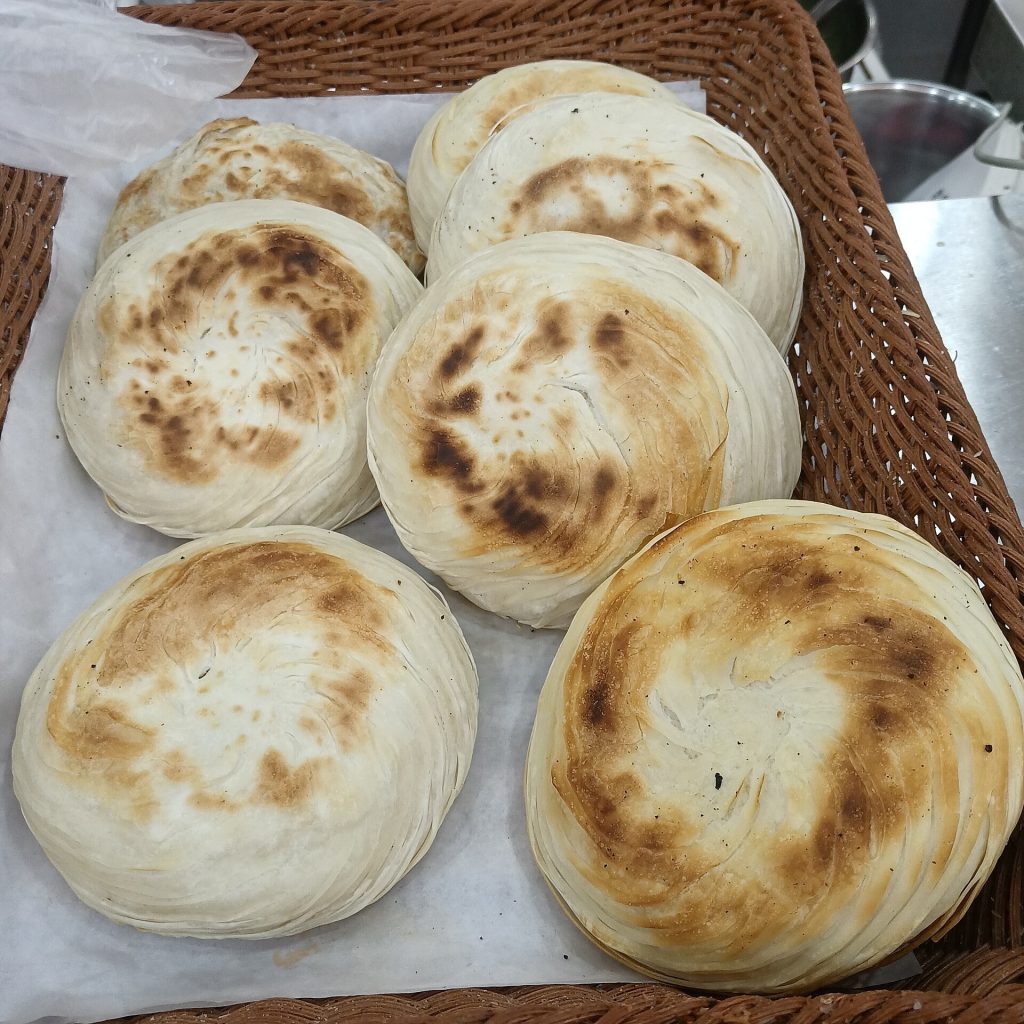
Roujiamo—often nicknamed a Chinese hamburger—is the handheld star of Xi’an’s street-food reputation: cracked or baked flatbread stuffed with chopped stewed meat. First-timers should treat it as a flexible family of sandwiches rather than a single standardised recipe.
What you are eating
The bread (mo) varies from dense and crisp to softer bakery styles. Meat is commonly pork, though beef and other options appear in some shops—especially around Muslim Quarter kitchens that follow different dietary rules. Onions, chilli oil, and coriander show up depending on the stall. Ask if you need milder spice; pointing at a less-red example often works when language fails (translation apps honest guide).
How to order without theatre
Watch the queue flow. Point to the meat on the cutting board if the menu overwhelms you. Specify “less spicy” when you can. Pay with QR wallets (Alipay setup for foreigners, WeChat Pay foreign card guide) or cash (why cash is still needed). Avoid blocking the cutting station for photos—step aside after you receive the wrapped sandwich.
Pairings that make sense
Liangpi (cold skin noodles), yangrou paomo (for heartier sit-down meals), and simple soy milk breakfasts sit in the same culinary neighbourhood. You do not need to eat everything famous in one afternoon. A City Wall walk plus one excellent roujiamo already feels like Xi’an.
Hygiene and common-sense caution
Busy stalls with high turnover are usually the practical choice. If a place looks neglected, walk on. Carry tissues; sauces drip. November weather means hot food cools fast outdoors—eat sooner rather than hunting a scenic ledge for twenty minutes.
Vegetarian and dietary notes
Classic pork roujiamo is not vegetarian. Seek clearly labelled alternatives and do not assume “meat looks like mushrooms.” Travellers with religious dietary rules should favour shops that match those rules rather than negotiating over a pork board.
Souvenir temptation
Some bakeries sell mo to take away; stewed meat travels poorly. Eat fresh. For payments setup before food crawls, use Alipay and WeChat Pay hub.
Related Lovely China reading
For payments and wallets, start with Alipay and WeChat Pay hub and WeChat Pay vs Alipay for tourists. For trains and long-distance moves, keep high-speed rail first-timers guide and 12306 passport signup for foreigners handy. For city orientation, the Beijing first-visit guide and Shanghai first-visit guide hubs remain useful even when your trip centres on another province. Bookmark China travel tools page so you can jump between logistics topics without searching from scratch on hotel Wi-Fi at midnight.
Practical checklist
- Confirm official rules on the relevant government, park, airline, or bank page near your travel week
- Screenshot bookings, tickets, and QR codes while you still have stable Wi-Fi
- Save hotel and attraction names in Chinese characters in your phone notes
- Carry passport, a backup payment method, and a small cash float (why cash is still needed)
- Test one small mobile payment before you rely on wallets at a gate or taxi
- Build time buffers for security lines, November weather, and bilingual navigation
- Prefer refundable holds until visas, trains, or park tickets are confirmed
- Keep the China travel tools page page bookmarked for related Lovely China hubs
How to verify information without panicking
English travel blogs lag policy changes. When something critical is at stake—entry permission, ticket validity, or whether a card works—use primary sources: embassy or VAC pages, National Immigration Administration notices, official park reservation platforms, airline apps, and the screens inside Chinese super-apps. Lovely China articles such as Alipay and WeChat Pay hub, high-speed rail first-timers guide, and essential apps for foreigners help you orient, but they are not substitutes for the live rule in front of you.
If two sources conflict, choose the stricter one until you can ask a human at the counter. That habit prevents most arguments that begin with “I read online that…” at gates.
FAQ
Is roujiamo always pork?
Pork is common, but beef and other versions exist—ask or watch the board.
Is it very spicy?
Spice varies; you can often request milder.
Can I find it outside Xi’an?
Yes in many cities, but Xi’an remains the spiritual home for many fans.
Should I tip?
Tipping is not expected in ordinary Chinese snack settings.
Notes for late 2026 travellers
Late October and November bring cooler mornings, earlier sunsets, and comfortable train weather across much of eastern and central China. Pack layers, keep phone batteries warm outdoors, and leave extra time whenever a clear weekend coincides with popular sightseeing.
This article does not invent ticket prices, opening hours, processing times, consular fees, or official statistics. When a number matters, verify it on the official site, consulate page, app screen, or ticket board near your travel week.
Write key Chinese addresses into your phone notes before you leave Wi-Fi. Screenshot tickets and booking codes. Carry a small cash float even if you prefer wallets—see why cash is still needed. Reconfirm last-mile transport the evening before early starts.
If an official rule page disagrees with this guide, follow the official page. Lovely China orients English-speaking travellers; we are not an immigration, banking, or medical authority. Keep the China travel tools page bookmarked for other logistics hubs.
Traveller mindset
Move slowly through paperwork moments. A calm queue is cheaper than a missed train or a refused visa file. When language fails, show passport pages, booking screens, and maps with Chinese labels. Hotel front desks and station information booths are used to helping foreigners through routine steps.
Keep expectations honest: China is highly digital, but edge cases remain. Your job is not to memorise every exception—it is to carry backups (second card, cash, offline maps, written addresses) so one failure does not end the day. For everyday apps, start with essential apps for foreigners.