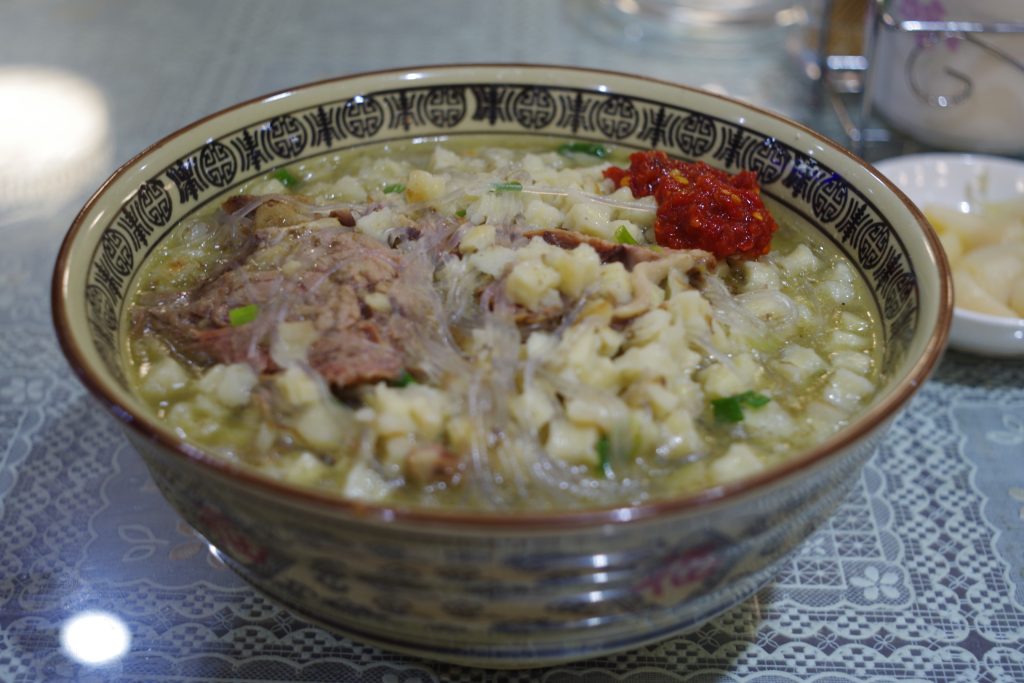
What yangrou paomo is
Yangrou paomo (羊肉泡馍) is Xi’an’s signature lamb (or mutton) soup with torn flatbread. You tear a dense wheat mo (馍) into small pieces, hand the bowl to the kitchen, and they simmer those crumbs in a clear, aromatic broth with sliced meat and often glass noodles. The result is a savoury, filling bowl that tastes more like comfort stew than street snack. For English-speaking first-timers, it is one of the clearest introductions to Shaanxi food culture alongside roujiamo and biangbiang noodles.
It is not instant ramen, not a light consommé, and not the same as Beijing’s instant-boil mutton hotpot. Paomo rewards patience: tearing the bread properly and eating while hot matter more than Instagram staging.
Mid-Autumn Festival falls on Friday 25 September 2026 (short holiday roughly 25–27 September). National Day Golden Week runs roughly 1–7 October 2026, with a makeup workday on Saturday 10 October 2026 per State Council notice 国办发明电〔2025〕7号. Specialist paomo shops near the city wall and Muslim Quarter get crowded on holiday lunches — go early or slightly late.
The tearing ritual (do not skip it)
Many shops give you the mo and expect you to tear it yourself. Tear into small pieces roughly the size of a fingernail or a soybean — not giant chunks. Smaller pieces soak broth evenly; huge chunks stay dry in the middle and gluey outside. Take your time; locals treat the tearing as part of the meal, not a chore you rush.
If staff offer to tear for you, that is hospitality, not judgement. If you have wrist or hand issues, ask politely: 可以帮忙掰馍吗 (keyi bangmang bai mo ma). Keep crumbs on the tray or plate provided so tables stay tidy.
How to order without guessing
Useful phrases:
- 羊肉泡馍 (yangrou paomo) — classic lamb/mutton version
- 牛肉泡馍 (niurou paomo) — beef version where offered
- 不要香菜 (buyao xiangcai) — no cilantro
- 少辣 / 微辣 — milder chilli if chilli oil or pickled peppers come on the side
- 加粉丝 — add glass noodles when available
Point to wall photos if English menus are thin. Ask whether chilli is mixed into the broth or served on the side — many classic bowls keep broth relatively mild, with heat optional at the table. Prices vary by shop and portion; check the menu rather than relying on memory from a travel blog.
Payments: Alipay / WeChat Pay. Maps and translation apps need data — see SIM / eSIM for foreign visitors.
What good paomo tastes like
Broth should smell of lamb and spice aromatics without tasting like detergent “muttony” funk. Meat should be tender enough to cut with chopsticks. Bread pieces should be soft but still distinct — not a single sludge. Pickled garlic, chilli, or cilantro on the side let you customise. If the bowl is only salt and grease, try another specialist tomorrow rather than deciding Xi’an food is not for you.
Pair thoughtfully. After a morning on the Xi’an City Wall, paomo can be lunch; after a heavy Muslim Quarter snack crawl, it may be too much the same day. For a lighter Xi’an carb day, save room for biangbiang another meal.
Spice, heat, and sides
Classic yangrou paomo is not Chongqing-level chilli. Heat often comes from optional chilli oil, pickled peppers, or house sauce. Start mild. Sesame paste is not the default here the way it is for Beijing shuanyangrou. Tea or simple drinks help; ice-cold beer is common but pace yourself if you still have sightseeing stairs ahead.
Sides and small dishes vary: cold vegetables, pickled items, or fried dough pieces in some shops. Order one side if you want crunch contrast; do not build a banquet for one person on day one.
Etiquette and table manners
- Tear bread over your own bowl or tray; do not scatter crumbs onto neighbouring seats.
- Wait for the kitchen to return the simmered bowl before adding all condiments.
- Use serving spoons for shared sides when provided.
- Phones and chilli oil mix poorly — wipe hands before photos.
- Finish what you can; these bowls are large. Asking for a takeaway container is sometimes possible for hotel rooms with rules — ask staff.
Shared-table norms in busy shops are friendly but compact. Keep bags off walkways. If you are unsure how long tearing should take, watch the next table for thirty seconds.
Holiday crowds and where to go
Tourist-facing shops near major gates can be fine or mediocre. Look for steady local turnover rather than empty dining rooms with multilingual neon alone. Hotel staff can often recommend a nearby specialist and help with a WeChat queue if the shop uses one. Walk-ins work better at off-peak times than at 12:30 on Mid-Autumn Saturday.
If you are combining paomo with a Muslim Quarter food crawl, treat paomo as the main meal, not a fifth snack after three skewers and a juice.
Common mistakes
- Tearing bread into huge chunks
- Flooding the bowl with chilli before tasting the broth
- Ordering paomo plus three other heavy dishes for one diner
- Expecting “no lamb smell” from a lamb dish — aromatics are part of it; funk is not
- Rushing to a hard-sleeper train immediately after a giant bowl
- Wearing a favourite white shirt under enthusiastic chilli oil
First-timer checklist
1. Choose a busy specialist shop.
2. Tear mo small and evenly.
3. Taste broth before maxing chilli.
4. Add cilantro/garlic only if you like them.
5. Walk slowly afterward — this is a nap-adjacent meal.
FAQs
Is it very spicy? Not necessarily; many bowls are mild with optional heat.
Can I get beef instead? Some shops offer beef paomo — ask.
Vegetarian? Traditional yangrou paomo is meat-and-broth based; this is not a reliable vegetarian main.
How long does it take? Tearing plus cooking often means 30–60 minutes total; do not schedule it as a five-minute snack.
Kids? Possible if they like mild soup and soft bread; chilli on the side helps.
Practical extras for English speakers
Screenshot the Chinese name 羊肉泡馍 before you lose signal in a basement dining room. When staff write a number on a pad, confirm whether it is price, portion count, or wait-time. Smiling confusion is normal; rushing creates wrong orders.
Near Mid-Autumn and Golden Week, build slack into every plan. A delayed metro ride plus a full restaurant plus a timed attraction ticket is the classic stress triangle. Choose two food priorities per day, not five. If rain arrives, paomo is an excellent indoor plan.
Carry tissues, hand sanitiser, and a power bank. Busy venues stretch toilet lines on holidays. Drink water even when the air feels cool. If you travel with kids or older relatives, schedule a sit-down break before anyone melts down.
Lovely China was founded in 2025 to publish practical English guides for travellers and expats. Questions or a broken link: [email protected].
Bread texture, broth clarity, and second bowls
Not every mo is identical. Some shops use denser bread that needs finer tearing; others use slightly airier rounds. If your first attempt leaves dry centres, tear smaller next time — the skill transfers within one meal if the kitchen allows a second mo. Ask before assuming free extras; policies vary.
Broth clarity is a style marker, not a universal rule. Some bowls look milkier from emulsified fats; others look clearer. What matters is clean savoury flavour without harsh ammonia notes. If you are sensitive to lamb aroma, sit near ventilation, start with smaller sips of broth, and lean on pickled garlic and chilli for brightness rather than forcing large plain gulps.
Second-bowl temptation is real for hungry travellers after wall climbs. Split a large bowl between two people if portions look huge, or order one bowl first. Leftover bread tearing for a friend who arrives late only works if the kitchen still accepts unfinished mo — ask; do not invent table rules.
Pairing Xi’an days without stomach overload
A classic mistake is Muslim Quarter snacks all morning, then a giant paomo, then night-market skewers. Pick a lane: paomo as the main lunch after a City Wall bike, or a light snack crawl with roujiamo and fruit, not both at maximum. Tea or simple drinks help cut richness. If you still want noodles the same day, choose a smaller biangbiang sharing portion rather than another solo giant bowl.
Rainy autumn afternoons are ideal paomo weather. Dry cold mornings after clear nights also suit hot soup. Carry a light layer; shop air-conditioning can feel icy after outdoor sun.
Allergies, dietary notes, and polite refusals
Cilantro, chilli, and sesame appear as optional toppings more often than as hidden broth bases, but recipes vary — ask if you have allergies. Gluten is inherent in the mo; this is not a gluten-free dish. If someone at your table does not eat lamb, ask about beef paomo or order a different specialty for them rather than pressuring a shared identity bowl.
Polite refusal script: smile, point, and say 我不要这个 (wo buyao zhege) for a garnish you dislike. Staff are used to customisation within reason. Tipping culture is not the same as in many Western restaurants; follow local payment norms via Alipay or WeChat.
Before you go (quick mental rehearsal)
Know the Chinese name, tear small, taste before chilli, and leave buffer before trains. That rehearsal prevents 80 percent of first-timer stress. Lovely China founded 2025 — [email protected].