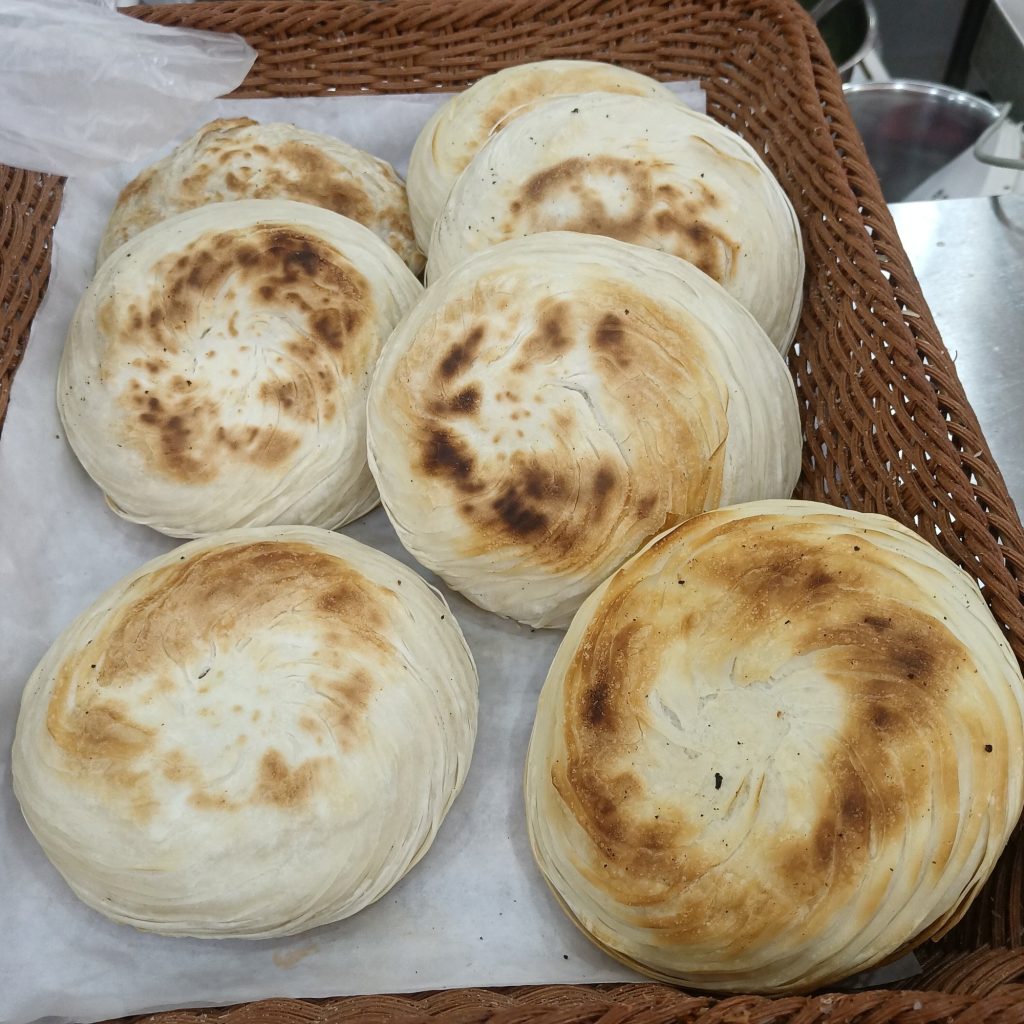
What roujiamo is
Roujiamo (肉夹馍) is a Shaanxi classic often nicknamed a “Chinese hamburger”: stewed or chopped meat tucked into a baked or pan-cooked bun (馍). In Xi’an and across Chinese cities with Shaanxi shops, it is handheld lunch fuel — dense, savoury, and easy to underestimate until you are halfway through and happily full.
It is not a Western burger with lettuce architecture, and it is not xiaolongbao. The bun matters as much as the meat: some are flaky layered, some denser, some crisp-edged. First-timers should order one classic pork (or beef where offered) sandwich, eat it fresh, and only then decide on a second flavour.
Late September travellers heading through Xi’an before Golden Week will find roujiamo shops busy near stations and Muslim Quarter edges — use ordinary crowd and food-safety caution via street food safety for the first month.
How to order without drama
Show the Chinese name
Point to 肉夹馍 or say “roujiamo.” Specify meat if choices appear: pork is classic in many Han shops; beef or lamb appears in some Muslim-run stalls — follow the house. Ask if chilli is mixed in by default; request mild (不要辣 / 少辣) if you want the meat and bun to lead.
Bun and moisture cues
A good roujiamo balances moist chopped meat with a bun that still has structure. If the bun is soggy collapse, eat sooner next time or choose a busier shop with higher turnover. If the meat is dry crumbs, try another stall rather than condemning the genre.
Pairings
Locals often pair roujiamo with liangpi (cold skin noodles) or a simple drink. One sandwich plus a light side beats two heavy sandwiches before a museum walk. For noodle contrast on another day, Xi’an’s wider wheat-food universe is deep — do not crush it all into one hour.
Shop types: street window vs sit-down
Street windows are fast and atmospheric. Sit-down Shaanxi restaurants let you add dishes and rest your feet. Tourist streets near major Xi’an sights push photo-ready shops — busy turnover is usually a better quality signal than neon alone.
Set up Alipay and WeChat Pay. Keep cash backup for tiny stalls. Tipping is not expected.
Taste and texture notes
Expect savoury stewed-meat flavour, sometimes with fragrant spices, inside a toasted or layered bun. Chili oil or pickled peppers may appear — keep them optional on your first. The sandwich is rich; tea or a light drink helps.
If you only know American pulled-pork sandwiches, the flavour family will feel familiar but the bun and spice logic differ. Eat over the bag or plate — juices escape.
Common mistakes
- Ordering two before finishing one
- Assuming every city mall version equals a good Xi’an specialist
- Ignoring chilli until your mouth is on fire mid-walk
- Eating while blocking a narrow snack-street lane
- Pairing with three other heavy snacks immediately
Allergies and diet
Wheat bun is standard. Soy may appear in braises. Sesame can show up in some shops. Pork is classic — confirm beef/lamb if you avoid pork. Not a vegetarian item in standard form. Ask simply about ingredients if you have serious allergies; busy stalls may not have full allergen charts.
Holiday and travel pacing
Around Mid-Autumn and Golden Week 2026, station-adjacent shops queue. Order one, step aside, eat without blocking. If you are day-tripping and racing a train, leave buffer — see how visitors book a mainland train on 12306 and do not eat so urgently that you drop sauce on your ticket QR.
A calm first-timer plan
1. Choose a busy specialist shop near lunchtime.
2. Order one classic roujiamo, mild chilli if unsure.
3. Step aside; eat while the bun still has structure.
4. Add liangpi or a vegetable dish only if still hungry.
5. Save dessert and milk tea for later — this sandwich is dense.
Regional variants without confusion
You will see “rou jia mo” spellings and local variants across China. Some buns are denser “white” styles; some are crisp “thousand-layer” styles. Neither is fake — they are family variants. If a shop posts photos, point. If you loved one style in Xi’an, note whether the bun was flaky or dense so you can ask again in another city.
Muslim Quarter edges and respectful snacking
Xi’an’s Muslim Quarter and nearby streets are famous and crowded. Eat with ordinary courtesy: step aside after ordering, keep voices reasonable, and do not plant a full camera rig in a tiny stall. During Friday prayer times and holidays, rhythms change — be patient. If a shop is clearly halal and you want beef or lamb roujiamo, that can be an excellent first choice for travellers who avoid pork.
Carry small packs of tissues; outdoor stools are imperfect. Dispose of rubbish in bins — water-town and snack-street etiquette applies in cities too.
Comparing roujiamo to other handhelds
Roujiamo is not a burger, not a gua bao, and not a doner kebab, though travellers reach for those analogies. The bun is wheat-based and often toasted or layered; the meat is stewed and chopped rather than grilled as a patty. Knowing that helps you order sides: vinegar-forward cold noodles complement better than another fried handheld immediately after.
Taking roujiamo on trains — carefully
A wrapped roujiamo can travel short distances, but warm meat in bags for hours is a food-safety gamble. Eat near the shop when possible. If you must carry food onto HSR, prefer sealed snacks and be mindful of smells in quiet carriages. Finish tea and wash hands after — cumin and chilli oil linger.
Building a calm Xi’an food day
Morning: light breakfast. Midday: roujiamo + liangpi. Afternoon: museum or wall walk. Evening: a sit-down hot dish or dumpling meal — not three more sandwiches. Late September heat can linger; hydrate. If Golden Week crowds choke the Quarter, walk one street farther for shops with shorter lines and similar recipes.
A longer look at meat styles and fat balance
Classic pork roujiamo relies on a braise that softens connective tissue and keeps chopped meat moist. Some shops chop coarser; some finer. A little visible fat is normal and carries flavour — it should not feel like a grease slick. If you prefer leaner bites, ask whether a leaner mix is possible; not every stall can customise at peak rush.
Beef and lamb versions follow different spice paths. Cumin may appear more clearly in some lamb sandwiches. If you are sensitive to cumin, ask before ordering. In mixed groups, order one pork and one beef to compare without over-ordering four sandwiches.
Sauce packets and self-serve chilli
Many counters offer chilli flakes, pickled garlic, or coriander. Add after the first bites. Coriander (cilantro) is polarising — keep it optional. If you accidentally over-chilli, the bun can only help so much; buy a plain steamed bun side if available, or slow down with a drink.
Where travellers go wrong on “authenticity”
Authenticity arguments online are endless. As a visitor, your job is a good sandwich from a busy shop, not winning a forum debate. A department-store food court can still serve a satisfying roujiamo when the bun is fresh and the meat moist. Likewise, a famous old brand can have an off day. Taste what is in your hand.
Mid-Autumn gift culture is not roujiamo culture
Mooncakes dominate Mid-Autumn gifting. Roujiamo remains everyday food. Do not overthink festival pairing — if colleagues share mooncakes in the office, that is a different social lane from your lunch sandwich near the Bell Tower. Enjoy both in their contexts.
Bottom line
Roujiamo is a savoury meat-filled bun — Xi’an’s handheld classic. Order one, keep chilli adjustable, eat it fresh, and pair lightly. It is one of the kindest first Shaanxi foods for travellers who want substance without a full banquet.