The steam hits you before you even open the kitchen door. It carries the quiet scent of rice breaking down into something soft, white, and deeply comforting. On a damp Shanghai morning, or after a long flight into Beijing Capital Airport, this is the bowl you want waiting on the table: a spoon that stands upright on its own, a slick of ginger oil, and the clatter of ceramic spoons against the rim.
What Arrives in the Bowl
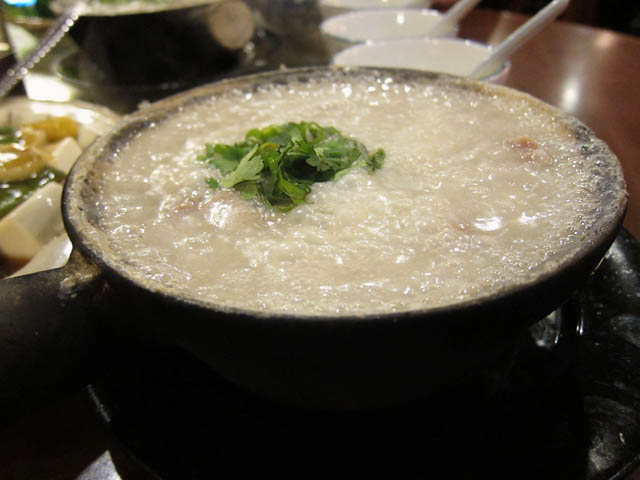
Good congee isn’t watery gruel. It has body—a viscous, opaque white that coats the spoon like heavy cream. The rice grains have surrendered completely, dissolving into a starch matrix that catches the light. On top, you’ll see a scatter of fine ginger threads, the bright green confetti of spring onion, and perhaps a snowfall of toasted sesame seeds. A few drops of sesame oil swim on the surface, catching the overhead light. The aroma is clean: toasted grain, nutty oil, and the sharp, sinus-clearing bite of raw ginger. It tastes of patience. The first spoonful is bland by design, a canvas. Then you dip into the condiments—salty fermented tofu, a shard of century egg, a spoonful of chili oil—and the bowl wakes up.
The Home Method: Low and Slow
Restaurant kitchens use pressure cookers or massive stockpots stirred by paddles. At home, you need a heavy-bottomed Dutch oven or a clay pot, a wooden spoon, and an afternoon you don’t mind staying near the stove. The ratio is the secret: one part rice to roughly eleven parts liquid by volume. That looks like a lot of water. Trust it.