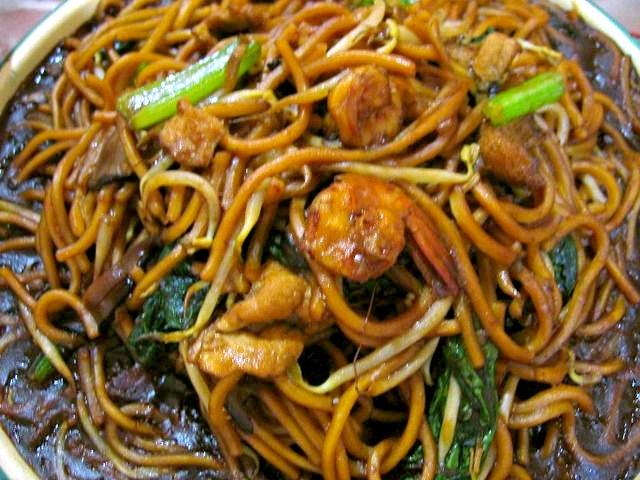
The wok sits heavy on the burner, its rim blackened by years of high heat. A splash of oil hits the metal and shimmers instantly, sending up a thin veil of smoke that smells of toasted sesame and garlic. This is the moment everything must be ready — noodles drained, vegetables sliced, sauce mixed — because once the aromatics hit the oil, there is no pausing. Chow mein, at its best, is a dish of controlled chaos: crisp-tender vegetables, noodles with a slight chew, and a glossy sauce that clings rather than pools.
What Arrives on the Table
A proper plate of chow mein doesn’t shout. The noodles are golden at the edges where they kissed the wok, tangled with ribbons of bok choy, matchsticks of carrot, and translucent slices of mushroom. Bean sprouts keep their snap. The sauce is a dark amber sheen — salty, sweet, faintly smoky from wok hei — coating each strand without drowning it. You taste soy, a whisper of sesame, the earthiness of shiitake standing in for oyster sauce, and the clean heat of white pepper. It eats hot, fast, and clean.
Ingredients and Home Method
This version skips meat entirely, using seitan for chew and shiitake for depth. The technique stays traditional: high heat, small batches, constant motion.
- ½ pound dry wonton noodles (thin, egg-based if you eat egg; otherwise alkaline wheat noodles)
- 15 ounces seitan, cut into ¼-inch strips
- 1 pound mung bean sprouts, roots trimmed
- ½ pound bok choy, stems and leaves separated, stems sliced diagonally
- ½ pound fresh shiitake mushrooms, stems removed, caps sliced
- 1 red bell pepper, cut into thin strips
- ½ red onion, sliced into half-moons
- 2 celery stalks, sliced on a sharp diagonal
- 1 green onion, cut into 1-inch batons
- Vegetable oil for frying (peanut or canola)
- ¼ cup toasted sesame seeds
Marinade for seitan:
- ¼ cup finely chopped dried shiitake (rehydrated and minced)
- 2 teaspoons toasted sesame oil
- 1 teaspoon light soy sauce
- ½ teaspoon cornstarch
- Salt and white pepper to taste
Sauce:
- ¼ cup water or low-sodium vegetable broth
- 1 tablespoon light soy sauce
- 1 tablespoon dark soy sauce (for color)
- 1 teaspoon sugar
- 1 tablespoon cornstarch
- Salt and white pepper to taste
Steps:
- Soak dried shiitake for the marinade in hot water until soft, 20 minutes. Drain, reserve liquid, mince caps. Mix marinade ingredients; toss with seitan strips. Rest 15 minutes.
- Whisk sauce ingredients until cornstarch dissolves. Set aside.
- Boil noodles 30 seconds shy of package time. Drain, rinse under cold water, toss with 1 teaspoon oil to prevent sticking. Spread on a tray to dry slightly — surface moisture kills wok hei.
- Heat wok over high flame until a drop of water evaporates on contact. Add 2 tablespoons oil, swirl. Add seitan in a single layer. Let sear 30 seconds undisturbed, then stir-fry until browned at edges. Remove.
- Add 1 tablespoon oil. Stir-fry onion, celery, pepper, and fresh shiitake 1 minute. Add bok choy stems; 30 seconds later, leaves. Push to sides.
- Add 1 tablespoon oil to center. Lay noodles in. Press gently with spatula; let crisp 20 seconds. Toss. Return seitan. Pour sauce down the wok’s side so it sizzles before mixing.
- Toss everything 30 seconds until sauce thickens to a glaze. Fold in bean sprouts and green onion. Kill heat. Sprinkle sesame seeds. Serve immediately.
Ordering in a Restaurant
In a Cantonese-style spot, ask for gan chao mian — dry stir-fried noodles — so the kitchen knows not to drown it in gravy. Specify “wok hei” if the cook understands the term; it signals you want that breath-of-the-wok char. If the menu lists “crispy chow mein,” that’s the deep-fried noodle cake topped with sauced vegetables — a different dish entirely. For the soft version, say “soft noodles, well-tossed.” Vegetarians should confirm no oyster sauce or chicken powder in the house sauce; many kitchens use both by default. A safe bet: “Buddhist style” (su) or explicitly “no animal products.”
Beginner Mistakes
First, boiling noodles to full doneness. They’ll turn to paste in the wok. Second, crowding the pan. A home burner can’t recover heat fast enough; steam, not fry, results. Cook seitan and vegetables in two or three batches. Third, adding sauce too early. Cornstarch breaks down under prolonged heat; the glaze turns watery. Pour it at the end, down the hot metal, so it activates instantly. Fourth, skipping the drying step after rinsing noodles. Surface water lowers oil temperature and prevents browning. Fifth, using only light soy sauce. Dark soy gives the caramel color restaurant versions have; without it, the dish looks pale no matter how well you cook.
Seasonal Notes and Substitutions
In late autumn, when bok choy sweetens after frost, use the tender hearts raw — toss them in at the very last second. Winter calls for napa cabbage, sliced wide; its water content helps steam the noodles gently. Spring brings garlic chives; swap green onion for them, adding a grassy bite. Summer heat makes bean sprouts cheap and fat — buy them morning-of, keep submerged in cold water in the fridge. No seitan? Firm tofu, pressed and dusted with cornstarch before frying, mimics the chew. No fresh shiitake? Dried, rehydrated, and minced works for both marinade and stir-fry; the soaking liquid, strained, replaces vegetable broth in the sauce.