The wok sits on the burner, oil shimmering with a lazy haze. A battered piece of thigh meat drops in and the surface erupts, a sharp, clean sizzle that settles into a steady bubble. The kitchen fills with the smell of ginger, garlic, and caramelizing sugar — sweet, sharp, savory all at once. This is the sound and scent of a Friday night order made at home, no takeout carton required.
What Arrives on the Table
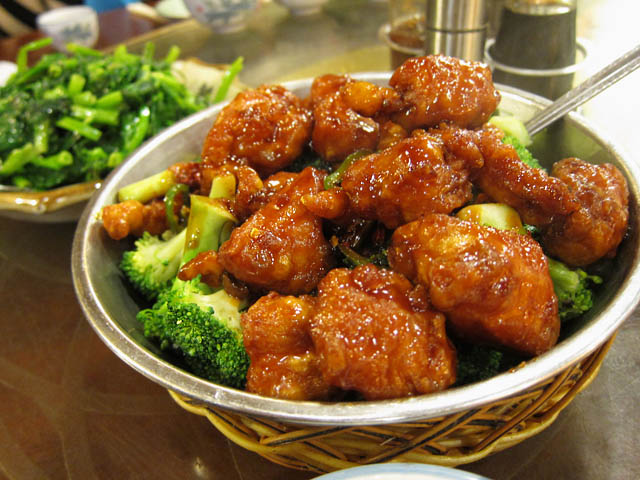
A proper plate of General Tso’s chicken glistens. Each nugget wears a crust that shatters like thin glass, giving way to juicy dark meat that hasn’t dried out. The sauce clings in a sticky, translucent glaze — mahogany red from dark soy, flecked with green scallion rings and the occasional dried chili skin. It tastes sweet first, then a punch of vinegar heat, followed by the deep, fermented whisper of Shaoxing wine. Steam rises in a cloud when you lift a piece with chopsticks. Beside the mound, a bowl of plain steamed rice waits to absorb the excess.
How It Should Taste and Look
The batter should be light, not a heavy dough blanket. Think tempura-thin: crisp enough to survive the sauce for ten minutes, tender enough to bite through without pulling the meat free. The color is golden amber, never pale blond or burnt brown. The sauce balances on a knife edge — cloying if the sugar wins, mouth-puckering if the vinegar dominates. You want the ginger and garlic to taste fresh, not cooked to mush. Dried chilies contribute a fruit-like heat that builds slowly, not an immediate scorch. If the pieces swim in loose liquid, the cornstarch slurry was too thin or the wok wasn’t hot enough.
Home Method: Shallow-Fry Approach
Deep-frying in a wok demands a liter of oil and a spider strainer. Shallow-frying cuts the oil to a centimeter depth, reduces splatter, and still delivers crunch. Work in batches so the temperature holds. A heavy cast-iron skillet works if your wok sits unstable on a flat burner.
Cut 750 grams of boneless, skinless chicken thighs into bite chunks, roughly three centimeters square.
In a bowl, combine the chicken with one egg, one tablespoon light soy sauce, a pinch of white pepper, and two to three tablespoons cornstarch. Mix until every piece feels tacky and coated. Let rest ten minutes while the oil heats.
Whisk the sauce: two tablespoons dark soy sauce, one tablespoon rice vinegar, one tablespoon Shaoxing wine, one tablespoon sugar, three tablespoons chicken stock or water, one tablespoon minced ginger, one tablespoon minced garlic, and one tablespoon cornstarch. Set near the stove.
Heat oil in a wok or deep skillet until a pinch of batter dropped in sinks halfway then rockets up bubbling.
Lay chicken pieces in one layer, leaving gaps. Fry two minutes until the bottom sets, flip, fry another two minutes until golden. Transfer to a wire rack.
Pour off excess oil, leaving one tablespoon. Toss in a handful of dried chilies and the white parts of four chopped scallions. Stir ten seconds.
Pour in the sauce. It will bubble and thicken in seconds. Return chicken to the wok. Toss once, twice — just until coated.
Scatter the green scallion rings. Serve immediately.
Restaurant Ordering: What to Ask For
Walk into a Cantonese-American spot at dinner rush and you’ll see the dish on every third table. If you want it closer to the kitchen’s intention, specify “dry” or “light sauce” — otherwise the ladle goes heavy and the crust softens in the carton. Ask for “extra crisp” if you plan leftovers; the second fry the next morning revives it. Request “whole dried chilies” rather than chili flakes; the oil infuses better and you can fish them out. Some kitchens use breast meat to cut cost — confirm “dark meat” or “thigh” when ordering. A side of steamed broccoli on the same plate dilutes the glaze; get it separate.
Mistakes Beginners Make
Crowding the pan. Temperature drops, batter steams, crust turns soggy.
Skipping the rest after battering. The cornstarch needs time to hydrate and grip the meat.
Using all light soy sauce. Dark soy provides the color and molasses depth; light soy only salts.
Adding sauce to cold chicken. The glaze seizes into clumps. Both must be hot.
Overcooking the aromatics. Burnt garlic turns bitter in seconds. Thirty seconds in hot oil is the limit.
Substituting apple cider vinegar for rice vinegar. The fruit acidity clashes with the fermented wine.
Thickening the sauce before the wok. Cornstarch slurry gels on the counter; whisk it in at the last minute.
The first bite at home never matches the restaurant exactly — your stove lacks the BTU blast, your oil isn’t recycled through a hundred orders — but the satisfaction lands heavier. You chose the thighs. You timed the fry. You balanced the sweet and sour. The carton stays in the drawer, and the wok cools on the rack, sticky with success.