The steam rising from the clay pot fogged the kitchen window, turning the courtyard lanterns into soft halos. My host mother, Auntie Liu, lifted the lid with a practiced flick of her wrist, and the scent hit me before the sight did — sticky rice, red beans, dried longan, and something faintly medicinal from the ginkgo nuts. It was the eighth day of the twelfth lunar month, deep in the cold snap before Spring Festival, and the porridge had been simmering since midnight. She ladled a bowl for me, then one for the ancestor tablet on the sideboard, then one for the stray cat that haunted the gate. “Drink it hot,” she said. “It chases the winter out of your bones.”
What the day marks
Laba falls on the eighth day of Layue, the last month of the lunar calendar. The name is literal: la for the month, ba for eight. In the countryside, people still say “After Laba, the New Year begins.” It is the unofficial starter pistol for the weeks of cleaning, curing meats, buying red paper, and arguing over train tickets. The date shifts on the Gregorian calendar — sometimes January, sometimes early February — but the feeling is always the same: the deep freeze when your breath hangs like smoke and the only thing that makes sense is a bowl of something thick and sweet.
What arrives on the table
The centerpiece is Laba congee, labazhou. A proper version is not a thin gruel. It is dense, glossy, each grain of rice burst open and holding hands with its neighbors. The color is a dark amber from the red dates and brown sugar. You should see whole peanuts, their skins still on, chestnut chunks that melt on the tongue, lotus seeds with their tiny green hearts removed, and the occasional ginkgo nut — bitter, warming, a reminder that medicine and food share a shelf in Chinese kitchens. Some families stir in diced sweet potato or taro for body. In the north, they might scatter a handful of millet or job’s tears. In Sichuan, a spoonful of fermented bean paste might lurk at the bottom, a savory ambush.
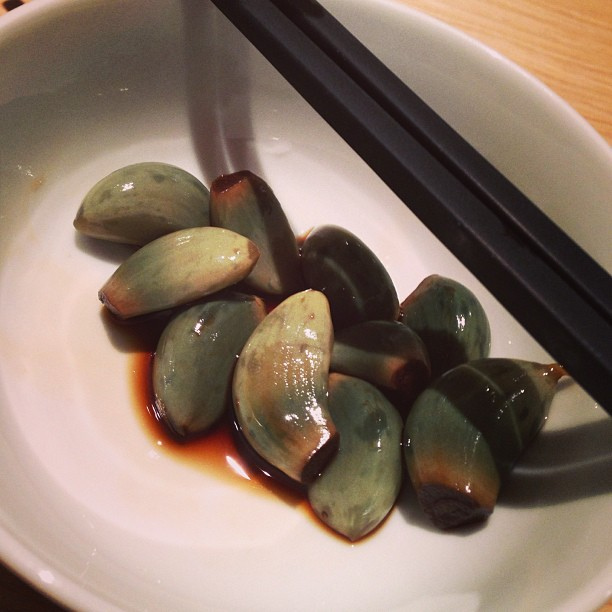
Besides the porridge, there is Laba garlic. Whole cloves, peeled and dropped into a jar of rice vinegar, sealed and left in a cool corner. Weeks later, they turn a startling jade green, crisp and mellow, ready to be eaten with dumplings on New Year’s Eve. Some households also pickle Laba tofu — blocks of firm bean curd rubbed with salt, chili, and five-spice, then air-dried until the surface blooms white mold. That goes into stews later.
A home method that works
I watched Auntie Liu make it three years running. The rhythm never changed.
- Soak everything hard the night before: red beans, mung beans, peanuts, lotus seeds, job’s tears, chickpeas. Separate bowls. Cold water. Cover.
- Rinse the rice — glutinous and regular short-grain, half and half — until the water runs clear. Drain.
- Use a heavy pot. Clay if you have it, enameled cast iron if you don’t. Three liters water to one kilogram total dry ingredients.
- Bring to a rolling boil, then drop to the lowest flame. Stir once every ten minutes with a wooden paddle, scraping the bottom so nothing welds itself there.
- After ninety minutes, add the dried fruit: red dates (pitted), longan, goji berries, raisins. Thirty minutes later, the rock sugar or brown sugar slab. Stir until dissolved.
- Final ten minutes: fresh ginkgo nuts (blanched first to remove the acrid skin) and a pinch of salt. Salt wakes the sweetness.
- Turn off the heat. Keep the lid on. Let it sit twenty minutes. The residual heat finishes the job without scorching.
The porridge thickens as it cools. Leftovers reheat beautifully with a splash of water. Some families deliberately make a giant batch so they can eat it for three mornings straight — breakfast, lunch, and a late-night snack while pasting spring couplets.
Ordering it in a restaurant
If you are in a city and not invited into a home kitchen, look for a laozhengxing — an old-brand snack shop — or a Buddhist vegetarian restaurant near a temple. They will have Laba porridge as a seasonal special, usually only for a week around the festival. Order a small bowl first. Good versions arrive in a lidded ceramic crock, still bubbling. The server should offer a side of pickled radish or spicy cucumber to cut the richness. Avoid hotel buffets; their version is often watery, made from a pre-mix, and kept warm on a steam table until the grains disintegrate into paste.
At a temple, you may find volunteers ladling free porridge from enormous iron cauldrons. Join the line. Take a disposable bowl. Eat standing near the incense burners. It is not about the flavor alone; it is about sharing the merit. Drop a few yuan in the donation box if you can.
Where beginners go wrong
First mistake: throwing everything in the pot at once. The beans need a head start, or the rice turns to mush while the chickpeas stay hard. Second: skipping the soak. Unsoaked red beans can take four hours to soften, and you will burn the bottom. Third: using only glutinous rice. The texture becomes glue. You need the structure of regular rice. Fourth: adding sugar too early. Acid from the beans and fruit can prevent the grains from breaking down properly. Fifth: walking away. A heavy pot on low heat still needs a stir. The scent of scorched porridge lingers in a kitchen for days.
Another trap: thinking Laba is only about food. In the morning, older neighbors may knock on your door with a thermos of porridge. Accept it with both hands. Say thank you. Return the thermos washed and with a few tangerines inside. If you live in a compound with a shared courtyard, someone will have hung a string of cured sausage and bacon from the clothesline the night before — Laba is the traditional start day for curing meats. Do not complain about the smoke. Offer to help turn the strips. You will be invited to the next round of drinks.
The Buddhist thread
Monks in saffron robes move through the temple kitchen at dawn, washing rice in wooden basins. The porridge they cook is offered first to the Buddha, then to the sangha, then to laypeople. The connection runs back to the story of the Buddha’s enlightenment: after years of extreme asceticism, a village girl named Sujata offered him a bowl of milk rice. He accepted, regained strength, and sat beneath the bodhi tree. Chinese Buddhists commemorate that moment on the same eighth day of the twelfth month. So the porridge is not just fuel. It is a reminder that the middle path includes a warm meal.
If you visit a monastery on Laba, you will see lay volunteers peeling garlic by the sack, stirring vats with boat oars. The atmosphere is practical, not solemn. Jokes fly. Steam rises. A novice monk might hand you a steamed bun stuffed with red bean paste. “Eat,” he will say. “Merit is delicious.”
What the day feels like
By afternoon, the porridge is gone. The garlic jars sit in the shadow of the balcony, slowly greening. The cured meats drip fat onto newspaper. Auntie Liu wipes her hands on her apron and pulls out a stack of red paper. “Now we write the couplets,” she announces. The festival has done its job. The winter is still outside, but inside, the year has already turned.