The river mist hangs low over the Yangtze at dawn, blurring the line where water meets sky. From the deck of the ferry pushing toward the north bank, the silhouette of Jinshan Temple appears first — its upturned eaves stacked against the hill like a pagoda staircase. By the time the ramp lowers, the smell of vinegar hits you before the diesel fumes: sharp, sweet, fermented, the signature of a city that has been aging jars of the stuff for centuries. This is Zhenjiang, not the tropical port of Zhanjiang far to the south, nor the province of Zhejiang to the east, but a compact Jiangsu river town where the Grand Canal kisses the great river and history sits down for breakfast.
Orienting Yourself: The River, the Hill, and the Old Streets
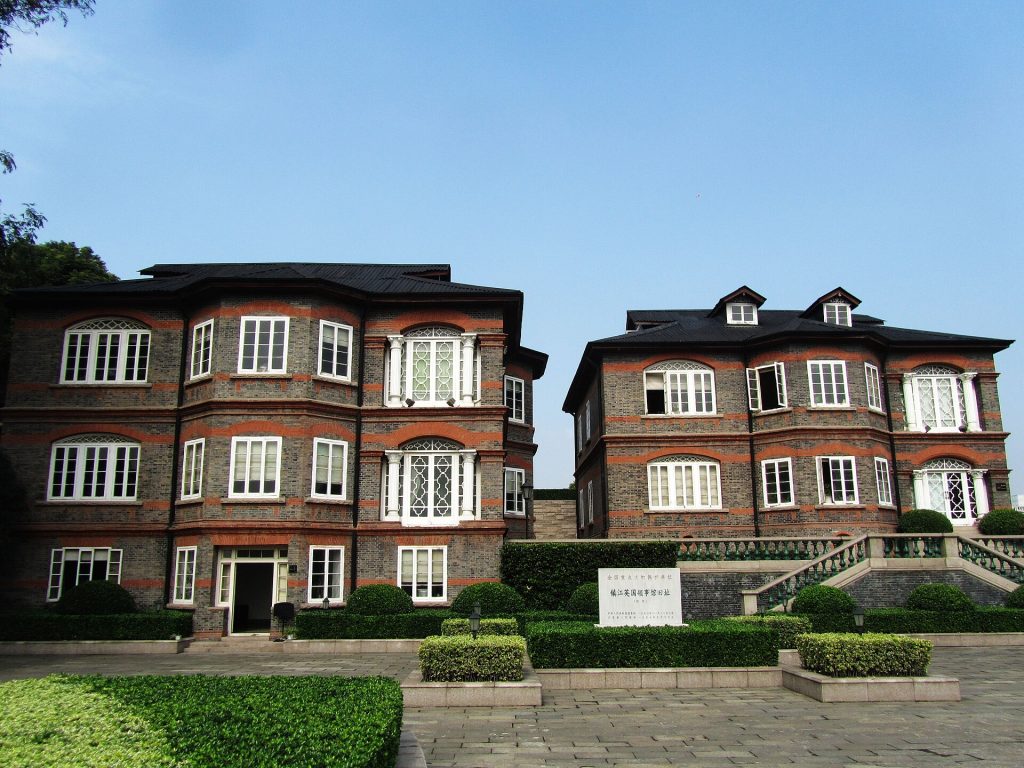
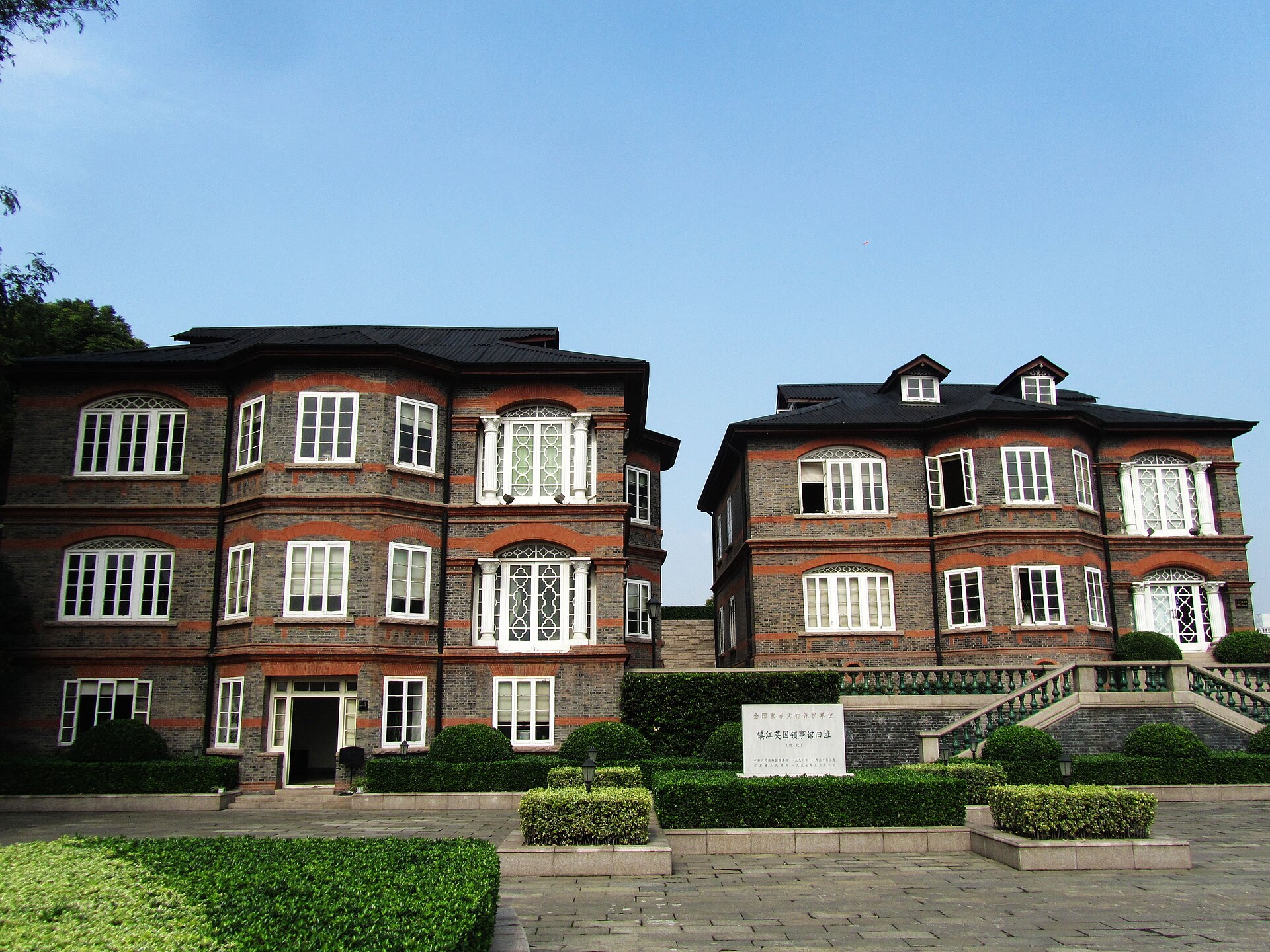
Zhenjiang grows along a north-south spine. The Yangtze forms the western edge, wide and brown with silt. The Grand Canal cuts through the center, still carrying barges piled with coal and construction aggregate. Jinshan (Gold Mountain) rises near the riverbank, a plug of rock crowned by the temple complex. East of the hill, the former British Concession spreads in a grid of plane-tree avenues and red-brick villas — some restored as cafes, others still housing government offices. South of the canal, the old commercial quarters of Daxi Road and Boxian Road twist into alley markets where vendors hack through pork ribs with cleavers the length of a forearm.
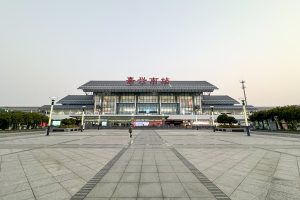
Most first-timers cluster their stay around Jinshan or the concession area. Buses 2, 14, and 101 link the train stations, the temple, and the pedestrian zones. Taxis start at a flag-fall that buys you three kilometers; a ride across town rarely exceeds the cost of a decent bowl of noodles. If you arrive at Zhenjiang South high-speed station, the metro Line 1 dumps you at Jinshan Park in twenty minutes. The older Zhenjiang station, right in the city center, is handier for the vinegar museum and the old streets but sees only conventional trains now.
Jinshan Temple: Legend, Stairs, and River Wind
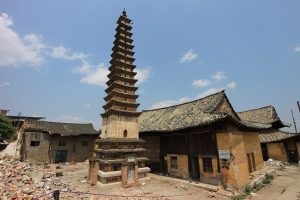
The temple is the reason most Chinese tourists come. The legend of the White Snake — a serpent spirit who falls for a mortal pharmacist, floods the mountain to rescue him, and ends up imprisoned under Leifeng Pagoda in Hangzhou — plays out in every guidebook and TV drama. At Jinshan, you climb the stone steps past the Heavenly King Hall, the Mahavira Hall, and the Cishou Pagoda. Each landing frames a different slice of river: barges pushing upstream, the Runyang Bridge stitching the banks, the smokestacks of the petrochemical zone glowing at dusk.
Locals come before incense peaks at midmorning. They bow three times at the Guanyin shrine, drop a coin in the iron burner, and tie a red ribbon on the wishing tree near the back courtyard. Foreign visitors often rush straight to the pagoda summit for the panorama. Stay longer. Sit on the stone bench behind the scripture library. An old monk may offer you a cup of bitter tea and point out the calligraphy carved into the cliff face — poems by Su Dongpo and Mi Fu, scratched into rock a thousand years ago. Wear flat shoes. The marble steps are polished slick by generations of soles, and rain turns them into ice.
The British Concession: Brick, Plane Trees, and Pearl Buck
Walk east from Jinshan along Zhongshan East Road. The traffic noise drops. Plane trees form a canopy over the bike lane. Villas with steep gables, bay windows, and chimneys line the streets — number 12 was once the British consul’s residence, number 8 housed the customs office. Pearl Buck lived at number 2, a two-story house with a veranda that faced the river before land reclamation pushed the water back. The interior is now a small museum: her typewriter, a first edition of The Good Earth, letters to Chinese friends written in careful characters. Admission is a few yuan; the caretaker unlocks the door only when someone knocks.
Around the corner, a row of former warehouses has become a craft-beer lane. One taproom serves a sour ale brewed with Zhenjiang vinegar — tart, funky, surprisingly drinkable. Another occupies the old fire station; the brass pole still slides through the ceiling. On weekend evenings, university students claim the picnic tables, ordering platters of fried river shrimp and peanuts. The concession feels quiet after nine. No neon, no hawkers. Just the hum of transformers and the rustle of leaves.
Eating: Vinegar, Pot-Lid Noodles, and the Morning Market
Zhenjiang cuisine is Jiangsu cooking turned sour. The city’s fragrant vinegar — aged in clay jars, black as soy sauce, sweet on the finish — seasons everything. The iconic dish is guogai mian, pot-lid noodles. The name comes from the copper lid that seals the broth while the hand-pulled strands cook in the steam. A proper bowl arrives with the lid still on; the server lifts it at your table, releasing a cloud of pork-bone aroma.
- Broth: pork femur bones simmered since before dawn, skimmed clear, seasoned only with salt and a splash of aged vinegar
- Noodles: alkaline wheat dough, pulled to order, thickness of a matchstick, springy enough to snap
- Toppings: minced pork fried with fermented soy bean, blanched baby bok choy, a spoonful of chili oil, and a drizzle of vinegar
- Method: drop noodles into boiling water for ten seconds, shock in cold water, return to bowl, pour boiling broth over, clamp lid for thirty seconds
Order at a counter, take a ticket, find a stool. The best shops — Lao Zhengxing on Daxi Road, a nameless stall at the west gate of Boxian Park — sell out by ten in the morning. Evening stalls switch to yao rou, stewed pork knuckle so tender the bone slides out clean, served with mantou buns for sopping. Don’t ask for soy sauce. The vinegar is the salt here.
Vinegar Museum and the Jar Yard
The Hengshun vinegar factory sits on the old canal bank, its red-brick chimney visible from the metro bridge. The museum tour walks you through a courtyard of three-meter-tall clay jars, each sealed with a bamboo lid and a ring of mud. Inside, the mash — glutinous rice, wheat bran, peas, and the mother culture — ferments through four seasons. Summer heat, winter cold, the turn of spring and autumn: each shift rewrites the flavor. A tasting bar at the end pours thimble shots of three-year, six-year, and twelve-year vintages. The twelve-year coats the tongue like balsamic but finishes clean, no cloy.
Buy a ceramic bottle at the gift shop. Wrap it in your checked luggage; the clay is fragile. Locals gift vinegar at weddings and housewarmings — a jar for longevity, a jar for harmony. If you’re invited to a family meal, bring a small bottle of the six-year. The host will pour a few drops into the communal soup bowl before serving, a quiet gesture of respect.
Day Trip to Xijin Ferry: Cobblestones and River Ghosts
Ten minutes by taxi north of Jinshan, the Xijin Ferry historic street follows the old riverbank. The cobblestones are original Qing dynasty, worn concave by cart wheels and sedan chairs. Storefronts sell calligraphy brushes, silk fans, and hand-stitched cloth shoes. At the far end, the Rescue Temple honors the river god; fishermen still leave offerings of steamed buns and baijiu at the altar before the autumn crab season.
Climb the narrow stairs to the Wangjiang Pavilion. The view frames the Runyang Bridge cables fanning into the sky. Below, a fleet of wooden sampans waits for tourists — twenty minutes, fifty yuan, a slow circle around the temple hill. The boatman sings a work song in the local dialect, syllables stretched thin by wind. You’ll hear the same melody in the vinegar yard, where workers chant while turning the mash. It’s not a performance. It’s how the rhythm of the place keeps time.
What Newcomers Get Wrong
First mistake: confusing Zhenjiang with Zhanjiang or Zhejiang. Say the name slowly — Zhen (pillow), Jiang (river) — and locals relax. Second: assuming the high-speed station is downtown. It’s twenty kilometers west in Dantu District. Budget forty minutes by car, an hour by metro. Third: skipping the morning market. The action on Boxian Road starts at six — live eels in blue tubs, mountains of water spinach, grandmothers bargaining in a dialect that swallows final consonants. By nine, the produce is picked over and the energy has moved to the tea houses.
Fourth: ordering “light” vinegar. There is no light version. The factory produces one grade; aging decides the price. Ask for “three-year” for cooking, “six-year” for dipping, “twelve-year” for sipping. Fifth: expecting English menus outside the concession cafes. Carry a photo of the characters for pot-lid noodles (锅盖面), vinegar (香醋), and pork knuckle (蹄膀). Point, nod, pay cash. The vendor will smile, shave a sliver of ginger into your bowl, and wave you to a plastic stool. That’s the welcome you came for.