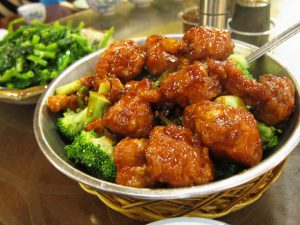
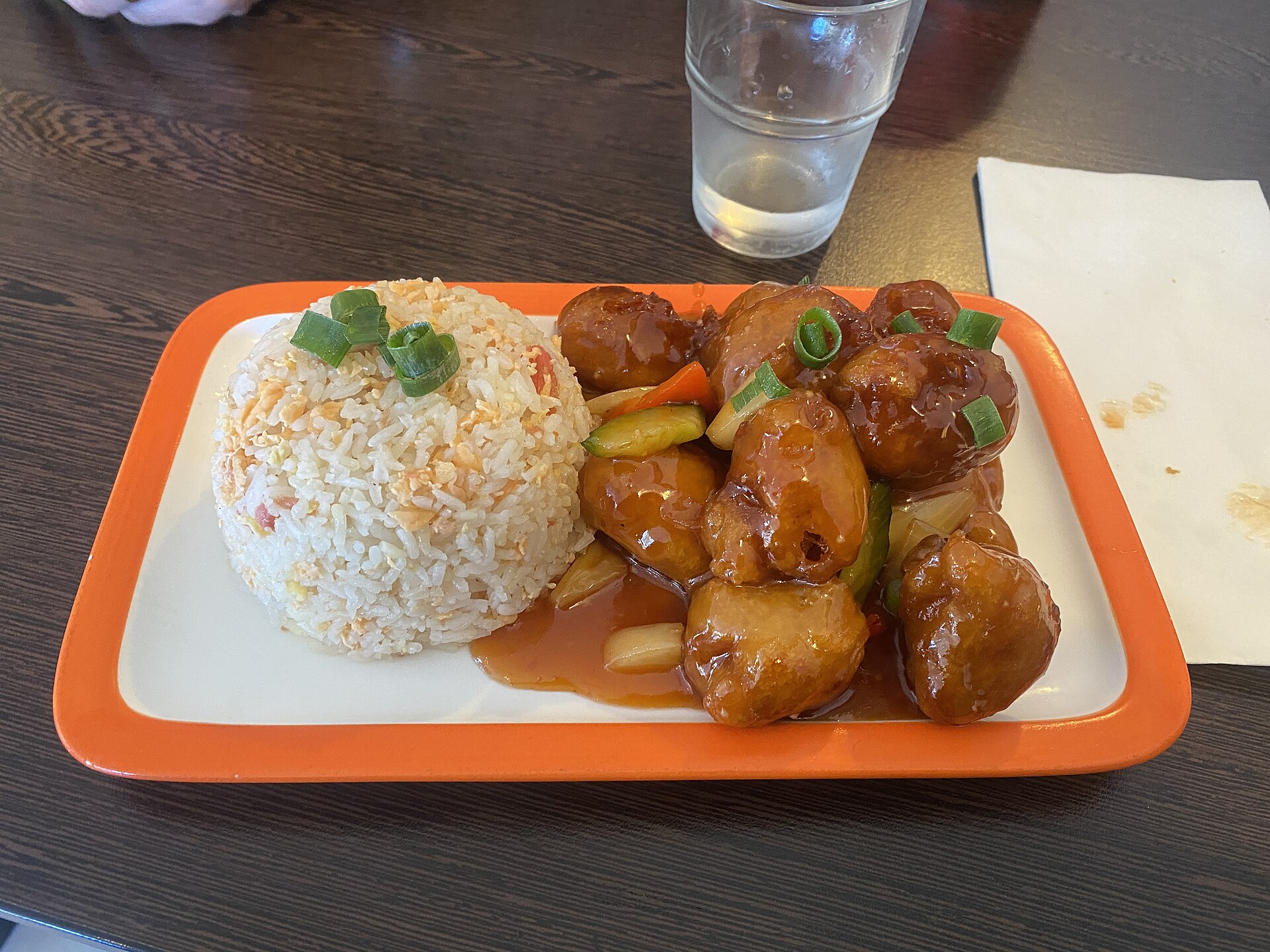
The wok hisses the moment the first cube of pork hits the oil, a sharp crackle that settles into a steady sizzle. Steam rises, carrying the sweet tang of vinegar and ketchup, the savory depth of soy and Worcestershire, and the faint floral heat of ginger and garlic. In a Cantonese banquet hall, the dish arrives on a wide porcelain platter, each piece lacquered a glossy amber, crowned with wedges of green pepper and pineapple that still hold their shape. At a neighborhood stir-fry joint, it comes in a stainless steel bowl, sauce pooled at the bottom, the pork a shade darker from a longer fry. Both versions share the same rhythm: crunch yielding to tender meat, then the bright, sticky pull of sweet and sour.
What Arrives on the Table
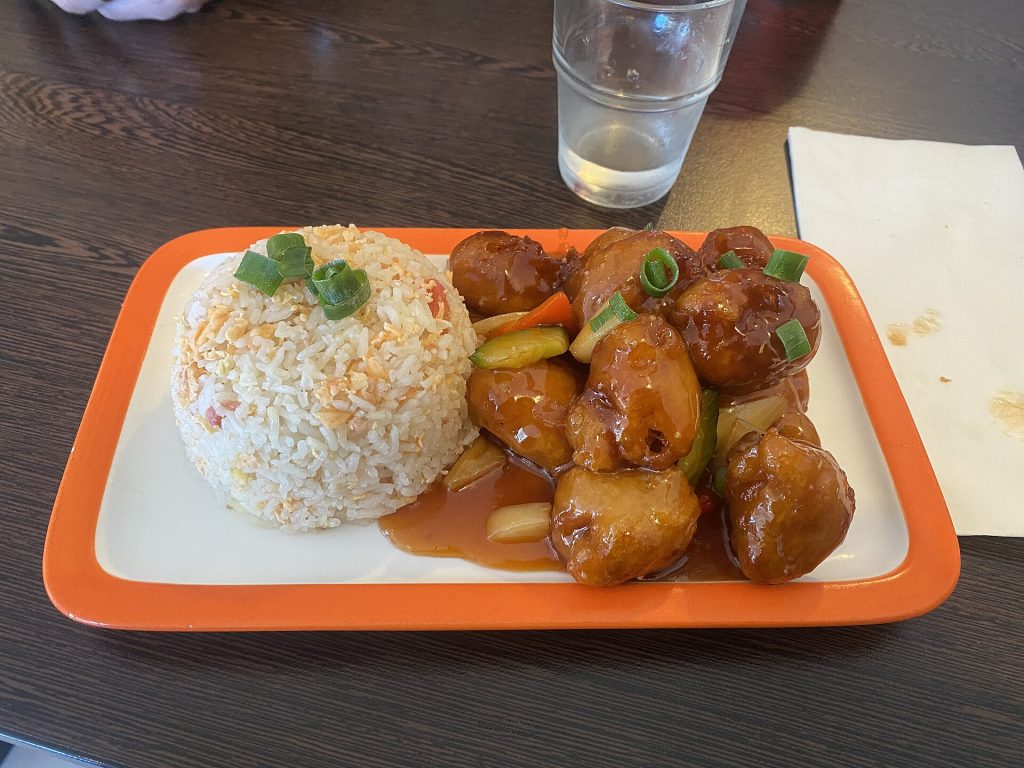
Expect bite-sized cubes, roughly the size of a thumb joint, coated in a batter that shatters cleanly when you pick them up with chopsticks. The color should read like polished copper — not pale blond, not burnt mahogany. Vegetables share the stage: chunky triangles of green bell pepper, thick half-moons of onion, and pineapple wedges cut from a fresh ring, not the crushed tidbits from a can. A scatter of toasted sesame seeds and a few cilantro leaves often finish the plate. The sauce clings rather than floods; you want each piece to glisten, not swim.
How It Should Taste and Look
The first hit is sweet — ketchup and sugar — followed immediately by the sharp lift of rice vinegar. Worcestershire adds a quiet umami hum, while ginger and garlic leave a warm, fresh aftertaste. If chili-garlic paste was used, a slow prickle builds at the back of the throat. Texture is the tell: the crust stays crisp for the first few minutes, then softens at the edges where the sauce seeps in. The pork inside remains juicy, never gray or stringy. Vegetables keep a snap; peppers should still crunch, onion layers should separate with a slight resistance.
A Home Method That Works
Start the night before or early in the morning. The marinade does the heavy lifting.
- Pork: one boneless loin roast per person, cut into 1-inch squares and pounded flat
- Marinade: 3 tablespoons dry sherry or Chinese rice wine, 2 tablespoons soy sauce, 2 teaspoons cornstarch
- Sauce: ¼ cup ketchup, 2 tablespoons rice vinegar, 1 tablespoon soy sauce, 1 tablespoon Worcestershire sauce, ½ teaspoon chili-garlic sauce, 1 tablespoon sugar, 1 egg lightly beaten, 2 teaspoons cornstarch
- Aromatics: 1 teaspoon minced ginger, 1 teaspoon minced garlic, 1 tablespoon chopped cilantro (optional)
- Oil: ¼ cup extra-light olive oil or vegetable oil, divided
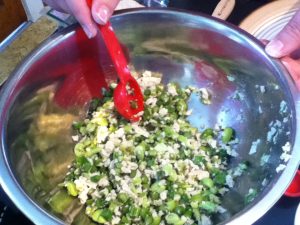
Mix the marinade ingredients in a large bowl, add the pork, and toss until every piece is coated. Cover and refrigerate for at least two hours, overnight if you can. When ready to cook, whisk the sauce ingredients together and set aside. Drain the pork, discarding excess liquid. Beat the egg with the 2 teaspoons cornstarch from the sauce list, then toss the pork in the mixture until evenly coated.
Heat a wok over high heat until a droplet of water dances. Add 2 tablespoons oil, swirl, and lay in half the pork in a single layer. Fry without moving for about a minute, then stir until the pieces are golden and no longer pink when cut, roughly two minutes total. Transfer to a plate. Add the remaining oil and repeat with the rest of the pork. Pour off the used oil, return the wok to medium heat, and add the ginger and garlic. Stir for ten seconds, then pour in the sauce. Let it bubble and thicken, about thirty seconds. Return all the pork to the wok, toss with the peppers, onion, and pineapple, and stir just until everything is glazed. Scatter cilantro and sesame seeds, then serve immediately with steamed rice.
Ordering at a Restaurant
Look for the characters 咕咾肉 on the menu — that is the classic Cantonese name. If the menu only lists “Sweet and Sour Pork” in English, ask the server whether the pork is battered and deep-fried first, or simply stir-fried with sauce. The former is what you want. Request “less sauce on the side” if you prefer to control the crunch yourself. In northern-style places, the dish may arrive with a thicker, darker sauce and no pineapple; that is a regional variation, not a mistake. At a banquet, the kitchen often fries the pork hours ahead and re-heats it in the sauce — accept it graciously, but know the crust will be softer.
Mistakes Beginners Make
Crowding the wok is the most common error. Too many pieces at once drops the oil temperature, and the batter absorbs grease instead of crisping. Fry in batches, even if it feels slow. Skipping the pounding step leaves the meat thick and chewy; the flattening creates surface area for the crust and shortens the cooking time so the interior stays moist. Using tomato paste instead of ketchup kills the bright acidity — ketchup already balances sugar, vinegar, and spice. Overcooking the sauce after the pork returns turns the glaze gummy; thirty seconds of bubbling is enough. Finally, letting the finished dish sit while you fetch drinks or take photos turns crunch into sog. Eat it the moment it hits the table.