The minibus rattles over a switchback above the You River, the engine whining in low gear. Through the window, wooden stilt houses cling to the slope, their dark tiles glowing amber in the late afternoon light. An old woman in a blue headscarf squats on a stone step, stripping bamboo shoots into a bamboo basket. She glances up, smiles, and lifts a gnarled hand in greeting before returning to her work. No tour guide, no ticket booth, just the rhythm of a Tuesday in a Tujia village.
Where the Tujia call home
The Tujia — Bizika in their own tongue, “native dwellers” — number over nine million, making them China’s seventh-largest recognized minority. Their heartland sprawls across the Wuling Mountains where Hunan, Hubei, Guizhou, and Chongqing meet. You will find them in counties like Zhangjiajie, Enshi, Qianjiang, and Xiangxi. The terrain is steep, the rivers fast, and the soil thin. For centuries that geography kept outsiders at bay and let a distinct culture take root.
If you are heading into this region, the main gateways are Zhangjiajie Hehua Airport, Enshi Xujiaping Airport, or the high-speed rail stations at Zhangjiajie West and Enshi. From there, county buses or hired drivers reach the smaller townships. Roads are paved now, but landslides after heavy rain can close mountain passes for hours. Pack a rain jacket and some patience.
Language, names, and a few words that open doors
Most Tujia under fifty speak fluent Mandarin, often with a local accent that rolls the retroflex initials into something softer. The Tujia language itself belongs to the Tibeto-Burman family and has no widely used writing system; it lives in songs, chants, and the names of places. You will hear two main dialects — Northern around Enshi and Southern near Yongshun — mutually unintelligible.
A handful of phrases earn respect:
- Ga bu ya (嘎布亚) — Hello / How are you.
- Ya sa (亚撒) — Thank you.
- Mo gao (莫高) — Delicious, used at the table.
- Ba ye (巴爷) — Respectful address for an older man; Ba ma (巴妈) for an older woman.
Do not assume everyone identifies as Tujia first. In mixed townships, some families register as Han for convenience. Ask “Ni shi Tujia ma?” gently. If the answer is no, drop it.
Daily rhythm: fields, fire pit, and the family altar
Life still orbits the huotang — the sunken fire pit at the center of a stilt house. In the morning, the grandmother feeds the fire with pine knots, the smoke curling up through the roof tiles to cure the hanging bacon and sausages. Breakfast is rice gruel, pickled mustard greens, and maybe a spoonful of chili paste fermented in a clay jar.
Men and women share field work: terracing corn, planting tea bushes on near-vertical slopes, harvesting rapeseed in spring. By mid-afternoon the village path fills with bamboo baskets borne on shoulder poles. Children dart between legs, speaking Mandarin at school and Tujia at home. Elders sit on low stools, mending nets or splitting kindling.
Every house has a family altar, usually a wooden board mounted high on the main wall. Incense sticks burn for ancestors and for the white tiger spirit, the Tujia totem. Visitors should not step over the threshold with shoes on, and never point feet toward the altar. If you are invited inside, pause at the door, bow slightly, and wait to be seated.
Festivals: when the mountains sing
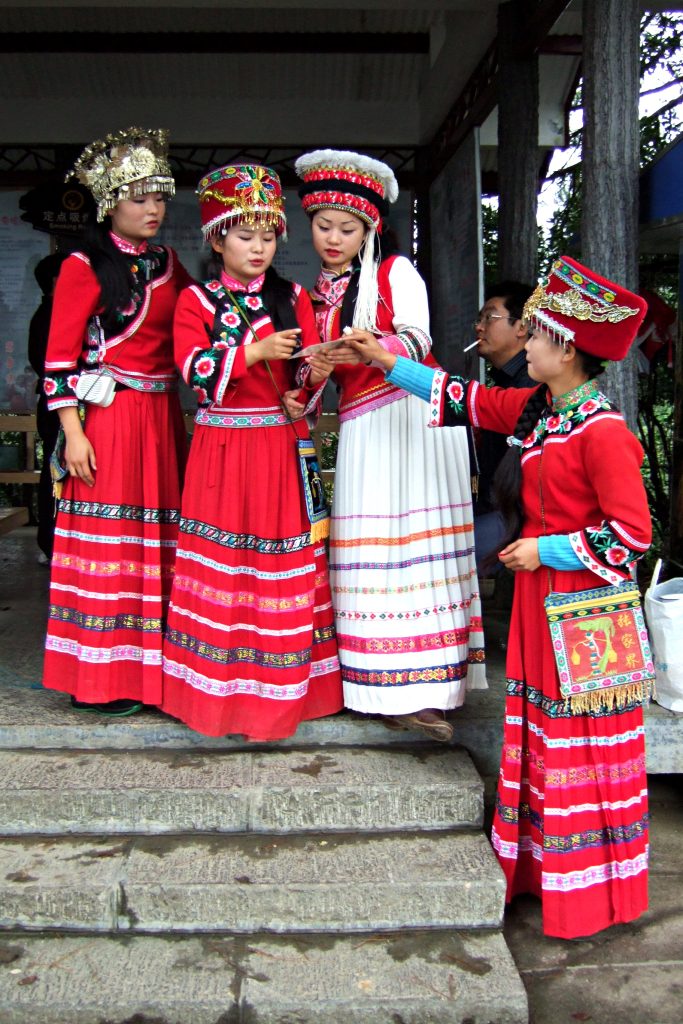
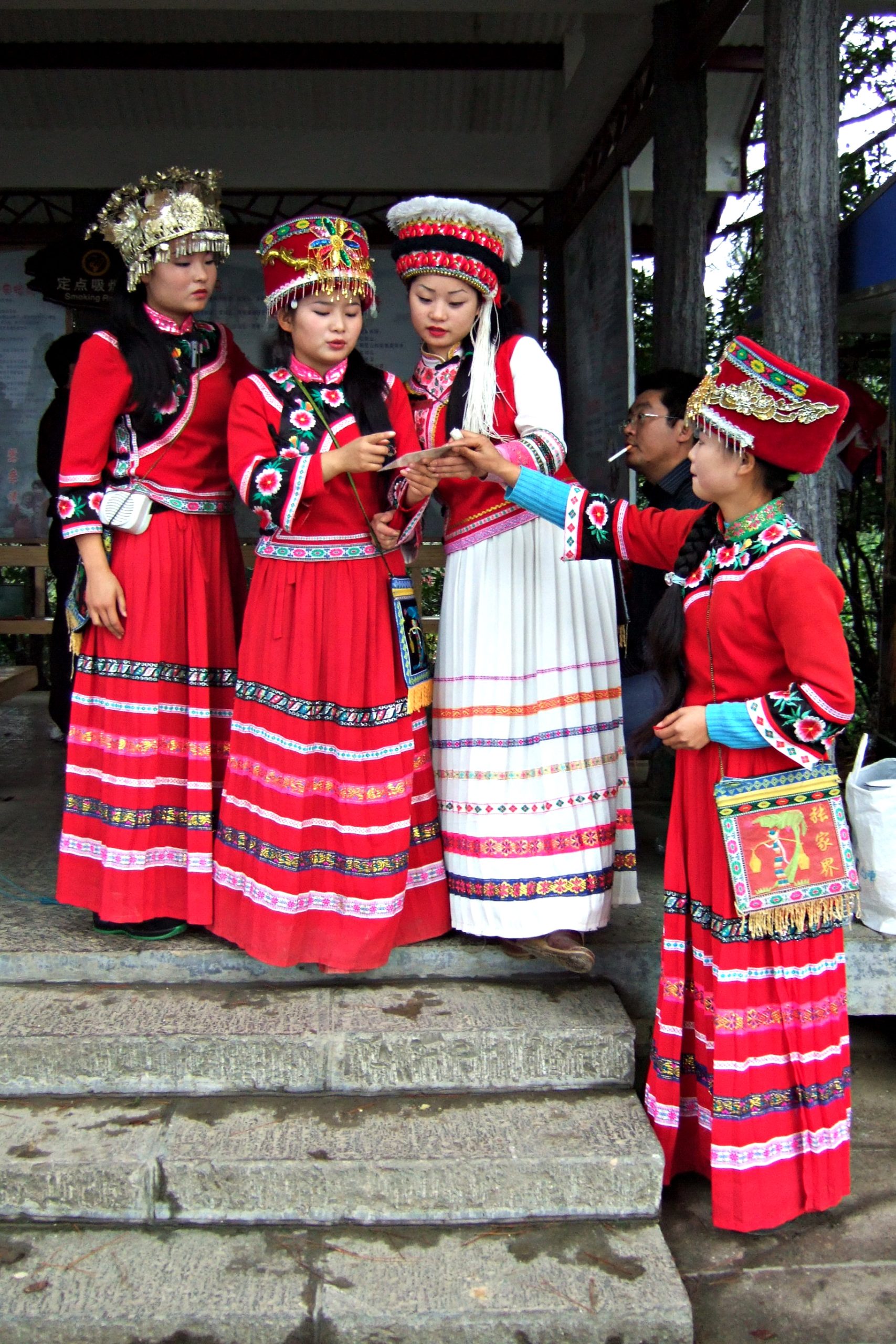
The biggest gathering is the Sheba Festival, held between the first and seventeenth days of the first lunar month. Villagers converge on a flat riverside clearing. Drums the size of wine barrels thunder. Men in embroidered jackets perform the Baishou — the Hand-Waving Dance — hundreds of gestures that mime hunting, farming, weaving, and war. Women circle them, silver headdresses flashing.
If you attend:
- Arrive early; parking vanishes by ten a.m.
- Stand at the edge of the dance ground. Do not step into the circle unless a local pulls you in.
- Accept a cup of jiu (corn liquor) if offered. Sip, do not shoot. Refusing outright can seem rude.
- Photograph the dancers, but lower the camera when elders pray at the ancestral poles.
Smaller events dot the calendar: the Dragon Boat Festival on the You River in the fifth lunar month, the New Rice Festival in the eighth lunar month when the first grain is roasted and offered to the fire pit. Dates shift each year; ask your hostel owner a week ahead.
Food that travels from forest to table
Tujia cuisine is sour, spicy, smoked, and fresh — often all in one bowl. The signature dish is hezi, a glutinous rice dumpling stuffed with cured pork, wild greens, and chili, wrapped in bamboo leaves and steamed over the fire pit. You will also encounter:
- Sour fish soup — river carp simmered with pickled tomatoes, green pepper, and fermented chili paste.
- Smoked tofu — pressed bean curd hung above the huotang for weeks until the skin turns mahogany.
- Pounded tea — tea leaves, ginger, garlic, peanuts, and sesame bashed in a stone mortar, then whisked with boiling water. Served in a wooden bowl with a side of pickled radish.
In a family home, the hostess ladles soup from a blackened iron pot. You eat with chopsticks and a porcelain spoon. Leave a few bites in the bowl to show you are satisfied. In town restaurants, order “la rou chao cai” (smoked pork stir-fried with seasonal greens) and a jug of corn liquor. Prices are modest — a feast for two rarely exceeds the cost of a city lunch.
Handicrafts: brocade, batik, and the weight of silver
Tujia brocade, xilankapu, is woven on a backstrap loom. Women sit on the floor, the warp tied to a beam and the other end looped around their waist. Patterns — diamonds, zigzags, stylized birds — are memorized, not charted. A single bedspread can take three months. Batik follows a similar logic: beeswax applied with a copper knife, cloth dipped in indigo vats, wax boiled away to reveal white-on-blue narratives.
Silver ornaments are heirlooms. A bride’s headdress may weigh two kilograms: horn-shaped pins, phoenix pendants, chains that chime when she turns her head. Silversmiths in Enshi’s old quarter still hammer by hand. If you buy, ask for the melt test — a drop of nitric acid on a hidden edge. Real silver turns creamy; alloys turn green.
What newcomers get wrong
- Treating villages as open-air museums. People live here. Do not wander into bedrooms, peer into granaries, or fly drones low over courtyards.
- Assuming every Tujia sings and dances on cue. The Baishou is a ritual, not a performance. Ask before filming close-ups.
- Gifting candy to children. It undermines dental health and creates a begging dynamic. Bring fruit or notebooks if you want to give something.
- Bargaining hard on handicrafts. A brocade piece priced at three hundred yuan represents weeks of labor. Haggle lightly, then pay fairly.
- Ignoring the fire pit etiquette. Never toss trash, spit, or extinguish a cigarette in the huotang. It is the spiritual hearth of the household.
Staying the night: homestay basics
Many villages now offer family-run guesthouses — concrete ground floor, wooden upper story, shared squat toilet, hot water from a solar heater. Expect:
- A firm mattress on a kang (heated brick bed) or a simple wooden frame.
- Breakfast included: rice, pickles, fried egg, pounded tea.
- The host family eating separately unless you are invited to join.
- No Wi-Fi in the rooms; a weak signal on the balcony if the weather holds.
Bring cash. Mobile payment works in county towns but often fails in mountain hamlets. A typical stay runs 80 to 150 yuan per person per night, meals included. Book through a local contact or the village WeChat group; online platforms rarely list these places.
Leaving with something real
The minibus coughs back to life. The old woman on the step is gone; only her bamboo basket remains, full of pale shoots. You carry a small roll of brocade in your pack, the indigo dye still faintly scenting your fingers. The mountains close behind the bus, green ridges folding into mist. You did not see a show. You shared a meal, learned a greeting, and remembered to bow at the threshold. That is enough.