The minibus shudders to a halt on a gravel pull‑out just past the last row of kiwi orchards. Through the open door comes the smell of wet pine and woodsmoke, and the sound of a stream that has been tumbling down the same limestone cleft for centuries. A farmer in a blue Mao jacket waves us toward a narrow footpath that disappears into the forest — this is the unofficial welcome to Longmen Mountain, the backbone of Pengzhou.
Getting there without a tour bus
Most travelers arrive from Chengdu on the high‑speed line that terminates at Pengzhou Railway Station. The ride takes roughly an hour from Chengdu East, and trains run every half hour during daylight. From the station forecourt, local buses 101 and 102 fan out to the main scenic gates, but they fill fast on weekends. A shared Didi to the Longmen Mountain visitor center costs about the same as two bus tickets and saves forty minutes of winding mountain road. If you drive, take the Chengdu–Pengzhou Expressway to the Bailu exit, then follow the brown signs for “Longmen Shan” — the last ten kilometers are a series of hairpins that reward patience with views of terraced tea gardens clinging to the slopes.
Where to sleep: courtyard guesthouses and riverside hostels
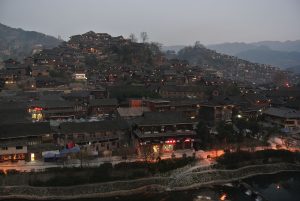
The old town of Pengzhou still has a handful of Qing‑era courtyard houses that have been turned into family‑run guesthouses. Look for a red lantern hanging over a wooden gate on Jiefang Street; the owners usually speak a few words of English and will serve a breakfast of steamed buns, pickled mustard greens, and strong green tea. For something closer to the trails, the cluster of hostels near Bailu Town’s river market offers dorm beds and private rooms with balconies that overlook the rushing Min River tributary. Book a week ahead during the peach‑blossom season in the third lunar month — rooms vanish faster than the blossoms fall.
Walking the Longmen Mountain trails
The main scenic area splits into two loops. The lower loop follows a boardwalk through a bamboo grove to a waterfall that fans out over a moss‑covered cliff — locals call it “White Dragon Tail.” The upper loop climbs stone steps to a ridge where, on a clear morning, you can see the Chengdu plain spread out like a quilt. Allow three hours for the full circuit if you stop to photograph the ancient ginkgo near the halfway pavilion. Wear shoes with grip; the limestone slabs turn slick after the afternoon mist rolls in.
- Start at the Longmen Mountain visitor center (ticket booth opens at 8 am).
- Follow the red‑painted arrows for the lower loop; blue arrows mark the ridge trail.
- Carry a liter of water — there are no vendors past the first pavilion.
- Pack a light rain shell; the microclimate shifts from sun to drizzle in minutes.
- Descend before 5 pm when the last shuttle leaves the upper parking lot.
Temples, tea, and the rhythm of market days
Longxing Temple sits on a low hill just outside the old town wall. Its Song‑dynasty bell still rings at dawn, and the courtyard smells of sandalwood incense and pine needles. Monks welcome visitors who bow three times at the main hall, but photography inside the inner sanctum is frowned upon. Down the lane, Yangping Taoist Temple guards a stone tablet carved with a poem by a Tang official exiled here — his calligraphy is faded but legible if you trace the characters with your fingertip. On the fifth and tenth days of each lunar month, the square in front of the Catholic church transforms into a market where grandmothers sell hand‑rolled tea bricks, dried persimmons, and bamboo‑woven baskets. Arrive early, bring small change, and be ready to taste a cup of bitter green tea poured from a long‑spouted pot.
Eating like a local: cold noodles, smoked pork, and mountain herbs
Lunch in Pengzhou is rarely a sit‑down affair. Follow the lunch‑hour crowd to a stall behind the bus station where a woman in a floral apron tosses hand‑pulled wheat noodles in a bowl of chili oil, black vinegar, crushed garlic, and a spoonful of fermented bean paste. The noodles arrive cold, slick, and faintly numbing from Sichuan pepper. Beside her, a wok smokes with cubes of cured pork belly stir‑fried with wild fern shoots gathered that morning from the slopes you just hiked. Order a side of pickled radish and a bowl of corn‑flour porridge to cool the heat. If you wander into a restaurant with an English menu and air‑conditioning, you’ve likely missed the best food.
Mistakes that turn a good day into a long one
First, assuming the mountain trails are marked in English — they aren’t. The colored arrows are your only guide, and they fade after heavy rain. Second, showing up at Longxing Temple during the lunch hour when the monks eat; the main gate locks for forty minutes. Third, paying a “guide” who appears at the visitor center offering a shortcut to a hidden waterfall — the path ends at a private fish farm and a very angry dog. Fourth, forgetting cash. Mobile payment works in town, but the mountain stalls, temple donation boxes, and most guesthouses still run on red hundred‑yuan notes. Finally, trying to cram the waterfall, both temples, and the market into a single afternoon. The mountain sets its own pace; the only way to respect it is to slow down.