- Trailhead: Parking lot beside the Longhua–Baxian road. A vendor sells walking sticks (five yuan) and bottled water.
- Halfway Pavilion: Flat roof, incense burner, view of the river loop. Good spot to eat a peeled orange.
- Buddha Platform: The statue is thirty meters tall, seated, hands resting on knees. Moss streaks the left shoulder. Pilgrims press foreheads to the cool stone; tourists take selfies from the side.
- Upper Ridge: Continue past the Buddha for another fifteen minutes. A fire lookout tower crowns the summit. On clear days you see the Sichuan Basin stretching to Chengdu.
Wear shoes with grip. The steps are polished smooth by decades of sandals. Bring a light jacket — wind at the top cuts through sweat. If your knees protest, a sedan chair service operates from the trailhead (negotiate 80 yuan round trip), but the bearers expect a tip and a cigarette.
Hot Springs: Steam and Silence
Pingshan’s geothermal field bubbles up along a tributary valley south of town. The main resort, Baxian Hot Spring, occupies a landscaped compound with indoor pools, open-air rock baths, and a few private villas. Day passes cost around 150 yuan on weekdays, 220 on weekends; towels and a locker are included. Locals come after work, soaking shoulders in the 42°C mineral water while scrolling phones.
For a wilder experience, ask your driver about “Ye Tang” — wild pools — upstream where the river runs hot. No changing rooms, no lights, just rock basins worn smooth by the current. Villagers bathe there before dawn. If you go, wear an old swimsuit; the sulfur stains fabric yellow. Leave valuables in the car.
Etiquette: rinse thoroughly before entering any pool. No soap in the communal water. Tattoos draw stares but are not forbidden. Women may prefer the women’s section at the main resort; the wild pools are mixed.
Eating in Pingshan: River, Fire, and Pepper
The cuisine leans on the Yangtze: carp, catfish, shrimp, all cooked with doubanjiang, dried chili, and Sichuan peppercorn. In town, follow the smoke to a storefront with a wok the size of a bathtub.
- Spicy Boiled Fish (Shuizhu Yu): Fillets poached in chili oil broth, topped with a mountain of dried chilies and peppercorns. The fish should slide off the bone; the oil should numb your lips for ten minutes.
- Cold Rabbit Head (Liangban Tu Tou): Braised, chilled, torn apart with fingers. Chew the skull for the brain; suck the marrow from the jaw. A beer essential.
- Pickled Vegetable Noodles (Suan Cai Mian): Hand-pulled wheat noodles in clear broth with fermented mustard greens, minced pork, and a spoonful of chili oil. Breakfast of champions.
- Longhua Tofu Pudding: Silken curd ladled into a bowl, doused with soy sauce, vinegar, chili oil, crushed peanuts, and scallions. Eat with a flat spoon while standing at the counter.
Ordering tip: point at a neighbor’s bowl. Say “yige zhiyang” (one like that). If the menu has pictures, ignore the English translations — “fragrant spicy” usually means “we ran out of the real chili.” Ask for “la zi bu yao tai duo” (not too many dried chilies) only if you truly cannot handle heat; the cook will respect the request but the dish loses its soul.
Sleeping: Courtyards and Clean Sheets
In Longhua, three family guesthouses occupy restored courtyards behind the main street. Rooms have tatami mats, shared bathrooms, and a cat that claims the windowsill. Cost: 120 to 180 yuan including a breakfast of congee and pickles. Book by WeChat; the owners rarely answer phone calls.
In Pingshan town, the Jinjiang Inn near the bus station offers standard business-hotel reliability — air conditioning, hot water, key cards — for 200 yuan. The hot spring resort has rooms from 400 yuan; you pay for pool access included.
Camping is tolerated on the riverbank below Longhua if you ask the village head (find him at the tea house). No facilities. Pack out everything.
Festivals and the Rhythm of the Year
Spring Festival (lunar new year) shuts the county down for a week. Firecrackers start at midnight and don’t stop until the fifteenth day. If you are here, you are family — expect invitations to dumpling-making, red envelopes pressed into your hand, and zero privacy.
Dragon Boat Festival (fifth day of fifth lunar month) brings races on the Yangtze reach below Longhua. Narrow boats, twenty paddlers each, drummers at the bow. The riverbank crowds three deep. Eat zongzi — sticky rice parcels wrapped in bamboo leaves — sold from bamboo baskets by women in blue aprons.
Mid-Autumn Festival (fifteenth day of eighth lunar month) means moon-viewing on the Baxian summit. Locals hike up after dinner with thermoses of tea and boxes of mooncake. The path glows with phone flashlights. Join them; share a slice of lotus-paste cake; listen to someone’s grandfather recite Su Shi poems in dialect.
What Newcomers Get Wrong
- Assuming English works: It doesn’t, outside the hotel front desk. Learn twenty words: hello, thank you, water, toilet, bill, spicy, not spicy, left, right, stop.
- Skipping cash: QR codes dominate, but the noodle lady, the sedan-chair bearers, and the wild-pool villagers want paper. Carry small denominations.
- Overplanning: The minibus breaks down. The mountain fogs in. The best meal happens at a stall you didn’t know existed. Build slack into every day.
- Photographing without asking: In Longhua, an old craftsman carving a wooden mold will wave you off. Smile, lower the camera, buy a mold for five yuan. He may then pose.
- Leaving too soon: Pingshan rewards the second morning — the one where you recognize the tea-house owner, the stray dog, the rhythm of the river.
The minibus back to Yibin West rattles over the same potholes. The woman with the ladle is gone; her pot sits cold on the stool. Through the window, the Buddha catches the last light, indifferent to seasons, to visitors, to the small anxieties of travel. You will carry the taste of chili oil on your fingers for days. That is the point.
- East Gate Wharf: Stone steps descend to the Yangtze. Fishermen mend nets at sunrise; an old man sells steamed corn from a bamboo basket.
- Wang Family Courtyard: A restored merchant house with carved window lattices. The caretaker unlocks the side gate for ten yuan and explains the rainwater drainage system in rapid Sichuanese.
- Tea House on the Corner: Plastic chairs, brass teapots, endless refills of jasmine. Order a bowl of “three-cannon” rice balls — glutinous spheres coated in sesame, soybean flour, and brown sugar — while you watch a funeral procession pass, firecrackers popping.
- Riverbank Path: A flat dirt track leads north past vegetable plots to a quiet viewing platform. Stay until the tour groups leave at 4 p.m.; the light on the water turns copper.
Mistake beginners make: arriving at 10 a.m. with a tour group, snapping the gate arch, eating lunch at the first “famous snack” stall, and leaving by noon. Stay for the afternoon lull. Talk to the woman selling embroidered insoles; she will tell you which well water makes the best tea.
Baxian Mountain and the Giant Buddha
The Buddha sits halfway up Baxian Mountain, carved into a cliff face during the Tang dynasty and restored in the 1990s. You reach it by a stone stairway — 1,200 steps, they say — that switchbacks through cypress forest. The climb takes forty minutes if you pause for breath; twenty if you are twenty.
- Trailhead: Parking lot beside the Longhua–Baxian road. A vendor sells walking sticks (five yuan) and bottled water.
- Halfway Pavilion: Flat roof, incense burner, view of the river loop. Good spot to eat a peeled orange.
- Buddha Platform: The statue is thirty meters tall, seated, hands resting on knees. Moss streaks the left shoulder. Pilgrims press foreheads to the cool stone; tourists take selfies from the side.
- Upper Ridge: Continue past the Buddha for another fifteen minutes. A fire lookout tower crowns the summit. On clear days you see the Sichuan Basin stretching to Chengdu.
Wear shoes with grip. The steps are polished smooth by decades of sandals. Bring a light jacket — wind at the top cuts through sweat. If your knees protest, a sedan chair service operates from the trailhead (negotiate 80 yuan round trip), but the bearers expect a tip and a cigarette.
Hot Springs: Steam and Silence
Pingshan’s geothermal field bubbles up along a tributary valley south of town. The main resort, Baxian Hot Spring, occupies a landscaped compound with indoor pools, open-air rock baths, and a few private villas. Day passes cost around 150 yuan on weekdays, 220 on weekends; towels and a locker are included. Locals come after work, soaking shoulders in the 42°C mineral water while scrolling phones.
For a wilder experience, ask your driver about “Ye Tang” — wild pools — upstream where the river runs hot. No changing rooms, no lights, just rock basins worn smooth by the current. Villagers bathe there before dawn. If you go, wear an old swimsuit; the sulfur stains fabric yellow. Leave valuables in the car.
Etiquette: rinse thoroughly before entering any pool. No soap in the communal water. Tattoos draw stares but are not forbidden. Women may prefer the women’s section at the main resort; the wild pools are mixed.
Eating in Pingshan: River, Fire, and Pepper
The cuisine leans on the Yangtze: carp, catfish, shrimp, all cooked with doubanjiang, dried chili, and Sichuan peppercorn. In town, follow the smoke to a storefront with a wok the size of a bathtub.
- Spicy Boiled Fish (Shuizhu Yu): Fillets poached in chili oil broth, topped with a mountain of dried chilies and peppercorns. The fish should slide off the bone; the oil should numb your lips for ten minutes.
- Cold Rabbit Head (Liangban Tu Tou): Braised, chilled, torn apart with fingers. Chew the skull for the brain; suck the marrow from the jaw. A beer essential.
- Pickled Vegetable Noodles (Suan Cai Mian): Hand-pulled wheat noodles in clear broth with fermented mustard greens, minced pork, and a spoonful of chili oil. Breakfast of champions.
- Longhua Tofu Pudding: Silken curd ladled into a bowl, doused with soy sauce, vinegar, chili oil, crushed peanuts, and scallions. Eat with a flat spoon while standing at the counter.
Ordering tip: point at a neighbor’s bowl. Say “yige zhiyang” (one like that). If the menu has pictures, ignore the English translations — “fragrant spicy” usually means “we ran out of the real chili.” Ask for “la zi bu yao tai duo” (not too many dried chilies) only if you truly cannot handle heat; the cook will respect the request but the dish loses its soul.
Sleeping: Courtyards and Clean Sheets
In Longhua, three family guesthouses occupy restored courtyards behind the main street. Rooms have tatami mats, shared bathrooms, and a cat that claims the windowsill. Cost: 120 to 180 yuan including a breakfast of congee and pickles. Book by WeChat; the owners rarely answer phone calls.
In Pingshan town, the Jinjiang Inn near the bus station offers standard business-hotel reliability — air conditioning, hot water, key cards — for 200 yuan. The hot spring resort has rooms from 400 yuan; you pay for pool access included.
Camping is tolerated on the riverbank below Longhua if you ask the village head (find him at the tea house). No facilities. Pack out everything.
Festivals and the Rhythm of the Year
Spring Festival (lunar new year) shuts the county down for a week. Firecrackers start at midnight and don’t stop until the fifteenth day. If you are here, you are family — expect invitations to dumpling-making, red envelopes pressed into your hand, and zero privacy.
Dragon Boat Festival (fifth day of fifth lunar month) brings races on the Yangtze reach below Longhua. Narrow boats, twenty paddlers each, drummers at the bow. The riverbank crowds three deep. Eat zongzi — sticky rice parcels wrapped in bamboo leaves — sold from bamboo baskets by women in blue aprons.
Mid-Autumn Festival (fifteenth day of eighth lunar month) means moon-viewing on the Baxian summit. Locals hike up after dinner with thermoses of tea and boxes of mooncake. The path glows with phone flashlights. Join them; share a slice of lotus-paste cake; listen to someone’s grandfather recite Su Shi poems in dialect.
What Newcomers Get Wrong
- Assuming English works: It doesn’t, outside the hotel front desk. Learn twenty words: hello, thank you, water, toilet, bill, spicy, not spicy, left, right, stop.
- Skipping cash: QR codes dominate, but the noodle lady, the sedan-chair bearers, and the wild-pool villagers want paper. Carry small denominations.
- Overplanning: The minibus breaks down. The mountain fogs in. The best meal happens at a stall you didn’t know existed. Build slack into every day.
- Photographing without asking: In Longhua, an old craftsman carving a wooden mold will wave you off. Smile, lower the camera, buy a mold for five yuan. He may then pose.
- Leaving too soon: Pingshan rewards the second morning — the one where you recognize the tea-house owner, the stray dog, the rhythm of the river.
The minibus back to Yibin West rattles over the same potholes. The woman with the ladle is gone; her pot sits cold on the stool. Through the window, the Buddha catches the last light, indifferent to seasons, to visitors, to the small anxieties of travel. You will carry the taste of chili oil on your fingers for days. That is the point.
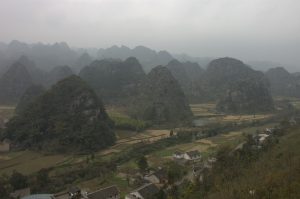
The minibus shudders to a halt on a dusty pull-out beside the Yangtze, and the conductor shouts something that sounds like “Longhua!” through the open door. Steam rises from a roadside noodle pot. A woman in a floral apron waves a ladle, motioning toward a row of plastic stools. Across the water, the grey-green ridges of Baxian Mountain catch the late light, and somewhere up there a giant Buddha sits with eyes half-closed. This is Pingshan: no ticket booth at the county line, no tour bus queue, just a river, a mountain, and a handful of lanes that have been here since the Ming dynasty.
Getting There Without a Headache
Fly into Yibin Wuliangye Airport if you value sleep; the drive from the terminal to Pingshan town takes about an hour on the expressway. A pre-booked car costs roughly the same as two airport bus tickets plus a local taxi at the other end. Trains drop you at Yibin West Station — high-speed from Chengdu in ninety minutes, overnight from Chongqing in three hours. From the station forecourt, minibuses to Pingshan leave when full, usually every twenty minutes. Long-distance coaches from Chengdu’s Xinnanmen or Chadianzi stations run through the night; grab a window seat on the right side for the first glimpse of the river gorge at dawn.
If you are already in Yibin city, the local bus 301 runs from the southern bus station to Pingshan’s main square. It stops at every village, so allow two hours. Drivers rarely speak English; have the Chinese characters for “Pingshan County” (屏山县) saved on your phone.
Moving Around the County
Pingshan town itself is walkable — ten minutes from the bus station to the riverfront. For the outlying sites, you have three realistic options. Didi works in the urban core but drivers cancel once you ask for Longhua Ancient Town or the hot springs. The county runs a handful of public buses (routes 1, 2, and 5) that connect the town center with Longhua, Baxian Mountain, and the main hot spring resort. They run roughly hourly from 7 a.m. to 6 p.m.; ask your guesthouse owner for the current timetable, printed on a laminated card behind the front desk.
The most flexible way is hiring a local driver for the day. Negotiate in the hotel lobby: 300 to 400 yuan gets you a sedan and a driver who knows which mountain road is washed out after rain. He will wait while you climb the Buddha steps, then drive you to a riverside restaurant for lunch. Share the cost with two other travelers you meet at the hostel and it becomes negligible.
Longhua Ancient Town: Lanes That Remember
Longhua sits in a river bend twenty kilometers upstream from the county seat. The main street is paved with worn flagstones, flanked by two-story wooden shophouses with overhanging eaves. No neon, no amplified music — just the clack of mahjong tiles from open doorways and the scent of fermented bean curd drifting from a courtyard kitchen.
- East Gate Wharf: Stone steps descend to the Yangtze. Fishermen mend nets at sunrise; an old man sells steamed corn from a bamboo basket.
- Wang Family Courtyard: A restored merchant house with carved window lattices. The caretaker unlocks the side gate for ten yuan and explains the rainwater drainage system in rapid Sichuanese.
- Tea House on the Corner: Plastic chairs, brass teapots, endless refills of jasmine. Order a bowl of “three-cannon” rice balls — glutinous spheres coated in sesame, soybean flour, and brown sugar — while you watch a funeral procession pass, firecrackers popping.
- Riverbank Path: A flat dirt track leads north past vegetable plots to a quiet viewing platform. Stay until the tour groups leave at 4 p.m.; the light on the water turns copper.
Mistake beginners make: arriving at 10 a.m. with a tour group, snapping the gate arch, eating lunch at the first “famous snack” stall, and leaving by noon. Stay for the afternoon lull. Talk to the woman selling embroidered insoles; she will tell you which well water makes the best tea.
Baxian Mountain and the Giant Buddha
The Buddha sits halfway up Baxian Mountain, carved into a cliff face during the Tang dynasty and restored in the 1990s. You reach it by a stone stairway — 1,200 steps, they say — that switchbacks through cypress forest. The climb takes forty minutes if you pause for breath; twenty if you are twenty.
- Trailhead: Parking lot beside the Longhua–Baxian road. A vendor sells walking sticks (five yuan) and bottled water.
- Halfway Pavilion: Flat roof, incense burner, view of the river loop. Good spot to eat a peeled orange.
- Buddha Platform: The statue is thirty meters tall, seated, hands resting on knees. Moss streaks the left shoulder. Pilgrims press foreheads to the cool stone; tourists take selfies from the side.
- Upper Ridge: Continue past the Buddha for another fifteen minutes. A fire lookout tower crowns the summit. On clear days you see the Sichuan Basin stretching to Chengdu.
Wear shoes with grip. The steps are polished smooth by decades of sandals. Bring a light jacket — wind at the top cuts through sweat. If your knees protest, a sedan chair service operates from the trailhead (negotiate 80 yuan round trip), but the bearers expect a tip and a cigarette.
Hot Springs: Steam and Silence
Pingshan’s geothermal field bubbles up along a tributary valley south of town. The main resort, Baxian Hot Spring, occupies a landscaped compound with indoor pools, open-air rock baths, and a few private villas. Day passes cost around 150 yuan on weekdays, 220 on weekends; towels and a locker are included. Locals come after work, soaking shoulders in the 42°C mineral water while scrolling phones.
For a wilder experience, ask your driver about “Ye Tang” — wild pools — upstream where the river runs hot. No changing rooms, no lights, just rock basins worn smooth by the current. Villagers bathe there before dawn. If you go, wear an old swimsuit; the sulfur stains fabric yellow. Leave valuables in the car.
Etiquette: rinse thoroughly before entering any pool. No soap in the communal water. Tattoos draw stares but are not forbidden. Women may prefer the women’s section at the main resort; the wild pools are mixed.
Eating in Pingshan: River, Fire, and Pepper
The cuisine leans on the Yangtze: carp, catfish, shrimp, all cooked with doubanjiang, dried chili, and Sichuan peppercorn. In town, follow the smoke to a storefront with a wok the size of a bathtub.
- Spicy Boiled Fish (Shuizhu Yu): Fillets poached in chili oil broth, topped with a mountain of dried chilies and peppercorns. The fish should slide off the bone; the oil should numb your lips for ten minutes.
- Cold Rabbit Head (Liangban Tu Tou): Braised, chilled, torn apart with fingers. Chew the skull for the brain; suck the marrow from the jaw. A beer essential.
- Pickled Vegetable Noodles (Suan Cai Mian): Hand-pulled wheat noodles in clear broth with fermented mustard greens, minced pork, and a spoonful of chili oil. Breakfast of champions.
- Longhua Tofu Pudding: Silken curd ladled into a bowl, doused with soy sauce, vinegar, chili oil, crushed peanuts, and scallions. Eat with a flat spoon while standing at the counter.
Ordering tip: point at a neighbor’s bowl. Say “yige zhiyang” (one like that). If the menu has pictures, ignore the English translations — “fragrant spicy” usually means “we ran out of the real chili.” Ask for “la zi bu yao tai duo” (not too many dried chilies) only if you truly cannot handle heat; the cook will respect the request but the dish loses its soul.
Sleeping: Courtyards and Clean Sheets
In Longhua, three family guesthouses occupy restored courtyards behind the main street. Rooms have tatami mats, shared bathrooms, and a cat that claims the windowsill. Cost: 120 to 180 yuan including a breakfast of congee and pickles. Book by WeChat; the owners rarely answer phone calls.
In Pingshan town, the Jinjiang Inn near the bus station offers standard business-hotel reliability — air conditioning, hot water, key cards — for 200 yuan. The hot spring resort has rooms from 400 yuan; you pay for pool access included.
Camping is tolerated on the riverbank below Longhua if you ask the village head (find him at the tea house). No facilities. Pack out everything.
Festivals and the Rhythm of the Year
Spring Festival (lunar new year) shuts the county down for a week. Firecrackers start at midnight and don’t stop until the fifteenth day. If you are here, you are family — expect invitations to dumpling-making, red envelopes pressed into your hand, and zero privacy.
Dragon Boat Festival (fifth day of fifth lunar month) brings races on the Yangtze reach below Longhua. Narrow boats, twenty paddlers each, drummers at the bow. The riverbank crowds three deep. Eat zongzi — sticky rice parcels wrapped in bamboo leaves — sold from bamboo baskets by women in blue aprons.
Mid-Autumn Festival (fifteenth day of eighth lunar month) means moon-viewing on the Baxian summit. Locals hike up after dinner with thermoses of tea and boxes of mooncake. The path glows with phone flashlights. Join them; share a slice of lotus-paste cake; listen to someone’s grandfather recite Su Shi poems in dialect.
What Newcomers Get Wrong
- Assuming English works: It doesn’t, outside the hotel front desk. Learn twenty words: hello, thank you, water, toilet, bill, spicy, not spicy, left, right, stop.
- Skipping cash: QR codes dominate, but the noodle lady, the sedan-chair bearers, and the wild-pool villagers want paper. Carry small denominations.
- Overplanning: The minibus breaks down. The mountain fogs in. The best meal happens at a stall you didn’t know existed. Build slack into every day.
- Photographing without asking: In Longhua, an old craftsman carving a wooden mold will wave you off. Smile, lower the camera, buy a mold for five yuan. He may then pose.
- Leaving too soon: Pingshan rewards the second morning — the one where you recognize the tea-house owner, the stray dog, the rhythm of the river.
The minibus back to Yibin West rattles over the same potholes. The woman with the ladle is gone; her pot sits cold on the stool. Through the window, the Buddha catches the last light, indifferent to seasons, to visitors, to the small anxieties of travel. You will carry the taste of chili oil on your fingers for days. That is the point.