The minibus shudders to a halt beside a steaming pot of duck blood soup on Aojiang’s old street. Steam curls around the fluorescent lights of a pharmacy sign written in Wenzhounese characters I cannot read. An auntie ladles dark broth over rice noodles, drops in a spoonful of chili oil, and slides the bowl across the counter without a word. I have been in Pingyang twenty minutes and already the place has fed me.
Getting Oriented: Two Towns, One County
Pingyang is not a single dot on the map. It is a county-level jurisdiction stretching from the Ou River delta to the foothills of the Yandang Mountains, administered from Wenzhou but possessing a rhythm entirely its own. The two poles are Kunyang and Aojiang, separated by a ten-minute drive along the G15 expressway or a twenty-minute local bus ride.
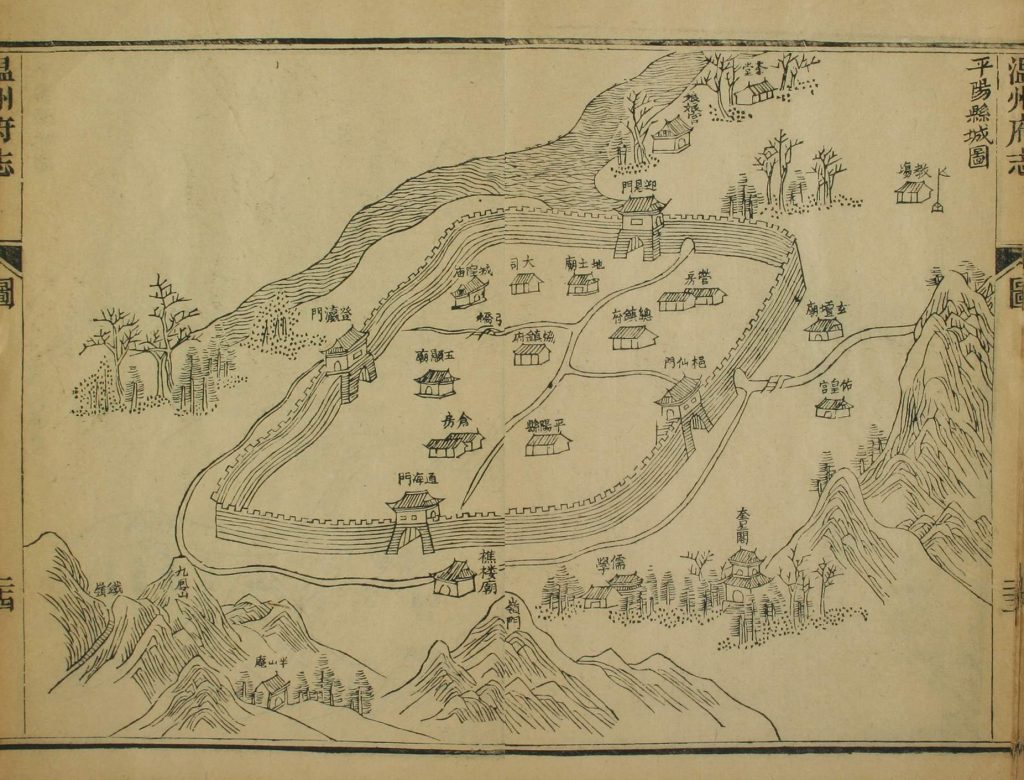
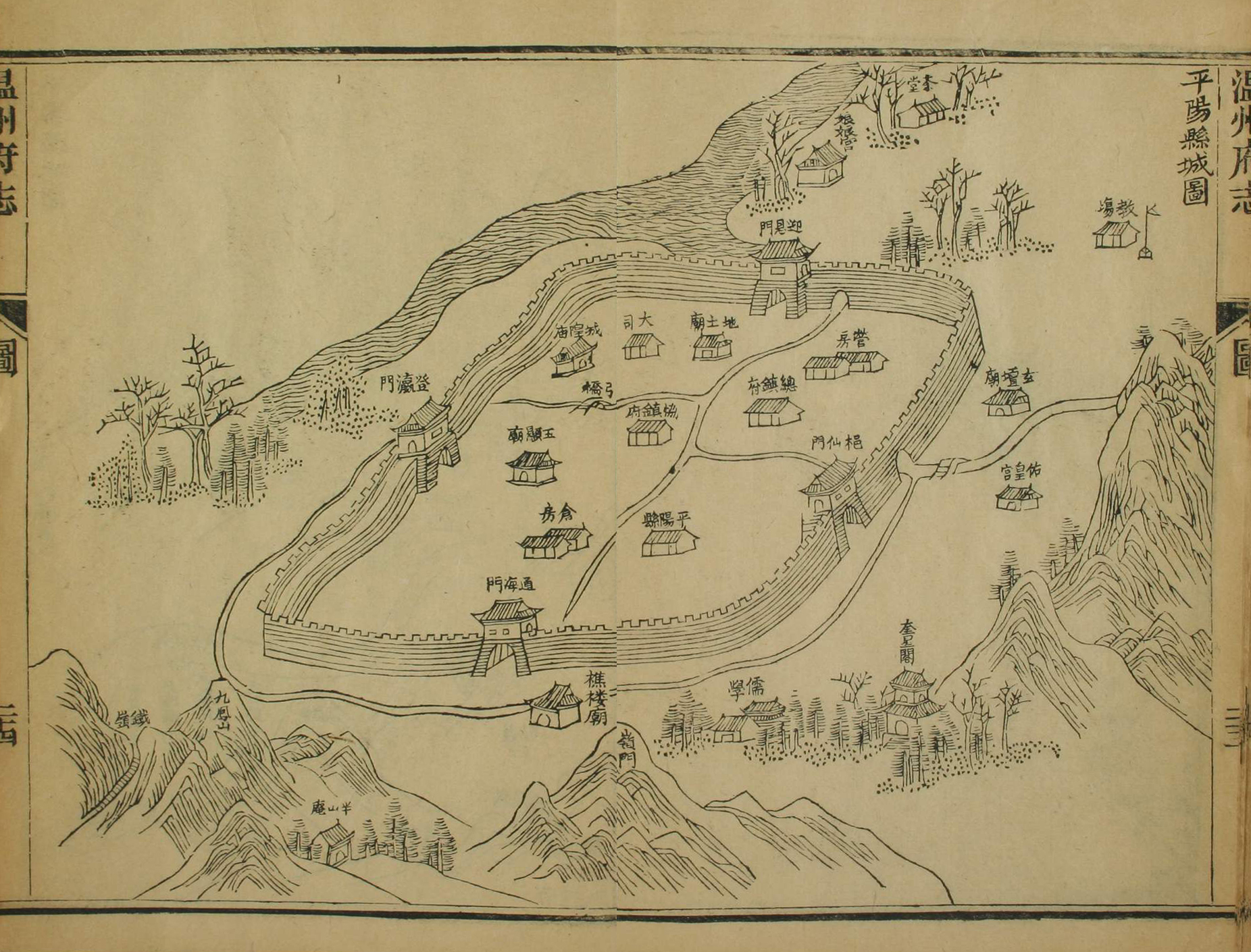
Kunyang wears the administrative crown. Government buildings cluster around People’s Square, and the older lanes behind the main boulevard hide ancestral halls dating back to the Song dynasty. Aojiang, ten kilometers east, is the commercial engine. Its wholesale markets move mountains of seafood, garments, and hardware daily. Most long-distance buses terminate at Aojiang station; the high-speed rail stop, Pingyang Station, sits closer to Kunyang. If you arrive by train, a taxi to a Kunyang guesthouse costs roughly thirty yuan. From the bus station, a shared van to the ancient town of Mengxi runs every half hour.
Coastal Hours: Sand, Mud, and the Tide Table
The coastline here does not announce itself with palm trees. It reveals itself in mudflats that stretch kilometers at low tide, dotted with women in wide-brimmed hats raking for clams. Nanji Islands, a national marine reserve, sit two hours by ferry from Aojiang’s Shitang harbor. The boats leave at dawn and return before the afternoon wind picks up. On the main islands, you sleep in fisherman’s guesthouses—concrete rooms with shared bathrooms and windows framing the East China Sea.
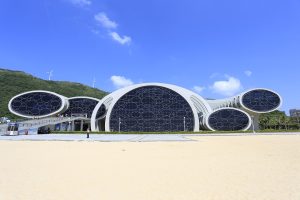
Closer to the mainland, the beach at Haiyang (海洋) is a crescent of coarse gray sand backed by a seawall. Families arrive in the late afternoon with fold-up stools, foam boxes of beer, and portable grills. They skewer oysters, squid, and pork belly over charcoal. The water is shallow for a hundred meters; children chase crabs in the retreating surf. There are no lifeguards, no rental kiosks, and the public toilets are a ten-minute walk toward the parking lot. Bring tissue.
- Check the lunar calendar: the best mudflat foraging falls on the days following the new and full moons, when the tide drops lowest.
- Ferry tickets to Nanji cannot be booked online from overseas. Buy them at the Shitang ticket window the morning you sail, or ask your guesthouse owner to reserve a spot.
- If you want a swim with clearer water, take the local bus from Aojiang toward Shanmen (山门) and get off at the signed turnoff for Dajing Beach. Fewer crowds, rockier bottom.
Stone Alleys and Incense: Mengxi and Shuitou
Mengxi Ancient Town (鳌江孟溪) sits inland, cradled by low hills. The central lane is paved with flagstones worn smooth by centuries of sedan chairs and handcarts. Whitewashed walls, black tile roofs, and wooden lintels carved with bats and peaches line the street. Unlike the polished tourist towns near Hangzhou, Mengxi still smells of fermented bean curd and woodsmoke. Residents hang laundry across the alleyways. An elderly man repairs bamboo chairs in a doorway; his great-grandson does homework on a plastic stool beside him.
Shuitou (水头), twenty minutes north by car, is quieter. Its claim to fame is the Liu Bowen Temple, dedicated to the Ming dynasty strategist born nearby. The complex sits behind a lotus pond that blooms in the sixth lunar month. Inside the main hall, the air is thick with sandalwood. Locals come to rub the bronze tortoise at the entrance for exam luck. If you visit during the Qingming festival in early spring, the paths are crowded with families burning paper money at ancestral graves on the surrounding slopes.
- Wear flat shoes. The flagstones are uneven and slick after rain.
- Morning is best for photographs—light slants through the east-west alleys around 9 a.m.
- Do not enter side courtyards unless invited. Many are private homes, not museums.
- Buy a packet of Mengxi’s local peanut candy from a street vendor; it is brittle, salty-sweet, and made in a wok over a coal fire.
Mountain Breath: Yandang Foothills and the Nanxi River
The western edge of the county lifts into the Yandang range. You do not need climbing gear to taste it. The Nanxi River (楠溪江) cuts a jade-green gorge through volcanic rock. Bamboo rafts depart from the dock at Daruoyan (大若岩) for a forty-minute drift past cliffs shaped like crouching lions and sleeping Buddhas. The boatmen pole silently; they know every eddy. Kingfishers dart across the bow. In autumn, the maples on the ridges turn the color of rice wine.
For a half-day hike, take the trail from Lingfeng Village (灵峰村) up to the Cloud Terrace viewpoint. The path is stone steps, steep in sections, but shaded by camphor trees. At the top, a flat rock platform overlooks a valley of tea terraces. On a clear morning you can see the ocean glittering fifty kilometers east. There are no vendors on the trail. Carry water and a packet of salted plums.
- Raft tickets are sold at the Daruoyan visitor kiosk; cash only. Weekends in the harvest moon season (eighth lunar month) sell out by noon.
- The Lingfeng trailhead is not marked in English. Show the driver the characters 灵峰村 on your phone.
- Leeches appear after rain. Tuck trousers into socks and check ankles at the summit.
Eating Like a Local: Rice Noodles, Seafood, and Late-Night Stalls
Pingyang cuisine leans salty, fresh, and fiercely spicy. The signature bowl is Aojiang rice noodle soup (鳌江米粉). The broth simmers pork bones, dried shrimp, and yellow croaker heads until it turns milky. Thin rice threads are blanched, then drowned in the liquid with slices of pork liver, fried tofu skin, and a tangle of pickled mustard greens. A dollop of chili paste—fermented broad beans, garlic, and local red peppers—sits on the rim. You stir it in slowly.
At night, the stretch of Renmin Road in Kunyang transforms. Carts unfold: grilled oysters brushed with garlic-soy butter, steamed blood cockles dipped in vinegar-ginger sauce, skewers of pork intestine wrapped in garlic chives. Plastic tables spill onto the sidewalk. Order by pointing. A meal for two with beer rarely exceeds eighty yuan. The only English you will hear is “cheers” shouted from a neighboring table.
- Must-try breakfast: Steamed glutinous rice cakes (糯米糍) stuffed with pork floss and pickled radish, sold from bamboo steamers on a tricycle.
- Seafood rule: If the tank water is cloudy, walk to the next stall.
- Vegetarian trap: “Vegetable” dumplings often contain dried shrimp powder. Ask for “su cai jiaozi” (素菜饺子) and confirm “wu hai xian” (无海鲜).
- Drink: Local yellow rice wine (黄酒) served warm in tiny porcelain cups. It hits harder than it tastes.
Practical Rhythms: Transport, Sleep, and Missteps
Public buses connect the major nodes, but schedules are written in Chinese characters at the stops. The 101 runs between Kunyang and Aojiang every fifteen minutes. For the ancient towns and mountain trails, hire a driver for the day—negotiate 300 to 400 yuan including waiting time. Most guesthouse owners know a reliable cousin with a seven-seat van.
Accommodation falls into three tiers. Business hotels near the high-speed rail station offer clean rooms, hot water, and English-speaking front desks for 200 to 300 yuan. Family guesthouses in Mengxi or on Nanji Islands cost 100 to 150 yuan, shared bathroom, squat toilet, and a host who wakes you with fresh tea. Homestays in renovated stone courtyards run 400 to 600 yuan; they book solid during the spring and autumn holiday weeks.
Common newcomer errors: assuming credit cards work outside chain hotels (they do not), expecting taxi meters in the county towns (drivers quote a flat fee—agree before you sit down), and packing only light clothing. The sea wind in the tenth lunar month cuts through a hoodie. Bring a windproof layer.
- Download an offline map with Chinese labels; GPS pins for “Pingyang” often drop you in the county government compound, not the old town.
- Carry small bills. Vendors rarely break a hundred for a five-yuan snack.
- Learn two Wenzhounese phrases: “mho yi” (thank you) and “va sa” (delicious). The accent is thick, but the effort earns a smile and sometimes an extra spoonful of chili paste.